
iTechGuides is reader-supported. When you buy through links on our site, we may earn an affiliate commission. As an Amazon Associate I earn from qualifying purchases. Learn more
Yes, you can reduce many spoofed and unwanted calls, but no setting or service guarantees that every one will be stopped. The right option depends on whether you use a mobile phone, traditional landline, or VoIP home phone. Caller ID can be falsified, so treat the number or name on your screen as a clue—not proof of who is calling.
What is a spoofed call?
Caller ID spoofing is the falsification of information displayed about an incoming call. A caller may make a call appear to come from a local number, a familiar business or government agency, or even your own number. A local-looking number can originate from anywhere, and the real owner of a displayed number may have no connection to the call.
The Federal Trade Commission (FTC) calls the use of a nearby-looking number “neighbor spoofing.” Do not assume the person or organization associated with the displayed number placed the call, and do not accuse or call that number back on the basis of caller ID alone. The FTC warns that “Caller ID is easy to fake, so even if it shows that a call is coming from nearby or a company you know, you can’t trust it.” FTC guidance on robocalls
Do these 3 things before closing this tab:
1Scan for outdated or missing drivers - takes under a minute2Repair Windows errors before they cause bigger problems3Fix the driver behind crashes, sound loss and screen glitchesWhat can block or identify a spoofed call?
Different protections act at different points in the call path. Blocking may stop a call from ringing normally, send it to voicemail, or otherwise keep it from reaching you. Labeling lets the call through but displays a warning such as “spam” or “scam likely.” Network authentication helps providers assess caller ID information; it does not authenticate every call for you or ensure that every suspicious call is blocked.
#1 Best Overall
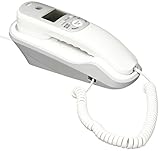
- Caller ID/Call Waiting
- 80-name/number Caller ID history
- 13-number memory
- Display dial
- Mute/flash.Last number redial.Ringer volume control.Desk/wall mountable.White
STIR/SHAKEN helps providers authenticate caller ID
STIR/SHAKEN is a framework that lets voice service providers verify whether caller ID information transmitted with a call matches the caller’s number. The Federal Communications Commission (FCC) describes its widespread use as a way to make illegal spoofing less effective and help providers identify suspicious calls. It is a network defense, not a guarantee that a call is legitimate or that every spoofed call will be blocked. FCC order on call authentication
Filters reduce calls, but can miss or misclassify them
The FTC says call blocking can help reduce unwanted calls. Filters can still miss scams, and they may block, silence, or divert calls you want. Their behavior and availability depend on your phone, provider, device, and chosen app or service. FTC guidance on blocking options
Rank #2

- Built-in Digital Answering System: Record up to 25 minutes of messages, outgoing announcements, and memos with easy playback and remote access — no need for a separate answering machine
- Large Tilt Display for Easy Viewing: Adjustable backlit LCD screen clearly shows Caller ID, call history, and menu options from any angle
- Reliable Corded Performance: Works during power outages for basic calling (line-powered); Caller ID and answering system require 4 AA batteries (not included)
- Caller ID: View incoming caller names and numbers with a 50-name/number call log for convenient call screening
- Convenient Features: Speakerphone, volume control, last number redial, and wall-mountable design — For everyday home or small office use.
Which call-blocking option fits your phone?
Mobile phones
Start by checking your phone’s built-in call controls and your carrier’s current blocking or labeling features. You can also consider a call-blocking app. Depending on its settings, an app may block suspected calls, let them through silently, or route them to voicemail. Apps may be free or paid, and some access your contacts. Before installing one, review its permissions and privacy policy, then compare current app-store reviews and features.
Silencing unknown callers or using a Do Not Disturb setting can reduce interruptions, but may hide wanted calls as well. If you expect calls from a health provider, school, delivery driver, employer, or a new contact, consider whether a strict filter could keep that call from ringing normally.
Rank #3

- 25-Minute Digital Answering System — Never miss a message again. Record up to 25 minutes of incoming calls, outgoing announcements, and memos with easy instant playback, selective save/delete, and the ability to skip or repeat messages right from the handset or base
- Extra-Large Tiltable Backlit Display — See Caller ID names, numbers, time, and date at a glance — even Call Waiting. The oversized LCD tilts for the perfect viewing angle, reducing strain for seniors and anyone with vision needs
- Oversized Big Buttons — Large, high-contrast keys are easy to read and press — ideal for elderly users, arthritis, or low vision. Simple, frustration-free dialing every time
- Hands-Free Speakerphone — Talk and listen comfortably without holding the handset. Perfect for multitasking, note-taking, or including the whole family in the conversation
- Reliable Corded Design with Audio Assist — Works even during power outages. Audio Assist temporarily boosts volume and clarity for better hearing, plus an extra-loud ringer with visual flashing indicator
Traditional landlines
A call-blocking device is an option for a traditional landline. Features vary: some devices use a database of known scam numbers and let you add numbers; others rely on your own block list. Depending on the device, it may screen callers, send calls to voicemail, or accept calls only from approved numbers. Check compatibility with your phone connection and the features your household needs.
VoIP home phones
VoIP, or Voice over Internet Protocol, means the home phone makes calls over the internet. Ask your VoIP provider what call-filtering or labeling features are available and whether they cost extra.
Rank #4

- [13 Speed Dial Keys] - With 3 dedicated memory keys to do one touch dialing to your 3 favorite numbers. Additionally 10 more numbers for two touch dialing using the number keys on keypad.
- [Display dialing & Last Number Redial] - The redial button help to dial the last number swiftly. Telephone numbers in the Caller ID log can be dialed with the touch of a button.
- [Caller ID / Call Waiting] - See who is calling with caller ID / call waiting. The handset displays the name, number, time and date of incoming calls. Stores 80 call record entries. For the Caller ID to function, three Alkaline AA batteries (not included) are necessary.
- [No AC Power Required] The Line-power mode enables you to connect to the world without any dependency on power at your premises. Standby time over one year & talk time over 6 months. Handset will indicate low battery when required.
- [[Easy Wall Mountable] This phone was designed to easily hang on the wall of your home and office so that you can keep on doing your activities and be able to take the call when required.
Compare controls by how they work
- Phone compatibility: Confirm the option works with your mobile, traditional landline, or VoIP service.
- What it does: Check whether it blocks, labels, silences, screens, or routes calls to voicemail.
- How it decides: Find out whether filtering is automatic, based on a list you maintain, uses an allow list, or asks callers to respond to a screening prompt.
- Risk of missed calls: Consider how a wanted call could be blocked or silenced, especially if you rely on calls from people not in your contacts.
- Cost and privacy: Check for service charges and, for apps, whether they access your contacts or other data.
- Upkeep: Determine whether the option depends on an updated scam-number database or a list you need to maintain.
The FTC describes these categories and trade-offs but does not rank or test particular products or apps. FTC guidance on blocking options
Recommended Free Tools
What should you do if a suspicious call gets through?
- Do not trust caller ID as proof. If a caller claims to represent a bank, government office, utility, or business, hang up and contact that organization using a number from a trusted source—not one supplied during the call.
- Hang up on an unexpected robocall. Do not press a number to reach an operator or remove yourself from a list; the FTC warns that doing so may lead to more robocalls. FTC guidance on robocalls
- Do not send money or personal information under pressure. The FTC says an unexpected caller demanding personal information, a wire transfer, gift card, payment-app transfer, or cryptocurrency is a scam.
- Report the call to the FTC. Include the number that received the call, the caller ID number, any callback number the caller gave, and the date and time if known. The FTC analyzes reports to identify illegal callers and shares reported numbers with phone companies and other partners working on call blocking and labeling. FTC reporting guidance
- If your own number appears to be spoofed, blocked, or labeled as spam, contact your provider. You can also use the FCC’s unwanted-calls complaint path; its complaint categories include “my own number is being spoofed.” FCC complaint guidance
Does the Do Not Call Registry stop spoofed calls?
No. The National Do Not Call Registry is intended to stop sales calls from real companies that follow the law. It is not a technical call filter, and it does not stop scammers who ignore the rules from making illegal calls. Registration may reduce lawful telemarketing and help you distinguish it from calls that should not be happening, but it cannot block spoofing itself. FTC guidance on blocking options
Best Value

- UNSURPASSED RANGE: Experience the best in long-range coverage and clarity, provided by a unique antenna design and advances in noise-filtering technology
- ANSWERING SYSTEM: This reliable cordless system includes a digital answering machine that can record up to 22 minutes of incoming messages, outgoing announcements and memos, and a voice-guide for easier set up
- SMART CALL BLOCKER & CALLER ID ANNOUNCE: Say goodbye to unwanted calls. Robocalls on your landline are automatically blocked from ever ringing through - even the first time. You can also permanently blacklist any number you want with one touch on the dedicated key on the handset. The call block directory can store up to 1,000 name and number entries. Plus, the handset announces the name of the caller, so you can decide to answer the call or block it - screening calls has never been easier
- LARGE 2-INCH SCREEN, BIG TEXT, LIGHTED KEY PAD: High-contrast text on the extra-large 2 inch screen makes it easy to read incoming caller ID or call history records. Plus, the enlarged font and extra-large and lighted handset keypad allows for easy dialing in low-light conditions. This feature is helpful for those who are visually impaired
- HANDSET SPEAKERPHONE, AUDIO ASSIST, INTERCOM: This cordless system has built-in full-duplex speakerphone on handset allowing both ends to speak - and be heard - at the same time for conversations that are more true to life. Also designed with useful features like Audio Assist and handset intercom to help make your daily communications enjoyable
What to expect from call protection
Treat filtering as a way to reduce interruptions, not a way to verify every caller. Caller ID authentication can help providers identify suspicious calls, while device, carrier, app, or VoIP controls may block, label, silence, or redirect some calls. Keep in mind that protection varies by phone and service, and a filter can miss unwanted calls or affect calls you need.
Quick Recap
Product prices and availability are accurate as of the date/time indicated and are subject to change. Any price and availability information displayed on Amazon at the time of purchase will apply.

