
Windows Errors? Fix Them Before They Spread
Repair common Windows errors and clear accumulated junk for a smoother, more stable PC - no reinstall needed.Free scan · no reinstallOutdated Drivers Are Slowing You Down
One free scan finds every outdated or missing driver and matches the right update for your exact hardware.Free scan · exact hardware matchiTechGuides is reader-supported. When you buy through links on our site, we may earn an affiliate commission. As an Amazon Associate I earn from qualifying purchases. Learn more
Yes—some transformers can catch fire. The risk is especially relevant to liquid-insulated units containing mineral oil, which can burn if a failure releases and ignites it. Dry-type transformers do not contain that pool of insulating liquid, but electrical equipment of any type can fail and ignite nearby materials. A transformer is not simply “combustible” or “noncombustible”: its risk depends on its design, insulating medium, failure mode, location, and protective measures.
Why can a transformer catch fire?
A transformer fire can involve more than the transformer’s insulating material. An electrical fault may damage the unit; in a liquid-insulated transformer, tank damage can release fluid that then burns. Fire can spread to nearby buildings, cables, buses, or other equipment, while smoke and burning liquid can create additional hazards. The U.S. Nuclear Regulatory Commission’s historical review describes these concerns in a nuclear-plant context, including oil moving with firefighting water toward drainage. Those examples illustrate possible failure consequences, not the expected behavior of every installation. NRC historical review.
| # | Preview | Product | Price | |
|---|---|---|---|---|
| 1 |

|
First Alert Battery Smoke Alarm | $51.42 | Buy on Amazon |
| 2 |

|
First Alert Battery Smoke Alarm | $16.99 | Buy on Amazon |
| 3 |
|
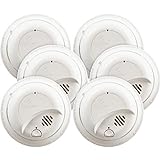
First Alert BRK SMI100-AC Hardwired Smoke Detector with Battery Backup, 6-Pack | $102.29 | Buy on Amazon |
| 4 |

|
First Alert Battery Smoke Alarm | $29.99 | Buy on Amazon |
| 5 |

|
First Alert Hardwire Smoke Alarm | $101.47 | Buy on Amazon |
CIGRE’s 2013 Guide for Transformer Fire Safety Practices characterizes the risk as “low but not negligible” and says the consequences “can be very severe.” The guide supplies qualitative framing, not a current industry-wide fire rate. CIGRE guide.
Are transformers filled with flammable oil?
Some transformers are liquid-insulated and use mineral oil; others use different insulating fluids, and dry-type transformers use no insulating liquid. Mineral oil can burn, so a leak or tank failure can contribute fuel to a fire. That does not mean every transformer contains oil or that every oil-filled unit is likely to burn. The type of unit and its installation matter.
#1 Best Overall
- First Alert's Precision Detection advanced sensing technology complies with new industry standards to reduce cooking nuisance alarms and provides early warning in the event of a home fire emergency
- Battery-operated alarm allows for easy installation and maintenance
- Front access battery compartment makes for easy battery replacements
- End-of-life warning lets you know when it’s time to replace the alarm
- Test/silence button for efficient testing to ensure alarm is working properly
Dry-type and liquid-insulated units
Dry-type construction avoids the pool of insulating liquid present in liquid-filled equipment, but it does not eliminate electrical failure or the possibility of igniting surrounding materials. Liquid-insulated units require attention to the fluid as well as to electrical faults, containment, separation, and the surrounding site. Neither category is universally safest without considering the specific design and installation.
Mineral oil and high-fire-point ester fluid
Cargill’s product page compares its FR3 natural ester fluid with mineral-oil transformer fluid. It reports a 330°C flash point and 360°C fire point for FR3, versus 155°C and 165°C respectively for mineral oil. The page’s publication date is not stated. These are manufacturer-reported fluid figures; they do not independently establish the fire performance of every transformer design or installation. Cargill describes FR3 as a high-fire-point, less-flammable fluid, but those terms do not mean fireproof. Cargill FR3 fluid information.
Rank #2
- First Alert's Precision Detection advanced sensing technology complies with new industry standards to reduce cooking nuisance alarms and provides early warning in the event of a home fire emergency.
- Battery-operated alarm allows for easy installation and maintenance
- Front access battery compartment makes for easy battery replacements
- End-of-life warning lets you know when it’s time to replace the alarm
- Test/silence button for efficient testing to ensure alarm is working properly
How often do transformer fires happen?
The sources cited here do not establish a current, independent industry-wide transformer-fire rate. CIGRE’s guide provides a qualitative assessment rather than a frequency estimate. A numerical rate should not be inferred from a single plant’s event history or from a vendor’s estimate.
Do these 3 things before closing this tab:
1Clear out junk files and repair common Windows errors2Fix the driver behind crashes, sound loss and screen glitches3Repair Windows errors before they cause bigger problemsThe NRC’s review reports a historical sequence at North Anna: seven main-transformer failures in 26 months, five of which resulted in reactor trips. Three failures involved tank rupture, and two involved fires; one fire spread beyond the transformer bay. This is a plant-specific historical example, not a current or industry-wide failure rate. NRC historical review.
Rank #3
- 6 pack of hardwired smoke alarms, includes battery backup for power outages
- Tamper resistant locking pins, single button silence/test and loud 85Db alarm
- 120-Volt AC power with 9-volt battery backup (included) to keep alarm functioning during power outage
- Open mounting design for easy installation with side load battery compartment for quick replacement and interconnect able up to 18 units (12 smoke, 6 co/heat/relay)
- 10-Year limited
How are transformer fires prevented or contained?
Protection is a combination of equipment design, site layout, containment, maintenance, and emergency planning. The right measures depend on the transformer, its surroundings, the applicable rules, and a site-specific risk assessment.
- Separation: Place equipment to reduce exposure to buildings, nearby transformers, cables, and critical systems.
- Barriers and vaults: Use engineered fire barriers, vaults, or other protective construction where the applicable code and risk assessment require them.
- Containment and drainage: Provide for leaking or burning liquid so it does not spread toward buildings or critical equipment. Drainage and containment arrangements are site-specific.
- Maintenance and procedures: Inspection, operating procedures, and response arrangements are professional site responsibilities; the relevant rules may require maintenance and records.
- Emergency planning: Plan for the effects of fire, smoke, and damage to adjacent equipment, including critical power feeds.
The NRC’s historical review discusses measures such as reviewing fire protection, modifying drainage, adding barriers or dikes, reviewing maintenance and operating procedures, and separating important power feeds. These examples arise from a nuclear-plant setting and should not be read as a universal checklist. NRC historical review.
Rank #4
- First Alert's Precision Detection advanced sensing technology complies with new industry standards to reduce cooking nuisance alarms and provides early warning in the event of a home fire emergency
- Battery-operated alarm allows for easy installation and maintenance
- Front access battery compartment makes for easy battery replacements
- End-of-life warning lets you know when it’s time to replace the alarm
- Test/silence button for efficient testing to ensure alarm is working properly
What do the rules require?
Requirements vary by jurisdiction, transformer type and voltage, location, and installation details. The provisions below are examples with specific scope, not universal rules; consult the authority having jurisdiction and the rules applicable to the particular site.
U.S. OSHA construction standard
OSHA’s construction electrical-safety regulation says combustible materials and certain nearby building features “shall be safeguarded from fires which may originate in oil-insulated transformers attached to or adjacent to a building or combustible material.” It also addresses indoor oil-insulated transformers that present a fire hazard to employees: covered installations must be in a vault, with requirements for containing fire and combustible liquids and preventing unauthorized access. The section has scope exceptions, so it should not be generalized to every transformer installation. OSHA, 29 CFR §1926.405(j)(5).
Best Value
- First Alert's Precision Detection advanced sensing technology complies with new industry standards to reduce cooking nuisance alarms and provides early warning in the event of a home fire emergency
- Through early warning interconnect, when one alarm sounds, all compatible alarms will soun
- Battery backup provides continuous protection during power outages
- Alarm indicator visually identifies the unit that initiated the alarm
- Quick Connect Plug included allows for easy installation with no need to rewire
California
California Title 8, §2875 states that indoor oil-insulated transformers must be in a vault or qualifying separate building. It provides an exception for certain listed less-flammable, high-fire-point liquid installations in a noncombustible occupancy area of a noncombustible building, subject to liquid confinement and a fluid fire point of at least 300°C. The provision also specifies vault requirements for covered indoor units above 35 kV. These are California-specific conditions, not a general rule for other jurisdictions. California Title 8, §2875.
Puducherry-hosted Indian Electricity Rules text
The government-hosted rules text describes measures for specified substations and oil quantities, including baffle walls, oil soak pits or drainage and removal, precautions against fire spread, extinguishing provisions, maintenance to the relevant code of practice, and records. Which measures apply depends on the rule and installation; its thresholds should not be treated as worldwide requirements. Puducherry-hosted Indian Electricity Rules text.
What should you do if a transformer is smoking or on fire?
Keep well away and contact emergency services or the utility. Treat smoke, arcing, fire, or leaking fluid as a high-voltage equipment emergency. Do not approach the unit or attempt to open, repair, or extinguish it. Response should be left to utility and fire professionals; the sources cited here discuss professional safeguards and planning, not public firefighting instructions.
What’s actually slowing this PC down?
Pick the symptom - the matching free tool is one click away.
Quick Recap
Product prices and availability are accurate as of the date/time indicated and are subject to change. Any price and availability information displayed on Amazon at the time of purchase will apply.

