
iTechGuides is reader-supported. When you buy through links on our site, we may earn an affiliate commission. As an Amazon Associate I earn from qualifying purchases. Learn more
Usually, a magnet near an iPhone camera causes interference rather than proven permanent damage. Apple says a strong magnetic field close to the rear cameras can interfere with, or temporarily disable, sensors used by optical image stabilisation (OIS) and closed-loop autofocus. That can limit lens movement, reduce focusing accuracy, or make photos look less stable. Apple does not establish a universal risk of permanent damage, but it also does not publish a guarantee that permanent damage is impossible. The practical advice is to keep magnets and magnetic metal away from the rear camera, remove suspect accessories when problems appear, and seek troubleshooting or service if the camera remains faulty.
What happens when a magnet is close to an iPhone camera?
The rear-camera system contains position and motion sensors that help the lens and camera sensor make precise corrections. A strong nearby magnetic field can disturb those measurements. Apple describes the result as interference with, or temporary disabling of, sensors rather than as a documented permanent failure in every affected phone. Photos may still be captured, but features that depend on accurate sensor readings may work poorly or not at all while the field is present.
The most relevant systems are optical image stabilisation and closed-loop autofocus. They do not exist in exactly the same form on every iPhone model or every rear-facing lens, so the visible effect depends on which camera is being used.
Recommended Free Tools
Optical image stabilisation (OIS)
OIS uses a gyroscope to detect camera movement and physically moves the lens to counteract that movement. The correction helps reduce blur from hand shake, especially in lower light or when using longer focal lengths. If a magnetic field interferes with the position sensors, the lens may have a more limited range of movement or the stabilisation system may not be able to correct as accurately.
#1 Best Overall

- Works For iPhone 16 Pro/16 Pro Max 2024/14 Pro/14 Pro Max 2022 camera lens protector.Effectively protecting the lens,featuring maximum protection from scratches, scrapes, and bumps.Camera lens protector only(display screen protector not included)[Not for iPhone 16 6.1 inch, iPhone 16 Plus 6.7 inch]
- Night shooting function: specially designed iPhone 16 Pro/16 Pro Max/iPhone 14 Pro/14 Pro Max camera lens protective film.The camera lens protector adopts the new technology of "seamless" integration of augmented reality, with light transmittance and night shooting function, without the need to design the flash hole position, when the flash is turned on at night, the original quality of photos and videos can be restored
- Easiest Installation - Please watch our installation video tutorial before installation.Removing dust and aligning it properly before actual installation
- 99.99% High-definition clear hydrophobic and oleophobic screen coating protects against sweat and oil residue from fingerprints
- It is 100% brand new,Precise laser cut tempered glass, exquisitely polished,0.1mm ultra-thin tempered glass Camera Lens screen protector
Closed-loop autofocus
Closed-loop autofocus uses accelerometers to account for gravity and vibration and magnetic sensors to determine the lens position. That position information lets the phone set corrective movement accurately. A strong magnet near the camera can disrupt the magnetic position reading, reducing autofocus accuracy or temporarily preventing the system from operating as designed.
Apple’s support article states: “If you place a magnet near these sensors, the magnetic field will interfere with or temporarily disable the sensors.” The statement is about camera operation and sensor behaviour; it is not a numerical estimate of the chance of permanent damage.
Can the damage be permanent?
Apple’s published guidance does not establish that ordinary exposure to a magnetic accessory permanently damages an iPhone camera. It also does not specify that permanent damage can never occur. The evidence supports a narrower conclusion: a sufficiently strong field close to the rear camera can cause interference or temporary sensor disabling, and that may degrade camera performance while the field is nearby.
Rank #2

- Works For iPhone 17 Pro Max 6.9 inch 2025 camera lens protector.Effectively protecting the lens,featuring maximum protection from scratches, scrapes, and bumps.Camera lens protector only(display screen protector not included) [Not for iPhone 17 6.3 inch, iPhone 17 Pro 6.3 inch, iPhone Air 6.5 inch]
- Night shooting function: specially designed iPhone 17 Pro Max 6.9 inch 2025 camera lens protective film.The camera lens protector adopts the new technology of "seamless" integration of augmented reality, with light transmittance and night shooting function, without the need to design the flash hole position, when the flash is turned on at night, the original quality of photos and videos can be restored
- Easiest Installation - Please watch our installation video tutorial before installation.Removing dust and aligning it properly before actual installation
- 99.99% High-definition clear hydrophobic and oleophobic screen coating protects against sweat and oil residue from fingerprints
- It is 100% brand new,Precise laser cut tempered glass, exquisitely polished,0.1mm ultra-thin tempered glass Camera Lens protector
There is no Apple-published universal safe distance, magnet-strength threshold, exposure duration, or percentage risk for permanent damage in the cited guidance. It would therefore be inaccurate to promise that every magnet is harmless at every distance, or to claim that any camera problem after magnetic exposure must be permanent. Treat the manufacturer’s recommendation as a precaution: avoid placing magnets or magnetisable metal close to the rear cameras.
Which iPhone cameras and models have the affected features?
Feature availability matters because a lens cannot be affected through a feature it does not have. Apple’s list describes where OIS and closed-loop autofocus are available, but it is not a complete damage-risk matrix for every iPhone, camera, magnet, or accessory.
| Camera feature | Models Apple lists | Important exceptions or limits |
|---|---|---|
| Optical image stabilisation (OIS) | iPhone 6 Plus, iPhone 6s Plus, iPhone 7 and later, including the second- and third-generation iPhone SE | OIS is not available on the Ultra Wide camera on iPhone 11 and later, or on the Telephoto camera on iPhone 7 Plus and iPhone 8 Plus |
| Closed-loop autofocus | iPhone XS and later, including the second- and third-generation iPhone SE | Apple’s list identifies feature availability; it does not state that every camera on every listed model has identical sensor hardware or identical magnetic tolerance |
These distinctions explain why one lens might show a problem while another appears normal. A phone can have OIS on one rear camera but not another, and the autofocus implementation can vary by model. Test the specific lens that was being used when the issue occurred rather than assuming the entire camera array has the same behaviour.
Rank #3

- Works For iPhone 15 Pro/15 Pro Max 2023 camera lens protector.Effectively protecting the lens,featuring maximum protection from scratches, scrapes, and bumps.Camera lens protector only(display screen protector not included)[Not for iPhone 15 6.1inch, iPhone 15 Plus 6.7inch]
- Night shooting function: specially designed iPhone 15 Pro/15 Pro Max camera lens protective film.The camera lens protector adopts the new technology of "seamless" integration of augmented reality, with light transmittance and night shooting function, without the need to design the flash hole position, when the flash is turned on at night, the original quality of photos and videos can be restored.
- Easiest Installation - Please watch our installation video tutorial before installation.Removing dust and aligning it properly before actual installation
- 99.99% High-definition clear hydrophobic and oleophobic screen coating protects against sweat and oil residue from fingerprints
- It is 100% brand new,Precise laser cut tempered glass, exquisitely polished,0.1mm ultra-thin tempered glass Camera Lens protector
Which accessories are most likely to cause interference?
Apple specifically warns about third-party accessories that put strong magnets or magnetisable metal plates near the rear camera. The examples include:
What’s actually slowing this PC down?
Pick the symptom - the matching free tool is one click away.
- Folio covers with magnetic closures or embedded magnets.
- Separable cases that attach through magnetic components.
- Rigid magnetic mounts, including some car mounts.
- Metal plates fitted to a case or phone for mounting purposes.
The issue is the field at the camera and its sensors, not simply the word “wireless” or the presence of any accessory. Apple does not provide a universal boundary at which every magnetic design becomes safe. A case that behaves normally on one model, or when used with one lens, should not be treated as proof that all combinations are safe.
How to check whether a magnetic accessory is causing the problem
Use a controlled removal test before assuming the camera has suffered permanent damage. This does not prove that a component is physically undamaged, but it can show whether the symptom follows the accessory.
Rank #4
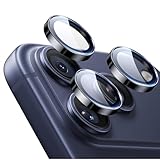
- Compatibility: only for iPhone 17 Pro Max/17 Pro/16 Pro Max/16 Pro/15 Pro Max/15 Pro/14 Pro Max/14 Pro
- Ultimate Lens Protection: high-quality, ultra-tempered glass with up to 110 lbs of impact resistance protects your lenses from even the toughest bumps and scrapes
- Crystal-Clear Photos: ultra-high transparency level preserves the original image quality of your photos, while the individual-lens design ensures your flash remains uncovered and fully functional
- Easy Application: included alignment guide and cleaning kit make bubble-free application a breeze while removal tool lets you take them off with ease
- In the Box: 1 set of individual lens protectors, cleaning kit, alignment guide, removal tool, and manual
- Close the Camera app. Swipe it away from the app switcher so the camera is not actively operating during the change.
- Remove the case, mount, plate, or cover. Take off every accessory that contains a magnet or magnetic metal and move it away from the rear-camera area.
- Inspect the camera lenses. Wipe away fingerprints, dust, or condensation with a clean, soft lens cloth. Do not use a metal tool or press on the lens cover.
- Reopen Camera and test each available rear lens. Try a distant, high-contrast subject in good light, then a nearby subject. Check whether autofocus locks and whether the preview or captured image appears unusually blurred or unstable.
- Compare with and without the accessory. If the symptom appears only when the magnetic item is close to the camera, stop using that accessory in that position.
Apple’s recommendation is to avoid accessories that use magnets or magnetic metal near the rear cameras when the best camera performance is required. A non-magnetic car mount is a reasonable alternative for someone who needs a mount but wants to keep magnetic material away from the camera; this is a practical inference from Apple’s advice, not an Apple-tested or Apple-endorsed product recommendation.
What camera symptoms can magnetic interference produce?
The exact symptom depends on the affected sensor, the camera being used, and the accessory’s position. Possible signs include:
Outdated Drivers Are Slowing You Down
One free scan finds every outdated or missing driver and matches the right update for your exact hardware.Free scan · exact hardware matchPC Slower Than It Used to Be?
A free scan shows the junk files, broken settings and background clutter dragging Windows down - then fixes them in one click.Free scan · Windows 10 & 11- Autofocus that hunts, takes longer than usual, or fails to lock.
- Images that look blurrier than expected because stabilisation is not correcting movement normally.
- A preview that appears unstable when the phone is held relatively still.
- Different behaviour between the Wide, Ultra Wide, or Telephoto camera.
- A camera that works again after the magnetic case or mount is removed.
None of these signs alone proves permanent hardware damage. Dirty lens covers, low light, subject movement, software problems, or a mechanical fault can produce similar results. The removal test is useful because it isolates one external cause without requiring you to open the phone.
Best Value

- Works For iPhone 15/15 Plus/14/14 Plus camera lens protector.Effectively protecting the lens,featuring maximum protection from scratches, scrapes, and bumps.Camera lens protector only(display screen protector not included)[Not fit for iPhone 14 Pro/15 Pro 6.1inch, iPhone 14 Pro Max/15 Pro Max 6.7inch]
- Night shooting function: specially designed iPhone 15/15 Plus/14/14 Plus camera lens protective film.The camera lens protector adopts the new technology of "seamless" integration of augmented reality, with light transmittance and night shooting function, without the need to design the flash hole position, when the flash is turned on at night, the original quality of photos and videos can be restored
- Easiest Installation - Please watch our installation video tutorial before installation.Removing dust and aligning it properly before actual installation
- 99.99% High-definition clear hydrophobic and oleophobic screen coating protects against sweat and oil residue from fingerprints
- It is 100% brand new,Precise laser cut tempered glass, exquisitely polished,0.1mm ultra-thin tempered glass Camera Lens protector
What Apple’s evidence does—and does not—show
Established by Apple’s guidance
- A strong magnetic field close to the rear camera can interfere with lens-position sensors.
- The field can temporarily disable sensors used by OIS and closed-loop autofocus.
- Interference can reduce sensor accuracy and limit the range of lens movement.
- Third-party cases, covers, and rigid mounts with strong magnets or magnetic metal can be sources of the field.
- Keeping magnets and magnetic metal away from the rear cameras is Apple’s recommended way to preserve camera performance.
Not established by the cited guidance
- A universal safe distance for every iPhone model and accessory.
- A magnet-strength or exposure-duration threshold.
- A numerical probability that a particular exposure will cause permanent damage.
- A guarantee that permanent damage is impossible in every circumstance.
- A complete compatibility table covering every magnetic accessory and every iPhone lens.
Apple’s source is “Magnetic accessories may interfere with iPhone cameras”, published January 22, 2024. It is the appropriate reference for the manufacturer’s camera-sensor warning and model feature notes.
What to do if the camera still fails after removal
If the camera remains abnormal with the case and magnetic accessories removed, do not keep testing with the magnet in place. Work through Apple’s camera troubleshooting guidance and arrange service if the fault persists.
- Repeat the test with no magnetic accessories attached. Keep the phone away from the mount, plate, or cover while checking the camera.
- Test more than one rear camera. Note whether the problem is limited to one lens or affects the entire rear-camera system.
- Record the symptoms. Write down whether the issue is focus, stabilisation, a black preview, or another failure, and whether it changes with lighting or distance.
- Use Apple’s camera troubleshooting steps. The support article directs readers to further troubleshooting when removing the magnetic accessory does not restore normal operation.
- Seek service if the fault continues. A persistent problem without the accessory needs a proper diagnostic assessment; the available guidance does not let you identify permanent damage remotely.
Avoid attempting to disassemble the camera or deliberately exposing it to a stronger magnet as a “test.” Those actions can create new damage and cannot establish a reliable safe limit.
How to prevent future camera interference
- Keep magnetic closures, plates, and mounts away from the rear-camera cluster.
- When buying a mount, choose a design that does not rely on a magnet near the phone’s camera if avoiding magnetic fields is a priority.
- Do not assume that a metal plate is harmless simply because it is not itself a magnet; Apple includes magnetisable metal among the accessory materials that can be relevant.
- Check camera performance after installing any new case or mount, especially if it sits close to the lenses.
- If an accessory causes focus or stabilisation problems, discontinue it rather than repeatedly reconnecting it.
Bottom line on permanent iPhone camera damage
Magnets can interfere with the sensors that control OIS and closed-loop autofocus, and Apple says that interference can temporarily disable those sensors or reduce camera performance. The cited Apple guidance does not prove that normal magnetic-accessory exposure permanently damages an iPhone camera, but it also does not establish an absolute guarantee against permanent damage. Remove magnetic cases, plates, and mounts first; if the camera remains faulty without them, follow Apple’s troubleshooting guidance or seek service.
Quick Recap
Product prices and availability are accurate as of the date/time indicated and are subject to change. Any price and availability information displayed on Amazon at the time of purchase will apply.

