
iTechGuides is reader-supported. When you buy through links on our site, we may earn an affiliate commission. As an Amazon Associate I earn from qualifying purchases. Learn more
If you can hear the television but can’t make out the words, try captions and reduce competing sound first. The problem can be related to hearing loss or difficulty understanding speech in noise, but the symptom alone cannot identify a cause. If it persists, a hearing professional can assess speech understanding as well as basic hearing.
Why can you hear the TV but not understand the dialogue?
Hearing that a sound is present and understanding the words in it are related but different experiences. Speech may seem muffled, some consonants may be hard to catch, or you may need the TV louder than others prefer. The National Institute on Deafness and Other Communication Disorders (NIDCD) lists difficulty understanding people and turning up the television among possible signs of noise-induced hearing loss. These signs do not establish that noise damage—or any particular condition—is the cause. NIDCD’s noise-damage guidance also explains that speech can sound muffled as hearing worsens, and that some high-frequency speech sounds may be harder to hear.
Difficulty following dialogue can also stand out more when there is background noise, when voices are high-pitched, or when listening becomes tiring. The American Speech-Language-Hearing Association (ASHA) lists these patterns and increased TV volume as possible signs of hearing loss, while noting that hearing loss can have different causes. One uncommon example described by NIDCD is auditory neuropathy, in which a person can detect sound but have trouble recognizing spoken words; that example is not a diagnosis to infer from TV difficulty. Read NIDCD’s overview of auditory neuropathy.
Do these 3 things before closing this tab:
1Clear out junk files and repair common Windows errors2Fix the driver behind crashes, sound loss and screen glitches3Repair Windows errors before they cause bigger problemsAuditory processing disorder is another distinct topic: the NHS describes it as difficulty understanding sounds, including speech, despite usually normal hearing. It can involve trouble in noisy places, but its causes are not always clear. TV dialogue trouble by itself is not enough to label someone with this disorder. The NHS advises seeking medical advice for trouble hearing or understanding speech.
#1 Best Overall

- Fire TV Soundbar Plus – Elevate your audio with an all-in-one 3.1 soundbar that’s easy to set up. Featuring built-in bass, crisp dialogue, Dolby Atmos, and DTS:X.
- Powerful sound with style – Take your entertainment to the next level with incredible sound, clarity, and depth packed into an all-in-one design.
- Crystal clear dialogue – A dedicated center dialogue channel sharpens conversations so you can catch every moment of your favorite shows.
- Sound in another dimension – Dolby Atmos features 3D sound that moves around you and clear dialogue. DTS:X delivers multi-dimensional audio for lifelike sound.
- Easy setup – Connect the included HDMI cable to your TV's HDMI eARC/ARC port and instantly enjoy audio that’s always in sync.
What can you try while watching TV?
Turn on captions
Use closed captions or subtitles when available. Captions can make dialogue easier to follow without requiring the TV volume to keep rising. ASHA recommends captioning when watching television and video.
Reduce competing sound
Turn down or switch off other audio sources in the room, such as a radio or music. A quieter listening environment may make speech easier to distinguish, although it will not address every cause of difficulty.
Rank #2

- HEAR YOUR TV BETTER: Designed with simplicity in mind, the Bose TV Speaker is an all-in-one soundbar that clarifies speech and is a simple fix for better TV sound
- WIDE, NATURAL SOUND: 2 angled full-range drivers deliver a more realistic, spatial audio experience for overall better TV sound from a small soundbar
- ENHANCED DIALOGUE: This sound bar for smart tv is designed to specifically focus on clarifying and elevating vocals and pronunciation
- BLUETOOTH TV SPEAKER: Pair your device to this Bluetooth soundbar to wirelessly stream your favorite music and podcasts. Connect up to 3 devices through the inputs (HDMI, Optical in, and AUX in); the first powered on device will automatically connect
- SIMPLE SETUP: A single connection from this compact soundbar to the TV via an optical audio cable (included) or an HDMI cable (sold separately) has you up and running in minutes
Do not rely on volume alone
Turning up the TV may make sound louder without making the words clearer. If you repeatedly need a volume that others find uncomfortable, consider arranging a hearing assessment rather than treating volume as the only solution.
Windows Errors? Fix Them Before They Spread
Repair common Windows errors and clear accumulated junk for a smoother, more stable PC - no reinstall needed.Free scan · no reinstallOutdated Drivers Are Slowing You Down
One free scan finds every outdated or missing driver and matches the right update for your exact hardware.Free scan · exact hardware matchMake conversation around the TV easier
Get the listener’s attention, face them, and speak clearly at a regular volume. If they miss something, try rephrasing it. Shouting can make understanding harder, according to ASHA’s communication tips.
Rank #3

- Straight from the theater to your home: easy set-up, built-in tweeter, 2-ch speaker with simple Bluetooth connection
- Deep sound with Bass Reflex speaker
- High power with a slim design that matches any room and is perfect for small living spaces
- Voice enhancement feature is great for TV content with hushed dialogue, or to make conference call participants easier to hear
- Easy TV set up with HDMI ARC
Can a TV listening device help?
A TV assistive listening device can route audio more directly to a listener, which may make the television more comfortable to hear. Options include a personal headset or receiver, wireless streaming, and a loop system used with a compatible telecoil or receiver. NIDCD explains that assistive listening devices can amplify desired sound when background noise competes, including sound from a home TV. ASHA also describes TV accessories using wireless streaming or a loop system. These are categories of equipment, not a guarantee that a particular product will work for every listener.
If you are comparing a wireless TV listening headset or personal listening system, check how it connects to the television and whether it works with the listener’s hearing aids or cochlear implant features. A loop arrangement requires compatible telecoil or receiver equipment. The cited guidance describes these systems but does not establish compatibility for particular TV or hearing-device models.
Rank #4

- Studio-Level Voice Performance: This sound bar features a premium 16mm silk film tweeter. It restores accurate high-frequency sound, reduces harsh distortion, and delivers clear, lifelike vocals and music, perfect for home movies and music streaming.
- High-Fidelity Bass Without Distortion: Equipped with dual 3.9*2.1 inch upgraded bass drivers and dual bass reflex ports, this soundbar for tv optimizes internal airflow. It produces strong, clean bass even at max volume, greatly upgrading your home theater sound system listening experience.
- 4-In-1 Multi-Scene Connection Solution: This tv soundbar supports TV-ARC, Optical, 3.5mm AUX and Bluetooth 5.3. It works perfectly with smart TVs, projectors, game consoles and mobile devices for a tidy, high-performance home theater sound system.
- AUX Volume Enhancement Mode: When connecting smart TVs, computers and other devices via 3.5mm AUX, double-click the boost button to amplify and restore volume. It fixes low-volume issues and ensures stable audio output from your soundbar.
- Optical Wired Stable Sound Transmission: Optical wired connection avoids signal interference and audio stutter. It eliminates popping and dropouts, enabling your sound bar to deliver consistent, pure sound quality at all times.
If you already use hearing aids, ask your audiologist or hearing-care professional about TV listening programs, streaming, and microphone settings. The best setup can depend on whether you are watching in quiet or with competing noise.
What’s actually slowing this PC down?
Pick the symptom - the matching free tool is one click away.
When should you get a hearing assessment?
Arrange an assessment if the difficulty continues, if speech is hard to understand even in quiet, or if the problem is markedly different between ears. Mention the situations where you notice it—TV dialogue, group conversation, particular voices, or background noise—so the clinician can consider the complaint in context.
Best Value
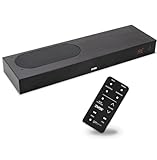
- CLEAR DIALOGUE TECHNOLOGY: Hear every word effortlessly with our sound bar for TV, featuring patented technology that separates and enhances voices, eliminating background noise. Enjoy seamless understanding, even in busy audio environments, for a frustration-free experience.
- CUSTOMIZABLE VOICE CLARITY: Tailor your listening experience with twenty AccuVoice settings, allowing you to fine-tune voice clarity for your needs. Enjoy clear dialogue from your sound bar, making every conversation crisp and easy to understand on your TV.
- RICH BASS: A powerful amplifier and dual built-in woofers deliver wide range sound, including rich bass – from a cabinet less than 2” high. Enhance your viewing experience with balanced audio that brings every beat and explosion to life.
- CONSISTENT VOLUME CONTROL: Say goodbye to jarring volume spikes with our Output Leveling feature, which instantly reduces the impact of loud commercials. Enjoy smooth, balanced audio levels for a more comfortable and uninterrupted listening experience.
- IMMERSIVE 3D SOUND EXPERIENCE: With PhaseCue virtual surround technology, enjoy room-filling 3D audio from a compact sound bar. Transform your space with rich, expansive sound that brings movies and music to life, all from one small, powerful cabinet.
A hearing assessment can look beyond whether you detect tones. ASHA notes that speech-in-noise testing may be more informative than word-recognition testing in quiet for people whose main concern is following speech in noise. This can help characterize a difficulty that a quiet test may not capture as well.
For adults 18 and older who believe they have mild to moderate hearing loss, NIDCD describes over-the-counter hearing aids as one option. Its guidance says to consult a hearing professional if you have trouble hearing conversation in quiet or loud everyday sounds, since OTC devices may not work well for more severe hearing loss. This general guidance is not a substitute for an individual assessment. See NIDCD’s OTC hearing-aid guidance.
What hearing aids and TV-streaming research can—and cannot—tell you
Hearing aids can improve hearing and speech comprehension for some people with sensorineural hearing loss, but amplification has practical limits. They do not perfectly separate wanted sound from background noise, and professional programming or adjustment may matter. Results from TV streaming also depend on the listener and the listening conditions.
A 2024 study by Patrick N. Plyler, Sarah Razavi, Jennifer Hausladen, and Elizabeth Humphrey evaluated 20 experienced hearing-aid users. In that tested group, TV streaming improved performance in noise when hearing-aid microphones were muted. The authors did not find a benefit from streaming with microphones attenuated or muted while listening in quiet. The small, specific study does not establish a universal setting or outcome. Read the study in the American Journal of Audiology.
For further background, ASHA’s overview of hearing loss in adults covers possible signs and causes, while its adult hearing-aid guidance discusses hearing aids and evaluation.
Quick Recap
Product prices and availability are accurate as of the date/time indicated and are subject to change. Any price and availability information displayed on Amazon at the time of purchase will apply.

