
Quick wins for a faster PC:
Fix the driver behind crashes, sound loss and screen glitchesFind Drivers →Clear out junk files and repair common Windows errorsFree Scan →Scan for outdated or missing drivers - takes under a minuteDriver Scan →iTechGuides is reader-supported. When you buy through links on our site, we may earn an affiliate commission. As an Amazon Associate I earn from qualifying purchases. Learn more
AI interviewers show promise at deciding whether an answer needs a follow-up, but the evidence does not yet establish that they can reliably abandon an interview script in live conversations. In a controlled 2026 study of Russian text interviews, tested models were often judged right when they skipped an unnecessary follow-up. That is a narrower skill than changing an entire interview plan or responding safely to an unexpected disclosure.
What does “abandon the script” mean?
There are two different decisions behind that phrase. An interviewer may choose locally to ask a follow-up because an answer leaves something important unclear, or to move to the next fixed question because the answer is complete. More broadly, it may depart from the overall protocol to pursue a new topic or handle an unexpected situation.


The strongest direct evidence here tests the local ask-or-skip decision—not whether an AI can safely discard or substantially change an interview plan. That distinction matters when interpreting results from both research interviews and hiring.
What the controlled study tested
A 2026 Scientific Reports study evaluated six large language models as semi-structured psychological interviewers. Researchers replayed 10 baseline human interview transcripts through each model. Each transcript used the same script of 54 main questions spanning seven areas: biography, family, interests, formative experiences, values, work, and health. After each response, the model decided whether to ask a follow-up or proceed to the next scripted question.
#1 Best Overall
The setup was text-only and in Russian. The models could not hear a respondent’s tone or use visual or prosodic cues. A single LLM interviewee supplied answers to follow-up questions, so the experiment compared model behavior under matched conditions rather than testing live conversations with different human participants.
Three expert psycholinguists assessed 1,658 generated follow-up questions and 1,275 turns in which a model skipped a follow-up. They scored five qualities:
- Benevolence: whether the question had an empathic tone.
- Necessity: whether a follow-up was warranted.
- Context-awareness: whether it used information disclosed earlier.
- Openness: whether it avoided leading the respondent.
- Justified skip: whether moving on without a follow-up was appropriate.
Agreement among the evaluators varied by criterion: Fleiss’ κ ranged from 0.67 for necessity to 0.93 for benevolence. This provides a useful structured evaluation, but the ratings are expert judgments within this study—not a universal performance score for AI interviewers.
Do these 3 things before closing this tab:
1Clear out junk files and repair common Windows errors2Fix the driver behind crashes, sound loss and screen glitches3Repair Windows errors before they cause bigger problemsRank #2
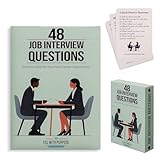
- Essential Phrases: Carefully selected flashcards feature common questions and advice to enhance your preparation and answers.
- Targeted Content: Curated by a career pathways and ESL instructor to help advanced language learners, as well as recent graduates and job seekers.
- Strategic Practice: Organized into 4 categories of relationship, knowledge, character, and leadership, allowing you to delve deep into each question and refine your responses.
- Insightful Guidance: The 8 tip cards such as the STAR method, along with what to ask the interviewer and more thoughtful ideas.
- Hiring Managers: Compact and portable, it provides a convenient resource to identify and draw out meaningful and honest responses.
How well did the models know when to move on?
Across the tested models, justified-skip ratings ranged from 0.85 to 0.93. In other words, evaluators usually judged a skipped follow-up appropriate in this particular setup. That is encouraging evidence that models can sometimes recognize when an answer has already addressed the scripted question.
The models also differed in how readily they probed. Grok 4 averaged 45.7 follow-ups per interview and was rated lowest on necessity; GPT-5 Chat averaged 19.4 and scored highest on necessity. These are results for the specific model versions, prompts, transcripts, and evaluation used in the paper. They are not a current leaderboard or a basis for assuming that every system from either provider behaves the same way.
Simply asking fewer questions is not the goal: an interviewer that moves on too quickly can miss relevant information, while one that probes too often can burden respondents or drift into details that do not help answer the main question. A good decision depends on whether information is actually missing, not on maximizing or minimizing follow-up count.
What makes a follow-up useful?
Fluent wording alone does not make a question effective. An interviewer needs to identify what is missing, connect a probe to what the person actually said, leave room for the person’s own framing, and stop once the answer is sufficient. In the study, all models scored above 0.80 on openness, but ratings for empathy and context use varied.
The paper reported strong use of prior context by Grok 4 and Qwen3, while also noting that Grok could overuse salient details. Gemini 2.5 Pro was rated most empathic, and GPT-5 Chat was more selective. These observations describe behavior in that study; they should not be treated as current product recommendations.
Separate design research offers a related, but narrower, lesson. A 2024 ACM study with 26 participants found that concept-focused and related-concept follow-ups had lower drop rates and better relevance, while general follow-ups elicited more informative answers. The trade-off is practical: a focused question can stay on-topic, while a broader prompt may invite a richer response. This study examined conversational-agent follow-up design, not current LLMs interviewing job candidates.
Does hiring research show that AI can adapt?
A 2026 CESifo working paper reports a natural field experiment involving 70,000 applicants randomly assigned to human recruiters or AI voice agents. The authors report that applicants interviewed by AI agents were 12% more likely to receive job offers, and describe the AI interviews as more structured and consistent while still responsive to individual applicants. Human recruiters evaluated the interviews and made hiring decisions.
This is a different kind of evidence from the text-replay study. It is relevant to how AI voice interviews may operate in a hiring process, but it does not directly measure whether an agent correctly decides to ask a follow-up or abandon a scripted question. It therefore cannot establish that AI interviewers generally know when to move on. The paper is identified as a working paper, and its reported result should be understood in that context.
A separate Findings of ACL 2025 paper evaluates LLMs through multi-turn interviewer interactions, examining reasoning, factuality, instruction-following, and adaptation to feedback. It shows how interview-like exchanges can be used to test model behavior dynamically, but the LLMs are the subjects being evaluated; the work does not demonstrate how an AI interviewer performs with human job candidates.
Independent reader supportYour contribution helps us test, update, and keep practical guides available for everyone.What the evidence can—and cannot—support
Taken together, the studies support a qualified conclusion: AI systems can make useful local ask-or-skip decisions in constrained settings, but there is not enough evidence here to claim reliable script abandonment across real interviews.
- The direct ask-or-skip evidence comes from Russian text transcripts, not live English voice interviews.
- The controlled study did not test speech, pauses, facial expression, participant satisfaction, diagnostic accuracy, or downstream outcomes.
- Psychological research interviewing and employment screening are different tasks; findings from one should not automatically be generalized to the other.
- The hiring field experiment reports outcomes and describes structure and responsiveness, but does not isolate the decision to probe or move on.
- The available studies do not establish performance across languages, interview populations, or high-stakes clinical settings, nor do they provide a comprehensive, current comparison of commercial platforms.
How to assess an AI interviewer
For organizations evaluating a system, a useful assessment should look beyond whether its questions sound natural. Compare performance on realistic conversations and measure the decisions that determine whether an interview remains useful and appropriate:
- How often are follow-ups necessary and relevant, and how often are skips justified?
- Does the system use prior context accurately, without repeating questions or over-personalizing around a striking detail?
- Are questions open-ended rather than leading?
- Can it handle ambiguity, refusal, or an unexpected disclosure without blindly continuing the script?
- Does it perform comparably in the actual language and voice conditions where it will be used?
- Is there human oversight and a clear escalation path for sensitive or high-stakes answers?
For an evaluation to support claims about live use, the test should resemble that use: human respondents, relevant languages, realistic voice conditions when applicable, and scenarios that include incomplete answers and unexpected turns. A text replay can reveal comparative behavior under controlled conditions, but it cannot answer those broader deployment questions by itself.
Quick Recap
Sources
- Scientific Reports (2026), “The AI interviewer: multi-faceted evaluation of adaptive questioning by large language models”
- CESifo / ifo Institute (2026 working paper), “Voice AI in Firms: A Natural Field Experiment on Automated Job Interviews”
- Proceedings of the ACM on Human-Computer Interaction (2024), “Designing the Conversational Agent: Asking Follow-up Questions for Information Elicitation”
- Findings of ACL 2025, “LLM-as-an-Interviewer: Beyond Static Testing Through Dynamic LLM Evaluation”
Product prices and availability are accurate as of the date/time indicated and are subject to change. Any price and availability information displayed on Amazon at the time of purchase will apply.

