
Windows Errors? Fix Them Before They Spread
Repair common Windows errors and clear accumulated junk for a smoother, more stable PC - no reinstall needed.Free scan · no reinstallOutdated Drivers Are Slowing You Down
One free scan finds every outdated or missing driver and matches the right update for your exact hardware.Free scan · exact hardware matchiTechGuides is reader-supported. When you buy through links on our site, we may earn an affiliate commission. As an Amazon Associate I earn from qualifying purchases. Learn more
Yes, in a limited, operational sense: AI systems have been shown to learn and use symbol-like representations for specific tasks. Whether those representations have meaning grounded in the system itself—or whether AI understands symbols as people do—remains unresolved. Generating content that contains symbols is not the same as creating representations a system can use, and neither alone proves human-like understanding.
What does it mean for a symbol to have meaning?
A symbol can be a word, mark, or internal representation that stands for something or helps a system perform a task. In AI research, authors do not always mean the same thing by “symbol,” so it helps to distinguish a representation that is useful for a task from one whose meaning is grounded in the system.


Stevan Harnad’s 1990 paper, “The symbol grounding problem,” asks how a formal symbol system could interpret its symbols intrinsically, rather than relying on meanings supplied by an outside interpreter. For example, a system may process a token effectively because its designers connected that token to a label or task. Its successful processing does not by itself show that the system has an independent understanding of what the token means.
Free tools Windows power users keep installed
One-click scans. No signup required.
What did the SEA-net experiment demonstrate?
In a 2023 paper, Yang Chen, Liangxuan Guo, and Shan Yu proposed SEA-net, a neural-network framework for learning symbols and using them to configure a task-solving network. The system includes a context-dependent processing module. In the authors’ account, symbolic inputs are learned alongside the network’s parameters and used in solving a task, rather than serving only as words generated for an audience.
#1 Best Overall

- ✅Powered by 26 Tera-Operations Per Second (TOPS) Hailo-8 AI Processor. 2.5W typical power consumption
- ✅Scalable, enabling simultaneous processing of multi-streams & multi-models
- ✅Enabling real-time, low latency and high-efficiency AI inferencing on the edge devices
- ✅Supports TensorFlow, TensorFlow Lite, ONNX, Keras, Pytorch frameworks
- ✅Supports Linux and Windows. Supports the temperature range of -40°C to 85°C
A bounded image-category task
The researchers tested SEA-net on CIFAR-100 category identification. They report classification accuracy ranging from 0.69 to 0.92 across the 100 categories, compared with a 0.5 chance level specified in their paper for that experiment. Those figures describe the reported task and setup; they are not a general measure of AI understanding.
The authors also report a 0.341 correlation between the semantic structure of SEA-net’s symbols and the compared natural-language word-vector structure. That is a result of their particular comparison, not evidence that the learned symbols are equivalent in meaning to words.
Rank #2

- 12.3 MP Sony IMX500 Intelligent Vision Sensor with a powerful neural network accelerator
- Integrated low-power inference engine
- Integrated RP2040 for neural network and firmware management
- Pre-loaded with MobileNet machine vision model
- Sensor modes: 4056×3040 at 10fps, 2028×1520 at 30fps
What the result says—and what it does not
The experiment is evidence that a network can learn and use task-effective symbol-like representations in a defined setting. The paper also describes learning new categories through symbolic manipulation and communication between systems. But the demonstrated process was guided by supervised learning and human-defined categories. The result does not establish open-ended language competence, independent meaning, or human-like semantic understanding.
Recommended Free Tools
Why “symbol emergence” can be a stronger claim
Learning a representation is not necessarily the same as explaining how a shared symbolic system emerges. A 2025 review of models of symbol emergence in communication warns that many such models already assume discrete symbols or signals at the outset. It also notes that models can treat communication mainly as a way to describe the world, or simplify meaning to a mapping between a signal and a referent.
Those assumptions matter because communication may develop through more than signal-to-object associations. Perception, sensorimotor activity, coordination, interaction, and the environment can all shape how signals are used. If a model starts with discrete signals already specified, it may explain how those signals are learned or applied without showing how a symbolic convention first arises.
Why grounding remains an open question
A 2025 perspective on symbol grounding for generative AI argues that meaning can depend on relations among objects, symbols, and human practices. That view directs attention to how people interpret and use AI outputs in context; it is not proof that a computer experiences the world as a person does.
Different kinds of evidence should therefore stay distinct. A representation might be tied to a task’s function, to perception or action, or to social practice. A system might classify, communicate, or generalize in a test. Each result can tell us something about how the representation works, but none automatically settles whether its meaning is intrinsic to the system.
Do these 3 things before closing this tab:
1Clear out junk files and repair common Windows errors2Fix the driver behind crashes, sound loss and screen glitches3Repair Windows errors before they cause bigger problemsHow to assess a claim that AI has created symbols
When evaluating a particular study, ask what the researchers mean by “symbol” and look for concrete evidence about its origin and use:
Best Value
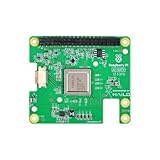
- 【Provide 13/26TOPS power】Two AI computing powers are available to provide Raspberry Pi 5 with better AI acceleration performance and unprecedented AI performance for edge devices.
- 【Build a model world】By supporting common frameworks such as TensorFlow and PyTorch, RaspberryPi AI HAT+ allows you to build a variety of AI-driven applications for process control, home automation, research, etc.
- 【Camera stacking】RaspberryPi AI HAT+ is fully integrated into the RPi's camera software stack, using the neural network accelerator to run post-processing tasks such as object detection, image segmentation, and pose estimation.
- 【Adaptability】Supports stacking installation with Pi 5, supports installation of active heat sinks, and supports installation of Yahboom's cool cooler pi. It is recommended to use with a heat sink to effectively avoid overheating problems caused by high-load computing. Ensure that the AI acceleration module is fully cooled to improve performance.
- 【Provide techn support】We provide a series of accessories for RaspberryPi 5 peripherals, and provide high-quality after-sales technical support services. If you encounter problems during use, please contact Yahboom or technical support for help.
- Origin: Were discrete symbols specified in advance, learned from data, or formed through interaction?
- Grounding: Are the representations connected to a task, perception, sensorimotor action, or social practice?
- Demonstrated use: Can the system use them to classify, act, communicate, or generalize—and on which tested cases?
- Human role: Did people define the categories, labels, rewards, or interpretations that shape what the representations mean?
For SEA-net, the evidence supports a focused claim: learned symbol-like representations helped a network perform a specified category-identification task. The broader claim—that general-purpose AI creates intrinsically meaningful symbols in the human sense—goes beyond what that experiment establishes.
Quick Recap
Product prices and availability are accurate as of the date/time indicated and are subject to change. Any price and availability information displayed on Amazon at the time of purchase will apply.

