
What’s actually slowing this PC down?
Pick the symptom - the matching free tool is one click away.
iTechGuides is reader-supported. When you buy through links on our site, we may earn an affiliate commission. As an Amazon Associate I earn from qualifying purchases. Learn more
AI can help find software vulnerabilities and may make cyberattacks faster or easier to scale, but available evidence does not show that an AI system has independently carried out an end-to-end attack on critical infrastructure. Nor does it prove that nobody is prepared. The evidence does show significant gaps in how U.S. agencies assessed AI-related risks, alongside practical security measures operators can strengthen now.
What can AI do in a cyberattack?
AI is a dual-use technology in cybersecurity. Tools that help defenders discover software flaws can also help malicious actors identify and exploit attack paths. The International AI Safety Report 2026 describes this offense-defense tension: vulnerability-finding capabilities may support security work while also enabling offensive activity.
That is a reason for concern about the speed, scale, and accessibility of cyber operations—not proof that an AI can independently compromise a power grid, water system, or other connected service. It is important to distinguish AI assistance from increasingly autonomous task execution, and both from an AI independently completing an entire attack chain.
| Evidence level | What it means | What the cited evidence establishes |
|---|---|---|
| AI-assisted activity | A person directs an AI to support a task, such as analyzing information or helping identify a vulnerability. | The International AI Safety Report 2026 describes the dual-use potential of vulnerability-finding capabilities. |
| Supervised agentic activity | An AI system performs bounded tasks under human oversight and controls. | Joint government guidance addresses how to constrain and supervise agentic systems; this is guidance for risk management, not evidence of an infrastructure attack. |
| Autonomous end-to-end attack | An AI independently carries out the full sequence needed to compromise and affect an operational service. | The cited GAO, International AI Safety Report, and UK AI Security Institute materials do not establish a verified real-world incident of this kind against critical infrastructure. |
The UK AI Security Institute says it has conducted frontier-system evaluations since November 2023 in domains relevant to national security and public safety. Those evaluations can inform understanding of capability trends, but the available material does not demonstrate an independently completed attack on critical infrastructure.
#1 Best Overall

- Zero-Latency HDMI Live Viewing - Directly connect to any HDMI TV or monitor for real-time 5MP-to-1080P display without extra NVR or DVR recorders—ideal for quick setup in retail stores and parking lots.
- All-Weather & High-Security Compliance - Rated IP66 for rain and dust resistance, and fully NDAA compliant. It ensures reliable surveillance for schools, government buildings, and critical infrastructure in extreme temperatures.
- Maximized Area Coverage with 2.8mm Lens - The wide-angle field of view eliminates blind spots across large spaces like warehouses and construction sites, reducing the total number of cameras required for full coverage.
- 24/7 Protection with Smart Alerts & Night Vision - Built-in motion detection sends instant alerts, while enhanced night vision delivers clear 1080P monitoring in complete darkness—keeping your property safe around the clock.
- Flexible Storage & Branding Options - Supports local TF card storage to avoid cloud fees, features two-way audio and alarm system connectivity, and offers customizable logo printing on the housing for professional system integrators.
What do we know about infrastructure preparedness?
The strongest concrete finding in the cited U.S. evidence is not that all operators are unprepared. It is that federal assessments had substantial gaps. In 2025, the U.S. Government Accountability Office (GAO) reviewed 17 assessments by nine sector risk management agencies, covering 16 critical-infrastructure sectors and one subsector.
- All 17 assessments identified AI use cases.
- Sixteen of the 17 only partially identified potential AI-related risks.
- In 16 of the 17, the likelihood of those risks occurring was not identified.
- None fully evaluated risk by considering both likelihood and impact.
GAO examined whether assessments documented their methodology; identified AI uses, threats, and vulnerabilities; addressed likelihood and impact; evaluated risk levels; identified mitigations; and mapped mitigations to risks. A risk inventory that omits likelihood or does not connect controls to identified risks can leave decision-makers without a clear basis for prioritizing work.
Rank #2
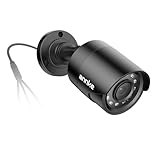
- Crystal Clear 1080p Footage: With this 2MP security camera, you can see everything clearly that matters in 1080p HD, easily recognize the details you need in smooth and clear videos, leaving nothing to the imagination
- NO Power Adapter Included&NEED Connect DVR System to Work: This Camera DOES NOT comes with a power adapter. Customer need to buy extra power adapter. And this security camera CAN NOT be used alone. Need to connect a DVR to work
- 100ft IR Night Vision: The equipped premium IR LEDs are automatically activated in low light conditions so that you can capture clear B&W vision at dawn, dust, night, on rainy days or any conditions with low light illumination
- 4-IN-1 Compatibility: The security camera supports AHD/TVI/CVI/CVBS video output (default AHD), and it is compatible to ANNKE DVRs. By pressing the button of the buttcock line, you can switch the video output mode easily
- IP67 Weatherproof: Built with IP67 weatherproof housing, the CCTV camera is able to endure whatever mother nature brings, thus keep out dust, water and air. It is tested that it can perform well even in extreme temperatures from -4 °F to 122 °F
GAO also recognized the potential upside: AI may improve essential services and cybersecurity. It cautioned that adoption may increase vulnerability in systems supporting essential functions, including water supply, electricity generation, and food production. GAO recommended that the Department of Homeland Security update its risk-assessment guidance and template. The report page listed March 31, 2027, as DHS’s estimated completion date for that recommendation, with status information current through July 2026.
Free tools Windows power users keep installed
One-click scans. No signup required.
Does the evidence show that “nobody’s ready”?
No. A 2025 World Economic Forum survey, as reported in the International AI Safety Report 2026, asked about confidence that respondents’ countries were prepared for major cyber incidents targeting critical infrastructure. It included 409 respondents across 57 countries. That is a measure of perceptions among survey respondents—not an objective audit of infrastructure security, and not evidence that every country or operator is unprepared.
Rank #3
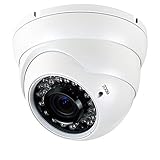
- This CCTV camera supports 4 modes for video output: 1080P AHD, 1080P CVI, 1080P TVI and 960H analog (CVBS), default video output is TVI 1080P.
- 2.8~12mm Manual Focus/Zoom Varifocal lens, 36 Powerful IR LEDs for Night Vision up to 100ft.
- 1/2.9" color CMOS sensor with 2.0 Megapixel Resolution, which ensures clear and bright pictures security solution monitoring activity indoors and outdoors.
- True Day & Night with ICR for perfect color reproduction.
- The security dome camera is IP66 weather-rated housing provides protection from elements, including dust and sand, as well as harsh weather conditions.
Preparedness varies by organization, sector, system, and threat. The GAO findings expose shortcomings in federal agencies’ AI-risk assessments; they do not measure every operator’s controls or recovery capability. The survey captures confidence, not tested defensive performance. Those findings justify scrutiny and improvement, but neither supports the absolute claim that nobody is ready.
Independent reader supportYour contribution helps us test, update, and keep practical guides available for everyone.What should infrastructure operators do now?
Current government guidance emphasizes established security practices and controlled AI adoption. The Australian Cyber Security Centre (ACSC) advises organizations to verify that core controls work in practice, rather than treating written policies as proof of protection.
Rank #4

- 【ONLY Works with 5MP and 8MP 4K DVR】- This camera does NOT work with 4MP or lower resolution DVR, only work with 5MP or 4K 8MP DVR. This camera is 5 Megapixels high definition HD TVI/CVI/AHD/960H(1000 TVL), 65ft IR night vision range. It has a 2.8mm Fixed lens with 100 degree wide Field of View (FOV) to cover large areas
- 【Compatible with Most Brand CCTV System】- This camera supports 5MP HD-TVI, HD CVI, AHD and 960H 1000TVL. Video format can be switched according to your DVR type.
- 【DIP Switch】- Easy switch of your camera video output format (TVI/CVI/AHD/CVBS).
- 【Indoor and outdoor use weatherproof】- This camera works indoor and order, come with IP66 weather-rated full metal housing, operating temperature is -40°F ~ 140°F
- 【Motion Detection and Remote View】-Note: This security camera does not come with recording or remote view feature by itself, but it is compatible with most 5MP or 8MP DVR that has motion detection or remote view feature. Video mode can be switched base on the DVR video mode. Please feel free to contact seller.
Verify foundational controls
- Patch systems: Apply security updates promptly, with operational testing and change controls appropriate to the system.
- Segment networks: Separate networks and restrict pathways between business IT, operational technology, and other sensitive environments to limit the effect of a compromise.
- Use least privilege: Give users, services, and tools only the access needed for their tasks; avoid broad or unrestricted permissions.
- Secure configurations: Establish and check secure configuration baselines instead of relying on default settings.
- Analyze logs: Centralize security logs and review them promptly so suspicious activity can be detected and investigated.
The ACSC says automated triage and response can be appropriate when actions are pre-approved, narrowly scoped, and reversible. That boundary matters in environments where a mistaken automated action could disrupt a service or affect physical operations.
Quick wins for a faster PC:
Scan for outdated or missing drivers - takes under a minuteDriver Scan →Repair Windows errors before they cause bigger problemsFix Now →Constrain AI and agentic systems
Joint guidance from the Australian Signals Directorate’s Australian Cyber Security Centre, CISA, NSA, the Canadian Centre for Cyber Security, New Zealand’s NCSC, and the UK NCSC recommends a security-first approach across design, deployment, and operation. Its advice is to begin with low-risk, well-defined tasks; maintain strong oversight, continuous monitoring, and human control; and conduct ongoing risk assessment and threat modelling.
Best Value

- Crystal-clear 5MP Video: Capture sharp, high-resolution footage with exceptional detail
- Superior Night Vision: IR LEDs illuminate the scene in complete darkness, ensuring reliable surveillance around the clock
- Robust Construction: Vandal-resistant design with IK10 impact rating withstands harsh weather and physical tampering
- Wide Dynamic Range (WDR): Provides clear images even in challenging lighting conditions with strong backlighting
- PoE (Power over Ethernet): Simplifies installation by transmitting both power and data over a single Ethernet cable
- Do not give an AI agent broad or unrestricted access, particularly to sensitive data or critical systems.
- Define permitted tasks, access boundaries, and escalation points before deployment.
- Keep a human responsible for consequential decisions and actions.
- Monitor the system continuously and reassess its risks as its use or environment changes.
For AI-assisted security work specifically, the ACSC recommends secure, controlled, human-supervised use to help analyze logs from internet-facing services and perform penetration tests or vulnerability assessments of those services. This is different from granting an AI autonomous control over infrastructure.
Assess risk as a complete chain
A useful assessment should connect plausible threats and vulnerabilities to both potential impact and likelihood, then map mitigations to the risks they address. Operators should also account for the boundary between information technology and operational technology: exposure of an office network is not automatically the same as compromise of a physical process, but connections between environments can create paths that need to be understood and controlled.
NIST’s AI Risk Management Framework is voluntary and intended to support risk management across AI design, development, use, and evaluation. NIST says AI RMF 1.0 is being revised; on April 7, 2026, it released a concept note for a profile focused on trustworthy AI in critical infrastructure. That concept note is not a finalized mandatory standard.
Quick Recap
Product prices and availability are accurate as of the date/time indicated and are subject to change. Any price and availability information displayed on Amazon at the time of purchase will apply.

