
Quick wins for a faster PC:
Repair Windows errors before they cause bigger problemsFix Now →Scan for outdated or missing drivers - takes under a minuteDriver Scan →iTechGuides is reader-supported. When you buy through links on our site, we may earn an affiliate commission. As an Amazon Associate I earn from qualifying purchases. Learn more
For most people, no. A phone-sized device should not be treated as a supported Windows 11 laptop replacement. Microsoft’s minimum requirements include a display larger than 9 inches diagonally, in addition to processor, memory, storage, firmware, TPM, and graphics requirements. A custom Windows installation on a particular phone is a separate experiment, not evidence of practical, supported everyday use.
A compact Windows device can handle selected light tasks at a desk if the exact hardware officially supports Windows 11, its applications and drivers work, and it can connect to the required display and input devices. The trade-off is that you must supply and verify much of what a laptop includes by default.
Why a phone-sized Windows 11 device is not automatically a laptop
The question combines two different ideas: running Windows 11 on phone-like hardware and replacing the complete laptop experience. The first may be technically possible on specific hardware or through an unofficial installation. The second requires a supported operating system, suitable performance, a usable screen, input devices, software compatibility, connectivity, and dependable power.
Free tools Windows power users keep installed
One-click scans. No signup required.
Microsoft’s Windows 11 minimum requirements include all of the following:
#1 Best Overall

- 5-in-1 USB-C Hub: Experience comprehensive connectivity featuring a Power Delivery input, two USB-A 2.0 ports, a USB-A 3.0 port, and an HDMI port. (Note: The USB-C power delivery input port is only for connecting an external wall charger to power your laptop and cannot power peripheral devices.)
- 90W Pass-Through Charging: Achieve optimal charging with 90W pass-through power to your laptop, supported by a total input of 100W, with the hub reserving 10W for operational efficiency. (Note: Wall charger not included.)
- Quick Data Transfers: Accelerate your productivity with rapid data transfers using a high-speed 5Gbps USB 3.0 port and two 480Mbps USB 2.0 ports.
- 4K HDMI Display: Enhance your visual experience with a hub capable of delivering 4K resolution at 30Hz in both mirror and extend modes. Please note that this hub is compatible with MacBook (macOS 12 and newer), Windows 10 and 11, ChromeOS, and laptops equipped with DP Alt Mode and Power Delivery. Note: This device is not compatible with Linux.
- What You Get: Anker USB-C Hub (5-in-1, 4K HDMI), welcome guide, 18-month warranty, and our friendly customer service.
- A display larger than 9 inches diagonally
- A 1 GHz or faster processor with at least two cores
- At least 4 GB of RAM
- At least 64 GB of storage
- UEFI firmware with Secure Boot capability
- TPM 2.0
- DirectX 12-compatible graphics with a WDDM 2.0 driver
These are eligibility thresholds, not a performance guarantee. Meeting them does not promise smooth multitasking, good battery life, complete driver support, or a comfortable mobile-work setup. A standard smartphone screen also conflicts with the stated display-size minimum, so an ordinary phone form factor is not a normal supported Windows 11 configuration.
Windows 11 Home and Windows 11 Pro for personal use also require an internet connection and a Microsoft account during initial setup. That requirement matters if the device is being prepared as a stand-alone computer rather than merely used as a thin client or test system.
What “replace a laptop” should mean
A laptop is more than a processor running desktop software. Microsoft describes the form factor as combining a screen, keyboard, trackpad, camera, and battery in one portable computer. Replacing one means reproducing the parts of that workflow that you actually use, not simply displaying a Windows desktop.
Screen and viewing position
A phone display can be adequate for a message, quick lookup, or short edit, but it is not equivalent to a laptop screen for long documents, spreadsheets, remote desktop sessions, or side-by-side windows. A desktop-style arrangement needs an external monitor, a stand or suitable placement, and a video path that the device genuinely supports.
Typing and pointing
Long typing sessions require a physical keyboard. Precise desktop work generally also needs a mouse or trackpad. Touch input can supplement those devices, but it does not remove the need for them in many office, development, accessibility, and creative workflows.
Rank #2

- 5-in-1 Connectivity: Equipped with a 4K HDMI port, a 5 Gbps USB-C data port, two 5 Gbps USB-A ports, and a USB C 100W PD-IN port. Note: The USB C 100W PD-IN port supports only charging and does not support data transfer devices such as headphones or speakers.
- Powerful Pass-Through Charging: Supports up to 85W pass-through charging so you can power up your laptop while you use the hub. Note: Pass-through charging requires a charger (not included). Note: To achieve full power for iPad, we recommend using a 45W wall charger.
- Transfer Files in Seconds: Move files to and from your laptop at speeds of up to 5 Gbps via the USB-C and USB-A data ports. Note: The USB C 5Gbps Data port does not support video output.
- HD Display: Connect to the HDMI port to stream or mirror content to an external monitor in resolutions of up to 4K@30Hz. Note: The USB-C ports do not support video output.
- What You Get: Anker 332 USB-C Hub (5-in-1), welcome guide, our worry-free 18-month warranty, and friendly customer service.
Camera, audio, and battery
Meetings and calls depend on a camera, microphone, speakers or headphones, and software that can use them. A laptop supplies these components and manages charging around them. With a phone-based setup, you must establish where each component comes from and whether Windows drivers expose it correctly.
Can Windows 11 run on Arm phone-like hardware?
Windows on Arm supports applications compiled natively for Arm and can run many unmodified x86 and x64 applications through compatibility technology. That is useful, but “many” is not “all,” and compatibility depends on the application and its dependencies.
Applications
Some applications, games, utilities, and software that customizes Windows may behave differently or fail. An application that launches successfully may still have missing features, performance limitations, or installation requirements that are not available on Arm.
Drivers and peripherals
A peripheral must have its driver built into Windows or supplied by the hardware maker as an Arm64 driver. This applies to docks, printers, scanners, audio interfaces, specialist input devices, accessibility hardware, and other equipment. A peripheral that works on an x64 laptop is not automatically usable on an Arm device.
Known compatibility categories
Microsoft identifies possible problems with anti-cheat drivers, some applications that customize Windows, certain third-party antivirus products, and Windows Fax and Scan. If your work depends on one of these categories, verify support for the exact Windows on Arm release before treating the device as your main computer.
Rank #3

- Sleek 7-in-1 USB-C Hub: Features an HDMI port, two USB-A 3.0 ports, and a USB-C data port, each providing 5Gbps transfer speeds. It also includes a USB-C PD input port for charging up to 100W and dual SD and TF card slots, all in a compact design.
- Flawless 4K@60Hz Video with HDMI: Delivers exceptional clarity and smoothness with its 4K@60Hz HDMI port, making it ideal for high-definition presentations and entertainment. (Note: Only the HDMI port supports video projection; the USB-C port is for data transfer only.)
- Double Up on Efficiency: The two USB-A 3.0 ports and a USB-C port support a fast 5Gbps data rate, significantly boosting your transfer speeds and improving productivity.
- Fast and Reliable 85W Charging: Offers high-capacity, speedy charging for laptops up to 85W, so you spend less time tethered to an outlet and more time being productive.
- What You Get: Anker USB-C Hub (7-in-1), welcome guide, 18-month warranty, and our friendly customer service.
Why USB-C does not guarantee a monitor connection
A USB-C connector describes the shape of a port, not every capability wired behind it. Microsoft’s guidance says the device, cable, and display must support the relevant DisplayPort or Mobile High-Definition Link (MHL) alternate mode. A failure in any one part can prevent video output.
Windows Errors? Fix Them Before They Spread
Repair common Windows errors and clear accumulated junk for a smoother, more stable PC - no reinstall needed.Free scan · no reinstallCrashes, No Sound, or Screen Glitches?
Random freezes, missing sound and display glitches usually trace back to one bad driver. Find and replace yours safely.Free scan · under a minuteCheck the device specification first
Look for an explicit statement that the USB-C port supports DisplayPort Alternate Mode, or another display method supported by the device. A port described only as charging or USB data should not be assumed to carry video.
Check the cable, hub, and display
The cable must carry the required signal, the hub or adapter must convert it correctly, and the monitor must accept the resulting input. A USB-C hub with HDMI is therefore a search term for a possible accessory, not a guarantee of compatibility. Confirm the device’s output mode, the hub’s power requirements, supported resolutions, and any driver requirement before buying.
Plan for power
Driving a monitor and USB peripherals can consume substantial power. If the device has only one USB-C port, the hub may need USB-C Power Delivery passthrough so the computer can charge while connected. Verify that the device supports charging through the hub and that the charger supplies adequate power; neither capability follows from the connector’s shape alone.
What a workable desk setup requires
A practical arrangement usually contains the following pieces, each of which must be compatible with the exact device:
The Tool Desk
Outbyte PC Repair FREERepair Windows errors before they cause bigger problemsFix Now →Outbyte Driver Updater FREEScan for outdated or missing drivers - takes under a minuteDriver Scan →Rank #4

- 5 in 1 Connectivity: The USB C Multiport Adapter is equipped with a 4K HDMI port, a 100W USB C PD port, a 5 Gbps USB A data port, and two 480 Mbps USB A ports
- An external monitor with an input matched to the device’s supported video mode
- A cable or adapter certified for that mode
- A keyboard, connected by USB or Bluetooth
- A mouse or trackpad, connected by USB or Bluetooth
- A hub or dock when the device lacks enough ports
- A charger and, where needed, a hub with power passthrough
- Headphones, speakers, or a microphone if the built-in audio is unsuitable
- A camera if the device does not expose a usable camera to Windows
For Arm-based systems, add a driver check for every item, including printers and accessibility equipment. “Plug and play” on another computer is not proof that the same hardware will work here.
Step-by-step: verify a device before buying accessories
- Confirm official Windows 11 eligibility. Check the manufacturer’s documentation for this exact model, not merely a similar phone or a generic processor. Verify the display, processor, RAM, storage, UEFI/Secure Boot capability, TPM 2.0, and DirectX 12-compatible graphics requirements.
- Identify the Windows architecture. Determine whether the installation is x64 or Arm64. On an Arm device, list every essential application and confirm its Arm support or acceptable x86/x64 compatibility.
- Inventory your peripherals. Write down the monitor, keyboard, pointing device, printer, scanner, headset, camera, dock, storage devices, and accessibility hardware you need. Check for built-in Windows support or a vendor-provided Arm64 driver for each one.
- Verify video output. Read the device specification for DisplayPort Alternate Mode, MHL, or another explicitly supported display route. Do not infer it from the presence of USB-C.
- Map the connection. Confirm that the cable, adapter or hub, and monitor all support the same video mode. Check whether the hub needs its own power supply and whether it passes charging back to the device.
- Check input and audio paths. Confirm how the keyboard, mouse, microphone, speakers, and camera will connect and which Windows drivers they use.
- Check setup prerequisites. Have internet access and a Microsoft account available for the initial setup of Windows 11 Home or Pro for personal use.
- Test your critical workflow. Before making the device your primary computer, install and exercise the applications, websites, files, meeting tools, and peripherals that you use every day. Test sleep, wake, charging, display reconnection, and switching between battery and external power.
Step-by-step: connect a supported device to a monitor
- Update Windows and firmware. Install available Windows updates and device firmware while the built-in display and input method are still available.
- Connect power. If your hub supports power passthrough, connect the charger to the hub first or follow the device maker’s specified order.
- Connect the video path. Attach the verified USB-C-to-display cable, or connect the verified hub and then the monitor. Select the monitor’s correct input.
- Attach keyboard and pointing device. Connect them directly or through the hub. For Bluetooth models, pair them in Windows Settings before disconnecting any built-in controls.
- Set the display mode. In Windows, open Settings, select System, then Display, and choose whether to duplicate, extend, or show the desktop on the external display. Select the appropriate resolution and scaling.
- Configure audio and camera. Open Settings and check System, Sound for the output and input devices. In Privacy & security, review Camera and Microphone permissions, then test them in the meeting application you intend to use.
- Test reconnection. Disconnect and reconnect the cable, put the device to sleep and wake it, and test operation on battery. A setup that works only after a reboot is not dependable enough for primary use.
Historical context: Continuum was not Windows 11 phone support
Microsoft’s older Continuum documentation described a Windows 10 Mobile feature that could connect a compatible phone to a monitor, mouse, and keyboard. Its wording said: “With Continuum-compatible accessories*, you can connect to a monitor and even to a mouse and keyboard to make your phone work like a laptop for getting things done.”
That documentation applies to compatible Windows 10 Mobile devices. It is historical context for the idea of phone docking, not evidence that Windows 11 supports a current phone product or that a Windows 10 Mobile accessory setup can run Windows 11. Keep the two platforms separate when evaluating claims about a “Windows phone PC.”
Where a compact Windows device can make sense
Short sessions at one prepared desk
A person who already owns a compatible monitor, keyboard, mouse, charger, and dock may use a supported compact device for email, browser work, document edits, remote sessions, and other light tasks. The value comes from leaving the peripherals in place and accepting that the device is a small computer at that desk, not a self-contained laptop.
Occasional light productivity
If the required applications run reliably and the device has adequate storage and memory for the workload, occasional note editing, web research, and simple administration may be practical. Keep the workload narrow and verify the exact software rather than assuming desktop compatibility.
Best Value
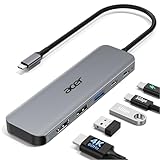
- 【5-in-1 Ultimate Productivity HUB】Expand your USB-C port into a high-performance workstation. This usb c hub multiport adapter integrates 4K@60Hz HDMI, 100W PD, USB-C 3.0 (5Gbps), USB-A 3.0/2.0. Perfect for keeping your desk organized and eliminating clutter from multiple dongles.
- 【True 4K@60Hz Visual Feast】Stop settling for blurry 30Hz displays. This USB-C to HDMI adapter supports 4K@60Hz, delivering 2X the smoothness of standard hubs. Ideal for pro video editing, high-stakes presentations, or immersive 4K streaming without motion blur.
- 【100W Pass-Through Fast Charging】Equipped with a high-speed PD 3.0 chip, this usb c to usb adapter supports up to 100W input and provides a stable 90W output to your laptop. Stay powered up during intensive tasks like 3D rendering or long meetings—say goodbye to low-battery anxiety once and for all. 📌Note: For optimal 90W charging, a 100W power adapter and cable are recommended (not included).
- 【Hyper-Speed 5Gbps Data Transfers】Move massive files in seconds! Featuring both USB-C and USB-A 3.0 ports (5Gbps), this usb c hub for laptop is 10X faster than USB 2.0. The additional USB 2.0 port is optimized for wireless mice and keyboards, ensuring a stable connection with zero interference.
- 【Superior Cooling & Ultra-Portable Design】Built with a durable aluminum shell, this docking station improves heat dissipation for reliable use. Its ultra-slim, lightweight design slips easily into your bag—perfect for travel, office, or remote work essentials.
Experiments and development
An enthusiast may deliberately accept unofficial installation, missing drivers, and recovery work to explore Windows on unusual hardware. That can be an interesting technical project, but it should be separated from a business-critical or travel computer. Unsupported installations may lack a dependable update path or a complete set of drivers.
Independent reader supportYour contribution helps us test, update, and keep practical guides available for everyone.When a laptop remains the better choice
- Frequent travel: A laptop includes its own display and input devices, so there is no monitor, hub, cable, or pairing routine at each location.
- Long typing sessions: An integrated keyboard and trackpad are ready immediately and designed for sustained use.
- Meetings: Cameras, microphones, speakers, and power management are normally integrated and tested as one system.
- Specialized software: Desktop applications with kernel components, anti-cheat systems, custom drivers, or unusual installers are more likely to have a supported x64 path.
- Broad peripheral use: Printers, scanners, docks, accessibility hardware, and other accessories are easier to select when the computer platform is conventional and well documented.
- Heavy multitasking: Multiple applications, large documents, and external displays benefit from hardware selected as a complete computer rather than assembled around a phone-sized device.
Phone-based setup versus laptop or Windows tablet
| Decision factor | Phone-based Windows setup | Traditional laptop | Windows tablet |
|---|---|---|---|
| Official Windows 11 eligibility | Must be verified for the exact device; a phone-sized screen conflicts with the stated display minimum. | Usually designed around supported PC requirements; verify the specific model. | Varies by model; verify requirements and edition. |
| Screen and connection | Often depends on an external display and a confirmed video-output mode. | Integrated screen; external display support depends on its ports and drivers. | Integrated touch display; may need a dock for desktop-style work. |
| Keyboard and pointing | Usually separate accessories. | Integrated keyboard and trackpad. | May require a detachable keyboard and mouse. |
| Arm64 software and drivers | Potentially central to the experience; every critical driver needs checking. | Depends on processor architecture, but conventional x64 models have broad application support. | Arm compatibility may also matter on Arm models. |
| Portability | Smallest device, but portability is reduced when carrying a monitor, hub, charger, and input devices. | One self-contained computer. | More portable than many laptops, with an accessory trade-off. |
| Best fit | Light tasks at a prepared desk or a deliberate experiment. | Frequent travel, sustained typing, meetings, multitasking, and specialized software. | Notetaking, light productivity, and mobility when the model’s software support is adequate. |
Microsoft’s general guidance aligns with this distinction: tablets can suit notetaking, light productivity, and mobility, while heavy multitasking, specialized software, and long typing sessions can favor a traditional laptop.
Troubleshooting common failures
The monitor stays blank
- Confirm that the device’s USB-C port explicitly supports DisplayPort Alternate Mode or another supported video route.
- Try a cable known to support the required signal and verify the monitor’s selected input.
- Remove the hub temporarily and test a direct connection if the device supports one.
- Check whether the hub or adapter requires external power or a particular connection order.
The keyboard, printer, or dock is not detected
- Check whether Windows includes the required driver or whether the maker supplies an Arm64 driver.
- Test the accessory directly rather than through the hub to isolate a power or compatibility problem.
- Look for firmware updates for the accessory and the device.
- If the accessory depends on an x64-only driver, treat that as a platform limitation rather than a cabling fault.
An application installs but does not work correctly
- Check whether an Arm-native version is available.
- Confirm that the application’s add-ons, services, anti-cheat component, or hardware driver also support Arm.
- Look for a documented Windows on Arm limitation from the application maker.
- Use a conventional laptop for that workflow if the incompatibility affects essential work.
The device works only while docked
Check charging through the hub, battery capacity under display load, sleep and wake behavior, and whether the display or input devices reconnect after unplugging. A desk setup can be useful without being a practical mobile computer.
A decision framework before you commit
- Start with support, not novelty. If the exact device is not an officially supported Windows 11 platform, classify the project as experimental.
- List non-negotiable software. Include work applications, meeting tools, security software, accessibility tools, printers, and storage utilities.
- Eliminate driver uncertainty. Every essential peripheral needs built-in support or a confirmed Arm64 driver.
- Price the complete setup. Count the monitor, hub, cable, keyboard, pointing device, charger, camera, and audio equipment, not just the phone-like computer.
- Measure setup tolerance. If reconnecting accessories or troubleshooting display output would disrupt your work, choose an integrated laptop.
- Keep a recovery path. Do not erase a dependable computer until the compact device has completed your real workload and you can restore it if an update or driver fails.
The decisive question is not whether Windows can appear on a small screen. It is whether the exact hardware, Windows edition, architecture, applications, drivers, display connection, and accessories form a supported computer for the work you need to do.
Quick Recap
Product prices and availability are accurate as of the date/time indicated and are subject to change. Any price and availability information displayed on Amazon at the time of purchase will apply.

