
iTechGuides is reader-supported. When you buy through links on our site, we may earn an affiliate commission. As an Amazon Associate I earn from qualifying purchases. Learn more
“Poop-free” does not mean waste-free. Bambu Lab says its H2C printer’s Vortek system can eliminate purge-cleaning between filament changes in certain multicolor jobs by switching between dedicated hotends instead of flushing old color from a shared nozzle. But priming, purge structures, supports, failed prints and some more complex filament setups can still use plastic. Whether the H2C is a better choice depends on how you print, not just on the label.
What “poop-free” means on the H2C
In multicolor FDM printing, “poop” is the colloquial name for purge filament: material pushed through a nozzle to clear the previous color or material before the next one is extruded. With a conventional single-nozzle system, the same nozzle handles multiple filaments, so clearing it helps reduce color contamination.
Bambu Lab’s November 14, 2025 description of the H2C’s Vortek system says the printer has six interchangeable hotends and can completely eliminate the purge-cleaning cycle during filament changes when printing with fewer than seven filaments. The manufacturer describes jobs using up to seven colors or materials, and says the AMS can support up to 24 filaments simultaneously. Those are manufacturer capability claims, not a guarantee that every job using those counts will produce no waste.
The distinction is the waste mechanism. Bambu Lab’s earlier explanation of the H2C design compares a shared nozzle to a brush used for several colors: it must be cleaned to avoid carrying one color into another. Vortek instead changes hotend assemblies so filaments can use dedicated hotends. That can avoid flushing the shared nozzle during supported changes, but it does not make every other source of print waste disappear.
#1 Best Overall

- Up to 16 Colors: Bring your designs to life with vibrant multi-color/multi-material printing capabilities, perfect for showcasing your creativity. Note: Connecting Bambu Lab AMS is required.
- 500mm/s and 20000 mm/s² Acceleration True High Speed: Don't wait around for your masterpieces. Lightning-fast printing speed lets you focus on creating, not waiting.
- Enclosed Design: Fully enclosed body improves print performance for advanced filaments. Automatic Bed Leveling: Say hello to high-quality, successful prints. Auto bed leveling makes 3D printing such an easy thing.
- Set Up in 15 Minutes: Spend more time printing and less time setting up. User-friendly design ensures a hassle-free assembly experience for all skill levels.
- Supported Filament: Ideal: PLA, PETG, TPU, PVA, PET ABS, ASA; Capable : PA, PC; Not Recommended: Carbon/Glass Fiber Reinforced Polymer.
What plastic can still be used or discarded?
A print can still need material for priming or a prime structure, which helps establish reliable extrusion before the model is printed. Supports, brims or rafts, failed prints, and startup material are also separate from purge-cleaning between colors. If a workflow uses more filaments than the dedicated hotends can serve, purge-cleaning can return as well.
The H2C also remains an AMS-oriented system for filament management. It changes hotends; it is not architecturally the same as a printer that parks several fully independent toolheads. That matters because a hotend swap is only one part of a material transition: filament handling, loading and priming can still affect the workflow.
Rank #2

- One-Click Automatic Printing: Experience hassle-free 3D printing with the Adventurer 5M Series. Enjoy automatic bed leveling for flawless first layers, ensuring consistent adhesion and saving time with no manual adjustments required.
- 12X Ultra Fast Printing: Featuring a CoreXY structure with 600mm/s travel speed and 20000mm/s² acceleration, the AD5M maximizes efficiency, reduces production cycles, and ensures high precision, making it ideal for rapid prototyping and mass production.
- Smart and Efficient Design: Quick 3-second nozzle changes, a high-flow 32mm³/s nozzle, and fast 35-second warm-up to 200°C deliver stable high-speed printing. Its dual-sided PEI platform and versatile options provide easy removal and adaptability for various creative projects.
- Superior Print Quality & Adaptability: Combines a 280°C direct drive extruder with dual-fan cooling and vibration compensation. Includes a standard 0.4mm nozzle and accepts optional sizes from 0.25mm to 0.8mm to fit various printing needs.
- Real-Time App Monitoring: Monitor print progress, adjust settings, and receive instant status alerts remotely with the Flash Studio. Smart mobile control ensures a seamless, effortless printing experience anytime, anywhere.
What one H2C-versus-H2D comparison showed
In a preliminary comparison by Tom’s Hardware, as recounted by CloudsPress in its August 13, 2026 H2C review, a five-color castle print on the H2C took 11 hours and produced a 43 g purge tower. The comparable H2D run was reported to take roughly twice as long and produce 279 g more waste in that test.
Quick wins for a faster PC:
Fix the driver behind crashes, sound loss and screen glitchesFind Drivers →Repair Windows errors before they cause bigger problemsFix Now →Scan for outdated or missing drivers - takes under a minuteDriver Scan →Those figures describe that particular model, material and slicer setup—not expected savings for every print. Geometry, the number and arrangement of color changes, materials, slicer settings and whether a purge tower is used can all change the time and waste. The available figures do not establish a standardized comparison across a representative range of models.
Rank #3
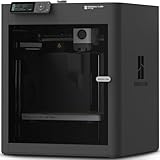
- Up to 16 Colors: Bring your designs to life with vibrant multi-color/multi-material printing capabilities, perfect for showcasing your creativity. Note: Connecting Bambu Lab AMS is required.
- 500mm/s and 20000 mm/s² Acceleration True High Speed: Don't wait around for your masterpieces. Lightning-fast printing speed lets you focus on creating, not waiting.
- Enclosed Design: Fully enclosed body improves print performance for advanced filaments. Automatic Bed Leveling: Say hello to high-quality, successful prints. Auto bed leveling makes 3D printing such an easy thing.
- Set Up in 15 Minutes: Spend more time printing and less time setting up. User-friendly design ensures a hassle-free assembly experience for all skill levels.
- Supported Filament: Ideal: PLA, PETG, TPU, PVA, PET ABS, ASA; Capable : PA, PC; Not Recommended: Carbon/Glass Fiber Reinforced Polymer.
Tom’s Hardware reviewer Denise Bertacchi is quoted by CloudsPress as saying, “The Bambu Lab H2C solves the plastic waste problem with a massive feat of overengineering, called the Vortek Hotend Changer.” That is a reviewer’s characterization, not proof that all printer waste is solved. Bertacchi is also quoted as saying, “The only thing the H2C lacks is the speed of a true tool changer.” The distinction reflects the H2C’s hotend-changing design rather than a set of fully independent toolheads.
How to decide whether the trade-off fits your printing
- Look at your typical jobs. If you often print with a few colors or materials that can stay assigned to dedicated hotends, avoiding purge-cleaning may be valuable. Jobs using more filaments than the dedicated hotends can support may bring purge-cleaning back.
- Consider the whole transition. Hotend changes do not remove the need to manage filament or establish extrusion. Judge the workflow by the print’s total transition time and material use, not by the absence of purge strands alone.
- Keep your quality needs in view. Priming or a prime structure may still be useful, and supports or failed prints remain independent sources of waste. A workflow optimized only to reduce purge material may not suit every model or material.
- Weigh the machine’s cost and architecture. Tom’s Hardware’s buying guide, updated October 6, 2026, listed the H2C at a base price of $2,499 at the time of its update and described the listing as including an AMS Pro 2, filament tracker and four Vortek hotend nozzles. Price and included accessories can change, so check the current configuration and price before buying.
The same Tom’s Hardware 2026 buying guide lists the Snapmaker U1 as its best multicolor pick and the Flashforge Creator 5 as a budget tool changer. Those are that guide’s selections, not a complete market ranking. It notes drawbacks for the Creator 5, including an open frame and manual aspects of loading and nozzle changes. Compare architectures against your own materials, setup and print habits rather than treating any one label as a guarantee.
Rank #4

- High-Speed Precision: The Bambu Lab P2S 3D printer prints up to 600 mm/s while maintaining exceptional accuracy. With the PMSM Servo Extruder and Active Flowrate Compensation, every layer of your printed object stays sharp and smooth, delivering flawless corners and consistent results.
- Ready to Print in 15 Minutes: Set up your P2S FDM 3D printer and start printing in just 15 minutes. With AI failure detection, quick-swap nozzles, and automatic calibration, this 3D printer makes professional-grade 3D printing effortless, even for beginners.
- Effortless Multi-Color Printing: The AMS 2 Pro enables seamless multi-color/multi-material 3D printing. It features built-in filament drying at up to 65 °C, keeping every spool ready for flawless prints. (Note: The P2S 3D printer does not support multi-color printing; Combo version required.)
- Smart Airflow for Any Filament: The Adaptive Airflow System automatically balances cooling and heat retention—keeping overhangs crisp with cool air, or maintaining a 50 °C chamber for engineering-grade materials. A carbon filter ensures clean, safe air while you print.
- Limitless Creativity, Seamless Workflow: Explore over one million 3D models on MakerWorld and bring them to life with a smooth, unified workflow using Bambu Studio, Bambu Handy, and your FDM 3D printer, from design to finished print.
Does less purge waste make prints recyclable?
No automatic conclusion follows. Tom’s Hardware’s February 9, 2026 article on desktop 3D-printing waste reports that home-printed PLA and PETG parts may be rejected from U.S. curbside recycling because they lack resin codes, and that putting such prints in household recycling can contaminate the stream. This is not universal local disposal guidance: check your local rules and facilities for the specific material and item.
Recommended Free Tools
Quick Recap
Best Value

- 600mm/s Speed & CoreXY Structure — Powered by an all-metal CoreXY frame and 20,000mm/s² acceleration, Adventurer 5M Pro reaches speeds up to 600mm/s. Integrated vibration compensation algorithms eliminate ghosting and ringing for smooth, high-precision surface finishes.
- 3-Second Quick-Swap Nozzle & Auto Leveling — Features a tool-free, quick-release nozzle mechanism for effortless 3-second replacements across multiple sizes (0.25/0.4/0.6/0.8mm). One-click full auto-leveling ensures precise bed calibration and a perfect first layer every time.
- Dual Filtration System & Quiet Enclosure — Built with an integrated dual filtration system and a fully enclosed chamber to ensure a clean printing environment and thermal stability. Powered by low-noise motion control, it operates quietly under 50dB for seamless home, office, or classroom use.
- 280°C High-Temp Extruder & Broad Material Compatibility — With a 280°C max nozzle temperature and a 110°C heated bed, it reliably prints engineering materials like ABS, ASA, and PETG-CF, as well as standard PLA and PETG.
- Smart Camera & Mobile Control — Features a built-in camera for real-time monitoring and time-lapse video creation. Monitor progress, adjust settings, and receive instant status alerts via Flash Studio. Integrated with filament detection, power loss recovery, and a 4.3-inch touchscreen for effortless operation.
Product prices and availability are accurate as of the date/time indicated and are subject to change. Any price and availability information displayed on Amazon at the time of purchase will apply.

