
iTechGuides is reader-supported. When you buy through links on our site, we may earn an affiliate commission. As an Amazon Associate I earn from qualifying purchases. Learn more
Use Lightning when your app needs fast, frequent, usually smaller Bitcoin payments and can manage channel liquidity and routing. Use on-chain Bitcoin when direct base-layer settlement matters more than immediate confirmation, especially for larger or infrequent transfers and long-term storage. Many production apps support both: Lightning for routine payments, with an on-chain fallback for amounts or situations that the channel network cannot handle.
The choice is architectural, not merely a question of which fee is lower. You must account for settlement timing, route or block-space availability, liquidity ownership, custody, wallet support, monitoring, failure recovery and the operational work your team is prepared to run. Fees, confirmation conditions, routing reliability and service terms change over time, so validate those details for your target market before launch.

The decision in one view
| Question | Lightning | On-chain Bitcoin |
|---|---|---|
| How does settlement occur? | An off-chain payment travels through a route of Bitcoin payment channels. The channels are anchored to the Bitcoin blockchain, which remains the settlement and enforcement layer for opening, closing and resolving channel states. | A Bitcoin transaction is broadcast to the base blockchain and becomes final for practical purposes after confirmation in a block. |
| What does the user see? | Near-instant completion when a route with enough liquidity succeeds. | Confirmation-dependent progress. A low transaction fee can leave the payment waiting for inclusion. |
| What determines reliability? | Available routes, channel capacity and liquidity in the required direction, plus the health of your node or service provider. | Valid transaction construction, network fee conditions and block inclusion. No Lightning route is required. |
| Where do costs arise? | Usually a small routing cost per payment, plus channel-opening, liquidity, rebalancing, monitoring and provider costs. The amount varies by route and service terms. | A variable Bitcoin transaction fee for each broadcast transaction. Opening or closing Lightning channels also creates on-chain costs. |
| Who operates infrastructure? | Your team, a Lightning service provider (LSP), or a combination. A self-operated node owns channel and liquidity responsibilities. | Your wallet or node creates, broadcasts and tracks the transaction and its confirmations. |
| Typical fit | Small, frequent payments, tipping, usage metering, machine-to-machine payments and applications where waiting for a block is unacceptable. | Larger transfers, occasional settlements, treasury movements and storage where direct base-layer settlement is preferred. |
| Custody profile | The protocol can support non-custodial payments, but the wallet, node and provider arrangement determines who controls funds and signing keys. | Custody likewise depends on the wallet or service. After confirmation, a transaction is generally irreversible without the recipient’s cooperation. |
These are patterns, not hard limits. An app with small payments may still choose on-chain settlement if its customers already use compatible wallets and can tolerate delay. A high-value app may use Lightning for deposits while periodically settling balances on-chain.
How each payment rail works
Lightning: channel-based payments
Lightning moves value through a network of payment channels rather than writing a separate Bitcoin transaction for every purchase. A channel is funded by an on-chain transaction. Once channels exist, participants can exchange payments off-chain and update their balances. A payment can pass through several channels, with each intermediary forwarding value only when it can satisfy the required conditions.
#1 Best Overall

- Proven security at scale: Over 9 years and millions of cards issued with no known remote hacks, while military‑grade EAL6+ security keeps your private keys locked inside the chip. Your cryptocurrencies stay strongly protected from online attackers.
- Tap once to manage your entire crypto wallet across 90 blockchains - no USB cables or Bluetooth, no batteries, no setup. Access 14,100+ coins & tokens, DeFi, NFTs, and staking instantly from your phone
- Smart backup: Use your second Tangem Wallet as your Backup keys with end‑to‑end encryption; no more papers, pictures. If one card is lost, the remaining can still restore full access, with an optional seed phrase available for advanced users.
- Engineered to last up to 25 years: Waterproof (IP69K), shockproof and tested for extreme temperatures from −25°C to 50°C. A durable cold wallet with long‑term protection and independently audited security.
- Trusted by 6 million users worldwide - buy, sell, swap, stake, and spend cryptocurrency directly. The secure offline storage wallet designed for how people actually use crypto wallets
The blockchain is still important. It records channel creation and closure and provides the enforcement mechanism if participants disagree or a channel must be settled on-chain. Lightning therefore reduces the number of base-layer transactions needed for a stream of payments; it does not eliminate the blockchain.
“Instant” describes the successful user experience, not a universal guarantee. The sender and receiver need a usable route with sufficient liquidity in the direction of the payment. A channel can have a large total capacity but little spendable balance on the side needed for your transaction. Intermediaries can be offline, fees can change, and a route can fail between quote and payment.
On-chain: direct Bitcoin transactions
An on-chain payment creates a standard Bitcoin transaction, signs it, broadcasts it and waits for miners to include it in a block. Your application can show an unconfirmed transaction as detected, but should define separately what “paid” means: broadcast, first confirmation or a higher confirmation threshold for riskier transfers.
Recommended Free Tools
Fee selection affects expected confirmation speed. A fee that is acceptable during a quiet period can become slow when demand for block space rises. Conversely, paying for priority does not create an absolute deadline. Your product should communicate the state clearly and retain the transaction identifier for support and reconciliation.
Match the rail to your app’s payment profile
Frequent, low-value interactions
Lightning is generally the better starting point for pay-per-use features, in-app credits, metered APIs, game actions, content access, tips and recurring machine payments. Users can complete many payments without waiting for a block, and the app avoids creating a base-layer transaction for every event.
Rank #2

- 【Complete 2-Pack Kit】Includes 2 crypto wallets, 1 steel engraving pen, and 2 sets of locking screws for permanent, which is a matching set to help you protect your codes, passwords, and further importantly, your cryptocurrency
- 【Secure Crypto See-d Storage】Safeguard your Bitcoin and cryptocurrency with durable stainless steel or aluminum plates, resistant to fire, water, corrosion, and physical damage
- 【Passphrase Field Design】Each cryptocurrency see-d storage wallet is designed with several passphrase fields, you can engrave on 12 or 24-word see-ds in any languages to build your own see-d storage system
- 【Easy to Engrave & Lock】Engrave words clearly with the hardened steel marking pen, then lock the plates together securely using the included screws (5mm holes for added security)
- 【Compact & Portable】Each plate measures 90×55×3mm (3.5×2.1×0.1 inches), lightweight yet rugged for hidde-n storage, travel, or disaster-proof cold wallet backup. The crypto steel wallet is compatible with BIP39 wallets, works well with most hardware wallets
Model the volume and direction of funds, not only the average amount. A service that receives thousands of payments but sends occasional refunds has a different liquidity requirement from one that both receives and sends constantly. Estimate peak periods, geographic distribution and the largest payment you expect to route successfully.
Larger or infrequent transfers
On-chain payments are usually simpler for a large transfer, a withdrawal to cold storage or a settlement that may sit for hours or days. The recipient does not need a Lightning route, and the transaction can be independently verified on the Bitcoin network. Build confirmation waiting time into the workflow and show users the fee and status before they authorize payment.
Quick wins for a faster PC:
Fix the driver behind crashes, sound loss and screen glitchesFind Drivers →Repair Windows errors before they cause bigger problemsFix Now →Scan for outdated or missing drivers - takes under a minuteDriver Scan →Mixed workloads
A hybrid design is often practical. Accept Lightning for routine amounts, keep an on-chain address or withdrawal path for users whose wallets do not support Lightning, and move accumulated Lightning funds on-chain when treasury policy requires it. A Lightning-to-on-chain swap service can also provide an on-chain fallback when a route lacks liquidity. Treat swaps as an operational dependency with its own fees, limits, availability and custody terms.
What an app must operate for Lightning
Node, wallet and channel capacity
Running your own node gives you control over signing and channel policy, but it adds work. Plan for channel capacity, inbound liquidity, routing fees, peer selection, backups, software updates, uptime and alerting. Inbound liquidity is the ability for value to reach your node; opening a channel that you can only spend from does not automatically make you able to receive the amount your business expects.
Liquidity is directional and changes as customers pay, withdraw and receive refunds. A channel that worked yesterday can become unbalanced today. Set thresholds for rebalancing, channel expansion and temporary routing restrictions. Keep operational funds separate from long-term reserves, and protect channel-state data and signing material with tested backups.
Rank #3

- READY IN 3 MINUTES – Set up your ELLIPAL X Card crypto wallet on the offline Starter device, then tap to the ELLIPAL mobile App and start using it. This 100% offline crypto wallet is a no battery crypto wallet with no charging, no firmware updates, and no complicated setup.
- TURN ANY WALLET INTO A CARD – Already have a wallet? Import your recovery phrase from MetaMask, Trust Wallet, Ledger, Trezor, or any compatible seed phrase wallet. X Card works as a backup wallet and physical twin of your existing bitcoin wallet, ethereum wallet, NFT wallet, or altcoin wallet — no transfers, no new accounts, no starting over.
- BUILT ON AN EAL6+ SECURE CHIP – Designed as a secure crypto wallet and private key wallet, X Card generates and stores your private keys inside the EAL6+ secure chip. Your keys never reach your phone, the App, USB, Bluetooth, or the internet, making it a true no bluetooth hardware wallet and no USB crypto wallet.
- ONE APP, EVERYTHING CRYPTO – Manage more with one cold storage wallet. Buy, sell, swap, send, spend, and earn across 45+ blockchains and 10,000+ tokens. Use X Card as your cryptocurrency wallet, coins and tokens wallet, DeFi wallet, and staking wallet for everyday crypto management.
- TAP TO CRYPTO – Carry your crypto cold wallet on a card and secure every transaction with one NFC tap. ELLIPAL X Card combines the simplicity of a crypto wallet with the protection of a cold storage hardware wallet.
Integration software
You can connect your application directly to a Lightning implementation or use integration software. Developer ecosystems commonly provide invoice creation, payment-status callbacks, key management and accounting interfaces. BTCPay and LNbits are examples of integration tooling cited in Lightning developer documentation; evaluate their current versions, deployment model and maintenance status before adopting them.
Windows Errors? Fix Them Before They Spread
Repair common Windows errors and clear accumulated junk for a smoother, more stable PC - no reinstall needed.Free scan · no reinstallCrashes, No Sound, or Screen Glitches?
Random freezes, missing sound and display glitches usually trace back to one bad driver. Find and replace yours safely.Free scan · under a minuteDesign your payment service behind an internal interface so that checkout, refunds, reconciliation and reporting do not depend on one vendor’s API. Store an internal payment ID, the invoice or request, amount and currency conversion used at quote time, creation and expiry times, settlement preimage or transaction identifier where applicable, and the final state.
Using a Lightning service provider
An LSP can open channels to improve inbound capacity or provide services that move funds between on-chain and off-chain balances. This can shorten the time needed to become receivable, but it transfers part of the operational dependency to another company. Compare:
- Custody: whether your keys remain under your control and whether the provider can freeze or redirect funds.
- Fees: channel, routing, swap, subscription or withdrawal charges, including minimums and limits.
- Reliability: uptime commitments, incident communication and geographic or regulatory availability.
- Fallbacks: what happens when a route or provider API is unavailable.
- Exit: how you close channels, recover funds and migrate without customer downtime.
“Lightning support” is not a uniform product category. Read the custody and settlement terms rather than assuming that an LSP provides the same control as a self-operated node.
Observability and failure handling
Instrument every stage: invoice generated, invoice presented, payment attempt received, in-flight, settled, failed, expired, refunded and manually reviewed. Include node health, channel balances, inbound liquidity, route failure reasons and provider API errors in operational dashboards.
The Tool Desk
Outbyte PC Repair FREERepair Windows errors before they cause bigger problemsFix Now →Outbyte Driver Updater FREEFix the driver behind crashes, sound loss and screen glitchesFind Drivers →Merchant software can have an awkward ambiguity: a failed attempt may be difficult to distinguish from a payment that the customer never attempted. Make invoices idempotent, accept late settlement notifications where safe, and give support staff a way to search by internal payment ID and invoice identifier. Never grant irreversible access solely because a client says a payment was sent; wait for a cryptographically verifiable settled state.
Implementing Lightning step by step
- Define the transaction profile. Record expected minimum, typical and maximum amounts; payments and payouts per hour; peak concurrency; currencies; refund patterns; and the maximum acceptable latency. Include a plan for users whose wallets support only on-chain Bitcoin.
- Choose the custody model. Decide whether your application controls node keys, uses a non-custodial infrastructure provider, or relies on a custodial account. Document who can sign, pause payments, close channels and recover funds.
- Provision infrastructure. Run a maintained Lightning implementation or contract for an LSP. Provide durable storage, secure key handling, backups, time synchronization, network access, updates and monitoring. Separate production and test environments.
- Acquire receiving liquidity. Open or obtain channels that can receive your expected amounts. Measure inbound capacity by channel and in aggregate; do not infer it from total channel capacity. Establish thresholds that trigger a new channel, a rebalance or a provider request.
- Build invoice and checkout flows. Generate a unique invoice for each order, show its amount and expiry, and expose a clear pending state. Avoid reusing an invoice across customers or treating an expired invoice as payable.
- Process asynchronous settlement. Use signed callbacks, polling or both, and make handlers idempotent. Credit the customer’s account only once the Lightning implementation reports settlement. Record the payment metadata needed for accounting and dispute investigation.
- Add fallback behavior. If routing fails, explain that the payment could not be completed, allow a retry with a fresh invoice, and offer an on-chain path when your business can accept the extra confirmation time. Do not silently convert an amount without displaying the new fee, address and expected delay.
- Test adverse conditions. Exercise insufficient liquidity, offline peers, expired invoices, duplicate callbacks, provider timeouts, node restarts, database recovery, delayed on-chain settlement and refunds. Test with realistic peak concurrency, not only a single successful payment.
- Reconcile continuously. Compare application orders, settled invoices, node balances, provider statements and on-chain movements. Alert on unmatched settlements, negative or impossible balances, repeated route failures and channels approaching operational limits.
Implementing on-chain Bitcoin payments
- Create a unique receiving request. Generate a new address or payment request per order where your wallet policy allows. Attach an internal order ID and the quoted amount and expiry to your records.
- Display fee and status expectations. Tell the payer whether the app accepts an unconfirmed transaction, one confirmation or more. Explain that fee conditions can change and that a low fee may delay confirmation.
- Detect the transaction. Watch the relevant address or wallet, validate the amount and destination, and record the transaction identifier. Treat detection as pending unless your risk policy explicitly allows zero-confirmation credit.
- Wait for the required confirmations. Update the order as blocks arrive, handle reorganizations according to your wallet’s policy, and release goods or irreversible services only at the threshold you selected.
- Handle underpayment, overpayment and replacement attempts. Route exceptions to a documented support or accounting process. Never assume that a second transaction replaces the first without verifying both on the network.
- Reconcile and retain records. Store the transaction identifier, addresses, amounts, fee, confirmation count and final order state. Keep wallet backups and access controls separate from application credentials.
Understanding the cost trade-off
Lightning can make an individual routed payment inexpensive, but its cost profile includes more than the forwarding fee. You may pay for opening channels, acquiring inbound liquidity, rebalancing, swapping between on-chain and off-chain funds, infrastructure, monitoring and an LSP’s service. Those costs are often fixed or periodic, so calculate them per payment at your actual volume rather than assuming every Lightning transaction is cheaper.
On-chain costs are visible as a variable transaction fee for each broadcast transaction. A busy network can make small payments uneconomic or slow, while a quiet period can make them practical. Channel opening and closing add on-chain transactions to a Lightning deployment, so compare the complete lifecycle cost over the period in which you expect to use each channel.
Do not publish a permanent “Lightning fee” or “Bitcoin fee” in product copy. Show the current quote, identify whether it is a network, routing, swap or service charge, and state whether the amount can change before settlement.
Free tools Windows power users keep installed
One-click scans. No signup required.
Reliability, user experience and support
Make state visible
For Lightning, use states such as “invoice ready,” “payment detected,” “settled,” “expired” and “route unavailable.” For on-chain, distinguish “address issued,” “transaction seen,” “unconfirmed,” “one confirmation” and “complete.” Give users a payment identifier and a recovery path instead of a generic error.
Best Value
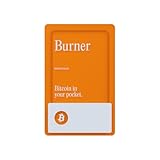
- Simple, Secure Bitcoin Storage for Anyone: Create a safe, offline place to hold Bitcoin without needing an app, account, seed phrase, or technical setup. Perfect for beginners, casual users, and anyone who wants a stress-free cold storage option.
- Easy to Load with Bitcoin in Seconds: Each card includes a unique deposit address so you can add Bitcoin quickly from any exchange or wallet. Designed to make storing and gifting Bitcoin intuitive, even for people who are new to crypto.
- Keeps Your Bitcoin Offline and Protected: Funds are stored in cold storage, keeping them completely offline and isolated from online threats. A durable, printed wallet format ensures long-term security whether you store it at home, in a safe, or on the go.
- Great for Gifting Bitcoin to Family & Friends: A fun, thoughtful way to introduce others to Bitcoin. Perfect as a birthday gift, stocking stuffer, party favor, graduation present, or starter wallet for someone learning how digital assets work.
- High-Quality Card Built for Everyday Use: Printed on premium materials and sealed for security and durability. Slim, credit-card style design fits easily into a wallet, gifting envelope, or safe deposit box for long-term use and convenience.
Prevent duplicate fulfillment
Both rails can produce repeated notifications or a user retry after a delayed response. Make fulfillment idempotent on your internal order ID and verified payment identifier. A retry should create a new attempt linked to the same order, not silently create a second entitlement.
Plan refunds explicitly
A Lightning refund needs a destination invoice or another agreed payment method and may fail if the recipient has no route. An on-chain refund needs a valid address and incurs a network fee. Record who bears that fee, how long the refund remains valid and what happens when the first attempt fails.
Custody, security and governance
Decide where keys live, who can authorize payouts and how emergency shutdown works. A self-operated Lightning node can support non-custodial control but increases the consequences of key loss, channel-state loss or operational mistakes. A custodial provider may simplify operations while introducing counterparty, account-access and withdrawal risk.
Apply least privilege: the checkout service should not automatically possess treasury-signing authority. Use separate wallets or accounts for customer flows and reserves, require multi-person approval for large on-chain transfers, encrypt backups and rehearse restoration. Monitor unusual payment sizes, rapid withdrawals, repeated failed routes and provider balance discrepancies.
Quick Recap
When to choose each rail
Choose Lightning first when
- Users need completion in seconds rather than after block confirmation.
- The app produces many payments whose individual amounts make separate on-chain transactions inefficient.
- Your team can operate liquidity, monitoring and failure recovery, or has evaluated an LSP that can do so under acceptable terms.
- Your target wallets and regions have dependable Lightning support.
Choose on-chain first when
- Transfers are larger, less frequent or intended for long-term storage.
- Users need a direct Bitcoin transaction that any standard wallet can verify.
- Your app cannot justify channel management or does not have reliable Lightning liquidity.
- Confirmation delay is acceptable and can be communicated clearly.
Use both when
- Customers have mixed wallet capabilities.
- Lightning handles everyday payments while treasury operations settle on-chain.
- You need a recovery path for route failures or amounts outside your channel policy.
Production checklist
- Document amount, frequency, latency and confirmation requirements by payment flow.
- Record who controls keys, channels, addresses, swaps and emergency actions.
- Measure Lightning inbound liquidity and route success at peak load.
- Define on-chain confirmation thresholds and fee-selection policy.
- Display current fees and status without promising universal instant settlement.
- Make callbacks, retries, refunds and fulfillment idempotent.
- Monitor node, channel, provider, wallet and reconciliation health.
- Test expired invoices, insufficient liquidity, delayed blocks, duplicate events and restored backups.
- Review provider pricing, custody, availability and exit terms before committing.
- Recheck network conditions and service availability whenever you publish time-sensitive guidance.
Product prices and availability are accurate as of the date/time indicated and are subject to change. Any price and availability information displayed on Amazon at the time of purchase will apply.

