
iTechGuides is reader-supported. When you buy through links on our site, we may earn an affiliate commission. As an Amazon Associate I earn from qualifying purchases. Learn more
For most ThinkPad X1 Carbon Gen 14 owners, the best everyday setup is Balanced in Windows 11 with Intelligent Cooling set to Balanced in Lenovo Vantage. Use Best power efficiency on battery when quiet operation and runtime matter most, and reserve Best performance for sustained, plugged-in work such as compiling or rendering. These modes change the trade-off among CPU speed, fan noise, surface temperature and battery drain; there is no single fastest setting that is ideal for every Gen 14 configuration.
The recommended baseline
Set Windows 11 to Balanced and Lenovo Vantage Intelligent Cooling to Balanced for mixed daily work. Microsoft describes Balanced as the compromise between performance and battery life, while Lenovo describes its Balanced mode as the default for switching among tasks. This combination suits writing, web applications, video meetings, document work and short bursts of heavier activity without locking the system into its noisiest or most power-hungry behavior.
Use separate choices for each power state rather than one permanent mode:
Crashes, No Sound, or Screen Glitches?
Random freezes, missing sound and display glitches usually trace back to one bad driver. Find and replace yours safely.Free scan · under a minutePC Slower Than It Used to Be?
A free scan shows the junk files, broken settings and background clutter dragging Windows down - then fixes them in one click.Free scan · Windows 10 & 11| Power state and workload | Windows 11 mode | Lenovo Vantage mode | What to expect |
|---|---|---|---|
| Battery, writing, browsing or meetings | Best power efficiency | Best power efficiency | Lowest power use, quieter fans and lower heat; peak and sustained performance are reduced. |
| Battery, mixed work where responsiveness matters | Balanced | Balanced | A practical compromise when maximum runtime is not the only priority. |
| AC power, normal office work | Balanced | Balanced | General-purpose performance without the extra heat and fan noise of the performance profile. |
| AC power, sustained compiling, rendering or another CPU-heavy job | Best performance | Best performance | Highest available performance for the workload, with greater temperature and fan-noise tolerance required. |
Windows exposes its setting at Start > Settings > System > Power & battery. Lenovo provides the corresponding control in Lenovo Vantage > Device > Power and, on supported installations, through the F8 Smart Modes widget.
#1 Best Overall

- Intel Core Ultra 7 258V, 8C (4P + 4LPE) / 8T, Max Turbo up to 4.8GHz, 12MB Intel Smart Cache
- 14" 2.8K (2880x1800) OLED 500nits Anti-glare / Anti-reflection / Anti-smudge, 100% DCI-P3, 120Hz VRR, DisplayHDR True Black 500, Dolby Vision
- 32GB LPDDR5X-8533, MoP Memory
- 1TB SSD M.2 2280 PCIe 4.0x4 NVMe
- Windows 11 Pro, Backlit Keyboard, Fingerprint Reader, WiFi+Bluetooth, 1-Year Warranty
What each Windows 11 power mode changes
Best power efficiency
Microsoft defines Best power efficiency as the battery-saving option. On the X1 Carbon, choose it when you are away from an outlet and your work is primarily browser, document, messaging or meeting based. It is also the appropriate choice when fan noise or warm surfaces are distracting. The trade-off is less aggressive performance, so a large build, export or other sustained CPU task will generally take longer than it would in Best performance.
Balanced
Balanced is the all-purpose setting. It allows the processor to respond to short bursts while avoiding the constant higher power and thermal envelope associated with Best performance. Lenovo’s user guide calls Balanced the default setting for Intelligent Cooling. Leave it selected when your workload changes repeatedly during the day or when you want predictable behavior without manually switching profiles.
Best performance
Best performance is intended to maximize performance, not battery life. Select it for sustained work while plugged in, such as compiling a large project, rendering media or running another workload that keeps the CPU busy for an extended period. Microsoft and Lenovo both associate this mode with higher power use; Lenovo specifically notes that increased temperature and fan noise are acceptable in this profile. It is not a sensible default for an unplugged workday.
Configure Windows 11 step by step
- Open the Start menu and select Settings.
- Choose System, then Power & battery.
- Find the power-mode control and select Best power efficiency, Balanced or Best performance for the current power state.
- Connect or disconnect the charger and confirm the mode again. Windows can use different choices for battery and AC operation, so verify that the profile shown is the one you intended.
- Repeat the check after a major Windows, BIOS or driver update. Both Windows and Vantage expose overlapping power controls, and an update can leave a profile different from the one you normally use.
If the menu offers only a subset of these choices, use the available Windows option and then set the Lenovo Vantage profile separately. The names and available controls can vary with the installed Windows build, firmware and exact Gen 14 configuration.
Configure Lenovo Vantage Global Power Management
Choose Intelligent Cooling
- Open Lenovo Vantage.
- Go to Device > Power. You can also open the F8 Smart Modes widget when it is present.
- Set Intelligent Cooling to Balanced for normal use.
- Choose Best power efficiency when battery runtime, low heat and quiet fans outrank speed.
- Choose Best performance only for a sustained workload, preferably with the charger connected and with higher fan noise and temperature accepted.
The Lenovo mode should agree with the Windows choice for the same power state. If Windows is set to Best power efficiency but Vantage is set to Best performance, the two layers are asking for different priorities; use matching profiles when you want the behavior described in the table above.
Rank #2

- The ThinkPad X1 Carbon Gen 13 Aura Edition weighs less than a kilogram, so you can manage it with one hand — and open it easily with one finger. But the best part? This super-thin laptop includes lots of connectivity options to hook up a monitor, quickly charge other devices, transfer files, and even plug in a headset if you’re old school.
Enable Efficiency Optimizer
In Vantage’s Global Power Management area, enable Efficiency Optimizer. Lenovo describes it as an exclusive power-saving feature that dynamically adjusts CPU power consumption according to system usage. It is useful when your workload alternates between idle periods and brief activity because it can reduce power during lighter use without requiring you to change modes every few minutes.
Efficiency Optimizer does not replace the three main modes. Treat it as an additional management layer: retain Balanced for everyday work, then let the optimizer adjust CPU power as the workload changes. For a controlled performance test or a long, repeatable compile, record whether it is enabled so that comparisons use the same configuration.
Use Panel Brightness Control when display changes are part of your routine
Vantage’s Panel Brightness Control can adjust display brightness incrementally when you connect or disconnect the charger. Enable it if you want a brighter panel on AC and a dimmer setting on battery without changing brightness manually each time. Leave it off if you prefer one fixed brightness or if automatic changes interrupt color-critical work.
Smart Charge: protect a battery that spends time plugged in
Open Lenovo Vantage > Device > Power > Smart Charge to choose how charging is managed. Lenovo documents Smart Charge as a battery-longevity feature with two useful approaches:
| Smart Charge option | Best for | How it behaves |
|---|---|---|
| Automatic | A changing schedule | Lenovo says it learns daily-use patterns and adapts charging to that routine. |
| Custom | A predictable desk or docking routine | You define the charge start and stop levels manually. |
Choose Automatic if you move between rooms, travel or vary the time spent on AC. Choose Custom when you know the thresholds that fit your routine and want them applied consistently. Smart Charge is independent of whether Windows is Balanced or Best performance: charging behavior and processor-performance policy solve different problems, so configure both.
Rank #3
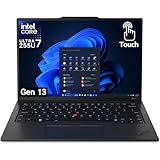
- UNOPENED RETAIL PACKAGING, sold as configured by Lenovo. Includes one year Lenovo Onsite Warranty. Add up to 5 years of Lenovo Premier Onsite Support Plus when you register your computer with Lenovo.
How to choose a mode by visible trade-off
Lenovo’s mode descriptions map to five things you can observe: runtime, fan noise, surface temperature, sustained performance and whether the computer is on battery or AC power.
| Mode | Battery runtime | Fan noise | Surface temperature | Sustained performance | Preferred power state |
|---|---|---|---|---|---|
| Best power efficiency | Highest priority | Lowest target | Coolest target | Lower than the performance profile | Battery or quiet environments |
| Balanced | Middle ground | Moderate | Moderate | Suitable for mixed work | Battery or AC |
| Best performance | Lowest priority | Highest likely level | Warmest target | Highest priority | AC and sustained heavy workloads |
These are policy trade-offs, not guaranteed measurements. Lenovo has not supplied one battery-runtime figure that applies to every Gen 14 configuration, so do not interpret a mode as a promised number of hours.
Why your X1 Carbon Gen 14 may not match another owner’s results
Lenovo’s 2026 PSREF lists several Gen 14 Aura Edition configurations. The listed Windows 11 systems use a 58 Wh battery, but processor, display and memory combinations differ. The PSREF shows Best power efficiency as the default in some configurations and Balanced in another. Those differences affect power draw, thermal behavior and the performance a given mode can sustain.
Before judging a setting, record your exact processor, display and memory configuration. Compare like with like: the same Windows build, brightness, connected peripherals, background applications, browser tabs and workload. A result from one SKU should not be presented as a universal result for every ThinkPad X1 Carbon Gen 14.
No authoritative, configuration-wide runtime figure has been established for this model family. Battery life varies with panel choice, workload, brightness, wireless activity, software and firmware. Use your own repeatable routine to evaluate a change instead of relying on a single number from a different configuration.
What’s actually slowing this PC down?
Pick the symptom - the matching free tool is one click away.
Rank #4

- With 32 GB of memory, users can run many programs without losing execution
- The 14" 1920 x 1200 screen provides a great movie watching experience
- 512 GB SSD is enough to store your essential documents and files, favorite songs, movies and pictures
Practical profiles you can use
Mobile writing and web work
- Disconnect the charger.
- Set Windows to Best power efficiency at Settings > System > Power & battery.
- Set Vantage Intelligent Cooling to Best power efficiency.
- Enable Efficiency Optimizer under Global Power Management.
- Use Panel Brightness Control if you want brightness reduced automatically on battery.
This profile prioritizes a cool, quiet computer and the longest practical runtime for light workloads.
Mixed office work at a desk
- Connect the charger.
- Set Windows to Balanced.
- Set Vantage Intelligent Cooling to Balanced.
- Keep Efficiency Optimizer enabled unless a repeatable workload requires a controlled comparison.
- Use Smart Charge Automatic for a variable schedule or Custom for a fixed charging routine.
This is the recommended default when you move among documents, browser tabs, meetings and short bursts of heavier work.
Long compile or render
- Connect AC power and ensure the charger is firmly connected.
- Set Windows to Best performance.
- Set Vantage Intelligent Cooling to Best performance.
- Place the laptop on a hard, unobstructed surface and expect more fan noise and heat.
- Return both controls to Balanced when the sustained job finishes.
Best performance is a workload-specific tool. Leaving it on after the compile or render wastes energy and can keep the system warmer and louder than necessary.
Maintenance after updates or unexpected behavior
After a BIOS, driver or Windows update, revisit both control panels. Confirm the Windows mode under Start > Settings > System > Power & battery, then confirm Intelligent Cooling, Efficiency Optimizer, Panel Brightness Control and Smart Charge in Vantage. This short check catches mismatched profiles before they are mistaken for a hardware problem.
If the laptop is louder or warmer than expected
- Check whether Windows or Vantage is set to Best performance.
- Switch both to Balanced for normal work.
- Use Best power efficiency when quiet operation is the priority.
- Look for a sustained task such as a compile, render, update or large synchronization job before changing hardware or firmware.
If performance feels too slow on battery
- Confirm whether Best power efficiency is active in both Windows and Vantage.
- Switch to Balanced while remaining on battery and compare the responsiveness of the specific task.
- Keep Best performance for cases where the extra speed justifies faster battery drain and greater heat.
If charging behavior does not match your routine
- Open Smart Charge in Vantage.
- Use Automatic if your schedule changes and allow it to learn the pattern Lenovo describes.
- Use Custom when you need manually defined start and stop levels.
- Recheck the setting after firmware or Vantage updates.
Cooling and repair context for Gen 14
A Windows Central report dated 7 January 2026 says Lenovo’s Gen 14 Space Frame redesign places components on both sides of the motherboard and is intended to improve cooling, heat dissipation and repair access. The report says the redesign should support greater sustained performance and simpler access to replaceable USB ports, the battery, keyboard, speakers and fans. It also reports a 9/10 repairability score from iFixit in 2026. These are third-party observations, not Lenovo’s specification, and they do not change the recommended software profiles.
Better thermal design can help a system sustain a workload, but it does not make Best performance a battery-saving mode. Continue to choose the profile based on the task, power source and amount of heat or fan noise you can accept.
Quick Recap
A concise decision checklist
- Need the longest practical battery life? Select Best power efficiency in Windows and Vantage.
- Need a quiet computer for meetings or writing? Use Best power efficiency, with Panel Brightness Control if automatic brightness changes suit you.
- Need one setting for varied everyday work? Use Balanced in both places.
- Compiling or rendering while plugged in? Use Best performance in both places, then return to Balanced.
- Spend most of the day docked? Configure Smart Charge Automatic for a changing schedule or Custom for fixed thresholds.
- Seeing different results from another Gen 14 owner? Compare the exact processor, display, memory and Windows configuration before drawing a conclusion.
- Changed BIOS, drivers or Windows? Recheck every relevant Windows and Vantage control.
Product prices and availability are accurate as of the date/time indicated and are subject to change. Any price and availability information displayed on Amazon at the time of purchase will apply.

