
iTechGuides is reader-supported. When you buy through links on our site, we may earn an affiliate commission. As an Amazon Associate I earn from qualifying purchases. Learn more
You can automate existing lighting without changing every bulb, but the right device depends on how the light receives power. Use a smart wall switch or dimmer for a hardwired fixture, a smart plug for a plug-in lamp, or a wall-switch module that keeps compatible smart bulbs continuously powered. These are different electrical solutions, not interchangeable products.
Start by identifying the fixture, bulb type, wiring, dimming requirement, circuit layout and required hub or platform. Then verify the exact model instructions: manufacturer compatibility claims are model-specific, and a device that works in one switch box or multi-way circuit may not work in another.
Choose the control that matches the light
The fastest way to avoid buying the wrong product is to classify the light before comparing brands. The table below summarizes the three practical paths for retaining your current bulbs.
Crashes, No Sound, or Screen Glitches?
Random freezes, missing sound and display glitches usually trace back to one bad driver. Find and replace yours safely.Free scan · under a minuteWindows Errors? Fix Them Before They Spread
Repair common Windows errors and clear accumulated junk for a smoother, more stable PC - no reinstall needed.Free scan · no reinstall| Solution | Best fit | Power and wiring | Dimming | Hub or bridge | What happens to existing bulbs |
|---|---|---|---|---|---|
| Smart wall switch | Hardwired ceiling, recessed or multi-bulb fixture using traditional bulbs | Installed in the wall box; requirements vary by model. TP-Link says HS200 requires live, load and neutral conductors. | On/off models do not dim. A smart dimmer requires dimmable bulbs and a compatible load. | Some models connect directly; others use a hub. Check the exact product documentation. | Ordinary bulbs remain in the fixture and the switch controls the whole circuit. |
| Smart wall dimmer | Hardwired fixture when adjustable brightness is needed | Model-specific neutral and conductor requirements. Philips Hue and other manufacturers list different requirements for their own products. | Only with bulbs and fixtures rated for dimming. Some LED combinations need neutral or a compatibility setting. | Varies by model and platform. | Existing dimmable bulbs can stay installed when the electrical load is supported. |
| Smart plug | Plug-in table, desk or floor lamp | Plugs into a receptacle; no wall-box wiring. | No. Feit describes its smart plugs as on/off-only. | Varies by model and platform. | The lamp stays unchanged, but its own switch generally needs to remain on so the plug can restore power. |
| Wall-switch module for smart bulbs | Homes with Philips Hue or compatible Zigbee smart bulbs | A wired Hue module requires a neutral; its battery version avoids neutral wiring. Both require a Hue Bridge. | Brightness and color remain functions of the smart bulbs and their ecosystem. | Hue Bridge required for the Hue module. | The module lets a physical switch send control commands without cutting power to the smart bulbs. |
“Best” therefore means best for your circuit. A smart plug is not a substitute for a wall switch, and a conventional smart switch is usually the wrong control for smart bulbs that must stay powered.
#1 Best Overall

- App-Guided Install: The Kasa or Tapo app guides you through step-by-step setup. Requires neutral wiring and 2.4 GHz Wi-Fi. Consulting an electrician is recommended if you’re unfamiliar with electrical wiring
- Control from Anywhere: Monitor your light status. Turn electronics on and off from anywhere with your smartphone using the Kasa app, whether you are at home, in the office or on vacation
- Voice Control: Enjoy the hands-free convenience of controlling the lights in your home with your voice via Amazon Alexa or Google Assistant; perfect for times when your hands are full or entering a dark room
- Scheduling: Use timer or countdown schedules to set your smart switch to automatically turn on and off while you're home or away. Enable ‘away mode’ to randomly switch on and off to trick potential intruders
- Trusted and reliable: Designed and developed in silicon valley, Kasa is trusted by over 4 million users. UL certified for safety use. System Requirements: Android 5.0 or higher, iOS 10 or higher
Hardwired fixtures: use a smart switch or dimmer
Overhead lights, recessed cans, sconces and fixtures with several bulbs are normally connected to a wall switch and a branch circuit. Replacing that switch with a compatible smart switch adds app control, voice control or schedules while leaving the bulbs in place. Feit describes its smart dimmer as controlling every bulb on its circuit, while Philips Hue also sells wired controls intended for traditional lights.
Choose on/off when brightness control is unnecessary
An on/off smart switch is the simplest hardwired option. It is appropriate when you only need remote control, routines, occupancy-related scenes or a voice command. The fixture can keep ordinary LED, CFL or incandescent bulbs, subject to the switch’s stated load and bulb compatibility.
Do not assume an on/off switch can dim because it is “smart.” Dimming is a separate electrical function. If the product is not explicitly a dimmer, treat it as on/off only.
Choose a smart dimmer only for a compatible load
A dimmer changes the electrical behavior of the circuit, so both the control and the bulbs must support dimming. Hue’s guidance for traditional-light dimmers specifies dimmable bulbs and cautions that some LED bulbs may not work correctly without a neutral conductor. Leviton provides settings intended to improve compatibility with dimmable LEDs, but the setting and supported load depend on the exact model.
- Read the bulb package or manufacturer specification for “dimmable,” not merely “LED.”
- Check the dimmer’s supported wattage range and bulb technology list.
- Look for minimum-load requirements; a very small LED load can behave differently from a larger incandescent load.
- Use the model’s LED-compatibility or calibration procedure when provided.
If the fixture contains mixed bulb types, replace the mix with a consistent, supported load before troubleshooting the dimmer. Flicker, a narrow adjustment range or a light that never fully turns off usually indicates an incompatibility or installation issue rather than a missing app setting.
Check the conductors in the wall box
Smart switches need more than a decorative faceplate. TP-Link states that its HS200 requires live, load and neutral conductors. Other products differ: one Hue control may require a neutral while another arrangement may not, and the presence of a ground wire does not substitute for a neutral.
Before ordering, identify the exact wires present in the box and compare them with the installation diagram for the specific model. Do not infer compatibility from a product family name. Two switches from the same manufacturer can have different requirements.
Do these 3 things before closing this tab:
1Scan for outdated or missing drivers - takes under a minute2Clear out junk files and repair common Windows errors3Fix the driver behind crashes, sound loss and screen glitchesRank #2
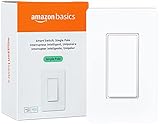
- SMART UPGRADE: Transform your home by upgrading to a smart switch that works seamlessly with Alexa, providing convenient voice control for an enhanced living experience
- GUIDED INSTALLATION: Enjoy a guided installation with our step-by-step video and user manual, providing necessary support for a smooth setup process of your smart switches for lights
- FLEXIBLE SCHEDULING: Take control of your home lighting by scheduling lights to turn on and off using Alexa routines, providing flexibility and convenience with your wifi light switch even when you're away
- VOICE-ACTIVATED CONTROL: The smart wall switch helps you effortlessly control your lighting system with voice commands via Alexa
- NO HUB REQUIRED: Simplify your setup with a smart switch that works exclusivly with Alexa, eliminating the need for additional smart home hubs or complex configurations
Plan for multi-location circuits
A light controlled from two or more locations is a multi-way circuit. A single-pole smart switch cannot automatically replace every device in that arrangement. Hue, TP-Link, Lutron and Leviton document different approaches, such as a compatible companion control, a particular primary-switch position or a defined wiring arrangement.
Use only a model that explicitly supports your circuit type and follow its complete setup sequence. If you cannot confidently identify which box contains line, load, neutral and travelers, stop and use a qualified electrician. Guessing can leave the light inoperable or create a shock and fire hazard.
Plug-in lamps: use a smart plug for simple on/off automation
A smart plug is the least invasive solution for a floor lamp, table lamp or desk lamp that receives power through a standard receptacle. Plug the lamp into the smart plug, add the plug to its app or platform, and use schedules, scenes or voice commands to control power. Feit describes its smart plugs as on/off-only, so a plug should not be presented as a lamp dimmer.
Leave the lamp’s own switch in the on position
The plug can only supply power when the lamp’s physical switch is on. In normal use, set the lamp switch to on and let the smart plug perform the daily switching. If someone turns the lamp’s switch off, the plug may report that it is powered while the lamp remains dark until the physical switch is returned to on. This is a practical operating caveat; exact recovery behavior depends on the plug and lamp.
Quick wins for a faster PC:
Scan for outdated or missing drivers - takes under a minuteDriver Scan →Clear out junk files and repair common Windows errorsFree Scan →Know what a smart plug cannot do
- It does not replace a wall switch for a ceiling fixture.
- It does not dim a lamp unless a product explicitly supports a dimming load, and the reviewed Feit smart plugs are on/off-only.
- It does not make a non-smart bulb individually addressable when several lamps share one plug.
- It cannot correct a lamp with a faulty cord, incompatible motor load or damaged receptacle.
Check the plug’s electrical rating and the lamp’s load before connecting it. For a lamp with an electronic touch switch or a multi-level control, test whether it reliably returns to its previous state when power is restored; if it does not, a smart plug may be inconvenient even though the electrical connection is safe.
Already have smart bulbs? Keep them powered with a wall-switch module
Smart bulbs need continuous power for their radios and software. A conventional smart switch that cuts power makes those bulbs unreachable whenever the switch is off. If you already use Philips Hue or compatible Zigbee bulbs, a dedicated wall-switch module is designed for the opposite behavior: the physical switch changes the bulbs’ logical state while power remains available.
Wired Hue wall-switch module
Philips Hue’s wired module is intended for existing compatible smart bulbs and requires a neutral conductor. It also requires a Hue Bridge. The module is not the same product category as a switch for ordinary bulbs; its job is to preserve power and translate physical switch actions into smart-light commands.
Rank #3

- NEVER COME HOME TO A DARK HOUSE AGAIN – Schedule exterior lights to turn on at sunset for added safety, comfort, and convenience
- USE YOUR VOICE FOR HANDS‑FREE CONTROL – Works with Google Assistant, Amazon Alexa, and Apple Siri so you can adjust lights without lifting a finger
- CONTROL LIGHTS FROM ANYWHERE – Check if lights are on and adjust them remotely using your smartphone, whether you’re home, at work, or on vacation
- SET IT AND FORGET IT - Use the My Leviton app to schedule your lights to turn on and off when you want
- THE MOST CONNECTED – Works with Alexa, Google Assistant, Apple Home, SmartThings, Home Assistant, and is Matter ready out of the box
Battery Hue wall-switch module
The battery version avoids neutral wiring, which can help in a box where a neutral is unavailable. It still requires a Hue Bridge. Battery maintenance, box depth and the manufacturer’s mounting requirements become part of the installation decision.
What’s actually slowing this PC down?
Pick the symptom - the matching free tool is one click away.
Verify bulb and ecosystem compatibility
Do not assume that any Wi-Fi or Zigbee bulb will work with a Hue module. Confirm compatibility for the exact bulb family, bridge generation, switch arrangement and firmware requirements. If your bulbs belong to another ecosystem, look for that ecosystem’s own “smart bulb switch” or scene-controller approach rather than wiring in a device designed to interrupt power.
“Should I choose a smart bulb or smart switch?”
That question appears in Philips Hue’s FAQ, but your constraint changes the answer: you want automation without replacing every bulb. Use this decision rule:
- Traditional bulbs in a hardwired fixture: choose a smart on/off switch, or a smart dimmer when the bulbs and fixture are explicitly dimmable.
- A plug-in lamp: choose a smart plug when on/off control is sufficient and the lamp can remain switched on.
- Existing Hue or compatible smart bulbs: choose a compatible wall-switch module so the bulbs stay powered.
- A mixture of fixture types: use the appropriate control for each circuit rather than forcing one device throughout the home.
A smart bulb remains useful when you need per-bulb color, tunable white or independent control within one fixture. However, buying bulbs is not necessary merely to add schedules or remote on/off control to a conventional circuit.
Compatibility checklist before you buy
Record these details for every light you want to automate:
The Tool Desk
Outbyte PC Repair FREERepair Windows errors before they cause bigger problemsFix Now →Outbyte Driver Updater FREEScan for outdated or missing drivers - takes under a minuteDriver Scan →- Physical location: is it a plug-in lamp or a hardwired fixture?
- Bulb type: are the bulbs traditional, dimmable traditional, or already smart?
- Desired control: do you need only on/off, or also dimming, color and scenes?
- Wiring: which conductors are actually present in the switch box, including neutral and ground?
- Circuit layout: is the light controlled from one location or multiple locations?
- Platform: does the device require Wi-Fi, a proprietary hub, a Hue Bridge or another smart-home controller?
- Exact model: which installation manual, load table and regional electrical approvals apply?
- Physical constraints: will the device fit the box, faceplate and lamp outlet without blocking adjacent controls?
Take a clear photo of the de-energized wiring only if you already know how to work safely, and use the photo to compare conductor labels with the manufacturer’s diagram. A photo is not a substitute for testing or professional identification of a live circuit.
Safe installation and setup workflow
Installation details vary by model, so the manufacturer’s instructions govern. The following workflow keeps the decision and safety checks in the right order without prescribing a universal wiring scheme.
Rank #4

- 【Matter: All-Round Compatibility】With Matter, users are no longer tied to specific platforms and works with all certified smart home platforms, such as Apple Home, Amazon Alexa, Google Home and Samsung SmartThings. You can control all your smart home devices from a single app, reducing the need for multiple apps for different devices.
- 【Matter: Smooth LAN Control】With Matter, all devices in your LAN communicate efficiently, even if your internet goes offline. A direct device-to-device interaction eliminates the need for a 'forwarding' device. For instance, a Matter switch or sensor can control a Matter bulb without any cloud service. Once set up, direct communication between Matter devices on your local network is easily achieved.
- 【Matter: Multi-Admin】Matter also allows you to control devices via multiple smart home systems at the same time through its Multi-Admin feature. That means you can turn on your lights from the SmartThings app on a Samsung smartphone, dim them by asking Alexa on an Amazon Echo speaker, and then turn them off from the Apple Home app on an iPad.
- 【App-Guided Install】The Tapo app guides you through step-by-step setup. Requires neutral wiring and 2.4 GHz Wi-Fi. Consulting an electrician is recommended if you’re unfamiliar with electrical wiring.
- 【Voice Control】Enjoy the hands-free convenience of controlling the lights in your home with your voice via Amazon Alexa, or Google Assistant. Perfect for times when your hands are full or entering a dark room.
For a hardwired smart switch or dimmer
- Confirm the fixture’s bulb type, total load and single-pole or multi-way arrangement.
- Read the exact model manual and verify neutral, live, load, ground and any companion-control requirements.
- Turn off the circuit breaker before opening the box. Hue explicitly warns users to turn off the breaker before electrical work.
- Use an appropriate tester and identify conductors according to local electrical practice; do not rely on wire color alone.
- Install the device exactly as shown in the model diagram, including any required neutral connection or bypass component.
- Restore power only after the box is closed and the device is secured.
- Complete the app, hub or voice-platform pairing, then test local operation before creating schedules.
- For a dimmer, test the full brightness range with the intended bulbs and apply the manufacturer’s LED setting or calibration if required.
For a smart plug
- Check the plug’s electrical rating against the lamp’s label.
- Set the lamp’s own switch to on.
- Insert the plug into the receptacle and the lamp into the plug.
- Pair the plug with its app or platform and name it by location.
- Test manual off and on, then add schedules or scenes.
- Make sure the plug remains accessible and is not enclosed where heat could accumulate.
For a Hue wall-switch module
- Confirm that the bulbs are compatible with the module and that a Hue Bridge is available.
- Choose the wired or battery version based on the box’s neutral availability and the product’s installation requirements.
- Verify whether the existing circuit is single-location or multi-location and follow the module’s specific arrangement.
- Turn off the breaker before electrical work; use a qualified electrician if conductor identification is uncertain.
- Pair the module with the Bridge and assign the desired room, scene or bulb behavior.
- Test the physical switch repeatedly to ensure the bulbs remain reachable and respond as intended.
Common mistakes and how to correct them
Putting a standard smart switch in front of smart bulbs
Symptom: the bulbs disappear from the app whenever the wall switch is off. Correction: restore continuous power and use a compatible wall-switch module or scene controller designed for those bulbs.
Assuming every box has a neutral
Symptom: the chosen switch cannot be installed according to its manual. Correction: verify the actual conductors before purchase and select a model whose requirements match, or have an electrician evaluate the box.
Using a dimmer with non-dimmable LEDs
Symptom: flicker, buzzing, limited range or lights that glow when “off.” Correction: use compatible dimmable bulbs and the manufacturer’s supported settings, or replace the dimmer with an on/off model.
Treating a multi-way circuit as single-pole
Symptom: one location works but the second switch behaves unpredictably or stops controlling the light. Correction: select a product with explicit multi-way support and follow its companion-control or wiring instructions.
Expecting a smart plug to dim
Symptom: the app offers only power control. Correction: keep the plug for on/off automation; use a compatible dimmer or smart bulb when variable brightness is required.
Ignoring the lamp’s mechanical switch
Symptom: the app says on but the lamp is dark. Correction: return the lamp’s own switch to on and leave it there for normal smart-plug operation.
Free tools Windows power users keep installed
One-click scans. No signup required.
Practical examples
Recessed kitchen lights with ordinary LEDs
Use a smart on/off switch if schedules and remote control are enough. If you want brightness scenes, verify that every LED is dimmable and that the selected dimmer supports the combined load. Check the box for the required neutral and confirm whether the circuit is controlled from more than one location.
Best Value

- 【2-Gang Design】Seamless installation of two switches are now made possible. Control two different circuits with an elegant flush look. Form and function rolled into one.
- 【Easy Guided Install】Neutral wire is required. No need to understand complex switch wiring or master vs auxiliary switch configuration. The Kasa App guides you through easy step by step installation. Need 2.4GHz Wi-Fi connection
- 【App & Voice Control】Control your connected lights from anywhere, anytime, with the Kasa Smart app or your favorite voice assistant: Amazon Alexa, Google Assistant or Samsung SmartThings.
- 【Control From Anywhere】Monitor your light status. Turn electronics on and off from anywhere with your smartphone using the Kasa App, whether you are at home, in the office or on vacation.
- 【Advanced Scheduling & Timer】Use timer or countdown schedules to set your smart switch to automatically turn on and off while you're home or away. Enable 【Away Mode】 to randomly switch on and off to trick potential intruders
A floor lamp beside the sofa
Use a smart plug when you need a timed evening routine or voice-controlled on/off. Leave the lamp switch on. If you need smooth brightness adjustment, a plug described as on/off-only is not the right device.
Hue bulbs in a bedroom controlled by a wall switch
Use a Hue wall-switch module rather than a switch that cuts power. Select the wired module when its neutral and Bridge requirements can be met; select the battery model when the wiring arrangement and product instructions permit it without a neutral.
A hallway light controlled from both ends
Do not buy a single-pole switch based only on the bulb count. Identify the multi-way arrangement, then choose a model and companion controls documented for that circuit. Professional help is appropriate when the wiring cannot be identified confidently.
How to compare products without overgeneralizing
When two devices appear similar, compare the characteristics that affect whether they will actually work in your home:
- Installation point: receptacle plug versus wall box.
- Neutral requirement: required, optional or avoided by a battery design.
- Load type: ordinary bulbs, dimmable LEDs, mixed loads or smart bulbs.
- Control range: on/off, dimming, color and independent bulb control.
- Multi-way support: explicit compatibility and required companion devices.
- Infrastructure: direct app connection, platform integration or a required bridge.
- Power behavior: whether the device interrupts power or preserves it for smart bulbs.
- Regional requirements: box size, electrical code, certifications and availability in your location.
Manufacturer pages are the authoritative source for those model-level details. Philips Hue, TP-Link, Lutron, Leviton and Feit publish different arrangements for their products, and a feature listed for one model should not be transferred to another. TP-Link’s relevant FAQ was indicated as updated May 25, 2026; the other reviewed pages should be treated as current manufacturer guidance accessed October 13, 2026, rather than as universal electrical rules.
Final selection rule
For a hardwired fixture with traditional bulbs, start with a compatible smart switch and add dimming only when the load supports it. For a plug-in lamp, use a smart plug for on/off automation and keep the lamp’s own switch on. For existing Hue or compatible Zigbee smart bulbs, use a wall-switch module that preserves power instead of a conventional switch that disconnects them. In every case, match the exact model to the wiring, circuit layout, bulb load and required bridge, and use a qualified electrician whenever those details are uncertain.
Quick Recap
Product prices and availability are accurate as of the date/time indicated and are subject to change. Any price and availability information displayed on Amazon at the time of purchase will apply.
Recommended Free Tools

