
What’s actually slowing this PC down?
Pick the symptom - the matching free tool is one click away.
iTechGuides is reader-supported. When you buy through links on our site, we may earn an affiliate commission. As an Amazon Associate I earn from qualifying purchases. Learn more
There is no single “best” Vintage Story seed. A seed is only good for a specific game version, world preset, climate distribution, and terrain configuration. The same seed text can produce a materially different start when those inputs change, so a trustworthy recommendation must publish the complete configuration alongside the seed.
No seed string can be responsibly called a universal winner without a stated build and matching settings. This guide gives you a reproducible way to test candidate seeds and choose the right start for first-time survival, building, farming, exploration, or multiplayer.
For a multiplayer seed, a Godlike.Host Vintage Story server provides a game panel with SFTP/FTP access; keep the exact version and world settings documented so other players can reproduce the start.
What makes a Vintage Story seed good?
A beginner-friendly spawn reduces the number of dangerous, time-consuming trips required before you can establish a base. The practical test is whether the first area supports the early survival sequence: make stone tools, secure food, put up basic shelter, collect clay and storage materials, and then reach copper (and, where available, tin) without an unreasonable trek.
#1 Best Overall

- ENTERTAINING AND UNEXPECTED QUESTIONS: This handy box is filled with 140 surprising and engaging prompts to inspire reminiscences between family, friends, or couples!
- FAMILY GAME NIGHT FUN: A special way to inspire intergenerational sharing. Great family game for kids and adults.
- TAKE IT ANYWHERE: The portable box is the ideal size to throw in your bag to take on vacation or to a family get-together.
- A FUN GIFT: Perfect for game night enthusiasts; kids, parents, and grandparents wanting to connect across the generations; anyone in search of birthday presents, anniversary gifts, or stocking stuffers for adults, teens, or the whole family.
- EXPLORE THE ENTIRE SERIES: This game is part of the Games Room series, a collection of elegantly designed, geometrically patterned small boxes filled with engaging games to inspire lively conversation and endless laughs.
Early food you can actually reach
Food should be visible or obtainable near the spawn rather than requiring a blind expedition. Check for edible wild resources and a mix of places to forage. A seed with abundant food but no safe place to return to can still be awkward, so record both the resource and the terrain around it.
Clay and storage before the first long trip
Clay supports early containers and other progression steps. Look for a clay deposit close enough to reach while carrying starter tools, plus a location where you can leave temporary storage and return safely. Treat “clay nearby” as a measured observation, not an assumption based on the biome name.
Surface copper or tin
Surface-deposit frequency is a meaningful world option because copper and tin are important starting metals. A strong survival seed puts at least one useful surface indication within a reasonable walk and leaves enough accessible stone for tool production. Record whether the metal is visible at the surface or only discovered after prospecting; those are very different beginner experiences.
Quick wins for a faster PC:
Repair Windows errors before they cause bigger problemsFix Now →Fix the driver behind crashes, sound loss and screen glitchesFind Drivers →Usable terrain and dependable water
Flat or gently sloping ground simplifies a first shelter, storage area, and farm. Nearby water reduces repeated hauling and helps you judge whether the location is practical for a permanent base. “Near” should mean a route you can walk repeatedly, not merely a feature visible from a distant hill.
Rank #2
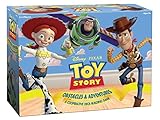
- HOWDY PARTNER - Welcome to Disney Pixar Toy Story Obstacles & Adventures, the cooperative deck-building game that brings the world of Toy Story to life! Play as your favorite characters from the films - Sheriff Woody, Buzz Lightyear, Jesse, Rex and Bo Peep
- TO INFINITY, AND BEYOND - This family board game features artwork, characters, obstacles, and adventures from across all the Toy Story movies and television films - Toy Story, Toy Story 2, Toy Story 3, Toy Story 4, Toy Story of Terror!, and Toy Story That Time Forgot
- THERE'S A SNAKE IN MY BOOT - Watch out for the hazards and obstacles that try and end playtime, While the toys may be cute, don't let them deceive you as there are serious challenges along the way
- YOU'VE GOT A FRIEND IN ME - Work together in this cooperative group game as you build your deck and move along the 6 sequential games that build on their level of difficulty
- 2-5 players | Ages 8+ | 30-90+ Min Play Time
A climate that matches the intended playstyle
Wild crops are created during world generation and appear in different climatic regions. Climate therefore affects which crops you can find and whether a farming plan is realistic. A temperate, reliable farming start may be better for a new player than a dramatic but harsh landscape, while an explorer may accept a difficult climate in exchange for varied terrain.
Why the seed number is never the whole recommendation
World creation exposes several controls that participate in generation. At minimum, record the starting climate, spawn radius, climate distribution, land coverage, ocean scale, upheaval, landform scale, and story-structure distance. Also record any changed frequency for surface copper or tin. Two players can enter the same seed text and receive different coastlines, biomes, resources, or structure locations if any of those values differ.
The server-configuration reference gives the necessary warning: Does not guarantee exactly the same world each time!
Treat a seed as one input to a world-generation configuration, not as a portable map code. Matching the installed Vintage Story version and every relevant setting gives you the best chance of reproducing a candidate; it is not a promise of byte-for-byte identity.
Free tools Windows power users keep installed
One-click scans. No signup required.
Set a fixed test configuration before comparing seeds
Do not change settings between candidate seeds. If you do, you are comparing different world rules rather than seeds.
Rank #3

- A WHOLE NEW WAY TO PARTY: Skip the small talk and spark unforgettable conversations with It’s Kind of a Fun Story, the adult party game where the story of your life earns you points. Perfect for adult game nights, pre-games, happy hours, bachelorette parties, or family gatherings.
- EASY TO LEARN, FUN TO PLAY: Take turns drawing cards and answering questions to be the first player to earn seven points! Story Cards put you in the spotlight to tell a story from your life, but watch out, if another player thinks they have a better tale, they can play a Hear Me Out Card to try to steal your points. Left or Right, Point a Finger, and Everybody Answers cards keep every round fresh, fast-paced, and full of surprises.
- FUN, HEARTFELT, AND FULL OF CONNECTION: With 320 conversation cards, every round is unique, hilarious, and full of exciting stories. More than just a funny adult card game, it brings people closer: laugh together, share embarrassing memories, and bond over stories that are silly, surprising, or even deep.
- CUSTOMIZE YOUR VIBE: Keep it clean or make it spicy with the included R-Rated mini-expansion pack. Clearly marked R-Rated cards let you adjust to your group, and every player gets a Nope Card to skip any topic they’re not comfortable with. Everyone stays engaged and having fun. Perfect as a drinking game, icebreaker game, or casual conversation game.
- PERFECT FOR EVERY OCCASION: Ideal for friends’ game nights, family gatherings, pre-games, happy hours, bachelorette parties, or adult game nights. It’s Kind of a Fun Story is the ultimate adult storytelling card game that gets everyone laughing, sharing, and connecting every time you play.
- Write down the game version. Use the version shown by the game or server you will actually play. Label a seed tested on an older build as historical rather than presenting it as current.
- Choose a preset or playstyle. Decide whether the test is for first-time survival, building, farming, exploration, or multiplayer. Your choice determines what counts as a good trade-off.
- Set the starting climate and spawn radius. Keep both fixed for every candidate. The spawn radius changes the area in which the starting point may appear, so it can alter what “near spawn” means.
- Choose realistic or patchy climate distribution. Record the exact choice. Climate distribution changes how consistently you can find the crops and temperatures you are testing for.
- Record land coverage and ocean scale. These controls affect how much continuous land is available around a spawn and how often water interrupts travel. Do not compare a seed generated with one ocean scale to a seed generated with another.
- Record upheaval and landform scale. Ruggedness and the size of terrain features influence building space, travel routes, and exposure to hazards. Keep the values identical while testing.
- Record story-structure distance. A survival start intended to reach story content quickly needs a different setting from a remote exploration world.
- Record surface-metal settings. If copper or tin frequency is changed from the preset, write down the change. A seed tested with boosted surface deposits is not directly comparable with an unmodified world.
A repeatable seed-testing procedure
Use the same inspection route and the same stopping rule for every candidate. The purpose is not to fully explore a world; it is to judge the first settlement area consistently.
- Create the world with the fixed configuration. Copy the seed text exactly, including capitalization, punctuation, and any minus sign. Save a screenshot or written record of the settings before entering the world.
- Survey the immediate spawn area. Note terrain, trees, visible water, exposed stone, and any obvious shelter sites. Do not move the spawn point or alter the world before recording the initial view.
- Check early food. Follow a consistent short loop around spawn and list what food is available. Record whether it is immediately visible, requires climbing or swimming, or lies beyond a hazardous route.
- Locate clay and a storage site. Mark the first practical clay deposit and the nearest level ground where a temporary shelter and storage can be built. Measure the route rather than estimating from a map view.
- Search for surface copper and tin. Look for exposed indications along the same loop. Note the metal, the terrain, and whether the deposit is easy to recognize for a new player. If none is visible, record that result instead of assuming prospecting will be convenient.
- Assess water and building terrain. Check whether water is close enough for repeated trips and whether there is a safe, reasonably level area for a starter base and later expansion.
- Evaluate climate and crops. Identify the climatic character of the spawn and the wild-crop variety available in the area. A farming candidate should offer a useful crop outlook without forcing an immediate migration.
- Check danger and travel friction. Record steep drops, exposed hostile areas, difficult crossings, and routes that force long detours. A resource that is technically close but dangerous is not equivalent to an easy early find.
- Check story-content distance. If story progression matters, record how far the relevant structures or content are from the intended base area under the chosen story-structure setting.
- Save the complete result. Keep the seed text, version, every world setting, observations, and approximate travel distances together. Without that record, another player cannot meaningfully reproduce your test.
Use this matrix to choose the right kind of “best”
The table below is a decision framework for judging any candidate seed. It does not claim that one unlisted seed wins every category; the appropriate choice depends on the profile in the first column.
| Player profile | Early food | Clay and storage | Surface copper/tin | Terrain and water | Climate and farming | Danger | Story-content distance |
|---|---|---|---|---|---|---|---|
| First-time survival | Prioritize several reachable food sources on the initial survey loop. | Require clay and level storage ground near the same route. | Prefer a visible surface indication within a reasonable walk. | Favor gentle terrain and dependable nearby water. | Choose a forgiving climate over an extreme one. | Reject starts that force hazardous travel for basics. | Accept a longer distance if it makes the opening safer. |
| Builder | Enough food for repeated local work matters more than variety. | Value broad, level land with clay close to the planned build site. | Convenient metal is useful, but not worth sacrificing building space. | Prioritize a large building area and attractive, usable water access. | Choose the climate that suits the planned landscape and crops. | Prefer a defensible, easy-to-navigate site. | Story structures can be farther away. |
| Explorer | Accept a less concentrated food supply if routes are interesting. | Nearby clay is helpful but not decisive. | Surface metal can be traded for varied terrain and discoveries. | Value connected landforms and navigable routes. | Look for climatic variety rather than a single farming zone. | Higher exposure may be an intentional trade-off. | Shorter structure distance is useful if story travel is a goal. |
| Farming start | Food and crop diversity are first-order requirements. | Keep clay and storage close so farming does not delay basic progression. | Require enough early metal to avoid abandoning the farm area. | Choose workable ground with reliable water access. | Match the starting climate to the crops you intend to grow. | Avoid dangerous terrain that makes field work and hauling costly. | Story distance is secondary to a stable agricultural base. |
| Multiplayer | Look for enough local food to support several players during setup. | Clay, storage space, and multiple build sites should be close together. | Prefer accessible surface deposits so the group can equip itself quickly. | Favor connected, expandable land and water routes. | Choose a climate that supports the group’s farming plan. | Reduce early danger because mistakes affect the whole team. | Set distance according to whether the server emphasizes story or settlement. |
How climate changes a farming recommendation
Climate is not decoration. Because wild crops are generated into climatic regions, a seed that looks excellent for building may be poor for a farming-focused world. During testing, record both the climate setting and what crops actually appear around the spawn. Do not infer crop availability from the seed text or from a screenshot made under a different climate distribution.
Realistic versus patchy distribution
Keep the distribution choice fixed while comparing seeds. If you switch between realistic and patchy climates, you may change how quickly a player encounters suitable crops and temperatures even when the seed text remains unchanged. State the choice whenever you share a result.
Rank #4

- In Prey, you awaken aboard Talos I, a space station orbiting the moon in the year 2032.
- You are the key subject of an experiment meant to alter humanity forever - but things have gone terribly wrong.
- The space station has been overrun by hostile aliens and you are now being hunted.
When to abandon a farming candidate
Move on to another candidate when the intended crop plan requires an immediate, hazardous migration, when suitable growing conditions are far from the usable building area, or when the early food supply and farming needs compete for the same scarce route. The right answer is a seed-and-configuration combination that supports the complete opening, not merely one attractive crop patch.
Independent reader supportYour contribution helps us test, update, and keep practical guides available for everyone.How surface-metal settings affect fairness
Surface copper and tin are especially important in the opening because they shorten the path from stone tools to metal progression. If you alter surface-deposit frequency, label the world as modified and compare it only with other worlds using the same setting. Otherwise, a seed may appear “better” simply because the world rules made metal more common.
When documenting a metal find, distinguish between “visible near spawn,” “found after a short, deliberate search,” and “not observed.” Those descriptions tell another player how much uncertainty and travel the start involves.
The Tool Desk
Outbyte PC Repair FREEClear out junk files and repair common Windows errorsFree Scan →Outbyte Driver Updater FREEScan for outdated or missing drivers - takes under a minuteDriver Scan →Sharing a seed so someone else can reproduce it
A useful seed report is a configuration record, not just a number. Include:
Best Value

- 3-Piece Premium Metal Puzzle Set for Adults 15+: This curated bundle has 3 unique vintage metal disentanglement puzzles for teens and adults craving brain challenges. Precision-cast high-strength alloy brings solid weight and smooth burr-free edges, no cheap plastic parts at all.
- Durable Anti-Rust Build for Long-Term Play & Collection:Premium electroplated vintage metal coating resists scratches, fading and rust after months of repeated twisting. The sturdy structure won’t bend or break easily, making it a long-lasting collection piece for countless play sessions.
- Boost Spatial Logic & Focus in a Screen-Free Way:This 3D IQ game trains your patience, spatial imagination and reverse thinking as you twist and explore hidden mechanisms. Gradual difficulty keeps you engaged for hours, melting work stress and keeping your mind sharp.
- Pocket-Sized Fun for Travel, Parties & Gatherings:Compact and lightweight enough to slip into your bag or jeans pocket, it lets you enjoy brain teasers on commutes, trips or family game nights. It livens up group interactions and pulls everyone away from mindless scrolling.
- Thoughtful Gift for Puzzle Lovers & Special Occasions:With clear illustrated instructions, this challenging disentanglement set is perfect for birthdays, anniversaries and holiday gifting. It’s more than a game — a fun, memorable way to share quality time with friends and partners.
- Exact seed text.
- Vintage Story version and whether the result is historical.
- Preset or intended playstyle.
- Starting climate and spawn radius.
- Realistic or patchy climate distribution.
- Land coverage, ocean scale, upheaval, and landform scale.
- Story-structure distance.
- Any changed surface copper or tin frequency.
- What was visible near spawn: food, clay, trees, water, shelter terrain, and surface metal.
- Approximate walking distance to each highlighted feature.
- Whether the observation came from a fresh world and an unmodified spawn.
Readers should be able to recreate the conditions before judging whether the seed suits them. If any setting is omitted, call the result a lead to test rather than a guaranteed recommendation.
Why community “best seed” posts often fail to reproduce
Community seed posts can reveal promising candidates, but they are anecdotal and frequently omit the full configuration. A post may use a different build, climate distribution, spawn radius, or metal frequency from your world. Treat the seed as a candidate and rerun the standardized survey above. If the opening changes, the difference is evidence that the configuration—not the seed text alone—determined the result.
Troubleshooting a different-looking map
The seed opens in a different climate
Check the game version, starting climate, and climate-distribution choice first. A mismatch in any of these can alter crop access and the character of the spawn.
The coastline or terrain does not match
Compare land coverage, ocean scale, upheaval, and landform scale. Also verify the seed text character by character; a missing minus sign or changed capitalization creates a different input.
Copper or tin is missing
Confirm the surface-deposit setting and the inspection route. “No visible metal on the first loop” is not the same claim as “the world contains no metal,” so report exactly what you checked.
Story structures are farther away
Check the story-structure distance setting and the version used for the original observation. A structure’s location should not be compared across worlds with different distance controls.
Bottom line: choose a verified configuration, not a magic number
The best Vintage Story seed is the one that meets your stated priorities under the exact version and world settings you will play. For a first survival world, favor reachable food, clay, storage ground, water, and visible copper or tin; for farming, put climate and wild-crop access first; for building or exploration, accept resource or story-distance trade-offs in exchange for terrain you value. Publish or save the complete configuration with every seed, because the seed string alone cannot guarantee the same world.
Recommended Free Tools
Quick Recap
Product prices and availability are accurate as of the date/time indicated and are subject to change. Any price and availability information displayed on Amazon at the time of purchase will apply.

