
Free tools Windows power users keep installed
One-click scans. No signup required.
For most people who use only Apple devices, Apple Reminders is the best place to start. It is already integrated with iPhone and iPad, supports Siri and dictation, handles shared lists and grocery planning, and offers tags and Smart Lists without requiring a separate third-party task system.
It is not the best fit for every workflow. Choose Todoist for flexible cross-platform projects, Things for a focused Apple-only personal system, TickTick for tasks combined with calendars and habits, Structured for visual time-blocking, or OmniFocus for complex projects and GTD-style reviews.
Quick comparison
| App | Best for | Why choose it | Main limitation |
|---|---|---|---|
| Apple Reminders | Most Apple users, families, errands, and groceries | Deep iPhone and iPad integration, Siri, shared lists, tags, Smart Lists, grocery categorization, and Scribble support | Less suitable for complex cross-platform project systems |
| Todoist | General-purpose and cross-platform task management | Projects, subtasks, priorities, filters, reminders, list and board views, integrations, and team workspaces | Important features vary between the Beginner, Pro, and Business tiers |
| Things | Focused personal task management on Apple devices | Projects, areas, tags, checklists, start dates, deadlines, widgets, Siri, and one-time platform purchases | No real-time list sharing and no Windows, Android, Linux, or web app |
| TickTick | Tasks, calendar planning, habits, and focus tools in one app | Calendar, timeline, Kanban, recurring and location reminders, habit tracking, Pomodoro, and collaboration | Its large feature set can be excessive if you only need a simple list |
| Structured | Visual daily planning and time-blocking | Drag-and-drop timeline, routines, subtasks, focus timer, widgets, and calendar connections | Its timeline model is not ideal for deep project databases or simple shared lists |
| OmniFocus | Complex projects and GTD-style organization | Folders, projects, tags, perspectives, Forecast, Review, automation, repeat schedules, and location-aware views | More setup and learning are required than with simpler apps |
Pricing and plan boundaries change. Todoist, TickTick, Structured, Things, and OmniFocus all have paid plans, purchases, or premium features. Check the current official pricing or App Store listing before subscribing or buying. The durable distinction is the product model: Reminders is Apple’s integrated default, Things uses separate platform purchases with free syncing, and the other specialized apps expose paid tiers or premium features.
1. Apple Reminders: best for most iPhone and iPad users
Choose Apple Reminders if you want a capable task app that works with the Apple features you already use. It is the lowest-friction option for errands, household chores, school tasks, grocery lists, appointments, and reminders shared with family members.
#1 Best Overall

- Connect in seconds: Fast, easy Bluetooth wireless technology simply connects without the need for a dongle or USB port
- Durable and reliable: Built for quality, K250 offers long-lasting keys, a spill-resistant design (2)
- Comfort is key: Deep-profile keys and an adjustable tilt-leg design make typing feel great
- Space-saving: with a compact layout that still includes number pad, arrow keys, and handy F-key shortcuts
- Made responsibly: Designed to last, K250 plastic parts are durably made with minimum 64% recycled plastic (3) to withstand everyday use
Reminders can create ordinary lists and group related lists together. You can also use tags and Smart Lists to organize reminders without manually copying them between lists. A tag browser can collect matching reminders from multiple lists, while a Smart List can automatically show reminders that meet selected rules. That makes it possible to keep separate lists for home, work, and shopping while still viewing all tasks with a particular tag or priority.
Useful Reminders features
- Siri and dictation: Capture a task by voice instead of opening the app and typing.
- Shared lists: Collaborate on household, shopping, school, or event lists with other people using Apple devices.
- Grocery categorization: Grocery lists can organize items into useful categories rather than presenting one undifferentiated sequence.
- Tags and Smart Lists: Build filtered views across several lists.
- Templates: Save a reusable list structure for recurring packing lists, shopping routines, trips, or projects.
- iPad input: Apple documents Scribble support, so you can write into Reminders with an Apple Pencil-compatible iPad rather than typing every item.
If handwriting task ideas is part of your workflow, an Apple Pencil for iPad can be a useful task-entry accessory. Check compatibility against the exact iPad model before buying: Apple Pencil support and the compatible Pencil generation vary by iPad.
Reminders is also the strongest choice for a family that wants shared lists without introducing another task-management service. Its main weakness appears when tasks become a substantial project system. Users who need extensive cross-platform access, advanced review workflows, detailed project hierarchies, or highly customized task views may outgrow it.
Important Reminders limitation
Some current Reminders capabilities depend on using updated iCloud reminders. Apple notes that certain features are unavailable when reminders are managed through other account types. If tags, Smart Lists, templates, or newer list features do not appear, check which account is storing your reminders and whether your devices are using the updated iCloud reminders system.
The Tool Desk
Outbyte PC Repair FREEClear out junk files and repair common Windows errorsFree Scan →Outbyte Driver Updater FREEScan for outdated or missing drivers - takes under a minuteDriver Scan →2. Todoist: best general-purpose cross-platform task manager
Choose Todoist if your tasks need to follow you beyond Apple devices or if you want a flexible system for work, personal projects, and shared responsibilities. It is a practical middle ground between a basic list and a full project-management tool.
Todoist organizes work into projects and supports subtasks, due dates and times, priorities, reminders, filters, and both list and board layouts. That gives you several ways to represent the same work: a conventional checklist, a project broken into stages, or a board organized by status. It also supports integrations and file uploads, while team workspaces provide a more structured way to manage shared work.
Todoist is particularly useful when you have tasks in several areas of life but want one consistent capture and review method. For example, you might keep separate projects for a home renovation, freelance work, and personal errands, then use filters to create views such as “high-priority tasks due this week” or “next actions for work.”
Who should choose Todoist?
- People who use iPhone and iPad alongside Windows, Android, or other platforms.
- Users who want both personal projects and shared team workspaces.
- Anyone who prefers flexible filters and multiple project views.
- Households that need more structure than a single shared shopping list.
Todoist’s main consideration is its plan structure. Its current documentation distinguishes a free Beginner tier from paid Pro and Business tiers, and features such as expanded reminders, filters, views, uploads, or team capabilities may depend on the plan. Do not rely on an old price or an old feature comparison; check the current Todoist pricing page before choosing a tier.
3. Things: best focused Apple-only personal task manager
Choose Things if you want a polished personal task system designed specifically for Apple platforms and prefer an app purchase over a recurring subscription for the app itself.
Things separates organization into areas and projects. Areas can represent broad responsibilities such as Work, Family, or Personal, while projects can contain the individual outcomes and actions inside those responsibilities. Tags, checklists, notes, deadlines, start dates, and reminders provide additional detail without turning every task into a complicated record.
Rank #2

- 3 Devices Switch with A Single Clicking: This keyboard is able to connect to 3 devices at the same time. You can switch between 3 devices with a single key clicking.
- Ergonomic design: Stainless steel material gives heavy duty feeling, low-profile keys, full size keys, arrow keys, number pad, shortcuts offer quiet and comfortable typing.
- Broad Compatibility: Use with all four major operating systems supporting Bluetooth (iOS, Android, Mac OS and Windows), including Computer, Desktop, PC, Laptop / iPad Pro, iPad Air, iPad, iPad Min, iPhone, Smartphone / Android Tablets like Samsung Galaxy, Surface etc.
- 6-Month Battery Life: Rechargeable lithium battery with an industry-high capacity lasts for 6 months with single charge (based on 2 hours non-stop use per day).
- Package contents: Arteck Stainless Bluetooth Keyboard, USB charging cable, welcome guide, our 24-month warranty and friendly customer service.
Things also supports natural-language date entry, widgets, Siri integration on iPhone and iPad, and drag-and-drop workflows on iPad. Things Cloud provides syncing, while the iPhone, iPad, Mac, and Apple Vision apps are separate platform applications with their own purchase details.
The app is a good fit when task management is primarily personal and you value a focused Apple-native environment. Its deliberate limitation is important, however: official support documentation says Things does not support real-time sharing of to-dos or lists. It is therefore not the right recommendation for a family that needs a jointly edited grocery list or a team that needs shared task ownership.
Things platform caveat
Things does not run on Windows, Android, Linux, or through a web browser. If even one important person in your workflow uses a non-Apple platform, confirm that the platform limitation is acceptable before committing to it. For an Apple-only household where each person needs shared lists, Reminders is usually a better fit.
4. TickTick: best all-in-one tasks, calendar, habits, and focus tools
Choose TickTick if you want tasks, scheduling, habits, and focus sessions in one product. It goes beyond conventional to-do lists by combining task management with calendar views, recurring reminders, habit tracking, a Pomodoro timer, countdowns, and planning tools such as the Eisenhower Matrix.
TickTick offers list, tag, filter, Kanban, timeline, and calendar views. It can handle recurring reminders and supports email and location reminders; the research documentation specifically identifies location reminders on iOS. Widgets, collaboration features, and integrations make it usable for both personal planning and shared work.
This combination is useful for someone who does not want separate apps for several related routines. A daily plan might contain appointments and project tasks in the calendar, recurring household chores, habits to track, and a Pomodoro session for focused work.
Recommended Free Tools
Recent TickTick direction
TickTick’s current feature material and changelog describe additions including suggested tasks, a yearly calendar view, Notion integration, expanded search filters, Telegram integration, constant reminders, and separate mobile and desktop list views. These details show that the product continues to expand beyond basic checklists, but they also reinforce the need to check current plan boundaries before subscribing.
TickTick is less appropriate when simplicity is the priority. If you only need a shared grocery list, its calendar, habit, focus, and planning tools may add more decisions than value. If you want those functions together, however, it is one of the broadest choices in this comparison.
5. Structured: best visual daily timeline
Choose Structured if you think in terms of time blocks rather than an unordered list of tasks. Instead of asking only what needs to be done, Structured emphasizes when each task should happen during the day.
Rank #3
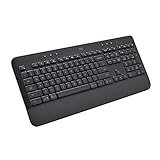
- All Day Comfort: Integrated soft-touch keyboard palm rest meets deep-cushioned keys with that instantly familiar feeling for a satisfying typing experience
- Achieve More with Less Effort: Wireless full-size keyboard layout with convenient access to all the right shortcut keys; save time with commands like mic mute, unmute, screenshot, and web navigation
- Connect the Way You Like: Wireless connectivity via BLE (Bluetooth Low Energy) wireless technology or the included Logi Bolt receiver
- Works on Multiple Platforms: Signature K650 Logitech Wireless Keyboard works with multiple operating systems—Windows, macOS, Chrome OS, Linux, iPadOS, iOS and Android
- Reliable and Hassle-Free: Your cordless keyboard won’t require new batteries for up to 36 months (may vary based on user and computing conditions); it is also easy to clean and spill-resistant
Its central interface is a visual timeline with drag-and-drop planning. Tasks can include subtasks and notes, and recurring tasks and routines can help turn repeated schedules into reusable patterns. The app also includes an inbox for capturing items before placing them into the day, a Pomodoro timer, Live Activities, and interactive widgets.
Outdated Drivers Are Slowing You Down
One free scan finds every outdated or missing driver and matches the right update for your exact hardware.Free scan · exact hardware matchPC Slower Than It Used to Be?
A free scan shows the junk files, broken settings and background clutter dragging Windows down - then fixes them in one click.Free scan · Windows 10 & 11Structured can connect with calendars and Apple Reminders, giving you a way to combine scheduled commitments with tasks in one visual plan. It also documents accessibility features and iPhone/iPad synchronization. On iPad, synchronization can use iCloud or Structured Cloud, and the help documentation specifies iPadOS 17 or later for iPad support.
What to know about Structured Pro
Several of the features that make Structured more than a simple timeline are tied to Structured Pro. The official App Store listing places capabilities such as calendar and Reminders connections, AI-powered planning, and automatic replanning under Pro. Verify the current subscription details and feature boundaries before assuming that a particular integration is included at no cost.
Structured is a strong match for students, time blockers, and visual planners who find ordinary lists too abstract. It is a weaker choice for a large project database, complex task dependencies, or a family that mainly wants a shared list. A timeline can show today clearly, but it is not automatically a substitute for deep project organization.
6. OmniFocus: best for advanced projects and GTD-style organization
Choose OmniFocus if managing tasks is itself a serious system that requires projects, contexts, reviews, custom views, and automation. It is the advanced option in this group and is aimed at users who want detailed control over capture, organization, scheduling, and review.
Quick wins for a faster PC:
Fix the driver behind crashes, sound loss and screen glitchesFind Drivers →Repair Windows errors before they cause bigger problemsFix Now →Scan for outdated or missing drivers - takes under a minuteDriver Scan →OmniFocus supports projects, folders, tags, flags, notes, attachments, due dates, defer dates, and repeat schedules. Its Forecast view helps combine dated tasks with a forward-looking plan. Nearby can surface location-aware tasks, while Review provides a structured way to revisit projects and keep them current.
Advanced users can create customized perspectives—saved task views based on their own rules—and use focus mode to limit attention to selected areas. Widgets and automation extend the system beyond the main app, and OmniFocus documents encrypted sync along with iPhone and iPad support.
Who should avoid OmniFocus?
OmniFocus is not automatically better because it has more features. If you want to add a task quickly, share a list, and get on with your day, Reminders or Todoist will usually require less setup. OmniFocus makes the most sense when you are willing to maintain projects, define useful tags or contexts, perform regular reviews, and customize the system around a demanding workload.
The current offering includes license-purchase and subscription paths as well as a free trial, but pricing and exact plan details should be verified before publication or purchase.
Do these 3 things before closing this tab:
1Scan for outdated or missing drivers - takes under a minute2Repair Windows errors before they cause bigger problems3Fix the driver behind crashes, sound loss and screen glitchesRank #4

- Connect in seconds: Fast, easy Bluetooth wireless technology—pair and play this Logitech Wireless Keyboard and Mouse Combo without the need for a dongle or USB port
- Durable and reliable: Built for quality, MK250 Bluetooth keyboard offers long-lasting keys, a spill-resistant design (2), and a 12-month keyboard battery life (1)
- Comfort is key: Deep-profile keys and an adjustable tilt-leg design make typing feel great
- Space-saving: with a compact layout that still includes number pad, arrow keys, and handy F-key shortcuts
- Made responsibly: Designed to last, MK250 plastic parts are durably made with a minimum of 66% (mouse) and 64% (keyboard) recycled plastic (3)(4)
How to choose the right app by workflow
Choose Apple Reminders when integration matters most
Reminders should be your first choice if your devices are iPhones and iPads, you use Siri, you share household lists, or you want grocery categorization and Apple Pencil Scribble without learning a separate system.
Choose Todoist when platform flexibility matters
Todoist is the safer choice when tasks must work across Apple and non-Apple devices, or when you need projects, filters, board views, integrations, and team workspaces in one general-purpose service.
Choose Things when the system is personal and Apple-only
Things is attractive for an individual who wants projects and areas, a focused interface, and a one-time platform-purchase model. Do not choose it for real-time collaboration or mixed-platform access.
Choose TickTick when you want one app for several planning habits
TickTick is the broadest fit if your ideal app includes a task list, calendar, habit tracker, Pomodoro timer, countdowns, recurring reminders, and multiple planning views.
Choose Structured when the question is “when?”
Structured is the best match when a task feels incomplete until it has a place in your day. Its visual timeline and drag-and-drop scheduling are more important than having the deepest project hierarchy.
Choose OmniFocus when the question is “how do I manage the whole system?”
OmniFocus is for project-heavy users who want custom perspectives, forecasting, reviews, tags, automation, and detailed control over task states and contexts.
A practical selection test
Before moving all your tasks, answer these questions:
- Which devices must be supported? If Windows, Android, Linux, or a web browser is required, exclude Apple-only options such as Things.
- Do other people need to edit the same lists? If yes, prioritize Reminders or Todoist. Do not assume Things supports shared lists.
- Do tasks need a time on the calendar? Consider Structured or TickTick. A conventional list may be enough if due dates are all you need.
- Do you need habits and focus timers? TickTick includes those tools alongside tasks.
- Do you need formal reviews and custom task views? OmniFocus is the specialist choice.
- Do you want to avoid a separate service? Start with Reminders, provided your iCloud setup supports the features you need.
- Will you maintain the system? The more advanced the app, the more valuable regular organization and review become. A simpler app that you actually use is better than a powerful one that becomes another neglected project.
Making task entry easier on iPad
An iPad can be useful for planning, but entering many small tasks with an on-screen keyboard is not ideal for everyone. Reminders’ documented Scribble support makes a compatible Apple Pencil useful for handwritten task capture. Check the exact iPad and Apple Pencil compatibility before buying.
If you type long project notes or capture many tasks at a desk, an iPad keyboard case or compatible Bluetooth keyboard may be more practical. This is an optional convenience rather than a requirement for any of the apps above, and it should not determine the app ranking.
Best Value

- Wireless keyboard has 7 colors & 4 modes RGB backlit options and adjustable brightness to provide you with more visual aesthetics typing atmosphere.
- Computer keyboard designed with 8.7" convenient device holder to hold your phone or tablet, keep your desk clean and tidy.
- The wireless keyboard features lighted and responsive tactile keystrokes for a smooth and quiet typing experience, ability to increase your work efficiency.
- Keyboard wireless layout with convenient access to all the right shortcut and multimedia keys, achieve more with less effort.
- Backlit wireless keyboard with built-in 1500mAh rechargeable battery that reduce the hassle of traditional battery replacement and wiring.
Pricing and plan checks before you commit
Do not choose an app solely from an old price comparison. App Store prices, subscription tiers, included features, and regional availability can change.
- Apple Reminders: The core experience is integrated with Apple’s ecosystem, though iCloud and account requirements apply to some features.
- Things: Uses separate purchases for its platform apps and offers free Things Cloud syncing; confirm the current price for each device platform.
- Todoist: Has a free Beginner tier and paid Pro and Business tiers, with feature availability varying by plan.
- TickTick: Offers a broad feature set with some advanced capabilities dependent on the current plan.
- Structured: Places several advanced timeline, integration, and AI capabilities under Structured Pro.
- OmniFocus: Offers license and subscription models plus a free trial; confirm the current offering before purchase.
For a current decision, review the provider’s own pricing page or App Store listing immediately before subscribing. The comparison above is intended to explain the products’ workflows, not freeze changing prices into an evergreen article.
Frequently Asked Questions
What is the best free to-do list app for iPhone and iPad?
Apple Reminders is the best starting point for most Apple users because it is integrated into iPhone and iPad and includes lists, shared lists, Siri and dictation input, tags, Smart Lists, templates, and grocery categorization. Some newer capabilities depend on updated iCloud reminders, so check your account setup if features are missing.
What’s actually slowing this PC down?
Pick the symptom - the matching free tool is one click away.
Which to-do list app works best across iPhone, iPad, Windows, and Android?
Todoist is the strongest general-purpose choice in this comparison for mixed-platform use. It supports projects, subtasks, priorities, filters, reminders, multiple views, integrations, and team workspaces. Check its current plan limits before relying on a paid feature.
Can Things share to-do lists with other people?
No. Things’ official support documentation says it does not support real-time sharing of to-dos or lists. It is designed primarily as a personal Apple-platform task manager, not as a collaborative family or team list.
Which app is best for time-blocking tasks?
Structured is the clearest fit for visual time-blocking because its primary interface is a drag-and-drop daily timeline. TickTick is another option if you also want calendar views, habits, focus tools, and broader task-management features.
Which app is best for GTD?
OmniFocus is the strongest choice here for advanced GTD-style organization because it supports projects, folders, tags, defer and due dates, repeat schedules, Forecast, Review, custom perspectives, focus mode, and automation. It requires more setup and ongoing maintenance than Reminders or Todoist.
Recommended Free Tools
The Bottom Line
Start with Apple Reminders unless your workflow points clearly elsewhere. Move to Todoist for cross-platform projects and collaboration, Things for focused personal use on Apple devices, TickTick for an all-in-one planning toolkit, Structured for visual time-blocking, or OmniFocus for advanced project reviews and automation.
Quick Recap
Product prices and availability are accurate as of the date/time indicated and are subject to change. Any price and availability information displayed on Amazon at the time of purchase will apply.

