
Quick wins for a faster PC:
Fix the driver behind crashes, sound loss and screen glitchesFind Drivers →Clear out junk files and repair common Windows errorsFree Scan →iTechGuides is reader-supported. When you buy through links on our site, we may earn an affiliate commission. As an Amazon Associate I earn from qualifying purchases. Learn more
For a family of six, the best RV is usually a dedicated bunkhouse travel trailer or fifth wheel if you already have (or plan to buy) a properly rated tow vehicle. Choose a Class C, Class A, or other motorhome when driving one integrated vehicle matters more than separating the tow vehicle from the living space. Do not choose from the advertised “sleeps” number alone. Match the exact bed and bunk dimensions, bunk weight ratings, legal passenger seatbelts, storage, cargo capacity, route and campsite limits, and the tow vehicle’s payload and ratings. No single floorplan is best for every family.
Start with the decision that changes every other choice
Before comparing model names, decide whether your family wants a towable RV or a motorhome. A towable trailer or fifth wheel gives you a separate vehicle for errands after setting up camp, but it requires a suitable tow vehicle, hitch equipment and a driver comfortable with the combination. A motorhome lets everyone travel in one vehicle and can simplify departure, but the family may need a second vehicle at the destination and must verify that every traveler has a designated, belted seat while moving.

Your ages, heights, sleeping preferences, trip length and camping style can change the answer. Six small children may fit a layout that becomes impractical when teenagers need longer bunks and more privacy. A family that takes short weekends may tolerate converting a dinette every night; a family spending two weeks inside during bad weather may need a permanent bunkroom, a second lounge and more than one bathroom.
PC Slower Than It Used to Be?
A free scan shows the junk files, broken settings and background clutter dragging Windows down - then fixes them in one click.Free scan · Windows 10 & 11Outdated Drivers Are Slowing You Down
One free scan finds every outdated or missing driver and matches the right update for your exact hardware.Free scan · exact hardware matchWhat “sleeps six” does—and does not—tell you
RV manufacturers count beds, convertible sofas and dinettes differently. A brochure’s sleeping capacity describes possible overnight spaces at camp; it does not guarantee comfortable dimensions, privacy or legal travel seating.
#1 Best Overall

- Precision Fit & Quick Setup: Tailored fit for Ford Class C E450 1997-2026 models, not for all RV models. The intuitive design with strong edge-gripping technology allows you to install or remove BougeRV rv windshield cover in about 3 minutes without tools
- All-Season Shield: BougeRV robust 4-layer aluminum foil + PE film material helps reduce sunlight to keep the cab noticeably cooler in summer and effectively stands up to heavy snow ice and frost during freezing winter storage
- Keep Your Privacy: Our opaque black interior lining completely covers the front windshield and side door glass to cover outside views providing added privacy when parked at the campsite
- Superior Wind Resistance: BougeRV multi-point fastening system combining built-in heavy-duty holding strips and sturdy hook-and-loop fasteners around mirrors helps keep the cover securely in place in windy conditions
- Compact Storage and Care: BougeRV motorhome windshield sun shade folds neatly into a compact size for easy storage. Do not machine wash
- Map each person to a real bed. Write down who uses the front bed, each bunk, the sofa and the dinette. Note which spaces must be assembled every night.
- Measure the bunks. Compare length and width with each child’s current height and expected growth. A nominal double bunk can be much more usable than a narrow single, but the exact floorplan controls.
- Check weight limits. An upper bunk or overhead cab bunk may have a stated maximum occupant weight. Never assume two people can share it.
- Separate privacy from capacity. A curtain around a bunk area is different from a dedicated room with a door. Consider changing clothes, bedtime schedules and early risers.
- Account for conversions. If a sofa or dinette becomes a bed, measure the remaining walking space and decide whether the family can live with losing that seating each evening.
For a motorhome, count seatbelts separately. A published example illustrates the distinction: the Jayco Redhawk is described as sleeping seven while providing safety belts for eight. That does not mean every Redhawk floorplan or model year has the same arrangement, so inspect the exact unit and belt locations before purchase.
Best towable layouts for six people
Dedicated bunkhouse travel trailers
A rear bunkhouse trailer is the most natural starting point for many families. Parents can use a front bedroom while children have a separate rear area, and the central living room remains available during the day. Camping World’s 2026 buyer guidance says families of six generally do best with trailers in the 30- to 40-foot range, often with a private rear bunk room and a separate front bedroom. Treat that as general guidance, not a rule: a shorter, efficiently designed trailer may work, while a long trailer can still feel cramped if storage and traffic flow are poor.
Look for a bunkroom that provides more than beds. A second sofa or lounge gives older children a place to read or play without occupying the main dinette. Drawers, wardrobe space and a dedicated place for shoes reduce clutter in the shared living area. Check whether the bathroom can be reached without walking through the parent bedroom and whether the refrigerator, pantry and exterior storage can handle a six-person trip.
Free tools Windows power users keep installed
One-click scans. No signup required.
Rank #2

- SELF ADHESIVE EASY INSTALLATION key rack– No drilling or special tools required! Simply peel and stick for hassle-free mounting on your RV, camper, or trailer. Size 6.7 *3.2 inch
- STRONG ADHESION for Heavy Keychains – Designed to securely hold bulky and heavy keychains, key rings, and accessories without budging, even in wet environments.
- DURABLE METAL Frame covered with soft rubber– Built with a sturdy metal frame inside to support long-lasting use and prevent warping or bending over time.
- PERFECT FOR INSIDE & Outside Use – Ideal for both interior camper decor and outdoor trailer storage, adding a stylish touch to your RV or travel trailer.
- RETRO DECORATIVE STORAGE – Enhance your camper’s interior with this vintage-inspired key holder, combining functionality with charming retro decor and efficient organization.
THOR Industries’ bunkhouse guide identifies several towable layouts to investigate, including the Airstream Flying Cloud with two rear full-size bunks and a convertible dinette; Highland Ridge Light layouts described as double bunks over double bunks with additional seating and a flip-up bunk; and bunkhouse lines from Jayco, Heartland and Cruiser. These are manufacturer descriptions, not a guarantee that every floorplan has identical dimensions or equipment. Verify the model year, options and labels on the exact unit.
Examples that show why specifications matter
Camping World’s 2026 guide lists a 38-foot-10-inch Wildwood Heritage Glen 301FAM with a published 9,893-pound dry weight and sleeping capacity of up to six. It also lists a 38-foot-4-inch Jay Flight 325BHT with an 8,475-pound dry weight and sleeping capacity of up to eleven. The second trailer’s higher advertised capacity does not automatically make it better for your family; bunk sizes, layout, loaded weight, storage and tow-vehicle limits determine whether it is workable.
| Example floorplan | Published length | Published dry weight | Advertised sleeping capacity | How to use the figure |
|---|---|---|---|---|
| Wildwood Heritage Glen 301FAM | 38 ft 10 in | 9,893 lb | Up to 6 | Confirm loaded weight, cargo capacity and tow ratings for the exact unit. |
| Jay Flight 325BHT | 38 ft 4 in | 8,475 lb | Up to 11 | Inspect actual bunk dimensions and decide whether the extra claimed beds are practical. |
Both weights are dry specifications. Water, propane, batteries, food, clothing, bicycles, cookware and personal gear increase the trailer’s actual travel weight. Use the manufacturer’s certification label and a loaded-weight estimate rather than treating dry weight as a towing recommendation.
Rank #3

- This RV levelers with Magnetism on the base, can absorbed onto the iron- or steel-surface for leveling.
- Come with 8 Pieces Screws for for easy mounting to leveled surfaces.
- Dimensions(Width x Length x Height ): 1.72 inch x 2.26 inch x 0.51 inch. Package: 4 x T Levelers.
- Multi-purpose, cross check, 2-directional levelers can adjust both vertical and horizontal surfaces.
- The small size T levelers can be permanently mounted to various places in rv so that you can always verify if it is still level.
Fifth wheels
A fifth wheel can provide a larger living area, a raised bedroom and substantial storage. The hitch position over the tow vehicle’s rear axle can improve maneuverability compared with a long bumper-pull trailer, but the truck must have adequate payload for the pin weight as well as passengers and cargo. A fifth wheel may be attractive when six people need indoor space for extended trips, yet its size can restrict campsites and routes. Confirm bed-rail clearance, hitch installation, turning space and the truck’s payload rating before shopping for a specific model.
What’s actually slowing this PC down?
Pick the symptom - the matching free tool is one click away.
Motorhomes that can work for six
Class C
A Class C often offers a cab-over bed, a rear bedroom and a convertible dinette or sofa, making it a manageable motorized option for a family. THOR’s guide describes the Jayco Redhawk as sleeping seven with safety belts for eight, and the Entegra Coach Odyssey as sleeping seven with belts for eight. Those figures show the kind of separation to look for: enough designated travel seats for every occupant, plus beds that fit everyone at night. Confirm the exact floorplan, belt locations, child-seat requirements and model year rather than relying on a line-wide number.
Class C coaches are generally easier to place and drive than the largest Class A models, but the cab-over bed may have a lower weight limit and limited headroom. Check ladder access, guardrails, mattress size and whether the bunk must be cleared for travel.
Rank #4
Class A
Jayco describes its 2026 Precept Class A line as having five floorplans that each sleep at least six. The 36A is listed as sleeping up to nine because it includes two 28-by-68-inch bunk beds; an optional overhead bunk has a stated 750-pound capacity. Verify whether the selected unit includes the option, and check the capacity label before assigning occupants. A Class A can offer broad living space and large storage bays, but its length, turning radius and campsite requirements deserve a route-by-route check.
Compare the choices on the dimensions that affect daily life
| Decision axis | Towable bunkhouse or fifth wheel | Class C or Class A motorhome |
|---|---|---|
| Travel arrangement | Family rides in the tow vehicle; trailer is living space at camp. | Everyone travels in one motorized coach, subject to designated seatbelts. |
| Local transportation | Unhitch and use the tow vehicle for errands. | Often requires towing or carrying a second vehicle, or breaking camp. |
| Sleeping design | Dedicated bunkrooms and larger layouts are common; exact beds vary. | Cab-over, rear-bed, bunk and convertible furniture combinations vary. |
| Capacity check | Match loaded trailer weight, hitch or pin load and tow-vehicle payload. | Match passenger seating, occupant weight, cargo and the coach’s ratings. |
| Driving and campsite limits | Length, turning, backing and hitching affect access. | Overall height, length, fuel use and maneuverability affect access. |
| Best fit | Families wanting a stationary home base and a separate runabout vehicle. | Families prioritizing one integrated vehicle and simpler departure. |
How to verify towing compatibility
Do not infer compatibility from a trailer’s dry weight or an advertised tow rating alone. The combination must account for the actual trailer, the vehicle, passengers and cargo.
- Get the exact trailer data. Record the certification-label GVWR, unloaded vehicle weight, cargo-carrying capacity and maximum hitch or pin weight for the specific unit and options.
- Estimate the travel load. Include full or partial water tanks, propane, batteries, food, clothing, chairs, grills, bicycles, toys and every passenger’s weight. Use a conservative estimate until a scale provides a measured figure.
- Check the tow vehicle’s ratings. Obtain its payload rating, maximum trailer rating, gross vehicle weight rating, gross combined weight rating, axle ratings and hitch rating from the door label and manufacturer documentation.
- Subtract people and cargo. Payload must cover passengers, luggage, hitch hardware and the trailer’s tongue or pin load. A vehicle can be below its advertised trailer rating yet over its payload limit.
- Have the match reviewed. Ask a qualified RV or vehicle specialist to verify the proposed combination, hitch setup, brake controller, weight-distribution equipment and mirrors. The final decision should use the exact vehicle and trailer labels, not a salesperson’s generic example.
For a family of six, the tow vehicle also needs enough seating for everyone and room for the gear that cannot remain in the trailer while traveling. Test the planned loading arrangement before signing a purchase agreement.
Best Value
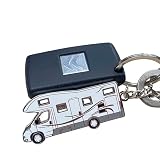
- PERFECT GIFT FOR RV LOVERS Looking for practical gifts for RV owners? This RV camper keychain is a thoughtful and unique gift for anyone who loves RV living, road trips, and the camping lifestyle.
- DESIGNED FOR CAMPING ENTHUSIASTS Inspired by classic Class C motorhome designs, this camper keychain adds personality to your keys, backpack, or travel gear—perfect for true camper lovers.
- DURABLE & EVERYDAY USE Built as a reliable key ring for daily use, this RV key chain is lightweight yet sturdy—ideal for holding car keys, trailer keys, or camper accessories.
- UNIQUE CAMPER GIFT IDEA Great for birthdays, holidays, or special occasions—this makes one of the best camper gifts for women, couples, and anyone passionate about camping adventures.
- FUN RV CAMPING ACCESSORY Add charm to your camping accessories collection with a stylish and fun camper keychain that celebrates freedom, travel, and life on the road.
Use this buying workflow
- List occupants and travel rules. Record each traveler’s age, height, approximate weight, car-seat needs and whether they require a permanent bed. For a motorhome, mark one designated belt position for every person who will ride.
- Choose motorized or towable. If you do not already own a suitable tow vehicle, include its acquisition, hitch installation and operating costs in the decision. If you prefer a separate vehicle at camp, prioritize a towable layout.
- Shortlist floorplans, not just brands. Select two or three layouts with usable bunks, parent privacy, bathroom access, storage and a living area that remains functional when beds are made.
- Read the exact specification sheet. Record bed and bunk dimensions, weight limits, GVWR, cargo capacity, tank sizes, seatbelt positions and included options. Ask for the build sheet when a dealer displays a generic line brochure.
- Walk through the unit. Have all six people sit at the dinette, stand in the bathroom, climb into each bunk and test the route from beds to the bathroom. Open every storage compartment and check whether doors collide with one another.
- Model a real trip. Pack representative clothing, food, outdoor gear and child equipment. Consider where wet coats, shoes, bicycles and trash will go, and whether the refrigerator and pantry are reachable while others sleep.
- Verify the tow or seatbelt plan. Obtain written confirmation of ratings and belt locations for the exact unit. Do not rely on an online “sleeps” count as proof of travel capacity.
- Compare written quotes. Request the same model year, options, delivery charges, warranty terms and taxes in each quote. Prices and inventory change, so obtain current figures directly from dealers and manufacturers.
- Consider a rental trial. RVshare recommends renting before buying. A short trip in a similar bunkhouse, fifth wheel or motorhome can reveal whether the beds, bathroom, driving position and setup workload suit your family.
Inspect these details before purchase
Sleeping and privacy
- Measure every bunk and compare the stated weight rating with the intended occupant.
- Check whether the parent bed can be reached without disturbing children.
- Ask how many beds require folding cushions, moving tables or storing bedding elsewhere.
- Look for ventilation, windows, lighting and outlets in the bunkroom.
Bathroom and water use
- Test whether six people can use the bathroom without blocking the bedroom or kitchen.
- Review fresh, gray and black tank capacities against your normal length of stay.
- Check shower dimensions, water-heater recovery and storage for towels and toiletries.
Storage and cargo
- Open exterior bays with slides extended and retracted.
- Confirm that the cargo-carrying capacity remains adequate after factory options, batteries and full propane cylinders.
- Identify where heavy items will ride so weight remains within axle and hitch limits.
Travel-day usability
- In a motorhome, verify every belt is in a designated forward-facing travel position and ask about child-restraint compatibility.
- In a trailer, check that the tow vehicle has enough seats and payload for all passengers and gear.
- Confirm that the refrigerator, restroom and essential supplies are accessible without opening slides during a stop.
Common mistakes and how to avoid them
Choosing by the largest sleeping number
An “up to eleven” claim may depend on multiple converted surfaces and small bunks. Build your own occupancy map and reject any layout that leaves someone without a suitable bed or privacy.
Using dry weight as the towing answer
Dry weight excludes the family’s supplies and often differs by options. Compare the loaded plan with GVWR, payload, hitch or pin load and axle limits, then obtain a qualified review.
Assuming all seats are legal travel seats
Some sofas and dinettes are not designated seating positions for travel. Count only the belts and positions identified for the exact motorhome; sleeping capacity cannot substitute for a belt count.
Ignoring route and campsite constraints
A 38-foot trailer or large Class A may fit a family beautifully but be difficult on narrow roads or short campsites. Check campground length limits, turning space, bridge clearances, fuel access and storage at home.
Buying before trying
A rental trial can expose setup time, bunk access, driving stress and bathroom bottlenecks that a dealership walkthrough cannot. Rent a layout close to the intended purchase rather than a different category.
A practical decision guide
- Choose a bunkhouse travel trailer when you want a private children’s room, already have (or can obtain) a compatible tow vehicle and value using that vehicle for local travel.
- Choose a fifth wheel when interior volume and storage are priorities and a heavy-duty pickup with sufficient payload and pin capacity is part of the plan.
- Choose a Class C when you want one drivable vehicle, a manageable size and a layout that combines a cab-over bed, rear bedroom and convertible living spaces.
- Choose a Class A when you need broad interior space and storage and are comfortable verifying the coach’s larger dimensions, seatbelts, ratings and campsite access.
- Keep shopping when the floorplan only reaches six by using unsuitable bunks, when the tow match is marginal, or when the written specifications for the exact unit are unavailable.
What to bring to the dealer
- A written list of all six travelers, including heights, weights and car-seat requirements.
- Your tow vehicle’s door-label payload, axle ratings, hitch rating and manufacturer tow documentation, if buying a towable.
- A tape measure and notes for bunk, bed, aisle, bathroom and storage dimensions.
- A checklist for GVWR, cargo capacity, hitch or pin weight, seatbelt positions, tank capacities, options, warranty and model year.
- A representative load list covering clothing, food, water, sports equipment, bikes and outdoor furniture.
Model names, floorplans, weights, seatbelt positions, capacities, options, prices and inventory can change by model year or exact build. Recheck the manufacturer’s current page and the certification labels on the specific RV before paying a deposit.
Quick Recap
Product prices and availability are accurate as of the date/time indicated and are subject to change. Any price and availability information displayed on Amazon at the time of purchase will apply.

