
iTechGuides is reader-supported. When you buy through links on our site, we may earn an affiliate commission. As an Amazon Associate I earn from qualifying purchases. Learn more
The best recruitment CRM in 2026 depends on your operating model: Recruit CRM is the strongest general-purpose choice for many small and mid-sized agencies, Loxo suits sourcing-heavy permanent-placement firms, Bullhorn fits established staffing operations, Recruiterflow emphasizes automation, and Zoho Recruit is the budget-friendly option. Prices and included features must be verified before purchase.
Recruitment CRM is an overloaded category. Some products are mainly candidate-tracking systems, while others combine applicant tracking, client sales, sourcing data, outreach, analytics, AI, and staffing operations. The right shortlist depends first on whether you recruit permanently, place contractors, run an executive-search practice, or hire for one company.
The pricing and product signals below were available around August 16–18, 2026. Vendor pricing, regional availability, billing requirements, AI credits, integrations, and contract terms can change, so use the standardized demo checklist before signing up.
Key takeaways
- Recruit CRM is the best overall fit for many small-to-mid-sized recruitment agencies that want ATS, CRM, sourcing, outreach, reporting, and calling in one platform.
- Loxo’s Core plan is listed at $149 per user per month when billed annually, while advanced sourcing, outreach, AI agents, and data credits are placed in higher tiers.
- Bullhorn lists Starter at $99 per user per month and Core at $165 per user per month; Pro, Max, Recruitment Cloud, Middle Office, and other operational modules are quote-based.
- Recruiterflow is reported at $119 per user per month for Advanced, but job-board coverage, AI requirements, and implementation scope need confirmation during a demo.
- Zoho Recruit offers a free edition, a 15-day fully featured trial, and a 45-day money-back guarantee, making it a strong budget and Zoho-ecosystem option.
- A low advertised seat price is not a comparable total cost because AI credits, contact data, implementation, job boards, messaging, API access, and additional user types may cost extra.
Which recruitment CRM is best in 2026?
Recruit CRM is the strongest default recommendation for a small or mid-sized agency that needs both candidate and client workflows without immediately buying an enterprise staffing suite. The recommendation is a fit inference from the vendor’s published feature set, not the result of a hands-on product test.
#1 Best Overall

- Digital Stereo Sound: Fine-tuned drivers provide enhanced digital audio for music, calls, meetings and more
- Rotating Noise Canceling Mic: Minimizes unwanted background noise for clear conversations; the rotating boom arm can be tucked out of the way when you’re not using it
- Handy In-line Controls: Simple in-line controls on the headset cable let you adjust the volume or mute calls without disruption
- Plug-and-Play USB Computer Headset: Simply plug the USB-A connector into your computer and you’re ready to talk or listen without the need to install software
- Padded Comfort: Comfortable headphones with adjustable headband features swivel-mounted, leatherette ear cushions for hours of comfort and is easy to clean
| Platform | Best fit | Category | Published or reported price signal | Free option or trial | Main strength | Main qualification |
|---|---|---|---|---|---|---|
| Recruit CRM | Small and mid-sized agencies | ATS/CRM hybrid | Free starting option; paid Pro, Business, Enterprise, analytics, and Recruit Craft tiers are shown | Free starting option; demo available | Broad agency workflow covering candidates, clients, sourcing, outreach, calling, and reporting | Exact paid seat totals and advanced feature availability should be confirmed on the live pricing page |
| Loxo | Permanent placement and executive search | ATS/CRM plus talent intelligence | Core: $149/user/month on annual billing | Free ATS/CRM; seven-day Professional-feature trial promoted | AI search, natural-language search, sourcing, outreach, and sales CRM | Higher-value sourcing, AI agents, outreach, and credits sit above Core |
| Bullhorn | Established and scaled staffing agencies | Agency ATS/CRM and staffing platform | Starter: $99/user/month; Core: $165/user/month | Quote/demo-led buying process | Mature agency workflows, integrations, marketplace, and operational scale | Higher tiers and staffing modules are quote-based and may require heavier implementation |
| Recruiterflow | Boutique and mid-market automation-focused agencies | ATS/CRM hybrid | Advanced reported at $119/user/month by third-party pricing coverage | Free trial | Sequences, recruiting automation, AI recruiting-agent functionality, sales automation, and API access | Verify exact job boards, AI-plan requirements, and migration scope |
| Zoho Recruit | Startups, budget-conscious teams, and Zoho users | ATS with CRM-style recruiting features | Free, Standard, and Enterprise editions; paid prices should be checked live | Free edition; 15-day trial; 45-day money-back guarantee | Low entry cost, integrations, branded careers site, sourcing, and Zoho ecosystem flexibility | May require more configuration and may lack specialist staffing depth |
| Manatal | Small teams wanting straightforward ATS/CRM functionality | Lower-cost ATS/CRM | 2026 comparison coverage places entry pricing around $15/user/month; verify before publication or purchase | Free trial reported | Affordability and simplicity | Less suitable for complex staffing operations or advanced agency sales |
For broader market context, comparison coverage also places Crelate, JobAdder, Vincere, Avionté, Tracker RMS, CEIPAL, PCRecruiter, Firefish, and Top Echelon among relevant agency or staffing products. Recruitment CRM comparison coverage and staffing CRM comparison coverage separate some agency, in-house, and enterprise use cases, although comparison pages should not replace a vendor demo.
How was this recruitment CRM comparison evaluated?
This comparison uses published vendor pricing and feature information, secondary review evidence, and fit analysis by agency type. It does not claim controlled hands-on testing, independent performance benchmarks, or verified implementation outcomes.
The evaluation gives the greatest practical importance to the complete agency workflow rather than to an isolated AI label or review score:
Quick wins for a faster PC:
Repair Windows errors before they cause bigger problemsFix Now →Fix the driver behind crashes, sound loss and screen glitchesFind Drivers →Clear out junk files and repair common Windows errorsFree Scan →| Criterion | Suggested weight | What to test |
|---|---|---|
| Core ATS/CRM workflow | 20% | Candidate, job, client, contact, submittal, interview, and placement records |
| Search and sourcing | 15% | Boolean, semantic, natural-language search, browser extension, and enrichment |
| Outreach and automation | 15% | Sequences, reminders, email sync, SMS, calling, follow-ups, opt-outs, and deliverability |
| Agency sales functionality | 10% | Business-development pipeline, job orders, account activity, revenue, and commission reporting |
| Reporting and analytics | 10% | Funnel, recruiter activity, source quality, revenue, aging jobs, and custom dashboards |
| Integrations and API | 10% | Email, calendars, LinkedIn workflow, job boards, Zapier, APIs, and export limits |
| Ease of use | 10% | Time required to configure a real workflow and achieve recruiter adoption |
| Implementation and migration | 5% | Import quality, deduplication, attachments, support, training, and migration timeline |
| Total cost of ownership | 5% | Seats, credits, add-ons, implementation, messaging, job boards, and contract terms |
Executive-search firms should increase the weight for relationship history, search, and outreach. Temporary-staffing firms should increase the weight for compliance, availability, onboarding, timesheets, payroll, redeployment, scheduling, margin, and billing.
What is a recruitment CRM, and how is it different from an ATS?
A recruitment CRM manages long-term relationships with candidates, clients, prospects, referrers, and talent pools, while an ATS manages applications, requisitions, stages, interviews, offers, and hiring decisions. Most agency products in 2026 combine both functions, but the balance differs substantially.
| Category | Primary job | Important capabilities | Typical buyer |
|---|---|---|---|
| CRM-first recruiting tool | Build and manage relationships | Contacts, accounts, activities, sales pipeline, talent pools, sequences | Agency with strong business-development or sourcing needs |
| ATS-first recruiting tool | Move applicants through hiring workflows | Requisitions, applications, interviews, feedback, offers, disposition reasons | In-house talent-acquisition team or application-heavy recruiter |
| ATS/CRM hybrid | Manage candidates, jobs, clients, and placements together | Candidate database, client CRM, job orders, sourcing, outreach, reporting | Most permanent-placement and boutique agencies |
| Talent-intelligence platform | Add data, enrichment, matching, and market intelligence | Sourcing database, contact finding, semantic search, AI matching, outreach | Sourcing-heavy or executive-search firm |
| Staffing operations suite | Run recruiting plus contractor operations | Availability, onboarding, credentials, timesheets, payroll, billing, redeployment | Temp and contract staffing business |
| Enterprise talent platform | Connect recruiting with broader talent infrastructure | Skills ontology, internal mobility, employer branding, workforce planning, HCM integrations | Large enterprise or global talent organization |
A candidate-tracking system can be excellent at applications and still be weak at client development, job orders, split placements, or revenue forecasting. A sales CRM can store client contacts and still lack resume parsing, candidate submittals, interview feedback, consent history, and recruiting-specific reports.
Who should choose Recruit CRM?
Recruit CRM is the best overall choice for many small-to-mid-sized recruitment agencies that want a broad agency platform with a visible free starting option and published paid tiers.
What’s actually slowing this PC down?
Pick the symptom - the matching free tool is one click away.
The vendor’s Recruit CRM pricing page shows a free starting option along with Pro, Business, Enterprise, advanced analytics, and Recruit Craft offerings. The published feature set includes ATS and CRM functions, a Chrome sourcing extension, AI resume parsing, GPT integration, templates, an integrated mailbox, deal pipelines, calling, reporting, unlimited open jobs, job-board posting, and AI sourcing, with availability varying by plan.
Recruit CRM is particularly suitable when the same team needs to manage candidate records, client relationships, open jobs, outreach, calls, placements, and revenue-related reporting in one workspace. Recruit CRM is less obviously suitable for a temp staffing firm that needs payroll, contractor compliance, timesheets, workforce scheduling, or back-office billing.
The main pricing qualification is transparency at the feature level. The extracted public pricing information does not expose every numeric Pro or Business total cleanly, so buyers should confirm the exact seat count, billing term, AI limits, analytics access, integrations, and add-ons rather than relying on a headline plan name.
Rank #2

- Digital Stereo Sound: Fine-tuned drivers provide enhanced digital audio for calls, meetings, music, and more
- Rotating Noise-Canceling Mic: Minimizes unwanted background noise for clear conversations; the rotating boom arm can be tucked out of the way when not in use
- Handy Inline Controls: Simple inline controls on the headset cable let you adjust the volume or mute calls without disruption
- USB-C Plug-and-Play: Simply plug the USB-C cable into your computer, including MacBook Neo laptops, and you're ready to talk or listen without installing software.
- Padded Comfort: Comfortable USB C headphones with adjustable headband feature swivel-mounted, leatherette ear cushions for hours of comfort
Is Loxo best for AI sourcing and executive search?
Loxo is the strongest shortlist candidate for a permanent-placement or executive-search firm that treats sourcing, enrichment, natural-language search, and outreach as central parts of its workflow.
Crashes, No Sound, or Screen Glitches?
Random freezes, missing sound and display glitches usually trace back to one bad driver. Find and replace yours safely.Free scan · under a minutePC Slower Than It Used to Be?
A free scan shows the junk files, broken settings and background clutter dragging Windows down - then fixes them in one click.Free scan · Windows 10 & 11Loxo’s July 2026 pricing update lists Core at $149 per user per month when billed annually. The same vendor page lists a free ATS/CRM option and says Core includes an AI-native ATS/CRM, AI search, natural-language search, sales CRM, Chrome extension, reports, dashboards, analytics, job-board posting, a hiring-manager portal, a client report generator, and free data migration subject to exclusions. Loxo’s July 2026 pricing update is the source for these plan details.
Loxo places Loxo Source, AI agents, Loxo Outreach, account-based prospecting, AI Notetaker, Loxo AI Chat, and 250 AI credits per user per month in Professional. Enterprise adds advanced security, SSO, SAML, HCM/ATS integration, custom contact-finding credits, and custom AI configurations.
Loxo’s Core price should not be treated as the complete cost of an AI-sourcing operation. A firm that needs contact finding, automated outreach, AI agents, or substantial data usage may need Professional or Enterprise, and the buyer should ask what happens when credits run out.
Loxo advertises free migration, but the free scope excludes unstructured data, cleanup, and customizations. The exclusion matters for agencies moving from spreadsheets, shared drives, inconsistent notes, or a legacy database rather than a clean structured export.
Free tools Windows power users keep installed
One-click scans. No signup required.
Is Bullhorn best for established staffing agencies?
Bullhorn is the strongest fit in this shortlist for an established staffing agency that needs mature agency workflows, integrations, and a path toward broader staffing operations.
Bullhorn’s published pricing signals list Starter at $99 per user per month and Core at $165 per user per month. Starter includes applicant tracking, resume parsing, client management, job posting with a career portal, and live expert support. Core adds an app marketplace, custom fields and workflows, LinkedIn integration, and email-sidebar functionality. Bullhorn’s pricing page lists Pro and Max as quote-based and separately identifies products such as Recruitment Cloud and Middle Office.
Bullhorn becomes more relevant when the business needs a combination of recruiting, client sales, integrations, and operational scale rather than a quick self-service database. Bullhorn may be unnecessarily complex or expensive for a solo recruiter or a very small permanent-placement firm that mainly needs candidate search, email follow-up, and a simple client pipeline.
The advertised Starter and Core prices are not a complete quote for a complex staffing operation. Ask about minimum seats, implementation, migration, operational modules, premium support, API access, integrations, and any contractor or back-office capabilities required.
The Tool Desk
Outbyte PC Repair FREEClear out junk files and repair common Windows errorsFree Scan →Outbyte Driver Updater FREEFix the driver behind crashes, sound loss and screen glitchesFind Drivers →Is Recruiterflow a good automation-focused recruitment CRM?
Recruiterflow is a strong alternative for boutique and mid-market agencies that want a modern ATS/CRM with recruiting automation, multichannel sequences, sales automation, AI features, and API access.
Rank #3
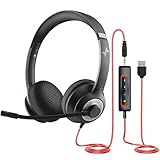
- ✅【Outstanding Noise cancelling Microphone】 The headphones with unidirectional boom 270°microphone that only picks up your voice and block out unwanted background noises. Also, you can wear it on the left or right ear as you like.
- ✅【All-Day Comfort for All Head Shape】 Eaglend always designed for all-day comfort using, there will be no restraint pressure, with the adjustable headbend fit adult and kids easily.The soft protein memory foam earpads is made of high-level breathable materials,ROHS certified materials prevent your ears from heat and sweat.
- ✅【Enhanced sound performance & 40mm audio driver】:Corded phone headset with built-in audio sound card, Eaglend sound lab tested thousands of times for your daily conversation/music/movie/gaming, bringing you extra clear and bass for pleasant experience.
- ✅【USB/3.5mm Connection】 The headphone is designed for multiple use, 3.5mm audio cable with USB In-line audio volume control (cord length 5+4 feet),with mic mute &indicators /speaker mute.Compatible with PC/Tablet/Mac/iOS/laptop /Android phone and other devices."
- ✅【Global warranty &multi-purpose】24 months warranty by eaglend. Great ideal for online courses, Skype chat, call center, Webinars Presentations, Office, Business, Rosetta Stone, Dragon Speaking, Conference Calls and more.
Third-party pricing coverage reports an Advanced plan at $119 per user per month, and Recruiterflow promotes a free trial. The product feature signals include ATS and CRM records, recruiting automation, multichannel sequences, AI recruiting-agent functionality, sales automation, client and team access controls, a Chrome sourcing extension, reports, and API access. Recruiterflow’s pricing page should be checked for the live commercial terms, while G2’s Recruiterflow pricing page provides secondary pricing coverage.
G2 lists Recruiterflow at 4.6 out of 5. Review themes commonly praise ease of use, customer support, automation, and organization, while some reviewers criticize job-board integrations, customization, or CRM depth. G2’s Recruiterflow reviews are directional evidence, not a controlled product test; review counts, scores, customer segments, and product versions change over time.
Job-board support deserves a live test. “Job posting” can mean a career page, selected one-click boards, an external multiposter, or a workflow that still requires manual steps. Ask Recruiterflow to post to the exact boards your agency uses and demonstrate the resulting application flow.
Do these 3 things before closing this tab:
1Scan for outdated or missing drivers - takes under a minute2Clear out junk files and repair common Windows errors3Fix the driver behind crashes, sound loss and screen glitchesRecruiterflow also says migrations are typically completed in six to eight weeks, which is materially different from a simple self-service import. Confirm what the migration includes, who cleans duplicates, how attachments are handled, and whether the timeline applies to your database size and customization needs.
Is Zoho Recruit the best budget recruitment CRM?
Zoho Recruit is the best budget-oriented option in this comparison for teams that value a free entry point, flexible configuration, and integration with the Zoho ecosystem.
Zoho Recruit’s pricing page lists a free edition, Standard and Enterprise editions, a 15-day fully featured trial, and a 45-day money-back guarantee. Standard features include sourcing, resume management, premium job boards, a branded careers site, referrals, social recruiting, assessments, a hiring pipeline, reports, dashboards, department hierarchy, and more than 50 integrations. Enterprise adds one-way or live video interviewing and broader automation features.
Zoho Recruit may need more configuration than a specialist agency platform, particularly when the agency wants customized sales stages, multiple permanent and contract workflows, complex permissions, or specialized staffing operations. The Zoho ecosystem can be an advantage for organizations already using Zoho applications, but ecosystem breadth does not automatically equal a ready-made staffing workflow.
Zoho’s pricing calculator and license structure should be reviewed carefully. Hiring-manager and employee licenses may be sold in packs of 10, so the number of recruiters alone may not determine the actual subscription cost.
What are the best alternatives to the main shortlist?
Several credible products deserve consideration when the five main options do not match the operating model:
- Manatal: A lower-cost, straightforward ATS/CRM option for small teams. A 2026 comparison source places entry pricing around $15 per user per month, but the live vendor price should be verified before publication or purchase.
- Crelate: Worth evaluating for search and staffing firms that want configurable workflows, subject to pricing and implementation confirmation.
- JobAdder: Relevant for agencies focused on job advertising and recruiting workflow; test CRM depth, reporting, and the total cost of job-board usage.
- Vincere or Access Vincere Evo: A candidate for larger agencies that prioritize analytics and operational breadth.
- Avionté, CEIPAL, and Tracker RMS: More relevant when temporary or contract staffing requires compliance, onboarding, availability, timesheets, payroll connections, scheduling, or billing.
- PCRecruiter, Firefish, and Top Echelon: Additional agency-focused products to consider for specialized workflows.
- Ashby, Lever, Gem, Greenhouse, and SmartRecruiters: Primarily in-house talent-acquisition choices for hiring-manager collaboration, employer brand, recruiting operations, or people analytics.
- Avature, Beamery, and Phenom: Enterprise talent environments for organizations needing global configurability, talent intelligence, talent experience, skills infrastructure, or HCM integration.
These products are not interchangeable. Capterra’s recruiting-agency software category and the cited staffing comparisons are useful for expanding a shortlist, but buyers should first classify the needed platform as an ATS/CRM hybrid, talent-intelligence system, staffing operations suite, or enterprise talent platform.
Rank #4

- Great Noise Cancelling & Mute Function: Experience crystal-clear calls with environmental noise cancelling (ENC) technology in our wireless headset. Our noise cancelling headphones for work blocks most background distractions (loud pets/children), making it the ideal headset for noisy environments. One-touch mute button instantly silences your mic during Zoom/Teams meetings.【NOTE】 Mute function activates only during calls
- Bluetooth 5.3 & Dedicated USB Dongle: Our Bluetooth headset features low-latency transmission for music/video calls, and includes a USB-A adapter for Windows PC (non-Bluetooth compatible), making it a versatile computer headset. It works seamlessly with popular platforms like Webex, Zoom, MS Teams, etc.【NOTE】Dongle incompatible with desk phones or landlines. Remove it when the headset is not in use
- Dual Pairing & Extended Mobility: Boost productivity by connecting this work headset to your laptop and smartphone simultaneously. This wireless headset with mic for work lets you seamlessly switch between conference calls and mobile chats, while its 33ft Bluetooth range enables free movement during meetings or calls—ideal for dynamic office setups.
- 40-Hour Battery & Rapid Charge: The 600mAh rechargeable battery delivers 40hrs talk time, with a full charge in just 2 hours using the included charging stand. Perfect for remote work, hybrid office, and business travel, this office headset keeps up with your busy schedule.【NOTE】Can be used while charging, but power off is recommended for optimal safety and battery longevity.
- All-DayComfort: Our Bluetooth headset for work features an adjustable headband and memory foam earcups, engineered for long-wearing comfort with breathable protein leather ear cushions. The flexible boom mic ensures voice clarity, making it a reliable wireless headset with mic for all-day use. A dedicated MFB button supports voice assistant access (Siri/Google) for added convenience.【NOTE】MFB button controls smartphone functions only (not computer apps)
How much does a recruitment CRM really cost?
The real cost of a recruitment CRM is the subscription plus implementation, migration, required add-ons, usage charges, and every paid user or capability needed for the actual workflow.
Recommended Free Tools
| Cost component | Why it changes the comparison | Question to ask |
|---|---|---|
| Per-user versus flat-rate pricing | A per-user plan scales with recruiters, coordinators, hiring managers, and clients | Which people require paid seats, and are viewer or hiring-manager licenses charged? |
| Monthly versus annual billing | Annual billing may be required for the advertised price | Is annual prepayment required, and what is the monthly equivalent? |
| Minimum seat commitments | A small agency may pay for more seats than it currently uses | What is the minimum number of billable users? |
| AI credits | Matching, contact finding, agents, and generation may consume separate credits | Are AI features included, credit-limited, or premium-only? What happens when credits run out? |
| Contact data and enrichment | Finding phone numbers and email addresses can create usage charges | How many records or lookups are included? |
| Job-board posting | One-click posting may exclude sponsored advertising or particular boards | Does the platform support the exact boards and posting types we use? |
| Email, SMS, and calling | Messaging, phone numbers, minutes, and texts may be billed separately | Are phone, SMS, email volume, recording, and carrier charges included? |
| Implementation and migration | Data cleanup, mapping, attachments, and custom workflows can require services | What records, notes, attachments, consent history, and custom fields will be migrated? |
| API and reporting | Custom dashboards, exports, API access, and advanced analytics may be restricted | Can custom fields be reported on, and are API calls or exports limited? |
| Staffing operations | Payroll, compliance, timesheets, onboarding, scheduling, and billing may be separate modules | Which operational functions are native, integrated, or unavailable? |
Three useful pricing scenarios are a solo recruiter, a five-person agency, and a ten-person agency. Public prices can provide a starting subscription calculation for Loxo, Bullhorn, and a reported Recruiterflow plan, but quote-based products and add-on-dependent platforms cannot responsibly be assigned a total without a vendor quote.
| Scenario | What to calculate | Why the headline price may mislead |
|---|---|---|
| Solo recruiter | One paid recruiter plus required sourcing, outreach, calling, reporting, and migration | A free ATS may exclude the outreach or client CRM functions that make the tool useful |
| Five-person agency | Five recruiter seats plus hiring-manager, coordinator, data, messaging, and integration needs | Additional user types, AI credits, and annual commitments can change the total |
| Ten-person agency | Ten recruiter seats plus implementation, custom workflows, API, reporting, and premium support | Negotiated pricing and operational modules become more important than entry-level rates |
Do not compare a free ATS-only plan with a fully featured agency platform. Compare the cost of the same usable workflow: candidate database, client CRM, job orders, sourcing, outreach, reporting, integrations, migration, and any staffing operations the business actually requires.
Independent reader supportYour contribution helps us test, update, and keep practical guides available for everyone.What should a recruitment CRM do?
A usable recruitment CRM should connect candidate relationships, client development, recruiting workflow, sourcing, outreach, AI assistance, and reporting without forcing recruiters to duplicate activity across disconnected systems.
Candidate database
- Search resumes, profiles, notes, tags, and custom fields.
- Detect and merge duplicate records.
- Assign ownership and permissions.
- Segment talent pools and preserve consent and retention controls.
- Import and export records in bulk.
- Parse resumes into structured candidate fields.
- Search by skills, location, seniority, availability, and compensation.
Client and business-development CRM
- Store company and contact records with relationship history.
- Track leads, prospects, accounts, and business-development stages.
- Set sales reminders and record client activity.
- Track job orders, placements, revenue, and commissions.
- Control shared ownership and permissions.
- Provide client portals or hiring-manager access when required.
Recruiting workflow
- Create requisitions and configurable job stages.
- Track candidate submissions to clients.
- Schedule interviews and collect structured feedback.
- Manage offers, placements, rejections, and disposition reasons.
- Support different workflows for permanent, contract, temporary, and executive-search jobs.
Sourcing and outreach
- Provide a browser extension or supported LinkedIn workflow.
- Offer contact enrichment where legally and contractually appropriate.
- Send email sequences, SMS, or calls with automated follow-up.
- Support personalization, opt-out management, bounce handling, and deliverability controls.
AI and automation
AI labels are not comparable by themselves. Resume parsing, semantic matching, natural-language search, job-description generation, email drafting, automated notes, contact finding, AI sourcing, workflow agents, candidate ranking, predictive analytics, and generative chat are different capabilities.
Ask each vendor whether AI is included in the base price, limited by credits, restricted to a premium plan, explainable to recruiters, subject to human review, and used to train provider models. AI matching should be treated as decision support rather than objective or bias-free candidate selection.
Reporting and analytics
At minimum, test recruiter activity, funnel conversion, time to submit, time to fill, source quality, client conversion, revenue and placement forecasting, aging jobs, candidate re-engagement, business-development pipeline, team productivity, custom dashboards, and export or API access.
What do recruitment CRM reviews actually tell you?
Recruitment CRM reviews are useful directional evidence, but a review score is not proof that a platform is objectively better for your agency.
Separate vendor-published testimonials from independent review-site evidence. When reading G2 or Capterra, record the score, review count, review date, customer segment, product version, and the specific feature or implementation experience described. Look for patterns involving ease of use, support, automation, reporting, customization, integrations, migration, price increases, and required upgrades.
For example, G2 lists Recruiterflow at 4.6 out of 5, with praise commonly focused on usability, support, automation, and organization and criticism sometimes focused on job-board integrations, customization, or CRM depth. The current G2 review page should be checked immediately before publication because scores and review counts change.
Best Value
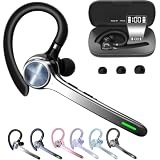
- Smart Digital Display: Easy-to-read digital display shows the remaining power of the charging case for the refill in time.
- High Capacity and Long-Lasting: Equipped with the 500mAh charging case to juice up the bluetooth headset for almost 72 hours of music/talking time. The single headset offer 18-23 hours of talking time.
- Design Ideas Of Mute: Add the individual mute button on the bluetooth earpiece to meet your demand for muting more simply on the cell phone call. (ONLY ALLOW TO MUTE DURING CALL ON PHONE)
- Ear Painless: Maximizing compactness of wireless headset based on ergonomics. Small and light even unobtrusive but still stable, and provide a more comfortable wearing experience.
- Ultra-Powerful Bluetooth Tech: Wireless earpiece features the updated 5.3 Bluetooth technology to quickly and stably connect devices in the 10m range.
G2 comparison pages also show changing ratings and review counts for products such as Recruiterflow, Loxo, Bullhorn, and Zoho Recruit. G2’s Loxo-versus-Recruiterflow comparison is therefore a snapshot, not a permanent specification.
What should you ask during a recruitment CRM demo?
Ask every vendor to demonstrate the same workflow using your likely data volume. A polished presentation of isolated features is less useful than seeing one record move from sourcing to placement and reporting.
- Import 500–1,000 sample candidate records.
- Detect and merge duplicate records.
- Search for a candidate using structured filters and natural-language search.
- Parse a resume into a candidate record.
- Create a new job order.
- Move candidates through configurable stages.
- Submit a candidate to a client.
- Schedule an interview and collect feedback.
- Send a personalized sequence to a talent pool.
- Log replies, opt-outs, calls, and notes.
- Create a client-development opportunity.
- Produce recruiter-activity and placement-funnel reports.
- Export the data.
- Show API documentation and integration limits.
- Explain migration, implementation, training, and cancellation terms.
Questions that expose hidden costs and limitations
- Is pricing based on recruiters, employees, users, database size, active jobs, or another measure?
- Are hiring managers, clients, coordinators, and administrators paid seats?
- Are AI features included or credit-limited?
- What happens when AI or data credits run out?
- Is contact enrichment included?
- Which job boards support one-click posting, and which require another service?
- Are LinkedIn integrations official, limited, or browser-based?
- Can users send bulk email without harming deliverability?
- Are unsubscribe and consent records preserved automatically?
- Can custom fields be included in reports?
- Can permanent, contract, and executive-search workflows be configured separately?
- Is there an audit log?
- What exactly is included in migration?
- Can the customer export records, attachments, notes, and consent history?
- What is the implementation timeline for the customer’s database?
- Are there minimum contract terms or annual prepayment requirements?
- Are price increases capped?
- Are phone, SMS, email, or data-usage charges billed separately?
- What support level is included?
Which recruitment CRM should each type of buyer choose?
| Buyer type | Strong starting shortlist | What matters most |
|---|---|---|
| Solo recruiter or very small agency | Zoho Recruit, Recruit CRM, Manatal, Loxo Free/Core | Low entry cost, fast setup, candidate search, email, and simple client tracking |
| Boutique permanent-placement agency | Recruit CRM, Loxo, Recruiterflow, Crelate | Relationship history, sourcing, sequences, job orders, and placement reporting |
| Executive-search firm | Loxo, Recruiterflow, Crelate, PCRecruiter | Deep search, enrichment, outreach, notes, confidentiality, and long-term relationships |
| Contingent staffing agency | Bullhorn, Recruiterflow, Recruit CRM, JobAdder, Vincere | Sales pipeline, requisitions, submittals, integrations, activity reporting, and scale |
| Temp or contract staffing business | Bullhorn, Avionté, Tracker RMS, CEIPAL, Vincere | Availability, compliance, onboarding, timesheets, payroll, scheduling, billing, and redeployment |
| Growing agency needing sales CRM | Recruit CRM, Recruiterflow, Bullhorn, Loxo | Account ownership, business development, job orders, reminders, and revenue reporting |
| Enterprise staffing organization | Bullhorn, Avature, Vincere, Phenom, Beamery | Security, integrations, implementation, analytics, permissions, and operational breadth |
| In-house talent-acquisition team | Ashby, Lever, Gem, Beamery, Greenhouse, SmartRecruiters | Hiring-manager collaboration, employer brand, internal recruiting, and people analytics |
Final recommendations
Choose Recruit CRM if you want broad agency functionality, a free starting option, and candidate, client, sourcing, outreach, calling, and reporting features in one product.
PC Slower Than It Used to Be?
A free scan shows the junk files, broken settings and background clutter dragging Windows down - then fixes them in one click.Free scan · Windows 10 & 11Outdated Drivers Are Slowing You Down
One free scan finds every outdated or missing driver and matches the right update for your exact hardware.Free scan · exact hardware matchChoose Loxo if permanent placement, executive search, sourcing data, natural-language search, and AI-led outreach are central to the business and the higher-tier cost is acceptable.
Choose Bullhorn if the agency needs mature staffing workflows, integrations, and a path toward deeper operational modules rather than the simplest self-service setup.
Choose Recruiterflow if modern automation, sequences, sales workflow, and a unified ATS/CRM are priorities, subject to verification of job-board coverage and AI-plan requirements.
Choose Zoho Recruit if budget, a free entry point, configuration flexibility, and the Zoho ecosystem matter more than specialist staffing depth.
The Tool Desk
Outbyte Driver Updater FREEFix the driver behind crashes, sound loss and screen glitchesFind Drivers →Outbyte PC Repair FREEClear out junk files and repair common Windows errorsFree Scan →Choose a staffing operations suite if contractors, compliance, onboarding, scheduling, timesheets, payroll, margin calculations, or client billing are core requirements. A general recruitment CRM can be an excellent permanent-placement tool and still be the wrong operational system for temporary staffing.
Frequently Asked Questions
What is the best recruitment CRM for a small agency in 2026?
Recruit CRM is the strongest general-purpose starting point for many small agencies because it combines ATS, CRM, sourcing, outreach, calling, and reporting with a free starting option. Zoho Recruit and Manatal are worth comparing when the lowest entry cost matters most, while Loxo suits sourcing-heavy firms.
How much does Loxo cost in 2026?
Loxo’s Core plan is listed at $149 per user per month when billed annually. Loxo also lists a free ATS/CRM option, while Professional and Enterprise add sourcing, outreach, AI agents, credits, security, and integrations at contact-sales pricing.
Is Bullhorn an ATS or a CRM?
Bullhorn is an agency ATS/CRM platform that combines applicant tracking, client management, job posting, integrations, and broader staffing operations. Bullhorn lists Starter at $99 per user per month and Core at $165 per user per month, while higher tiers and operational modules are quote-based.
What is the difference between a recruitment CRM and a staffing platform?
A recruitment CRM primarily manages candidate relationships, clients, jobs, sourcing, outreach, and placements. A staffing platform adds contractor operations such as availability, compliance, onboarding, scheduling, timesheets, payroll connections, redeployment, margin calculations, and billing.
The Bottom Line
There is no universal best recruitment CRM in 2026. Start with Recruit CRM for broad small-to-mid-sized agency coverage, Loxo for sourcing-heavy permanent placement, Bullhorn for established staffing operations, Recruiterflow for automation, and Zoho Recruit for budget-conscious or Zoho-based teams. Before buying, compare the complete usable workflow—not just the advertised seat price—and make every vendor demonstrate import, deduplication, search, outreach, client development, reporting, export, integrations, and migration.
Quick Recap
Product prices and availability are accurate as of the date/time indicated and are subject to change. Any price and availability information displayed on Amazon at the time of purchase will apply.

