
Quick wins for a faster PC:
Fix the driver behind crashes, sound loss and screen glitchesFind Drivers →Clear out junk files and repair common Windows errorsFree Scan →iTechGuides is reader-supported. When you buy through links on our site, we may earn an affiliate commission. As an Amazon Associate I earn from qualifying purchases. Learn more
The best pollution-control program for a small manufacturing business is a layered system, not one machine. First prevent pollution with safer material choices, closed containers, housekeeping, spill prevention and efficient use of water and energy. Then add controls matched to the actual pollutant: local exhaust with a cartridge collector or baghouse for dust, a wet scrubber for compatible particulate or acid-gas streams, and a measured wastewater-treatment train for the contaminants in your discharge. Stormwater exposure controls, inspections, employee training and permit compliance complete the system. The right design depends on your process, pollutant concentrations, airflow, water flows, site layout and permit conditions.
What “best” means for a small factory
A control is only best when it removes the pollutants your process creates, performs reliably at your operating rate and can be maintained by your staff. A high-efficiency device connected to a poorly designed hood, undersized duct or neglected filter will perform worse than a simpler system that is correctly captured and inspected.
Use the hierarchy below when planning or upgrading controls:
The Tool Desk
Outbyte Driver Updater FREEFix the driver behind crashes, sound loss and screen glitchesFind Drivers →Outbyte PC Repair FREEClear out junk files and repair common Windows errorsFree Scan →- Prevent and reduce at the source. Substitute less hazardous materials where feasible, use the smallest practical quantities, keep containers closed, improve housekeeping and prevent spills.
- Capture pollution at the point of generation. Enclose or hood dust, fumes, vapors and process water before they spread through the building or site.
- Treat the captured stream. Select filtration, scrubbing, separation, precipitation, biological treatment or another process that matches the pollutant and required removal.
- Verify performance. Monitor the indicators that show whether the control is working, document inspections and correct failures promptly.
This sequence lowers the load on end-of-pipe equipment, often reducing energy, chemical, water and disposal costs. It also makes permitting and operator training more manageable.
#1 Best Overall
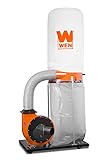
- Circulate up to 1,300 cubic feet of air per minute
- Attach up to two tools at a time with the dual 4-inch air inlets
- Vertical collection bag holds up to 50 gallons of dust
- 14-amp motor rotates the 10-inch steel impeller up to 3450 RPM
- Includes mobile base with four swivel casters for easy mobility
Start with a pollution and permit inventory
Before buying equipment, map every material and pathway at the facility. Walk the process from receiving through production, storage, shipping and waste handling. Record:
- Raw materials, coatings, solvents, oils, metals, powders and cleaning chemicals.
- Each operation that creates dust, mist, vapor, fumes, wastewater or contaminated debris.
- Airflow from machines, existing hoods, fans, ducts and exhaust points.
- Water use, wastewater flow, drains, floor washes, cooling water and any connection to a publicly owned treatment works or surface water.
- Outdoor storage, loading areas, dumpsters, roof drains, storm drains and locations where rain or snow can contact industrial materials.
- Current air, wastewater, stormwater and hazardous-waste permits, reporting duties and inspection records.
Measure or estimate flow and pollutant loads before sizing a control. A local authority determines which permit and discharge limits apply; national guidance cannot substitute for a site-specific determination.
Air-emission controls: dust, particles, gases and vapors
Local exhaust is the foundation
For machining, cutting, sanding, grinding and similar operations, capture emissions at the tool with an enclosure or local exhaust hood. The collector cannot remove material that escapes the hood. Keep capture points close to the source, minimize cross-drafts, seal unnecessary openings and balance branches so each machine receives the airflow it needs.
What’s actually slowing this PC down?
Pick the symptom - the matching free tool is one click away.
Cartridge collectors and baghouses for particulate
A cartridge dust collector uses pleated filters in a compact housing; a baghouse uses fabric bags and is common for larger dust loads or applications requiring more filter area. Both can be effective when the filter media, airflow and dust characteristics are correctly matched. Select the unit using:
- Required hood capture velocity and total system airflow.
- Duct length, fittings and pressure losses, plus the pressure drop across a loaded filter.
- Particle size, temperature, moisture, abrasiveness and whether the dust is sticky.
- Continuous versus intermittent duty and the available space for the collector, duct and discharge bin.
- Combustible-dust hazards, grounding, bonding, explosion venting or suppression and the electrical classification required at your site.
Use a sealed discharge container and prevent collected dust from becoming a secondary exposure. EPA sector guidance calls for regular inspection of air-emission control systems such as baghouses. Your written schedule should include filter condition, hopper or bin level, pulse-cleaning operation, leaks, fan performance and visible emissions.
Rank #2

- Intense Airflow Power: Equipped with 1100CFM suction, this portable vortex dust collector quickly pulls in coarse sawdust and fine debris. Its strong, steady airflow clears dust efficiently, enhances workshop cleanliness, and allows for uninterrupted, smooth woodworking operations
- Larger Collection Bag: Equipped with a 42-gallon (159L) non-woven bag, this woodshop dust collection system captures more dust and debris in one operation. Perfect for continuous small to medium woodworking jobs, it minimizes downtime and enhances productivity in busy workshop environments
- Advanced Dust Capture: Equipped with 2.5-micron precision filtration, this dust collection system for woodworking efficiently traps wood dust, chips, and fine particles. The cleaner exhaust air minimizes airborne dust, creating a healthier workspace and improving overall dust management during woodworking tasks
- Steady Suction Power: Featuring a 1.5HP induction motor, this vortex cone dust collector delivers strong, stable suction for both fine and coarse dust. Noise levels are kept under 90dB, and its durable construction resists overloads, providing reliable, long-term performance for woodworking operations
- Effortless Bag Access: Our wood dust collector's clip-style design makes maintenance effortless. Release the clips to remove or empty the collection bag, quickly disposing of sawdust and debris. The simple system reduces downtime and keeps your woodworking tasks running smoothly
Wet scrubbers for compatible particle or gas streams
A wet scrubber brings a liquid into contact with the gas stream so particles or soluble gases transfer into the liquid. The U.S. Environmental Protection Agency states that “Most wet scrubbing systems operate with particulate collection efficiencies over 95 percent” in its 2025 Monitoring by Control Technique—Wet Scrubber for Particulate Matter guidance. That figure describes wet scrubbing systems generally, not a guaranteed result for every small plant.
Low-, medium- and high-energy scrubbers address progressively smaller particles. Higher energy generally means higher pressure drop and electricity use, particularly for sub-micrometer particles. Track the operating indicators that reveal loss of performance:
- Pressure differential across the scrubber.
- Liquid flow rate, pump condition and makeup-water supply.
- Scrubber-liquid outlet concentration, pH or reagent strength when chemistry is used.
- Nozzle, packing and mist-eliminator condition.
Common failure modes include inadequate liquid flow, liquid re-entrainment, poor gas-liquid contact, corrosion and plugged nozzles, beds or mist eliminators. Treat the resulting wastewater or sludge as part of the design; a scrubber shifts pollution from air to a liquid or solid waste stream rather than eliminating it.
VOC, acid-gas and nitrogen-oxide controls
Do not choose a particulate collector for a vapor problem. Volatile organic compounds, acid gases and nitrogen oxides require controls selected from the process chemistry, concentration, temperature and applicable rule. The EPA Air Pollution Control Cost Manual covers stationary-source controls for VOCs, particulate matter, NOx and acid gases, but it does not establish one universally best VOC technology for every small facility. Options may include adsorption, condensation, thermal or catalytic oxidation, absorption or process substitution; feasibility depends on the specific stream and permit limit.
Air-control troubleshooting
| Observed symptom | Likely causes to check | Corrective action |
|---|---|---|
| Dust escapes at the machine | Hood too far from the source, insufficient airflow, blocked duct or open enclosure | Measure branch airflow, reposition or enclose the hood, clean the duct and repair leaks. |
| High collector pressure drop | Loaded or wet filters, failed pulse cleaning, closed damper or excessive dust loading | Inspect cleaning controls, replace damaged filters, remove obstructions and verify airflow balance. |
| Visible plume or odor after a scrubber | Low liquid flow, poor contact, plugged nozzles, re-entrainment or exhausted reagent | Check differential pressure, pump flow, spray pattern, mist eliminator and liquid chemistry. |
| Frequent filter fires or static shocks | Combustible dust, poor bonding or unsuitable electrical equipment | Stop and obtain a qualified combustible-dust and electrical-hazard assessment before restarting. |
Wastewater: match treatment to the discharge
EPA’s Industrial Effluent Guidelines are national, technology-based standards for industrial wastewater discharged to surface waters and publicly owned treatment works. A small manufacturer must identify its industry category, pollutants, flow and discharge route before selecting pretreatment. The receiving authority may impose local limits or sampling requirements in addition to national standards.
Rank #3
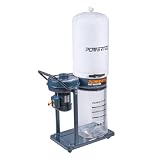
- INCLUDES: 1 HP Dust Collector System with sturdy base (15-1/4" x 25-1/2"), powerful motor, filter, collection bags and assembly hardware
- FUNCTION: Keeps your workshop free from woodchips and sawdust, creating a clean workspace & environment while eliminating harmful dust particles caused by most woodworking machines
- FEATURES: A sturdy yet portable (comes with casters) base, an air suction capacity of 800 CFM, a standard 1 micron filtration bag, plus quick release (disconnect) dust collection bag clamps
- POWER DUST COLLECTOR: Equipped with a single phase, 120V/240V, 1 horsepower motor that gives low noise levels, plus a 3450 RPM motor speed and efficiency needed for a seamless dust collection experience
- VERSATILE: The dust collector machine can be moved to the required point for a stationary set-up, or connected to a centralized dust collection destination, and portable enough for your mobile units
Build a treatment train from measured chemistry
Candidate processes are building blocks, not a universal recipe:
Do these 3 things before closing this tab:
1Repair Windows errors before they cause bigger problems2Scan for outdated or missing drivers - takes under a minute3Clear out junk files and repair common Windows errors- Segregate streams. Keep concentrated process liquids, sanitary wastewater, stormwater and non-contact cooling water separate where practical. Segregation prevents a small hazardous stream from contaminating a much larger volume.
- Equalize flow. An equalization tank can dampen batch peaks and stabilize downstream treatment, provided its materials and ventilation suit the waste.
- Remove settleable solids. Screens, settling tanks, clarifiers or dissolved-air flotation can remove particles before chemical or biological steps.
- Adjust pH and precipitate metals. pH control and chemical precipitation can convert dissolved metals into solids for separation. Reagent choice and sludge classification depend on the actual metals and chemistry.
- Separate oil and grease. Use source segregation, coalescing or flotation where oils are present; detergents can make separation more difficult.
- Apply biological treatment when appropriate. Bioreactors require biodegradable organics, stable loading and control of oxygen, nutrients and temperature.
- Polish or reuse water. Filtration, activated carbon or membranes may be used for residual solids, organics or dissolved contaminants when the required quality justifies their maintenance and concentrate-disposal burden.
EPA’s Industrial Wastewater Treatment Technology Database (IWTT) catalogs treatment-technology performance and availability. Use it to compare candidate processes, then confirm performance with representative sampling and pilot or vendor data relevant to your wastewater.
Wastewater monitoring and maintenance
- Sample at a point that represents the permitted discharge, not only a clean-water bypass.
- Track flow, pH, temperature, suspended solids, oil and grease, metals, organics or other permit parameters applicable to your process.
- Inspect pumps, mixers, chemical feed lines, probes, sludge-handling equipment and secondary containment.
- Keep calibration records and chain-of-custody documentation for required laboratory samples.
- Plan for sludge, spent carbon, membrane concentrate and filter media disposal before commissioning the system.
Stormwater: prevent exposure before adding treatment
Industrial stormwater controls often provide the fastest risk reduction because preventing contact is simpler than treating a large volume of runoff. EPA’s stormwater guidance covers 29 industrial sectors. Its 2021 Developing Your Stormwater Pollution Prevention Plan guide states: “The first step in an effective stormwater control program is minimizing exposure of manufacturing, processing, and material storage areas … to rain, snow, snowmelt, and stormwater.”
Exposure-prevention controls
- Store raw materials, waste and finished goods indoors or under storm-resistant covers.
- Use berms, curbs or secondary containment to keep spills away from drains.
- Keep loading and unloading areas clean; inspect hoses, valves and containers before transfer.
- Cover dumpsters, prevent leaking containers and use dedicated, labeled waste areas.
- Install drain covers or shutoff devices that can be deployed during a spill, while maintaining safe access and flood protection.
- Maintain spill kits sized for the largest credible release and train employees in notification, containment and cleanup.
- Sweep or vacuum paved areas instead of washing pollutants into a drain.
SWPPP, inspections and No Exposure Certification
A Stormwater Pollution Prevention Plan (SWPPP) identifies exposed materials, drainage pathways, control measures, inspection procedures, corrective actions and responsible personnel. Inspect after significant rain events and at the frequency required by your permit. Sample runoff when the permit requires it and document both compliant results and failures.
A facility may qualify for a No Exposure Certification only when all industrial materials and activities are protected from stormwater contact and every other permit condition is met. A roof over one storage rack is not enough if loading, waste handling or maintenance remains exposed.
Rank #4

- Powerful Air Intake: This portable vortex dust collector provides 1550CFM strong airflow for rapid dust removal. It efficiently collects both wood chips and fine sawdust, keeping your workshop clean, enhancing air circulation, and supporting smoother, more efficient woodworking tasks
- Ample Dust Storage: Featuring dual 42-gallon (159L) large non-woven bags, this woodshop dust collection system allows longer continuous operation with fewer stops. It efficiently handles dust and debris from medium and small woodworking tasks, saving time and increasing overall workshop productivity
- Precision Air Filtration: Featuring 2.5-micron filtration, this dust collection system for woodworking effectively captures fine wood dust, chips, and particles. It lowers airborne contaminants, maintains cleaner air, and reduces dust exposure, supporting a more efficient and comfortable woodworking environment
- Durable Motor Design: Our vortex cone dust collector comes with a 3.0HP high-performance induction motor that maintains steady suction while operating at ≤90dB. Its overload-resistant structure extends motor life, delivering consistent airflow for efficient dust removal and uninterrupted workshop workflow
- Fast Dust Disposal: Equipped with clip-on fixtures, our wood dust collector allows for fast and easy removal of filter and collection bags. Simply release the clips to dump sawdust and collected debris in seconds, streamlining maintenance and keeping your workshop clean with minimal effort
Source reduction that lowers control-system workload
EPA’s small-manufacturing best-management-practice guidance groups improvements into green procurement, energy saving, water saving, waste reduction, spill response, air management, wastewater management and stormwater management. Apply these before expanding treatment capacity:
- Purchase less hazardous solvents, coatings or cleaners when product quality permits.
- Use closed dispensing, automatic shutoff and smaller working quantities to reduce evaporation and spills.
- Improve preventive maintenance so leaks, worn seals and failed filters are found early.
- Reuse rinse water or counter-current rinsing where chemistry and product quality allow.
- Optimize cutting layouts and batch sizes to reduce scrap and off-specification product.
- Schedule high-emission operations when capture equipment and trained staff are available.
- Use energy-efficient fans and variable-speed drives only after confirming that minimum capture airflow is maintained.
Track material use, hazardous-waste generation, water and energy use, filter pressure drop, scrubber liquid flow and pH, spill incidents and stormwater inspection findings. Trends reveal deterioration before a permit limit or production problem is reached.
Independent reader supportYour contribution helps us test, update, and keep practical guides available for everyone.Compare technologies with a lifecycle scorecard
Use the same criteria for every proposal. A low purchase price can be outweighed by electricity, chemicals, water, filter media, sludge disposal, downtime or specialist maintenance.
| Criterion | Questions to answer |
|---|---|
| Pollutant and concentration | What contaminant is present, at what concentration, particle size, temperature and variability? |
| Capture point and flow | Can the source be enclosed? What airflow or water flow must the control handle during peak operation? |
| Required performance | What permit limit, workplace objective or discharge specification must be met, and how will it be demonstrated? |
| Capital cost | Include hoods, ducts, fans, pumps, tanks, controls, foundations, electrical work and installation; a general purchase price is not established for these systems. |
| Operating cost | Estimate electricity, water, chemicals, replacement filters, laboratory testing and disposal over the equipment’s life. |
| Maintenance | Are spare parts available? Can operators safely clean, inspect and calibrate the equipment? |
| Safety | Evaluate combustible dust, chemical exposure, corrosion, confined spaces, noise, heat and electrical classification. |
| Space and utilities | Allow room for access, filter or sludge removal, ventilation, drainage and future capacity. |
| Monitoring and records | What pressure, flow, pH, concentration or visual checks prove the system is operating? |
| Permit obligations | Will the control create a new wastewater, sludge, hazardous-waste or air-monitoring requirement? |
Use conservative peak flows and loads rather than average production alone. Ask vendors to state assumptions, guaranteed operating ranges, expected maintenance intervals and the waste streams their equipment generates.
Recommended Free Tools
Implementation sequence for a small facility
- Inventory. Map chemicals, materials, process steps, emissions, waste streams, drains and stormwater exposure.
- Reduce at the source. Substitute safer inputs, improve housekeeping, cover materials, contain spills and reduce unnecessary water and energy use.
- Characterize loads. Measure or estimate dust generation, airflow, wastewater flow and chemistry, and stormwater pathways.
- Confirm requirements. Obtain current air, wastewater and stormwater permit conditions from the relevant authority before final equipment selection.
- Compare engineered options. Score removal performance, lifecycle cost, maintenance, safety, space and monitoring needs.
- Design for verification. Include sampling ports, pressure gauges, flow meters, pH instrumentation, access doors, isolation valves and safe maintenance clearances.
- Commission and train. Record baseline readings, write inspection procedures, train operators and document corrective actions.
- Review after changes. Reassess capture, treatment and permit implications whenever production rates, chemicals, equipment or site drainage change.
Common mistakes and how to correct them
Buying a collector before measuring airflow
An advertised capacity may not deliver the capture velocity your hood requires after duct losses and filter loading. Measure or calculate the complete system, then verify fan performance at operating pressure.
Best Value

- NO MORE CLOGGED FILTERS -- Pre-separates over 99% of debris sending clean air to your shop vac or dust extractor keeping suction strong and your vac running in tip top shape.
- THE FASTER THE SPIN, THE MORE DUST THAT FALLS IN! -- Parabolic design and seamless one-piece construction create a faster airstream, more suction power and better capture efficiency that ordinary straight-wall cyclone-and-bucket assemblies.
- RIGID, CUT-TO-FIT PVC CONNECTION -- Eliminates the Frankenstein-like assembly of bolts, bungees, and duct tape of other systems creating a unified, airtight connection and a vac filter that stays cleaner, longer.
- UNIVERSAL VAC COMPATIBILITY -- Included Hose Adapters allow for easy connection to virtually all wet dry shop vacuums, dust extractors and their hoses. Red, orange, yellow or green; tall, short, big or small; Mullet is made to fit 'em all!
- MADE IN USA -- Headquartered in Dripping Springs, Texas.
Treating symptoms instead of the source
More filtration cannot compensate for an open container, leaking transfer line or poor housekeeping. Remove the source first, then size treatment for the residual load.
Ignoring secondary wastes
Filters, scrubber liquor, precipitation sludge, spent carbon and membrane concentrate need labeled containers, compatible storage and a legal disposal route. Include these streams in the permit and cost review.
Allowing stormwater controls to depend on memory
Use checklists, assigned owners and inspection dates. Keep spill kits stocked and replace absorbents after use; an unrecorded inspection provides no evidence that a control was maintained.
Postponing operator involvement
Operators know when a machine, odor or flow changes. Involve them in hood placement, alarm limits, cleaning access and the written response to abnormal readings.
What to monitor every month
Create a simple dashboard with a baseline and an action limit for each indicator:
- Air: fan status, hood airflow where measured, collector pressure drop, pulse-cleaning cycles, visible emissions and bin level.
- Wet scrubber: pressure differential, liquid flow, pH or reagent strength, outlet concentration and nozzle or mist-eliminator condition.
- Wastewater: flow, pH, treatment-chemical use, sludge volume, laboratory results and bypass or alarm events.
- Stormwater: exposed materials, drain condition, cover and berm integrity, spill-kit readiness, inspection findings and required samples.
- Resource use: material consumption, hazardous-waste generation, water, energy and spill counts per unit of production.
Investigate a gradual pressure-drop, flow or waste trend before it becomes an exceedance. Keep inspection dates, readings, photographs, maintenance work orders, training attendance and corrective-action closure together with permit records.
Bottom line for choosing equipment
For a dusty small shop, a well-designed local-exhaust system connected to a correctly sized cartridge collector or baghouse is usually the starting engineered control. For compatible fine particles or acid-gas streams, a wet scrubber can provide high removal but adds water, chemical, corrosion and wastewater-management demands. Wastewater equipment must be selected from measured chemistry and the applicable industrial category, while stormwater risk is best reduced by covering and containing materials before runoff reaches a drain. Source reduction, documented inspections and trained operators determine whether any of these technologies continues to work.
Free tools Windows power users keep installed
One-click scans. No signup required.
Quick Recap
Product prices and availability are accurate as of the date/time indicated and are subject to change. Any price and availability information displayed on Amazon at the time of purchase will apply.

