
Free tools Windows power users keep installed
One-click scans. No signup required.
iTechGuides is reader-supported. When you buy through links on our site, we may earn an affiliate commission. As an Amazon Associate I earn from qualifying purchases. Learn more
If Crimson Desert appeals because it combines a huge fantasy continent, acrobatic combat, quests, puzzles and side activities, start with Elden Ring for demanding exploration, The Witcher 3: Wild Hunt for story, or Dragon’s Dogma 2 for unpredictable physical encounters. Ghost of Tsushima is the closest fit for polished swordplay, while Red Dead Redemption 2 is the choice for slower, deeply simulated world immersion.
What makes a game a good Crimson Desert alternative?
Crimson Desert is positioned as an open-world action-adventure across the continent of Pywel. PlayStation describes it as “a vast open-world adventure with deep, varied combat, multiple playable characters, numerous quests, NPCs and locations to discover, ancient puzzles to solve and many side activities to engage in.” Pearl Abyss announced a worldwide launch for 19 March 2026, with releases planned for PlayStation 5, Xbox Series X|S, Steam, Apple Mac, Epic Games Store and ROG Xbox Ally. The PlayStation listing identifies both physical and digital editions.
| # | Preview | Product | Price | |
|---|---|---|---|---|
| 1 |

|
Elden Ring (PS5) (European Version) | $34.00 | Buy on Amazon |
| 2 |

|
Elden Ring, 1 PS5-Blu-ray Disc | $74.33 | Buy on Amazon |
| 3 |
|
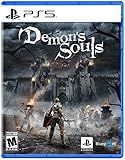
Demon's Souls - PlayStation 5 | $39.45 | Buy on Amazon |
That combination matters when choosing a substitute. A game can resemble Crimson Desert in one dimension and diverge sharply in another: a hard game may have little authored storytelling, a cinematic adventure may lack systemic freedom, and a realistic world may replace fantasy combat with firearms. The recommendations below separate those dimensions so you can match the feature you actually want.
Recommended Free Tools
- Combat: Is fighting fast, technical, physics-driven, stealth-focused or deliberately slow?
- Exploration: Does the map reward wandering, or mainly direct you between story missions?
- Quest and character writing: Are side characters and dialogue central to the experience?
- World reactivity: Can unscripted encounters, factions, weather or travel create stories of their own?
- Traversal: Do climbing, mounts, grappling or other movement systems change how you read the landscape?
- Tone and structure: Is the setting high fantasy, grounded historical fiction, or something in between, and do you play alone or with a party?
The five games that follow are not interchangeable. Each is a strong answer to a different reason someone might be waiting for Crimson Desert.
#1 Best Overall
- Collaborating with George R.R. Martin to create the ELDEN RING mythos has been a genuinely delightful experience and a source of wonderful inspiration. The team is working hard to ensure that the world of ELDEN RING will be a fascinating place for players to explore, filled with peril and wonder from its furthest reaches to its lowest depths. This is a FromSoftware title through and through, rich in fantasy and RPG action. We sincerely hope you look forward to it.
- Building the world of ELDEN RING with Miyazaki-san and his team was a treat! The graphics, mythos, and action-RPG gameplay will deliver an unforgettable experience. I can’t wait for people to see what ELDEN RING has in store for them.” Said George R.R. Martin.
Quick comparison
| Game | Best fit | Main similarity | Main difference |
|---|---|---|---|
| Elden Ring | Challenging exploration and build experimentation | A large world that rewards detours and difficult encounters | Less cinematic and less quest-directed |
| The Witcher 3: Wild Hunt | Story, dialogue and character depth | A huge fantasy map filled with authored quests | Combat is less acrobatic |
| Dragon’s Dogma 2 | Tactile, emergent combat | Exploration can generate unscripted stories | More class-and-party-driven |
| Ghost of Tsushima | Cinematic swordplay and stealth | Responsive melee combat in a polished open world | Grounded samurai theme rather than broad fantasy |
| Red Dead Redemption 2 | World immersion and travel | A reactive world where ordinary journeys produce encounters | Slower, realism-first pacing and no fantasy combat |
Elden Ring: best for challenging exploration
Why it matches
Choose Elden Ring when the part of Crimson Desert that interests you most is setting out without knowing what is over the next ridge. Its world is built around discovery: side paths, hidden spaces and optional bosses can be more memorable than the route you initially intended to follow. The game trusts you to notice landmarks, read environmental clues and decide whether an encounter is worth attempting now or later.
That design makes every detour meaningful. You might find a new weapon, spell, upgrade material or shortcut, then change your character around what you discovered. Build experimentation is not a side feature; it is one of the principal ways the game encourages repeat exploration. If you enjoy testing different weapons and abilities against enemies rather than following a fixed combat style, this is the strongest recommendation on the list.
Combat and difficulty
Combat is deliberate and punishing. Enemy attack patterns, spacing, stamina management and timing matter, and a careless approach can end a fight quickly. The difficulty is part of the exploration loop: an intimidating opponent can be a sign to investigate another area, improve your equipment or rethink your build rather than simply a wall that ends progress.
Do these 3 things before closing this tab:
1Fix the driver behind crashes, sound loss and screen glitches2Repair Windows errors before they cause bigger problems3Scan for outdated or missing drivers - takes under a minuteCompared with the expectation set by Crimson Desert, do not expect the same cinematic flow or acrobatic presentation. Elden Ring communicates through atmosphere, animation and environmental storytelling more often than extended scenes or tightly staged quest sequences. Its openness is less about being led through a chain of set pieces and more about finding your own route through danger.
Who should choose it
- Players who want the hardest combat option among these recommendations.
- Players who enjoy changing builds, experimenting with equipment and learning from failure.
- Players who would rather uncover a mystery than receive a constant stream of objective markers.
Pick another game first if your priority is a clearly authored plot, frequent dialogue scenes or a combat system that feels immediately acrobatic. Elden Ring is the best match for the exploratory challenge, not for every surface feature of Crimson Desert.
The Witcher 3: Wild Hunt: best for story and character depth
Why it matches
The Witcher 3 is the recommendation for readers who want a vast fantasy map where quests, conversations and consequences carry as much weight as fighting. Its strongest similarity to Crimson Desert is the sense of a large world full of people with specific problems, histories and competing motives. Side content is not merely a checklist of combat arenas; it is often written as a complete short story with a beginning, a difficult choice and a lasting result.
The game’s authored quests give travel a narrative purpose. A village, ruin or roadside meeting can introduce a character who reappears hours later, or reveal that the apparently simple version of a problem was incomplete. If what you want from Pywel is a densely written place rather than only a large map, this is the most dependable alternative.
What’s actually slowing this PC down?
Pick the symptom - the matching free tool is one click away.
Combat and pacing
Combat uses swords, signs and preparation, but it is less acrobatic than the action implied by Crimson Desert. Fights reward choosing the right tool for an enemy and maintaining awareness, yet the overall feel is closer to a methodical action system than a showcase of constant aerial movement. That difference becomes more noticeable as you move between the game’s long dialogue sequences and its battles.
The pacing is also more quest-directed. You can wander, but the game regularly presents a strong narrative reason to visit the next location. This structure is useful if you want momentum and character payoff; it is less suitable if your ideal open world gives equal priority to aimless discovery and emergent systems.
Which edition to seek
For a new player, the most useful physical-product phrase is The Witcher 3 Complete Edition. Confirm the platform, edition contents, region, stock and current price before buying, because availability and packaging can change. The Complete Edition is relevant here because it presents the core adventure as the full package rather than requiring a new player to determine which major content belongs with the base game.
Who should choose it
- Players who rank dialogue, character arcs and moral decisions above acrobatic combat.
- Players who want a fantasy world that feels authored in detail at both main-quest and side-quest scale.
- Players who prefer a guided dramatic arc inside an otherwise open map.
Dragon’s Dogma 2: best for tactile, emergent combat
Why it matches
Dragon’s Dogma 2 is the closest choice when you want exploration to produce stories you did not plan. Its seamless world supports physical encounters in which positioning, terrain and the behavior of large enemies matter. Climbing or grappling with foes turns a battle into a spatial problem: reaching a weak point, holding on, surviving a sudden change in movement and deciding when to disengage can matter as much as selecting an ability from a menu.
That physicality creates the same kind of “how did that happen?” anecdotes that make a large open world memorable. A journey can be interrupted by an enemy, a difficult route or an encounter involving your companions, and the result may not resemble a cleanly scripted sequence.
Party structure and improvisation
The key difference is that Dragon’s Dogma 2 is more class-and-party-driven. Your character’s role and the companions traveling with you shape what is possible in a fight. Instead of treating every encounter as a solo test of one highly customized hero, you improvise with a group whose abilities complement—or occasionally complicate—your plan.
This structure changes how you evaluate difficulty. A problem may be solved by switching roles, bringing a different combination of companions or exploiting an enemy’s physical vulnerability rather than simply adding damage to your existing build. Players who like the idea of multiple playable characters and varied combat situations in Crimson Desert may find this especially appealing, although the party system gives it a distinct identity.
Who should choose it
- Players who want large enemies that can be climbed, grappled with and physically manipulated.
- Players who enjoy party-based improvisation more than a purely solo action format.
- Players who value unpredictable travel stories over tightly controlled cinematic staging.
Look elsewhere if you want every quest beat to be carefully authored or if managing a party sounds less attractive than mastering one hero.
Rank #3
- Discover where the journey began - Experience the original brutal challenge, completely remade from the ground up. All presented in stunning visual quality with enhanced performance, this is the world of Boletaria as you have never seen it before.
- Become the Slayer of Demons - Venture to the northern kingdom of Boletaria – a once prosperous land of knights, now beset with unspeakable creatures and ravenous demons. Meet strange characters, unhinged and twisted by the world around them, and unravel the unsettling story of Demon’s Souls.
- Face the world’s greatest warriors in ferocious PVP combat - With online invasions adding to the danger of your quest. Or play cooperatively by summoning allies to aid in your fight against the demons. Active PS Plus subscription required for online multiplayer.
Ghost of Tsushima: best for cinematic swordplay
Why it matches
Ghost of Tsushima is the most direct recommendation for responsive sword duels in a polished open-world presentation. Its combat asks you to read opponents, choose the appropriate response and maintain control of space. Stealth provides a second approach when a direct confrontation is not ideal, so the game can alternate between precise melee encounters and quieter infiltration.
The result is a focused, cinematic adventure. Landscapes, weather and transitions are designed to support a strong visual and thematic identity, while the open world gives you room to decide which activities to pursue next. If your image of Crimson Desert is primarily a capable warrior moving through a dramatic landscape, this is the cleanest tonal and mechanical bridge.
Where it diverges
The setting is grounded in samurai history rather than a broad fantasy continent populated by many kinds of creatures. That means the match is strongest in swordplay, stealth and presentation, not in fantasy scale or systemic variety. The game’s structure is also more controlled than the most free-form open-world RPGs: you receive a clear dramatic arc and a curated set of activities rather than an ecosystem built mainly around unpredictable simulation.
Those differences are advantages if you want a coherent theme and readable combat. They are limitations if you are specifically waiting for ancient puzzles, multiple playable characters or a world that constantly changes its rules.
Quick wins for a faster PC:
Fix the driver behind crashes, sound loss and screen glitchesFind Drivers →Clear out junk files and repair common Windows errorsFree Scan →Scan for outdated or missing drivers - takes under a minuteDriver Scan →Who should choose it
- Players who want polished sword duels with stealth as a meaningful alternative.
- Players who prefer cinematic direction and a strong historical atmosphere.
- Players who want an open world that is broad but easier to read than a highly opaque sandbox.
Red Dead Redemption 2: best for world immersion
Why it matches
Red Dead Redemption 2 is a tonal alternative rather than a mechanical match. Choose it when the appeal of Crimson Desert is the idea of inhabiting a world that feels active even when you are not advancing a major quest. Travel, camp life, wildlife, strangers and incidental encounters are treated as meaningful parts of the experience rather than empty distance between objectives.
The game’s strength is observation. A slow ride can reveal a conversation, a changing landscape or an encounter that would not have appeared if you had fast-traveled between mission markers. Its realism-first approach asks you to accept deliberate movement and a patient pace in exchange for a strong sense of place.
Why the combat comparison is limited
This is not a fantasy action RPG. Firearms replace swords and supernatural abilities, and the rhythm of a gunfight does not reproduce the close-range acrobatics associated with Crimson Desert. The game also spends more time on travel, animation and everyday routines than a player seeking constant combat may expect.
That slower pace is precisely why it belongs on the list. If what you want is a world that can surprise you through ordinary detail, it may be a better fit than a superficially similar fantasy game with less environmental reactivity.
Who should choose it
- Players who prioritize living-world detail over rapid combat progression.
- Players who enjoy long journeys, emergent encounters and deliberate pacing.
- Players who are comfortable with a historical setting and no fantasy creatures or powers.
How to choose among the five
Choose by combat feel
| If you want… | Start with… | What to expect |
|---|---|---|
| The most demanding fights | Elden Ring | Punishing encounters, pattern learning and extensive build experimentation |
| Physical battles with large enemies | Dragon’s Dogma 2 | Climbing or grappling, terrain-driven opportunities and party improvisation |
| Clean, readable sword duels | Ghost of Tsushima | Responsive melee with stealth and cinematic presentation |
| Story-supported action | The Witcher 3 | Methodical combat embedded in long, authored quest lines |
| Realistic ranged combat | Red Dead Redemption 2 | Firearms, deliberate movement and a slower simulation-first rhythm |
Choose by exploration style
- Uncover the map yourself: Elden Ring gives the fewest assumptions about where you should go.
- Follow rich stories while wandering: The Witcher 3 fills exploration with authored quests and recurring characters.
- Let travel create incidents: Dragon’s Dogma 2 turns encounters and party behavior into improvised stories.
- Explore a curated cinematic landscape: Ghost of Tsushima balances freedom with strong visual direction.
- Observe a living simulation: Red Dead Redemption 2 rewards patience and unplanned detours.
Choose by solo versus party structure
If you want one character whose equipment and abilities you constantly refine, begin with Elden Ring, The Witcher 3 or Ghost of Tsushima. Dragon’s Dogma 2 places more emphasis on a class-and-party setup, so it is the better option when companion roles and group tactics sound like part of the fun. Red Dead Redemption 2 is centered on a defined protagonist and a story ensemble rather than a build-focused party system.
A practical play order
Start with your strongest reason for waiting
- Write down the one feature you are most excited about: difficult exploration, narrative depth, physical combat, swordplay or world immersion.
- Play the matching recommendation first: Elden Ring, The Witcher 3, Dragon’s Dogma 2, Ghost of Tsushima or Red Dead Redemption 2, respectively.
- Use the second choice to cover the missing dimension: pair Elden Ring with The Witcher 3 for challenge plus story, or Ghost of Tsushima with Dragon’s Dogma 2 for polished duels plus emergent physical encounters.
- Check the edition and platform before purchase: availability, physical stock, regional releases and edition contents can change. For a physical copy, “Elden Ring PS5” is the clearest product phrase, with “The Witcher 3 Complete Edition” as a secondary option; verify current details for your region.
Two useful pairings
For exploration-focused players: begin with Elden Ring, then move to Dragon’s Dogma 2. The first emphasizes discovery and difficult encounters; the second adds party dynamics and physical improvisation.
For story-focused players: begin with The Witcher 3, then try Ghost of Tsushima. The first supplies dense character writing and quest consequences; the second offers a more concentrated swordplay experience with a cinematic historical tone.
Important expectations before you buy
No single game reproduces every Crimson Desert feature
Crimson Desert combines multiple playable characters, a large fantasy setting, varied combat, quests, NPCs, puzzles and side activities. The alternatives specialize. Elden Ring emphasizes challenge and discovery; The Witcher 3 emphasizes writing; Dragon’s Dogma 2 emphasizes physical systems and parties; Ghost of Tsushima emphasizes cinematic swordplay; and Red Dead Redemption 2 emphasizes realism and immersion.
Open-world scale does not guarantee the same pacing
A large map can support very different rhythms. Elden Ring may leave you without an obvious next objective. The Witcher 3 can hold you in long conversations before returning to combat. Dragon’s Dogma 2 may ask you to adapt to an encounter that was not part of your plan. Ghost of Tsushima keeps a clearer cinematic direction, while Red Dead Redemption 2 expects you to spend time traveling and observing.
Verify current availability
Platform availability, physical editions, stock and regional packaging are separate questions from whether a game is a good creative match. Check the current store or retailer listing for the platform you own and confirm the edition name before paying. The launch information for Crimson Desert is specific to the worldwide date announced by Pearl Abyss—19 March 2026—and its listed platforms: PlayStation 5, Xbox Series X|S, Steam, Apple Mac, Epic Games Store and ROG Xbox Ally.
Which game should you play first?
Pick Elden Ring if “like Crimson Desert” means a huge world that rewards curiosity and tests your combat decisions. Pick The Witcher 3: Wild Hunt if you are primarily waiting for quests and characters with lasting narrative impact. Pick Dragon’s Dogma 2 if you want exploration to produce physical, unscripted stories with a party. Pick Ghost of Tsushima if swordplay and cinematic presentation are the priority. Pick Red Dead Redemption 2 if the fantasy is less important than feeling present in a reactive world.
Quick Recap
Product prices and availability are accurate as of the date/time indicated and are subject to change. Any price and availability information displayed on Amazon at the time of purchase will apply.
The Tool Desk
Outbyte Driver Updater FREEFix the driver behind crashes, sound loss and screen glitchesFind Drivers →Outbyte PC Repair FREEClear out junk files and repair common Windows errorsFree Scan →
