
Quick wins for a faster PC:
Repair Windows errors before they cause bigger problemsFix Now →Fix the driver behind crashes, sound loss and screen glitchesFind Drivers →Clear out junk files and repair common Windows errorsFree Scan →iTechGuides is reader-supported. When you buy through links on our site, we may earn an affiliate commission. As an Amazon Associate I earn from qualifying purchases. Learn more
Best overall combination: use a PCIe 3.0 x4 NVMe M.2 2280 SSD with a PCIe adapter. Samsung’s 500GB 970 EVO is a well-matched Gen3 example: it uses the M-key NVMe protocol, fits the common 2280 format, reaches up to 3,400 MB/s sequential read, and carries a five-year or 300 TBW limited warranty. If your motherboard has no M.2 socket, a dual-slot PCIe 3.0 adapter such as StarTech’s PEX8M2E2 provides the physical connection. The adapter cannot, however, add NVMe boot support that the motherboard firmware lacks.
Before buying, identify an open PCIe slot with at least four lanes, verify that the board’s UEFI supports NVMe booting, and confirm that the SSD is M-key NVMe rather than M.2 SATA. An exact motherboard model and firmware version determine whether you can boot from the new drive; there is no universal compatibility result for older desktops.
What to buy for an older desktop with no M.2 socket
An older desktop normally benefits most from a PCIe 3.0 x4 NVMe drive, not from paying extra for a faster drive whose performance the host cannot use. The practical setup has two parts:
What’s actually slowing this PC down?
Pick the symptom - the matching free tool is one click away.
- SSD: a 2280-length, M-key, PCIe/NVMe module. The Samsung 970 EVO 500GB is a concrete Gen3 choice with NVMe 1.3, PCIe Gen3 x4 connectivity and a rated sequential read speed of up to 3,400 MB/s.
- Adapter: a PCIe card that routes the motherboard’s lanes to the M.2 connector. StarTech’s PEX8M2E2 is an example of a dual-M.2 PCIe 3.0 adapter supporting M-key NVMe/AHCI modules in 2242, 2260 and 2280 lengths.
This arrangement improves storage latency and throughput compared with a SATA SSD when the platform can expose PCIe lanes efficiently. The adapter is passive: it changes the connector and mounting position, but it does not add a storage controller or new firmware features.
#1 Best Overall
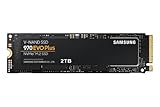
- Always Evolving SSD: The 970 EVO Plus is powered by the latest V-NAND technology and firmware optimization, maximizing the potential of NVMe bandwidth; Comes in storage capacities of up to 2TB, with reliability of up to 1,200 TBW.Computer Platform:PC.Internal Storage : Samsung V-NAND 3-bit MLC. Voltage : 3.3 V 5 % Allowable voltage.Allowable Voltage : 3.3 V 5 % Allowable voltage.
- Breakthrough Read/Write Speeds: The 970 EVO Plus reaches sequential read/write speeds up to 3,500/3,300 MB/s, up to 53% faster than the 970 EVO
- Samsung Magician for Data Security: This software provides a suite of user-friendly tools that help you keep your drive up to date, monitor drive health and speed, and even boost performance
- Superior Heat Dissipation: Samsung’s Dynamic Thermal Guard automatically monitors and maintains optimal operating temperatures to minimize performance drops
- 7 Year Limited Warranty: The 970 EVO Plus provides up to 1200 TBW (Terabytes Written) with 5-years of protection for exceptional endurance powered by the latest V-NAND technology and Samsung's reputation for quality
Why Gen3 is the sensible baseline
Intel’s installation guidance says the host connector must provide PCIe x4 or more and recommends PCIe 3.0 for best performance in this type of installation. A Gen3 x4 drive therefore aligns with the lane width and generation commonly available on older systems. A newer Gen4 drive can operate at a lower link speed on a Gen3 host, but its headline specification will not be reached in that system.
When a Gen4 drive still makes sense
The 2TB WD Blue SN580 is specified for PCIe 4.0 x4, up to 4,150 MB/s and 900 TBW. In an older Gen3 desktop it is primarily a capacity and future-reuse purchase: the motherboard limits the link to Gen3 behavior. Choose it when you need 2TB now or expect to move the drive into a newer PCIe 4.0 system later, not because the old desktop will deliver 4,150 MB/s.
Compatibility checklist before ordering
- Locate a suitable slot. Find an open PCIe slot connected with at least four lanes. A physically long slot is not proof that four electrical lanes are available, so consult the motherboard manual or vendor specification.
- Check lane sharing and clearance. Installing the adapter may share lanes with a graphics slot or another expansion device. Also check whether the graphics card, case drive cage or side panel will obstruct the adapter or its M.2 modules.
- Match the key and protocol. The SSD must be an M-key PCIe/NVMe module. M.2 SATA drives use a different interface even though the card shape looks similar. The 970 EVO listed here is PCIe/NVMe.
- Confirm the length. The common 2280 format is 22 mm wide and 80 mm long. The PEX8M2E2 also accepts 2242 and 2260 lengths, but the motherboard-side adapter and its standoff must support the size you install.
- Read the firmware notes. Look up the exact motherboard model and UEFI revision. Samsung states that NVMe requires UEFI NVMe support; a legacy BIOS alone does not support NVMe SSDs as boot devices.
- Decide whether the drive is for boot or storage. If the board lacks NVMe boot support, keep the existing SATA drive as the boot disk and use the NVMe module as secondary storage. Do not assume a firmware update will add the feature unless the board vendor explicitly documents it.
SSD and adapter options compared
| Option | Interface and format | Capacity | Rated performance or endurance | Best use in an older desktop | Important limitation |
|---|---|---|---|---|---|
| Samsung 970 EVO 500GB | PCIe Gen3 x4, NVMe 1.3, M.2 2280, M-key | 500GB | Up to 3,400 MB/s sequential read; five-year or 300 TBW limited warranty | Balanced Gen3 boot or application drive when UEFI supports NVMe | Capacity is limited to 500GB in this configuration; exact boot support depends on the motherboard |
| WD Blue SN580 2TB | PCIe 4.0 x4, M.2 NVMe | 2TB | Up to 4,150 MB/s and 900 TBW | Large secondary drive or a future upgrade to a PCIe 4.0 system | A PCIe 3.0 host limits the link, so the old desktop will not achieve the Gen4 headline rate |
| StarTech PEX8M2E2 adapter | PCIe 3.0 adapter with two M.2 positions; M-key NVMe/AHCI | Supports 2242, 2260 and 2280 modules | Adapter specification does not establish an SSD’s own speed or endurance | Adding one or two M.2 modules to a board with no M.2 socket | Passive card; it does not create UEFI NVMe boot capability |
Warranty, endurance and throughput figures in the table are manufacturer specifications for the named models. They are not guarantees of the speed a particular older motherboard, operating system or workload will deliver.
The Tool Desk
Outbyte PC Repair FREERepair Windows errors before they cause bigger problemsFix Now →Outbyte Driver Updater FREEFix the driver behind crashes, sound loss and screen glitchesFind Drivers →How PCIe lanes, generations and adapters affect speed
Lane count matters more than the slot’s physical length
NVMe drives communicate over PCIe lanes. A four-lane connection is the normal target for an M.2 NVMe module. Some desktop slots are physically x16 but electrically wired for fewer lanes, or they lose lanes when another slot is populated. Intel’s guidance calls for a PCIe x4-or-larger host connector, so verify electrical lane assignment rather than relying on appearance.
Generation negotiation is automatic but bounded
PCIe devices negotiate a common generation. A Gen4 SSD can fall back to Gen3 when installed in a Gen3 system, but the host remains the bottleneck. This is why the 970 EVO’s Gen3 specification is a better performance match for many older desktops, while the SN580’s Gen4 rating mainly provides extra capacity and reuse potential.
Rank #2

- INNOVATIVE V-NAND TECHNOLOGY: Powered by Samsung V-NAND Technology, the 970 EVO Plus SSD’s NVMe interface (PCIe Gen 3.0 x4 NVMe 1.3) offers enhanced bandwidth, low latency, and power efficiency ideal for tech enthusiasts, high end gamers, and 4K & 3D content designers
- BREAKTHROUGH READ WRITE SPEEDS: Sequential read and write performance levels of up to 3,500MB s and 3,300MB s, respectively; Random Read (4KB, QD32): Up to 600,000 IOPS Random Read. Operating Temperature: 0 - 70 ℃
- PERFORMANCE OPTIMIZATION AND DATA SECURITY: Seamless cloning and file transfers with Samsung Magician Software, the ideal SSD management solution for performance optimization and data security with automatic firmware updates
- SUPERIOR HEAT DISSIPATION: Samsung’s Dynamic Thermal Guard automatically monitors and maintains optimal operating temperatures to minimize performance drops. WWN not supported
- 5-YEAR LIMITED WARRANTY: 5-year limited warranty or 600 TBW (Terabytes Written). Power consumption (Idle) - Max. 30 mW Actual power consumption may vary depending on system hardware & configuration. Voltage - 3.3 V 5 % Allowable voltage. AES 256-bit Full Disk Encryption, TCG/Opal V2.0, Encrypted Drive (IEEE1667)
The adapter does not translate SATA to NVMe
A passive PCIe-to-M.2 card simply routes PCIe signals and supplies a mounting point. It cannot make an M.2 SATA module work in an NVMe-only position, and it cannot emulate firmware support that the motherboard never implemented. Buy the protocol and key required by the adapter, not just an SSD with “M.2” in its name.
UEFI boot support: the decision that determines your setup
Storage detection and booting are separate questions. An operating system may recognize an NVMe disk after its driver loads even when the motherboard firmware cannot start an operating system from that disk. Samsung’s support guidance explicitly requires UEFI NVMe support and notes that a legacy BIOS does not support NVMe SSDs as boot devices.
Do these 3 things before closing this tab:
1Scan for outdated or missing drivers - takes under a minute2Repair Windows errors before they cause bigger problems3Fix the driver behind crashes, sound loss and screen glitchesIf the board supports NVMe booting
You can install the operating system on the NVMe drive, provided the firmware is configured for the board’s supported boot mode. The exact menu names vary by vendor. Look for UEFI storage, NVMe or boot-device entries in the motherboard setup utility, and follow the vendor’s installation notes for the specific model.
If the board does not support NVMe booting
Use the NVMe drive as secondary storage for applications, project files or games while retaining a SATA drive as the boot device. The system can still use the NVMe disk after the operating system loads, but the firmware will not hand off to it during startup. Do not promise booting from the adapter without the exact motherboard and firmware documentation.
If support is unclear
Search the motherboard manufacturer’s specifications and UEFI release notes using the complete model number and revision. Statements about “M.2 support” are not enough when the socket is absent; you need an explicit NVMe boot or PCIe boot capability statement. If no such statement exists, plan for secondary-storage use.
Rank #3

- GROUNDBREAKING READ/WRITE SPEEDS: The 990 EVO Plus features the latest NAND memory, boosting sequential read/write speeds up to 7,150/6,300MB/s*. Ideal for huge file transfers and finishing tasks faster than ever.
- LARGE STORAGE CAPACITY: Harness the full power of your drive with Intelligent TurboWrite2.0's enhanced large-file performance—now available in a 4TB capacity.
- EXCEPTIONAL THERMAL CONTROL: Keep your cool as you work—or play—without worrying about overheating or battery life. The efficiency-boosting nickel-coated controller allows the 990 EVO Plus to utilize less power while achieving similar performance.
- OPTIMIZED PERFORMANCE: Optimized to support the latest technology for SSDs—990 EVO Plus is compatible with PCIe 4.0 x4 and PCIe 5.0 x2. This means you get more bandwidth and higher data processing and performance.
- NEVER MISS AN UPDATE: Your 990 EVO Plus SSD performs like new with the always up-to-date Magician Software. Stay up to speed with the latest firmware updates, extra encryption, and continual monitoring of your drive health–it works like a charm.
Installing the SSD and adapter
Prepare the hardware
- Back up important files before changing storage hardware.
- Shut down the desktop, switch off the power supply and disconnect the power cable.
- Press the case power button briefly after unplugging to discharge residual power.
- Ground yourself and work on a nonconductive surface.
- Have the adapter’s M.2 screw and the motherboard’s slot-retaining screw available.
Mount the M.2 module
- Remove the adapter’s cover or retaining hardware if the card uses one.
- Set the standoff to the SSD’s length, normally 2280 for the 970 EVO.
- Insert the M-key edge connector at a shallow angle, then press the free end down.
- Secure the module with the supplied screw. Do not force the connector or bend the board.
- If using a dual-position adapter, populate only the position and protocol supported by your intended configuration; both slots still depend on the host’s available lanes and the adapter’s design.
Install the adapter in the desktop
- Remove the case’s matching expansion-slot cover.
- Seat the adapter firmly in an open PCIe slot with at least four electrical lanes.
- Fasten the bracket to the case so the card cannot flex.
- Check that the graphics card, fans and side panel do not press against the M.2 module or adapter.
- Reconnect power and start the system.
Initialize and format the drive
Once the operating system loads, open its disk-management utility and confirm that the new NVMe device appears with the expected capacity. For a new data disk, initialize it using the partition style recommended for your operating system, create a volume and assign a drive letter or mount point. If you are replacing the boot disk, use the operating system’s supported migration or clean-install procedure and verify that the firmware lists the new drive before wiping the old one.
Thermals, placement and physical clearance
Older cases often have less airflow around expansion cards than modern designs. The adapter should not block a graphics-card intake or sit against a cable bundle. Leave room for the M.2 module and any heatsink supplied with the adapter or SSD. A drive that fits electrically can still be unsuitable if the card cannot be installed without touching the graphics cooler or side panel.
The supplied specifications do not establish a universal temperature limit or a guaranteed sustained-write rate for either example SSD in every enclosure. Treat airflow as a system-design concern: keep the module clear of obstructions, ensure case fans operate, and monitor the drive with the operating system or motherboard tools after installation.
Independent reader supportYour contribution helps us test, update, and keep practical guides available for everyone.Choosing capacity and endurance
500GB class
The 500GB 970 EVO is appropriate when the goal is a responsive boot and application drive while bulk files remain on existing disks. Its manufacturer-rated endurance is 300 TBW and its limited warranty is five years. Those figures describe the warranty specification, not a promise that every workload will consume exactly that amount.
2TB class
The 2TB SN580 provides substantially more space and a 900 TBW rating. On an old Gen3 host, that capacity is its strongest reason to buy it. It can later move to a PCIe 4.0 system where its interface rating is usable, making it a practical bridge purchase for a staged PC upgrade.
Rank #4

- GROUNDBREAKING READ/WRITE SPEEDS: The 990 EVO Plus features the latest NAND memory, boosting sequential read/write speeds up to 7,250/6,300MB/s. Ideal for huge file transfers and finishing tasks faster than ever.
- LARGE STORAGE CAPACITY: Harness the full power of your drive with Intelligent TurboWrite2.0's enhanced large-file performance—now available in a 4TB capacity.
- EXCEPTIONAL THERMAL CONTROL: Keep your cool as you work—or play—without worrying about overheating or battery life. The efficiency-boosting nickel-coated controller allows the 990 EVO Plus to utilize less power while achieving similar performance.
- OPTIMIZED PERFORMANCE: Optimized to support the latest technology for SSDs—990 EVO Plus is compatible with PCIe 4.0 x4 and PCIe 5.0 x2. This means you get more bandwidth and higher data processing and performance.
- NEVER MISS AN UPDATE: Your 990 EVO Plus SSD performs like new with the always up-to-date Magician Software. Stay up to speed with the latest firmware updates, extra encryption, and continual monitoring of your drive health–it works like a charm.
Match endurance to the workload
Endurance is relevant when the drive will receive frequent writes such as scratch files, virtual machines or video projects. For a light boot and application workload, capacity, firmware support and physical compatibility usually determine the decision first. Do not compare TBW figures without noting the different capacities and product generations.
Common installation failures and fixes
The drive is missing from firmware and the operating system
- Power down and reseat the M.2 module and adapter.
- Confirm that the module is M-key NVMe, not M.2 SATA.
- Try another PCIe slot with at least four electrical lanes if the board offers one.
- Check lane-sharing notes; a populated graphics or expansion slot may disable the chosen slot.
- Verify that the adapter is fully inserted and secured.
The operating system sees the drive but the firmware will not boot it
This is usually a boot-support limitation rather than a defective SSD. Check the exact motherboard’s UEFI documentation. If NVMe booting is not supported, keep the SATA boot disk and use the NVMe module as secondary storage.
The drive appears slower than its specification
Confirm the negotiated PCIe generation and lane count. A Gen4 SN580 in a Gen3 x4 desktop is constrained by the host. A slot wired for fewer than four lanes, lane sharing, thermal throttling or a workload dominated by small random operations can also produce results below a sequential-read headline. Manufacturer sequential figures are maximum specifications, not guarantees for every system.
The adapter does not fit beside the graphics card
Move it to another compatible slot, use a lower-profile adapter only if its specifications meet the SSD’s requirements, or choose a different M.2 position on a dual-slot card. Never force the bracket or allow the module to contact the graphics cooler.
When an NVMe adapter is not the right upgrade
If the motherboard has no suitable x4-or-larger slot, cannot provide stable lane assignment, or lacks UEFI NVMe support and you require a bootable upgrade, a conventional SATA SSD may be the simpler choice. SATA will not provide NVMe’s PCIe interface, but it avoids firmware uncertainty and usually installs through the board’s native storage connectors.
An NVMe adapter is most compelling when the desktop has an available x4-or-larger slot, the case has clearance, and you either have confirmed UEFI boot support or are comfortable retaining a SATA boot drive.
Quick Recap
Recommended buying decisions
Choose the Samsung 970 EVO 500GB plus a PCIe adapter when
- Your desktop is limited to PCIe 3.0.
- You want a known Gen3 x4 match rather than paying for unused Gen4 bandwidth.
- 500GB is sufficient for the operating system and primary applications.
- Your motherboard documentation confirms NVMe boot support, or you will use the drive as secondary storage.
Choose the WD Blue SN580 2TB when
- You need 2TB of space now.
- You accept that an older PCIe 3.0 host will limit performance.
- You expect to reuse the drive in a PCIe 4.0 system later.
Choose the StarTech PEX8M2E2-style adapter when
- Your motherboard has no M.2 socket.
- You need support for M-key NVMe/AHCI modules in 2242, 2260 or 2280 lengths.
- You have verified slot lanes, clearance and the adapter’s mounting arrangement.
Questions to answer before you click Buy
- What is the complete motherboard model and revision?
- Which PCIe slots remain available after installing the graphics card?
- Does the chosen slot provide at least four electrical lanes?
- Does the UEFI documentation explicitly mention NVMe boot support?
- Is the SSD M-key PCIe/NVMe rather than M.2 SATA?
- Will a 2280 module and adapter clear the graphics card and case panel?
- Do you need 500GB for a system drive or 2TB for bulk storage and future reuse?
Product prices and availability are accurate as of the date/time indicated and are subject to change. Any price and availability information displayed on Amazon at the time of purchase will apply.

