
iTechGuides is reader-supported. When you buy through links on our site, we may earn an affiliate commission. As an Amazon Associate I earn from qualifying purchases. Learn more
The best balance is not a universal daily gaming limit. It is a family routine in which games do not crowd out sleep, movement, schoolwork, reading, imaginative play, hobbies, or face-to-face connection. Start by identifying what gaming is displacing, ask your child which offline activities sound genuinely enjoyable, and agree on screen-free times and places together. Revisit the plan as school schedules, interests, and developmental needs change.
What “balance” means for a child who games
The American Academy of Pediatrics (AAP) says current evidence does not support one screen-time number that fits every school-aged child or teenager. The more useful questions are what the game contains, when and where it is played, whether the child can stop, and what gaming is replacing. A session that ends on time after homework and outdoor play is different from gaming that regularly pushes bedtime later, eliminates physical activity, or displaces family contact.
Use gaming as one part of a full day rather than treating it as the only variable. A workable plan protects sleep, daily movement, learning responsibilities, relationships, and unstructured time. It also leaves room for enjoyment: games can be a legitimate leisure activity when they fit those priorities.
Do these 3 things before closing this tab:
1Clear out junk files and repair common Windows errors2Scan for outdated or missing drivers - takes under a minute3Repair Windows errors before they cause bigger problemsFirst, find out what gaming is crowding out
Before adding activities, observe a typical week. The goal is not to build a perfect timetable; it is to locate the pressure point that needs an offline replacement.
#1 Best Overall
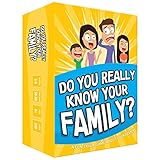
- Get ready for the best family game night as you laugh and learn new things about each other with this fun card game.
- See who really knows the family best as you answer fun questions about each other while sparking interesting conversations.
- Create hilarious family memories as you compete and perform silly challenges together.
- Super easy to learn and play - a perfect game for families with kids 8 and up, teens and adults.
- Sleep: Is the child playing near bedtime, waking to play, or struggling to get up for school?
- Movement: Are there fewer opportunities to run, climb, ride, walk, or play actively?
- School responsibilities: Is homework rushed, forgotten, or done while distracted by a game?
- Reading and creative time: Has reading, drawing, music, building, or another hobby disappeared?
- Relationships: Is gaming replacing meals, conversations, shared play, clubs, or time with siblings?
- Downtime: Does every unstructured minute become screen time, leaving no quiet time to daydream, listen to music, or be outdoors?
Pick one or two displaced needs first. A child who already gets plenty of exercise may need a calmer reading or creative option, while a child who sits for long stretches may benefit most from an easy movement routine.
Age-specific activity targets to keep in view
These are health recommendations, not a required shopping list or a rule that every child must follow identically. Consider age, ability, health, weather, access, and the child’s interests.
| Age | Guidance relevant to balancing gaming | How to apply it |
|---|---|---|
| 6–17 years | The U.S. Centers for Disease Control and Prevention (CDC), page dated December 4, 2025, recommends at least 60 minutes of moderate-to-vigorous physical activity each day. Aerobic activity should occur daily; muscle- and bone-strengthening activity should occur at least three days per week. | Accumulate activity in ordinary play, walking, sports, riding, climbing, or short bursts. It does not have to be one continuous workout. |
| 3–5 years | CDC recommends physical activity throughout the day and encourages caregivers to make active play enjoyable. | Offer frequent opportunities to move rather than assigning a single formal exercise period. |
| 1–2 years | World Health Organization (WHO) guidance from 2019 calls for at least 180 minutes of varied physical activity spread across the day. | Use floor play, walking, dancing, pushing or carrying safe objects, and outdoor exploration. The 180-minute figure is for this age group, not for older children. |
| 3–4 years | WHO recommends at least 180 minutes of varied activity, including at least 60 minutes of moderate-to-vigorous activity. | Mix energetic play with lighter movement and protect naps and nighttime sleep. |
For children under five, WHO combines movement, sedentary behavior, and sleep. During quiet periods, caregiver-child reading and storytelling are specifically encouraged. The WHO’s 2019 message is to shift sedentary time toward play while protecting sleep, not to replace one rigid quota with another.
Recommended Free Tools
Best non-screen activities, matched to different needs
Outdoor movement and active play
Outdoor play is often the simplest replacement for a long gaming block because it combines movement, sensory variety, and a change of setting. Try walking a route together, running games, tag, jumping, playground climbing, riding a tricycle or bicycle, or an age-appropriate sport. CDC examples include walking, running, tag, climbing, and jumping.
Rank #2

- GAME OF SWEET REVENGE: Enjoy classic Sorry! gameplay with this Sorry! board game for kids. It's an edge-of-your-seat race to home, so hurry up and get there first
- FIRST ONE HOME WINS: Who will be the first player to get all 3 of their pawns to the home space? But watch out! Players can get "sweet revenge" by sending each other's pawns back to the starting point
- SO MANY POSSIBILITIES: Slide, collide, and score to win the Sorry! game. This family game for kids and adults features so many possibilities depending on the card picked up and strategy chosen
- CLASSIC SORRY! GAMEPLAY: Remember playing the original Sorry! game as a kid? Bring back memories of playing the Sorry! game with family members and introduce it to a new generation
- FAMILY GAME NIGHT FAVORITE: A go-to game for family time or anytime indoor fun, the Sorry! game for kids is one of the best family games for game night
Let the child choose the intensity and format. One child may prefer a basketball hoop; another may enjoy collecting leaves on a walk. For a child with a disability, chronic condition, coordination difference, or low confidence, adapt the activity with a clinician, physical therapist, school, or recreation provider when needed. The aim is regular enjoyable movement, not athletic performance.
Family games and face-to-face play
A family board game, card game, puzzle, charades, or a simple outdoor game can replace gaming while preserving its social and problem-solving appeal. AAP’s family media-plan guidance explicitly lists family games as an option. Choose rules and duration that fit the child’s age, frustration tolerance, and interests; a cooperative game may work better than a highly competitive one for some families.
Reading and storytelling
Keep books visible and easy to reach, then offer choice: comics, novels, nonfiction, magazines, audiobooks, or a parent-child read-aloud. For younger children, WHO specifically recommends caregiver-child reading and storytelling during sedentary time. Retelling a game’s story, inventing a sequel, or drawing a map of an imaginary world can bridge a child’s existing interests into reading and language play.
The Tool Desk
Outbyte PC Repair FREEClear out junk files and repair common Windows errorsFree Scan →Outbyte Driver Updater FREEScan for outdated or missing drivers - takes under a minuteDriver Scan →Art, music, building, and making
Creative activities provide a satisfying sense of progress without requiring a screen. Options include drawing, painting, clay, crafts, singing, learning an instrument, model building, construction sets, cooking, gardening, photography with a non-networked camera, or writing a comic. AAP identifies art and music among possible extracurricular alternatives. Keep supplies proportionate to the child’s age and supervision needs; household paper, recycled boxes, pencils, and kitchen ingredients can be enough.
Rank #3

- All New Game: It's the 2nd edition of the quick question “what am I?” Game. Includes 6 new bands- dino, narwhal, robot, flower, butterfly, & brain
- Simple To Play: Pick a headband, place a card in it and play to figure out what's shown on your card. Using yes/no questions, be the first to guess 3 cards correctly and you win
- Family Game Night: Hedbanz is a must-have in your collection of family games for kids and adults. It is for everyone ages 6 and up. For 2-6 players, bring along when you are in need of fun board games for family night
- Funny Random Stuff For Family Game Night: Throw the best party, birthday, game night & Friendsgiving with new party games, family board games & card games for teens & adults
- Spin Master Toys & Games: Looking for kids games, yard games & card games for grown ups, kids or teens? Shop everything from family game night, travel games, puzzles for adults & family games
Clubs, sports, volunteering, and community connection
Structured activities can supply both social contact and a predictable time away from games. Consider a school club, library program, team or individual sport, dance, drama, scouting, a community garden, or age-appropriate volunteering. AAP advises considering offline creative, sports, and volunteering opportunities that fit the young person. Check transportation, fees, schedule, sensory environment, and whether the child actually wants to participate before committing.
Quiet, restorative downtime
Not every alternative needs to be energetic or productive. Reading alone, coloring, listening to music, spending time with a pet, sitting outdoors, doing a puzzle, stretching, or simply being bored can help a child recover from a busy day. Quiet time is particularly useful when gaming is being used to avoid overstimulation or when a child needs a transition before sleep.
How to choose among activities
When several options are possible, compare them on practical dimensions rather than ranking one hobby as universally best. These questions are a planning aid, not a validated scoring system.
| Question | What to look for | Example decision |
|---|---|---|
| Will the child choose it? | Interest, curiosity, and willingness to try again after a difficult first attempt. | Offer both a bike ride and a drawing challenge; let the child select the first option. |
| Does it fit age and ability? | Physical safety, attention span, developmental level, and required supervision. | Use a nearby playground for a preschooler and a longer walk or sport for an older child who wants more challenge. |
| What need does it meet? | Movement, creativity, calm, mastery, social contact, or time with a caregiver. | Choose reading after a tiring school day; choose active play after a long sitting period. |
| Can the family access it? | Cost, equipment, transport, weather, space, disability access, and adult availability. | Substitute a free neighborhood walk for a paid class when budget or transport is limited. |
| Does it fit the time available? | Whether it works in a 10-minute gap, a 30-minute evening, or a weekend block. | Keep jump-rope, a short story, or a quick drawing prompt available for brief transitions. |
Do not imply that buying equipment is necessary. Books, art supplies, a ball, or an age-appropriate family game may make an activity easier, but the guidance supports the activity itself rather than a mandatory product.
Rank #4

- Fast-Paced Fun for All Ages: Engage in a lively game where players race to match cards with spoken words like "Taco," "Cat," "Goat," "Cheese," and "Pizza." Designed for 2–8 players aged 7 and up, each round lasts just 10–15 minutes, making it perfect for quick family card games or travel entertainment. Its simplicity and speed ensure everyone stays engaged and laughing.
- Simple Rules, Wild Gameplay: Players take turns playing cards while chanting the game's title in order. When a spoken word matches the card played, everyone races to slap the pile and the last one to do so takes the cards! Add in surprise action cards and it becomes a fast-paced, laugh-out-loud competition that's easy to learn but hard to stop playing.
- Card Games for Families and Social Events: Whether it's a holiday gathering, birthday party, or casual get-together, Taco Cat Goat Cheese Pizza is a go-to choice. Its easy-to-learn rules and engaging gameplay make it a hit among both kids and adults. It's also a top pick for stocking stuffers and Easter baskets, offering fun without the need for screens.
- Portable Entertainment for On-the-Go Fun: Compact and lightweight, this card game is travel-friendly, making it an excellent companion for road trips, vacations, or family outings. Its quick setup and short playtime ensure that you can enjoy a fun-filled game session anytime, anywhere.
- Boosts Cognitive Skills and Reflexes: Beyond entertainment, Taco Cat Goat Cheese Pizza helps develop important skills such as concentration, pattern recognition, and fine motor coordination. Players must stay alert and think quickly, making it both a fun and mentally stimulating activity for all ages.
Build a family media plan that makes alternatives realistic
AAP’s HealthyChildren family-media-plan guidance recommends individualized rules, screen-free zones, role modeling, and revisiting the plan as children mature. Use a short planning meeting rather than announcing a sudden ban.
- Describe the problem neutrally. Say, “Gaming is making bedtime late,” or “We are not getting outside,” instead of labeling the child irresponsible.
- Ask what the child wants to protect. They may care about finishing a game with friends, keeping a weekend tournament, or having time to relax after school.
- Set screen-free times and places. Common choices include meals, homework time, bedrooms at night, family outings, or the first part of the morning. Pick boundaries the adults can enforce consistently.
- Offer two or three alternatives the child helped select. Keep a menu visible: a walk, a family game, a chapter of a book, music practice, art, or a club. Choice increases the chance that an alternative will stick.
- Plan transitions. Give a time warning, save progress when possible, and identify the next activity before play starts. A snack, shower, walk, or short household task can provide a predictable off-ramp.
- Model the same expectations. Adults can put phones away during meals, join the planned activity, and explain their own stopping points.
- Review the plan periodically. Revisit it after a school-term change, holiday, new sport, sleep shift, or change in the child’s interests. A rule that worked for a nine-year-old may not fit a teenager.
Write down the agreement in plain language: when games are available, where devices charge, what happens before play, which activities are protected, and how exceptions work. Include a procedure for online games that cannot be paused easily, such as completing a round and then stopping rather than starting another match.
Independent reader supportYour contribution helps us test, update, and keep practical guides available for everyone.Examples of balanced routines
School day for an elementary-age child
After school, the child has a snack and a short decompression period, completes homework, then plays outside or walks with a caregiver. Gaming can follow dinner or another agreed point, with a clear end time that leaves room for reading, hygiene, and sleep. The exact sequence should reflect the child’s school load and family schedule; the principle is that gaming does not automatically claim the first and last hours of the day.
School day for a teenager
A teenager might combine walking or another activity during the commute, lunch, or after school with strength or team activity on several days each week. Gaming can be scheduled after responsibilities and social commitments, while bedrooms remain charging-free overnight if late play harms sleep. Older teens should participate in setting the plan and adjusting it for exams, work, sports, and online social commitments.
Best Value

- INTRODUCING A DIGITAL DIE: More suspense, more surprises, more laughs! In this Jenga game, enjoy the classic Jenga gameplay fans love—or dare to play it with the digital die for added challenges
- 6 MORE WAYS TO PLAY: Roll the digital die for unpredictable challenges: play using thumbs only, race against the clock, and more! (To download the die onto a phone, scan the in-pack QR code or access the web app. No additional purchase needed)
- HILARIOUS CHALLENGES: Actions like “Team-Up” amp up the fun! A player who rolls it selects another player to act as their eyes. The other player can guide their arm, but can’t touch the tower—or topple it
- EXCITING GAME FOR PARTIES OR SOLO PLAY: The Jenga game for kids and adults is the wooden block balancing game livening up parties for generations. No friends around? No problem. Play solo to beat a personal best
- GENUINE WOOD BLOCKS: The Jenga party game includes 54 precision crafted wooden blocks. Pull out a block, place it on top, but don't let the tower fall in this original wood block game
Weekend with more flexibility
Use a longer outdoor outing, visit, club, volunteer shift, or family game as an anchor. Gaming may have a larger window than on school days, but keep meals, sleep, movement, and agreed family time protected. A flexible weekend plan is different from unlimited access: the child still knows when the next activity and stopping point occur.
Making alternatives work when a child resists
Start smaller than the gaming block
If a child usually plays for two hours, proposing a two-hour replacement may feel impossible. Begin with a 10-minute walk, one chapter, a single art prompt, or one round of a face-to-face game. Expand only when the activity becomes familiar.
Preserve the appealing feature
Games often offer challenge, stories, collecting, creativity, competition, or friendship. Match that feature offline: a timed scavenger hunt for challenge, a comic for story, a building project for creativity, a cooperative board game for connection, or a sport for competition.
What’s actually slowing this PC down?
Pick the symptom - the matching free tool is one click away.
Expect imperfect attempts
A child may reject an activity once and later enjoy it under different conditions. Change the partner, location, duration, or difficulty before discarding it. Avoid presenting every alternative as a reward for surrendering the game; some activities should exist because they are part of family life.
Account for access and ability
Families differ in housing, neighborhood safety, transportation, money, caregiving time, and disability access. Indoor movement, free library materials, household crafts, storytelling, music, and visits with relatives can be valid choices. If pain, fatigue, mobility, sensory needs, or medical restrictions affect activity, seek individualized advice instead of applying a generic target.
When to seek professional help
Gaming time alone does not diagnose a problem. Talk with the child’s pediatrician when persistent gaming-related conflict occurs alongside ongoing sleep problems, marked mood changes, withdrawal from friends and family, declining school function, or difficulty meeting basic routines despite a consistent family plan. Bring a description of the pattern—when gaming happens, what it displaces, and what happens when it stops—rather than relying on a single daily-hour number.
A quick implementation checklist
- Identify the one healthy activity gaming is currently displacing most.
- Ask the child to name offline activities they would actually try.
- Choose at least one movement option, one quiet or creative option, and one social option.
- Set specific screen-free places or times and a predictable stopping routine.
- Protect sleep and the age-appropriate movement guidance that applies to your child.
- Make the alternatives convenient, affordable, and accessible with the resources already available.
- Review the agreement regularly and change it when the child or family schedule changes.
Key takeaway
The strongest replacement for gaming is not a single activity; it is a child-informed mix of movement, sleep, reading, play, creativity, quiet time, and relationships. Use AAP’s context-based approach for school-aged children and teens, CDC movement guidance for ages 3–17, and WHO’s combined movement, sedentary-time, and sleep guidance for under-fives. A family plan that children help shape is more practical—and more sustainable—than a universal stopwatch rule.
Windows Errors? Fix Them Before They Spread
Repair common Windows errors and clear accumulated junk for a smoother, more stable PC - no reinstall needed.Free scan · no reinstallOutdated Drivers Are Slowing You Down
One free scan finds every outdated or missing driver and matches the right update for your exact hardware.Free scan · exact hardware matchQuick Recap
Product prices and availability are accurate as of the date/time indicated and are subject to change. Any price and availability information displayed on Amazon at the time of purchase will apply.

