
Quick wins for a faster PC:
Scan for outdated or missing drivers - takes under a minuteDriver Scan →Clear out junk files and repair common Windows errorsFree Scan →iTechGuides is reader-supported. When you buy through links on our site, we may earn an affiliate commission. As an Amazon Associate I earn from qualifying purchases. Learn more
For carpets and rugs, map every textile area in the Narwal app, enable its carpet setting, and run a vacuum-only task with normal or strong suction. For sealed hard floors, label each room correctly, then use Vacuum & Mop with normal suction and normal mop wetness; switch to Vacuum then Mop when loose debris is heavy. In mixed homes, create room-specific tasks and add no-go zones wherever a rug must never be crossed during mopping.
There is no single numeric preset that suits every pile, pet, soil level, or floor finish. Treat the settings below as safe starting points, then adjust one parameter at a time after checking the first run.
Quick settings by floor type
| Surface | Map setting | Recommended mode | Starting suction | Mop wetness | Passes |
|---|---|---|---|---|---|
| Wall-to-wall carpet | Mark the room as carpet and enable carpet cleaning | Vacuum | Normal; raise to strong for embedded hair or grit | Off because this is a vacuum-only task | One; add a second pass if debris remains |
| Area rug | Mark the rug or rug-containing area as carpet | Vacuum | Normal or strong, depending on pile and soil | Off | Inspect edges after one pass; repeat only where needed |
| Sealed tile, vinyl, or hardwood | Set the correct hard-floor material for each room | Vacuum & Mop for routine cleaning | Normal | Normal, provided the finish tolerates moisture | One routine pass |
| Hard floor with crumbs or loose grit | Correct hard-floor label | Vacuum then Mop | Normal or higher if pet hair is present | Normal after dry debris is removed | One vacuum pass followed by one mop pass |
| Moisture-sensitive wood | Correct wood or hard-floor label | Vacuum & Mop, or separate Vacuum then Mop | Normal | Lowest setting that removes soil; test a small area first | One pass, then inspect the finish |
Narwal advertises up to 31,000Pa suction for the Freo 20 on its 2026 product page. That is a headline capability, not a command to run every floor at maximum power. The app’s adjustable suction, cleaning cycles, and mop humidity let you match output to the surface instead of using maximum settings everywhere.
Prepare the map before choosing settings
The Freo 20 decides where to vacuum, mop, or avoid based on the map. A wrong floor label can therefore produce what looks like a hardware problem: a rug may be skipped, or a mop task may approach a textile surface. Finish mapping and inspect the result before fine-tuning suction.
#1 Best Overall
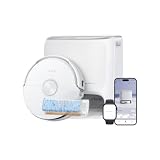
- FRESH-WATER FLOWWASH MOPPING: NARWAL Freo 20 robot vacuum and mop uses the FlowWash Mopping System to rinse its wide Track Mop through 16 nozzles, scrape away residue, and extract dirty water in real time, helping reduce dirty-water recirculation.
- 7× LARGER MOP CONTACT AREA: The FlowWash Track Mop delivers 7× larger mop contact area than traditional roller mops, while continuous fresh-water self-cleaning and a 7.48 in mop circumference support wider, more consistent mopping.
- 140°F HOT-WATER MOPPING + 12N: NARWAL Freo 20 vacuum mop combo uses hot water to help loosen sticky kitchen grease, while 12N of steady downward pressure delivers a deeper scrub for tough spills and stains.
- NarMind Pro Autonomous System: Dual-camera obstacle avoidance recognizes 300+ household object types and navigates around everyday clutter, helping this robot vacuum reduce collisions, interruptions, and pre-cleaning floor pickup.
- 31,000Pa TURBO SUCTION. ZERO-TANGLE PICKUP: 31,000Pa Hyper Suction lifts pet hair, cat litter, crumbs, and fine dust from carpets and hard floors, while DualFlow delivers 0% tangle rates on both the main and side brushes, independently verified by SGS.
Complete a full mapping run
- Clear cables, toys, loose clothing, and other objects that could interrupt the initial run.
- Start the robot’s mapping process from the Narwal app and let it visit every accessible room. Keep doors open when you want connected rooms on one map.
- Wait for the map to finish processing. Do not create detailed room tasks from a partially scanned map; room boundaries can change after later discovery.
- Open the map editor and verify that every room has a usable boundary and a recognizable floor surface.
Label carpets and rugs explicitly
Use the app’s floor-material and carpet controls to mark each rug or carpeted room. A rug that appears visually obvious to you may not be classified correctly by the robot’s map. Tom’s Guide reported that rugs were skipped until carpet cleaning was enabled, making this map setting the first check when textile flooring is not being cleaned.
- Open the saved map in the Narwal app.
- Select the room or floor area containing the rug.
- Choose the carpet setting or carpet floor material, then save the change.
- Zoom in around the rug perimeter. If the mapped edge is incomplete, correct the room boundary or add the relevant carpet area before scheduling a task.
Set hard-floor materials accurately
Assign sealed tile, vinyl, hardwood, or another available hard-floor category to the rooms where mopping is permitted. Accurate labels give the app the information it uses to separate mop-safe surfaces from textile areas. If a room contains both a large hard-floor section and a rug, split the map into usable zones or rely on a no-go zone for the rug.
Verify the map after furniture moves
Dining chairs, temporary mats, and moved sofas can create a route that was not present during mapping. After a significant layout change, inspect the map and run a short test task. A no-go zone is safer than relying on the robot to infer that a newly placed mat is a rug.
Crashes, No Sound, or Screen Glitches?
Random freezes, missing sound and display glitches usually trace back to one bad driver. Find and replace yours safely.Free scan · under a minuteWindows Errors? Fix Them Before They Spread
Repair common Windows errors and clear accumulated junk for a smoother, more stable PC - no reinstall needed.Free scan · no reinstallBest Freo 20 settings for carpets and rugs
Use vacuum-only mode
Select Vacuum for a carpeted room or rug zone. Vacuum-only keeps mop moisture away from textile flooring and makes the robot’s intended behavior unambiguous. The Freo platform’s manual lists Vacuum as a separate cleaning mode, alongside Mop, Vacuum and Mop, and Vacuum then Mop.
Do not select a whole-home Vacuum & Mop task when the route includes rugs that should remain dry. Instead, select only carpeted rooms for vacuuming, or create a zone around the rug. Reserve mopping for mapped hard-floor rooms.
Rank #2

- Always-fresh FlowWash Track Mop — NARWAL Freo 20 Edge robot vacuum and mop sprays clean water through 16 precision nozzles onto an extra-wide 10.5 in track mop that rotates 80 RPM with 12 N of downward pressure, scrubbing away coffee, juice, and sticky kitchen messes in a single pass, while the built-in scraper removes away residual dirt and recycles dirty water into the robot tank in real time, allowing a cleaner mop to continue cleaning the floor.
- 31,000Pa Hyper Suction — NARWAL Freo 20 Edge robot vacuum picks up everything from everyday dust and cereal crumbs in the kitchen to cat litter by the sofa, lifting embedded debris from hardwood, tile, and other hard floors in one pass. Flagship-grade suction helps keep every room fresh and clean with ease.
- DualFlow Tangle-Free System — NARWAL Freo 20 Edge robot vacuum hair solution pairs a Zero-Tangling Floating Roller Brush that channels long hair toward the suction inlet with a Dynamic Detangling Side Brush that auto-reverses to shake off wrapped strands, together guiding 15.7 in long hair and pet fur straight into the dustbin with nothing left to unwrap.
- Edge-to-Corner Cleaning — NARWAL Freo 20 Edge robot vacuum and mop combo reverses its side brush automatically to sweep dust out of inside corners, while the track mop extends 1.9 in beyond the body to hug baseboards and glide around chair legs, so edges and corners get scrubbed, not just passed by.
- All-in-one Dock for Hands-free Cleaning — This self-emptying robot vacuum empties dust into a 2.5 L bag, with each bag lasting up to 120 days, auto-rinses the mop with 113°F warm-air drying to keep it fresh, and flushes its own pipes, nozzles, and dirty-water tank so daily floor care runs with almost no upkeep.
Start with normal suction, then increase deliberately
Begin at normal suction for an ordinary rug or carpet. Raise suction when you can still see pet hair, tracked grit, or crumbs after the first pass. A strong setting can be useful on dense pile, but it may use more battery and take longer to cover a large area. Because Narwal documents adjustable suction rather than one universal Freo 20 carpet preset, the correct level depends on pile height, fiber density, and the debris you are removing.
Use a second pass only where inspection shows a need
Run one complete pass first. Check traffic lanes, under-table areas, and the rug perimeter in good light. If hair or grit remains, add a second cleaning cycle for that room or zone rather than doubling every room automatically. This concentrates battery and time on the areas that need agitation.
Recommended Free Tools
Inspect edges and transitions
Rug borders collect debris where the robot changes direction or climbs a transition. After the first scheduled run, check the leading edge, corners, and the point where the rug meets hard flooring. If the center is clean but the edge is not, correct the mapped boundary, remove a nearby obstruction, or run a targeted zone task along the perimeter.
Independent testing indicates that hard-floor cleaning is stronger than rug cleaning for this model. Tom’s Guide reviewer reported: “Each rug still had grit and dog fur left behind after cleaning, pretty much every time I used the Freo.” Treat that observation as a reason to inspect rugs and adjust expectations, not as a guaranteed result for every home.
When the Freo 20 skips a carpet
- Carpet cleaning is disabled: Reopen the map, select the rug or room, enable the carpet setting, and save.
- The rug is outside the mapped boundary: Remap or edit the room so the entire textile area is inside the map.
- The task is mop-focused: A Mop or whole-home Vacuum & Mop task may avoid a carpet area. Create a carpet-only Vacuum task instead.
- A no-go zone covers the rug: Remove or resize the exclusion if you want the robot to vacuum that area. Keep it in place if the goal is permanent avoidance.
- The robot reaches the rug but leaves debris: Increase suction one step, add a second pass, and inspect the edge transition rather than assuming the map is wrong.
Best Freo 20 settings for sealed hard floors
Choose the cleaning mode for the amount of loose debris
Use Vacuum & Mop for routine cleaning on sealed tile, vinyl, or hardwood when the floor has light loose debris. This combines dry pickup and wet cleaning in one task.
Rank #3

- 25,000Pa Powerful Suction – Smarter, Deeper Cleaning: Freo Z10 Turbo robot vacuum cleaner removes fine dust, debris, and pet hair with high-powered suction, while intelligent sensors adjust cleaning in real time to helps reduce dirt spread during cleaning and ensure every pass is more effective.
- Edge-to-Edge, Corner-to-Clean: Freo Z10 Turbo robot mop and vacuum combo automatically extends and swings outward to reach tight edges, corners, and low gaps, maintaining consistent downward pressure to lift stubborn dirt from hard-to-reach areas.
- DualFlow Tangle-Free System – Engineered for Zero Hair Wrap: Side brushes loosen and guide hair toward the main brush through coordinated movement, while a burst of suction pulls it directly into the dustbin, preventing tangles and reducing manual cleaning.
- True Deep Cleaning – Enhanced by Downward Pressure: A downward-pressing cover creates a tighter seal against floors, concentrating airflow to boost suction and lift embedded dust, debris, and pet hair from deep within surfaces—enhancing performance for your vacuum mop robot.
- Mops Until Truly Clean: Dual spinning mops scrub away dried stains like coffee or sauce, while dirt detection monitors water condition in real time and triggers targeted re-mopping until floors are fully clean.
Choose Vacuum then Mop when crumbs, sand, or pet hair are substantial. The robot first removes loose material, then mops, reducing the chance that the mop pad pushes grit across the finish. Use separate room or zone tasks if you want to inspect the dry pass before allowing moisture.
Free tools Windows power users keep installed
One-click scans. No signup required.
Use Vacuum alone when you need dry pickup, when a finish should not be dampened, or when you are preparing the floor for a later manual cleaning. Mop alone is appropriate only after loose debris has already been removed and the mapped area is known to be mop-safe.
Set suction for the debris, not the marketing maximum
Normal suction is a conservative starting point for most hard floors. Increase it for pet hair, crumbs in grout lines, or visible dust along baseboards. The 31,000Pa figure published by Narwal describes maximum advertised suction capability; it does not establish the best level for a particular room or a measured pickup rate on your floor.
Set mop wetness conservatively
Use normal mop wetness on sealed tile or vinyl when the finish tolerates routine damp cleaning. Increase wetness only when a visible film or dried soil remains and the floor manufacturer permits more moisture. More water is not automatically cleaner: it can lengthen drying time and is unsuitable for finishes that tolerate only minimal dampness.
For hardwood or another moisture-sensitive surface, choose the least wet setting that removes the soil and test a small, inconspicuous area first. Watch for pooling, edge seepage, whitening, raised grain, or a change in sheen. Stop the task if any of these appear and follow the flooring manufacturer’s care guidance.
Rank #4

- Self-Cleaning Mop with FlowWash — Always Cleans with Fresh Water. Tired of robot mops spreading dirty water? This robot vacuum and mop combo continuously washes its track mop in real time, so only clean water touches your floors. With up to 7x more contact area and 15x longer stain scrubbing, it cleans deeper with every pass. 140°F hot water loosens dirt, 12N pressure scrubs it away, while a scraper removes residue and dirty water is collected into a sealed tank.
- 31,000Pa Suction for Pet Hair + Dual Tangle-Free Brush System. This robot vacuum for pet hair delivers 31,000Pa suction power to lift dust, crumbs, debris, and pet hair from hard floors and carpets. Its Dual Zero-Tangle System combines dual short rollers with an upgraded long-bristle side brush to reduce hair wrap and support a 0% hair entanglement rate, certified by SGS, making it ideal for homes with pets or long hair.
- AI Object Recognition with Dual Cameras — Avoids Obstacles, Cleans Smarter. Powered by dual cameras and an advanced VLM AI brain, Flow 2 goes beyond basic obstacle avoidance. It recognizes common household objects like shoes, cables, and pet bowls in real time, then adjusts its path for smarter cleaning with fewer bumps and less getting stuck.
- Adapts to Pets, Kids, and Everyday Life. Flow 2 intelligently responds to your home environment. It can lower noise near a crib for quieter cleaning and supports interactive pet features through the app, including playful sounds and pet locating support. The result is a more responsive robot vacuum and mop that fits your family’s daily routine with less interruption.
- Smart Light Bar — Status Updates at a Glance. No need to open the app or walk over to the dock. This vacuum mop combo features a built-in smart light bar that communicates cleaning, charging, drying, and alerts through clear color cues, so you always know what’s happening.
Understand the older Freo examples correctly
Narwal’s older Freo product-help material illustrates the principle with “Wood floor [7N + Dry]” and “Hard floor [12N + Normal].” Those examples are not confirmed Freo 20 presets. Do not enter them as if they were an official numeric table for this model; use them only as historical illustrations that wood generally calls for drier cleaning than a sealed hard floor.
Reliable routines for mixed carpet-and-hard-floor homes
Routine 1: vacuum carpets first, then mop hard floors
- In the app, create a room task covering all carpeted rooms and rugs.
- Set that task to Vacuum, with normal suction initially.
- After the task completes, inspect high-traffic rug edges and add a second pass only where grit or hair remains.
- Create a separate task containing only mapped hard-floor rooms.
- Set the hard-floor task to Vacuum & Mop for light debris, or Vacuum then Mop when loose material is heavy.
- Confirm that no carpeted area is included before starting the mop task.
Routine 2: permanent rug avoidance
If a rug must never be crossed during mopping, draw a no-go zone around it in the map. Leave enough margin to account for the robot’s body and navigation path. Keep the carpet label as well if you want separate vacuum tasks to target the rug; the no-go zone controls exclusion, while the carpet setting identifies the surface.
Routine 3: one room with both surfaces
Where one room contains a hard floor and a movable rug, split the area into zones if the map editor allows it. Otherwise, remove the rug before a mop task, or surround it with a no-go zone and run a separate Vacuum task while the rug is in place. Do not assume that selecting the room name alone will distinguish the two materials.
Independent reader supportYour contribution helps us test, update, and keep practical guides available for everyone.Freo Mind or Custom settings?
When Freo Mind is useful
Freo Mind is designed to adjust cleaning parameters automatically. It is convenient when rooms have similar surfaces and you prefer the robot to react to detected soil without editing each task. It can be a good default after the map and floor labels are correct.
When Custom is the better choice
Choose Custom or manual controls when you need deterministic behavior: vacuuming a specific rug, avoiding a textile area during mopping, repeating the same hard-floor routine, or documenting a known suction and wetness combination. The manual describes adjustable suction, cleaning cycles, and mop humidity, so Custom mode is the practical choice for repeatable experiments.
Best Value
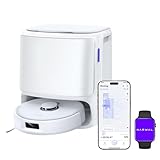
- 11,000Pa Hyper Suction: Freo X10 Pro robot vacuum and mop delivers ultra-strong 11,000Pa suction for deep cleaning on hard floors and carpets. Carpet detection with 12mm auto mop lift helps keep rugs dry and protected.
- DualFlow Tangle-Free System: Designed to reduce hair wrap, the dynamic side brush loosens debris while the roller brush guides strands straight into the dustbin—ideal for homes with pets or long hair.
- Edge & Corner Coverage: This automatic vacuum robot uses MopExtend and EdgeSwing to reach edges and corners, ensuring thorough cleaning around toe-kicks and tight spaces.
- All-in-One Base Station with Heated Drying: The dock automatically washes and dries mops with warm air. With self-emptying and an extra-large dust bag, the vacuum robot for home stores up to 120 days of debris for hands-free upkeep.
- Mops Until Spotless: Dual spinning mops apply 8N pressure to scrub stubborn stains. The patented Reuleaux Triangular Mop design maximizes coverage, standing out among robot vacuums.
A safe way to tune either mode
- Change only one variable, such as suction or mop wetness.
- Run the same room or zone so the comparison is meaningful.
- Inspect pickup, remaining grit, drying time, and any change to the floor finish.
- Keep the setting only if it improves the result without creating moisture or navigation problems.
Settings comparison for common jobs
| Job | Map requirement | Mode | Suction | Mop setting | Why this combination works |
|---|---|---|---|---|---|
| Weekly rug maintenance | Rug marked as carpet | Vacuum | Normal | Off | Dry pickup protects textile flooring from moisture |
| Pet-hair buildup on carpet | Carpet label verified | Vacuum | Strong, then reassess battery and coverage | Off | Higher airflow targets embedded hair |
| Light dust on sealed tile | Hard-floor label verified | Vacuum & Mop | Normal | Normal | One combined routine is efficient for light soil |
| Sand or crumbs on vinyl | Hard-floor label verified | Vacuum then Mop | Normal or higher | Normal after dry pickup | Dry debris is removed before wet cleaning |
| Lightly soiled hardwood | Wood or hard-floor label verified | Vacuum & Mop | Normal | Lowest effective wetness | Limits moisture while retaining a damp clean |
| Rug that must never be mopped | Carpet label plus no-go zone | Vacuum in a dedicated task | Normal or strong as needed | Off | Surface identification and exclusion work together |
Troubleshooting by symptom
The robot skips every rug
Open the map and confirm that carpet cleaning is enabled for each rug. Check that the rugs are inside the mapped room boundary and that a no-go zone is not covering them. Then run a small Vacuum task for one rug. If that test works, the previous whole-home task was using a mode or room selection that excluded carpet.
The robot mops a rug
Stop the task, dry the rug if necessary, and inspect the map. Mark the area as carpet and add a no-go zone if the rug must never be crossed during mopping. Recreate the hard-floor task using only rooms or zones that are confirmed mop-safe. A correct floor label is essential, but a no-go zone provides an additional hard boundary.
Rugs look clean but still contain grit
Check the rug edge and traffic lanes first. Increase suction one level and run a second pass on the affected zone. If residue remains after repeated passes, the available independent review suggests that rug pickup can be weaker than hard-floor pickup; manual spot cleaning may still be necessary for deeply embedded grit or fur.
Hard floors are wet for too long
Reduce mop wetness, verify that the task is not using an unnecessarily high setting, and improve ventilation. Inspect for pooled water and stop using the robot on any finish that shows damage. For wood, return to the least wet setting that removes soil and test a small area before resuming full-room cleaning.
Cleaning is incomplete or battery use is high
Strong suction and multiple passes increase runtime. Use normal suction for routine rooms, reserve strong suction for visibly dirty zones, and add a second pass only after inspection. Splitting carpet and hard-floor work into room tasks also prevents the robot from carrying a mop-focused routine across surfaces that do not need it.
What is and is not established about Freo 20 presets
Narwal’s Freo 20 documentation confirms adjustable suction and separate cleaning modes, but the public material does not provide one universal numeric table labeled “best” for every carpet, rug, tile, vinyl, or wood floor. Settings therefore need to be treated as starting points tied to surface and soil conditions.
The official manual was published August 25, 2026. Narwal’s product page lists the 31,000Pa suction claim and app controls for floor material and carpet settings. Tom’s Guide’s October 16, 2026 review provides a useful caution about residual grit and dog fur on rugs, while also finding hard-floor cleaning stronger than rug cleaning. None of these sources establishes a controlled carpet-pickup percentage for the Freo 20.
What’s actually slowing this PC down?
Pick the symptom - the matching free tool is one click away.
For a dependable setup, prioritize correct mapping, a dry vacuum task for textile flooring, conservative moisture on wood, and room-level separation in mixed homes. Then adjust suction, wetness, and passes from what you observe on your own floors.
Quick Recap
Product prices and availability are accurate as of the date/time indicated and are subject to change. Any price and availability information displayed on Amazon at the time of purchase will apply.

