
Free tools Windows power users keep installed
One-click scans. No signup required.
iTechGuides is reader-supported. When you buy through links on our site, we may earn an affiliate commission. As an Amazon Associate I earn from qualifying purchases. Learn more
The most dependable lower-sugar candy swaps are products labeled sugar free or reduced sugar, but the front-of-pack claim is only a starting point. Compare the same serving size, total sugars, added sugars, calories, sweetener type and ingredient list before choosing. Sugar-free hard candy is the clearest category for a hard-candy craving; reduced-sugar chocolate can suit a chocolate craving; and gummy or chewy alternatives require especially careful serving-size comparisons.
FDA labeling rules give you a useful baseline: “sugar free” means fewer than 0.5 grams of sugars per labeled serving, while “reduced sugar” or “less sugar” means at least 25% less sugar than the regular version. Neither claim automatically makes a candy healthier overall.
What “lower sugar” means when you shop
“Lower sugar” is not one single legal category. A product can qualify for one claim while still delivering substantial calories, saturated fat, sodium, carbohydrates or sugar alcohols. Start by identifying the exact claim, then verify the Nutrition Facts panel.
The Tool Desk
Outbyte Driver Updater FREEFix the driver behind crashes, sound loss and screen glitchesFind Drivers →Outbyte PC Repair FREEClear out junk files and repair common Windows errorsFree Scan →| Label wording | What it establishes | What it does not establish |
|---|---|---|
| Sugar free | Fewer than 0.5 g of sugars per labeled serving under FDA’s definition, as summarized by the American Heart Association (accessed 2026). | That the candy is low calorie, low carbohydrate, free of sugar alcohols, or better for you in every respect. |
| Reduced sugar / less sugar | At least 25% less sugar than the regular version of the same or a similar product. | That the absolute amount is low. A 25% reduction can still leave a sizable amount of sugar. |
| No added sugar | No sugars were added during processing under the product’s labeling rules. | That total sugar is low. Ingredients such as fruit or milk can contribute naturally occurring sugars. |
| Low Daily Value | FDA considers 5% of the Daily Value or less to be low for a nutrient. | That the candy is nutritionally complete or appropriate to eat without considering the rest of the label. |
For added sugars, FDA uses a Daily Value of 50 g per day on a 2,000-calorie diet. A candy serving showing 20% DV or more is high by FDA’s labeling convention; 5% DV or less is low. These percentages help compare products even when serving weights differ, but you still need to check how many servings you actually eat.
#1 Best Overall

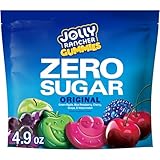
- Contains one (1) 6.1-ounce bag of JOLLY RANCHER Zero Sugar Assorted Fruit Flavored Hard Candy
- Long-lasting, colorful hard candy you can take with you on the go, to work, on snack breaks and back home again at the end of the day
- Sugar free, aspartame free, fruit flavored hard candy individually wrapped for convenience and exceptional freshness to the last piece
- Host the fruitiest, most colorful birthday, New Year's, graduation, back to school and anniversary parties with JOLLY RANCHER Zero Sugar fruit flavored hard candy
- An unbelievably delicious Valentine's Day, Christmas, Easter and Halloween candy selection featuring bold fruit flavors like watermelon, grape, apple and raspberry for all the flavor with none of the sugar
How to compare two candies fairly
Use the following sequence whenever you compare a regular candy with a lower-sugar alternative. It prevents a small serving or a marketing claim from creating a misleading advantage.
- Normalize the serving. Put both products on the same basis, such as one labeled serving or the same number of pieces. If one serving is three pieces and another is eight, note that difference before comparing grams.
- Read total sugars and added sugars. Total sugars include naturally occurring and added sugars. Added sugars show how much sweetener was added during processing. A product can have little added sugar but still contain naturally occurring sugar.
- Check calories. Sugar alcohols and fats can replace sugar without making the candy low calorie. Calories matter if your goal is overall energy intake rather than sugar alone.
- Identify the sweetener. Sugar-free candy commonly uses sugar alcohols such as sorbitol, xylitol, erythritol, maltitol, lactitol or mannitol, sometimes alongside high-intensity sweeteners. The sweetener affects taste, texture, carbohydrate accounting and personal tolerance.
- Scan the ingredient list. Look for the order and number of sweeteners, as well as chocolate, nuts, dairy, coconut, gelatin or other ingredients that matter for allergies, dietary restrictions or preference.
- Compare the format. Hard candy, chocolate, gummies and chews are eaten at different speeds and in different piece sizes. A technically lower-sugar product may not satisfy the same craving if its texture is completely different.
Once you have completed that check, the phrase sugar-free hard candy is a useful search term for a hard-candy swap. Treat it as a category to investigate, not as proof that every result has the same nutrition profile.
Best alternatives by the kind of candy you want
For a hard-candy craving
Start with sugar-free hard candy and compare the number of pieces in a serving, grams of total sugar, calories and the sweetener blend. Hard candies are often formulated with sugar alcohols, which can keep the sugar number below the sugar-free threshold while preserving a slowly dissolving texture.
What’s actually slowing this PC down?
Pick the symptom - the matching free tool is one click away.
Do not compare one lozenge with an entire handful of another product. Some labels define a serving as one piece; others use several pieces. Record the serving count and decide in advance how many pieces you intend to eat. If a product contains sorbitol, maltitol, xylitol, erythritol, lactitol or mannitol, make the first portion modest until you know how your body responds.
Rank #2

- Contains one (1) 6.1-ounce bag of JOLLY RANCHER Zero Sugar Assorted Tropical Fruit Flavored Hard Candy
- Long lasting, colorful hard candy you can take with you on the go, to work, on snack breaks and back home again at the end of the day
- Sugar free, aspartame free, tropical fruit flavored hard candy individually wrapped for convenience and exceptional freshness to the last piece
- Host the fruitiest, most colorful birthday, New Year's, graduation, back to school and anniversary parties with JOLLY RANCHER Zero Sugar tropical fruit flavored hard candy
- An unbelievably delicious Valentine's Day, Christmas, Easter and Halloween candy selection featuring bold, tropical fruit flavors like fruit punch, lime, mango and golden pineapple for all the flavor with none of the sugar
For a chocolate-style craving
Look first for a regulated reduced-sugar or less-sugar claim, then verify the actual sugar grams. A reduced-sugar chocolate product must have at least 25% less sugar than the regular comparison product, but that still does not tell you whether the serving is low in calories or saturated fat.
Dark, “natural” or premium wording is not a substitute for the Nutrition Facts panel. Chocolate can contain less added sugar than a sweet milk-chocolate confection while still supplying considerable calories and fat. Compare products by the same weight or serving count, and check whether the serving is a single square, a small bar or multiple pieces.
If the alternative uses sugar alcohols, the texture may be firmer, cooling or less smooth than conventional chocolate. That is a sensory trade-off rather than evidence of a better or worse product. Choose the version whose texture lets you stop at the intended portion.
For gummies and chewy candy
Gummies and chews create the biggest serving-size trap because a label may define a serving as only a few pieces. Compare the number of pieces, total sugars, added sugars and calories at the same piece count. A product can look lower in sugar simply because its labeled serving is smaller.
Rank #3
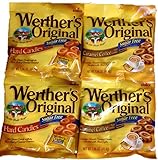
- CLASSIC WERTHER'S SUGAR-FREE CANDIES: Enjoy the buttery flavor of Werther's Original in sugar-free form, now as a bundle featuring two popular types: Hard Candies and Caramel Coffee Hard Candies
- SMOOTH, INDULGENT TASTE: Each candy delivers the signature smooth caramel taste, with a creamy coffee twist in the Caramel Coffee Hard Candies
- INDIVIDUALLY WRAPPED: Our candies are individually wrapped for freshness! Perfect for home, on the go, dessert trays, or holiday treating
- IRRESISTIBLE FLAVOR COMBOS: From classic hard candies to caramel coffee delights, this variety pack offers a mix of flavors to satisfy every caramel craving
- WERTHER'S CLASSIC: Founded in 1909 in the town of Werther, Germany, this brand has crafted its signature recipes you love for over a century
Reduced-sugar gummies may still contain enough sugar to matter if you eat several servings. Sugar-free versions may rely on sugar alcohols to provide bulk and chew. Check the ingredient list for the specific sweeteners and consider whether the product’s total carbohydrate profile fits your dietary needs.
For sour, fruit-flavored or “natural” candy
Flavor descriptors do not determine sugar content. Fruit flavor, juice concentrate or a natural-color claim can appear in a candy that still contains substantial added sugar. Use the same sequence: serving size, total sugars, added sugars, calories and ingredients.
A no-added-sugar fruit-based candy can retain naturally occurring sugars from fruit ingredients. Treat “no added sugar” as a processing statement, not a guarantee that the total-sugar line will be low.
Quick wins for a faster PC:
Repair Windows errors before they cause bigger problemsFix Now →Fix the driver behind crashes, sound loss and screen glitchesFind Drivers →Are sugar-free candies actually healthier?
They can be useful when your specific goal is reducing sugar intake, but “healthier” depends on what replaces the sugar and how much candy you eat. A sugar-free product may reduce sugars per labeled serving while retaining similar calories, adding sugar alcohols or using a small serving that is easy to exceed.
Rank #4

- This is a single 8.25 oz bag of fresh-from-the-factory Sugar-Free goodness!
- All of the flavor without all of the sugar, making this a "better for you" treat.
- Peanut-free, OU Kosher, Fat-free, Gluten-free and Dairy-free
- The bag is re-sealable for optimal freshness and longevity
- Have a question? Contact us! We're happy to help.
The American Heart Association advises using both the Nutrition Facts panel and the ingredient list whenever you see a sugar claim. That approach is more reliable than assuming that sugar-free, reduced-sugar or no-added-sugar wording describes the entire nutritional profile.
- Potential advantage: A sugar-free product can keep sugars below 0.5 g per labeled serving, which may help someone reduce added-sugar exposure.
- Potential limitation: Sugar alcohols, fats or other carbohydrates can still contribute calories and may affect digestion or blood-glucose management differently from person to person.
- Dental consideration: FDA notes that the sugar alcohols used in these candies do not promote tooth decay in the same way traditional fermentable sugars do.
- Portion consideration: A low-sugar label applies to the stated serving, not automatically to the amount in your bowl, desk drawer or movie-theater box.
People managing diabetes, gastrointestinal conditions, food allergies or a medically prescribed carbohydrate target should review the entire label and, when needed, ask a qualified clinician how a particular sweetener fits their plan.
Sugar alcohols: what they do and what to watch for
FDA lists sorbitol, xylitol, lactitol, mannitol, erythritol and maltitol among the sugar alcohols used in sugar-free candies. They provide sweetness and bulk and are slightly lower in calories than traditional sugar. FDA also notes that they do not cause a sudden increase in blood glucose in the way traditional sugar can, and they do not promote tooth decay. Those properties explain why they are common in hard candy, chocolate-style products and chews.
Recommended Free Tools
| What to check | Why it matters |
|---|---|
| Name of the sugar alcohol | Different people tolerate different sweeteners, and blends can change both taste and digestive response. |
| Amount per serving | A single serving may be manageable while several servings may not be. The label’s serving count is essential context. |
| Total carbohydrate | Sugar alcohols are part of the carbohydrate profile. Do not judge a product from the sugars line alone if you track carbohydrates. |
| Piece size and texture | Chewy products can make it easy to consume multiple pieces before noticing the serving limit. |
Digestive tolerance is individual. Some people can eat a normal serving without difficulty; others experience gas, bloating or loose stools when they consume larger amounts of sugar alcohols. Start with the labeled serving, avoid stacking several sugar-free products at once and stop if your body reacts poorly. Xylitol is also highly toxic to dogs, so keep candies containing it away from pets.
Independent reader supportYour contribution helps us test, update, and keep practical guides available for everyone.How much added sugar fits into a day?
FDA’s Nutrition Facts framework uses 50 g of added sugars per day for a 2,000-calorie diet. The label’s 5% and 20% Daily Value guide identifies low and high amounts per serving, respectively. These are reference values, not personalized prescriptions; a person eating 1,500 or 3,000 calories will have different overall needs.
The American Heart Association recommends limiting added sugars to no more than 6% of daily calories. Its 2024 guidance gives about 9 teaspoons, or 150 calories, per day for men. The recommendation is a daily ceiling for added sugars from all foods and drinks, not a candy allowance. A lower-sugar candy can help you stay within your own target, but it does not make other sources of added sugar disappear.
A five-minute shopping method
- Define the craving. Decide whether you want a slowly dissolving hard candy, chocolate, a gummy or a chew. Matching format improves the chance that the swap will satisfy you.
- Find two or three candidates. Include at least one sugar-free product and one reduced-sugar product when available. Do not restrict your search to a single front-label claim.
- Write down serving facts. Record serving size, number of pieces, total sugars, added sugars and calories. If the serving sizes differ, recalculate mentally for the same number of pieces.
- Read the sweetener list. Note sugar alcohols and any high-intensity sweeteners. Check for ingredients that conflict with allergies or dietary preferences.
- Choose a portion plan. Buy or open only the amount that fits your plan, and keep the labeled serving visible. If a product causes digestive symptoms, switch sweetener or format rather than simply eating less of a product you cannot tolerate.
Common label mistakes and how to avoid them
- Mistake: treating “sugar free” as “calorie free.” Fix: read calories and total carbohydrate; sugar alcohols and fat can supply energy.
- Mistake: comparing different serving sizes. Fix: compare the same number of pieces or the same weight.
- Mistake: assuming “no added sugar” means no sugar. Fix: check total sugars and identify naturally occurring sugars from fruit or dairy ingredients.
- Mistake: trusting “dark” or “natural” wording. Fix: use the Nutrition Facts panel and ingredient list instead of color or marketing language.
- Mistake: ignoring added sugars because total sugars look modest. Fix: inspect both lines; added sugar is the part most directly addressed by public-health limits.
- Mistake: eating several sugar-free servings because each serving is low. Fix: count pieces as you eat and multiply the label values by the number of servings.
- Mistake: assuming every sugar alcohol feels the same. Fix: note the specific sweetener and your own tolerance, especially with large portions.
Choosing the right type for your goal
If your priority is the lowest possible sugar number
Begin with products that meet the sugar-free definition of fewer than 0.5 g per serving. Confirm that the serving is realistic and inspect the sweetener and carbohydrate lines. A tiny serving that you routinely exceed may be less useful than a modestly reduced-sugar product with a satisfying, clearly measured portion.
If your priority is reducing added sugar without changing texture
Look for a reduced-sugar version of the same format. Verify that it delivers at least 25% less sugar than the regular comparison product and compare the absolute grams per serving. This route may preserve the familiar chocolate, gummy or chewy experience better than a sugar-free formulation.
If your priority is avoiding digestive surprises
Favor products with a short, familiar ingredient list and begin with one labeled serving. Sugar-free candy is not automatically easier to digest; sugar alcohol content and your individual response determine whether it works for you.
If your priority is dental protection
Sugar alcohols do not promote tooth decay in the same way traditional sugars do, according to FDA information, but candy is still a treat rather than a substitute for brushing, flossing and regular dental care. Follow your dentist’s advice, particularly if you have a history of cavities or dry mouth.
Bottom line for each popular-candy swap
| Craving | Best starting category | Final checks before buying |
|---|---|---|
| Hard candy | Sugar-free hard candy | Serving pieces, sugar alcohol, total carbohydrate, calories and tolerance. |
| Chocolate | Reduced-sugar or less-sugar chocolate | At least 25% reduction versus the regular version, absolute sugar grams, calories and fat. |
| Gummy | Sugar-free or reduced-sugar gummies | Piece count, added sugars, total carbohydrate and whether the serving is unrealistically small. |
| Chewy candy | Reduced-sugar chews or a sugar-free formulation you tolerate | Sweetener blend, digestive response and how many pieces you actually eat. |
| Fruit-style candy | A product with a verified lower-sugar panel | Do not rely on “natural” or “no added sugar”; check total sugars and ingredients. |
The practical winner is the candy that meets your specific target on a serving you can follow, tastes good enough to stop at that serving and does not cause problems with your digestion, allergies or dietary plan. Label comparison—not a single marketing phrase—is what turns a lower-sugar claim into a useful choice.
Windows Errors? Fix Them Before They Spread
Repair common Windows errors and clear accumulated junk for a smoother, more stable PC - no reinstall needed.Free scan · no reinstallCrashes, No Sound, or Screen Glitches?
Random freezes, missing sound and display glitches usually trace back to one bad driver. Find and replace yours safely.Free scan · under a minuteQuick Recap
Product prices and availability are accurate as of the date/time indicated and are subject to change. Any price and availability information displayed on Amazon at the time of purchase will apply.

