
The Tool Desk
Outbyte PC Repair FREERepair Windows errors before they cause bigger problemsFix Now →Outbyte Driver Updater FREEFix the driver behind crashes, sound loss and screen glitchesFind Drivers →iTechGuides is reader-supported. When you buy through links on our site, we may earn an affiliate commission. As an Amazon Associate I earn from qualifying purchases. Learn more
For most people watching YouTube, Netflix, sports and other online video, the best laptop is the one whose screen size, operating system and tested battery behavior fit the way you watch. The 13-inch MacBook Air (M5) is the most portable macOS choice, while the 15-inch MacBook Air (M5) gives you a larger viewing area without moving to a heavier premium class. On Windows, the Surface Laptop (8th Edition, Snapdragon) has impressive manufacturer playback figures, the ASUS Zenbook 14 (UX3480) adds an OLED option, and the Samsung Galaxy Book6 Ultra is a large, high-performance choice rather than a value default.
Those are different kinds of evidence, not a controlled head-to-head ranking. Apple quotes online video streaming; Microsoft and ASUS describe local-file playback under their own conditions; independent reviews use still other tests. Use the comparison below to match a laptop to your room, travel habits, services and resolution requirements instead of treating one battery number as a universal winner.
What makes a laptop good for streaming video?
Streaming video is primarily a screen-and-comfort decision. Processor performance matters for smooth playback, but modern laptops in this group have more than enough capability for ordinary 1080p and 4K viewing when the service, browser, network and display are compatible. The differences you will notice every day are the viewing area, panel characteristics, reflections, speakers, battery behavior and how easily the computer fits where you watch.
Recommended Free Tools
- Screen size: A 13-inch class laptop is easier to carry and works well on a tray table or small desk. A 15- or 16-inch model makes subtitles, scoreboards and split-screen viewing easier to see.
- Resolution and panel: Higher resolution can make text and interfaces sharper. OLED can be attractive for contrast and dark scenes, while IPS panels can still provide an excellent picture. The specifications alone do not establish which panel looks best in every room.
- Brightness and reflections: A bright display is easier to see near windows, but glossy surfaces can reflect lamps and daylight. Positioning the laptop often matters as much as the quoted brightness.
- Operating system: Confirm that your streaming service, preferred browser or app and desired resolution work on the exact operating system and hardware configuration.
- Battery evidence: “Video playback,” “web browsing” and “video streaming” are separate tests. They should not be combined into a single league table.
This guide is about watching streamed video. A laptop for broadcasting a live stream, editing a production or gaming while streaming has different processor, graphics, cooling and connectivity priorities.
#1 Best Overall

- Compatible with Nintendo Switch 2’s new GameChat mode
- Auto-Light Balance: RightLight boosts brightness by up to 50%, reducing shadows so you look your best—compared to previous-generation Logitech webcams (1)
- Privacy with a Slide: The integrated webcam cover makes it easy to get total, reliable privacy when you're not on a video call
- Built-In Mic: The built-in microphone lets others hear you clearly during video calls
- Easy Plug-And-Play: The Brio 101 works with most video calling platforms, including Microsoft Teams, Zoom and Google Meet—no hassle; it just works
Top laptop picks for viewers
| Laptop | Best fit | Display information | Published battery result | Important qualification |
|---|---|---|---|---|
| Apple MacBook Air 13-inch (M5) | Portable macOS viewing | 13.6-inch, 2560×1664 IPS, 500 nits | Up to 18 hours video streaming; up to 15 hours wireless web | Apple manufacturer figures; actual online sessions vary |
| Apple MacBook Air 15-inch (M5) | Larger macOS viewing area | 15.3-inch, 2880×1864 IPS, 500 nits | Up to 18 hours video streaming; up to 15 hours wireless web | Same manufacturer method as the 13-inch model; larger chassis and screen |
| Microsoft Surface Laptop, 8th Edition (Snapdragon) | Windows users prioritizing long unplugged use | 13.8-inch or 15-inch model | Up to 20 hours (13.8-inch) or 19 hours (15-inch) | Microsoft tested local 1080p playback on preproduction devices, Wi-Fi connected, 150 nits; not an online Netflix test |
| ASUS Zenbook 14 (UX3480, Intel) | Windows viewers who prefer OLED | 3K, 120 Hz OLED in the cited test configuration | Result depends on the exact configuration and test method | Cited setup used Core Ultra 9 386H, 1 TB SSD, 24 GB RAM and 70 Wh; playback Wi-Fi was enabled but disconnected from an access point |
| Samsung Galaxy Book6 Ultra | Premium, large-screen Windows viewing | 16-inch model described by TechRadar | About 13.5 hours video playback; more than 15 hours web browsing in TechRadar tests | Independent review results; premium price and large footprint are trade-offs |
Best compact choice: MacBook Air 13-inch (M5)
The 13-inch Air is the sensible starting point when you carry the laptop frequently or watch in cramped spaces. Apple lists a 13.6-inch 2560×1664 IPS display rated at 500 nits. That provides a sharp 16:10 canvas for video controls, subtitles and browsing around the player without the bulk of a larger-screen machine.
Apple quotes up to 18 hours of video streaming and up to 15 hours of wireless web use for this model. “Up to” is important: brightness, browser tabs, wireless conditions, audio level, video quality and background activity all change runtime. Treat the figure as a manufacturer ceiling from Apple’s test setup, not a promise that every Netflix session will last 18 hours.
Choose it when portability and macOS are more valuable than maximum built-in viewing area. If you normally watch from a desk or couch and do not travel with the computer, the 15-inch version gives you more screen for the same quoted streaming endurance.
Best larger macOS screen: MacBook Air 15-inch (M5)
The 15-inch Air uses a 15.3-inch 2880×1864 IPS display rated at 500 nits. The extra diagonal area is useful for films with subtitles, sports score overlays and watching from farther away. It is still an Air rather than a performance workstation, so it suits viewers who want a roomy screen without buying a specialist high-power laptop.
Apple lists the same up-to-18-hour video-streaming and up-to-15-hour wireless-web figures as the 13-inch M5 Air. The matching claims do not mean the two models will perform identically for every owner; display size, brightness settings, wireless conditions and software load affect real use. Pick the 15-inch model when screen comfort at your usual seat outweighs the convenience of a smaller bag.
Rank #2
Best Windows starting point: Surface Laptop, 8th Edition (Snapdragon)
The Snapdragon Surface Laptop is the Windows alternative for readers who want a conventional Windows environment and a choice of 13.8-inch or 15-inch screen. Microsoft lists up to 20 hours for the 13.8-inch model and up to 19 hours for the 15-inch model.
Those numbers come from Microsoft’s local 1080p video-playback test on preproduction devices, with Wi-Fi connected and brightness set to 150 nits. Local playback avoids the continuous network transfer, browser or app work involved in Netflix or YouTube, so it is not an online-streaming measurement. Microsoft also says battery life varies with settings, usage and other factors. Use the figures to understand Microsoft’s test result, then look for independent testing of the exact retail configuration if unplugged streaming time is critical.
Best OLED option: ASUS Zenbook 14 (UX3480, Intel)
The Zenbook 14 is the choice for a Windows viewer who specifically wants an OLED panel in a compact class. ASUS identifies the configuration behind its battery test as a 3K 120 Hz OLED display, Intel Core Ultra 9 386H processor, 1 TB SSD, 24 GB of memory and a 70 Wh battery.
Check the complete model suffix and the configuration sold in your country before buying. A different processor, panel resolution or battery can change both picture characteristics and endurance. In ASUS’s cited video-playback test, Wi-Fi was enabled but disconnected from an access point; web-browsing testing used a Wi-Fi connection. That setup means the playback result should not be presented as online-streaming endurance. OLED is a display preference, not proof that this model lasts longer or looks better for every viewer than an IPS laptop.
Premium large-screen option: Samsung Galaxy Book6 Ultra
The Galaxy Book6 Ultra belongs on a premium shortlist when you want a 16-inch Windows screen and more performance headroom than a basic viewing laptop needs. TechRadar’s tests reported about 13.5 hours of video playback and more than 15 hours of web browsing.
Rank #3

- Compatible with Nintendo Switch 2’s new GameChat mode
- Crisp HD 720p/30 fps video calls with diagonal 55° field of view and auto light correction. Compatible with popular platforms including Skype and Zoom.
- The built-in noise-reducing mic makes sure your voice comes across clearly up to 1.5 meters away, even if you’re in busy surroundings.
- C270’s RightLight 2 feature adjusts to lighting conditions, producing brighter, contrasted images to help you look good in all your conference calls.
- The adjustable universal clip lets you attach the camera securely to your screen or laptop, or fold the clip and set the webcam on a shelf. You’re always ready for your next video call.
Those are that reviewer’s results, not a manufacturer claim shared with the other models. The laptop’s premium pricing and large footprint are meaningful drawbacks if your main activity is watching video. Buy it for the combination of a large display and higher performance, not because its test number automatically beats the smaller alternatives.
What’s actually slowing this PC down?
Pick the symptom - the matching free tool is one click away.
How to read battery-life claims correctly
Battery figures are useful only when you know what was playing, how the network was used, the brightness setting and whether the device was a production model. The candidates above were not tested under one common protocol.
Three tests that are often confused
- Online video streaming: A service continuously transfers video while the browser or app decodes it. Apple’s quoted “video streaming” figure is the closest direct match among the cited manufacturer claims.
- Local video playback: A file stored on the laptop is played without the same network activity. Microsoft’s Surface result uses local 1080p playback; ASUS’s cited playback setup had Wi-Fi enabled but disconnected from an access point.
- Continuous web browsing: A test repeatedly loads web pages over Wi-Fi rather than playing video. Tom’s Guide recorded 20 hours 41 minutes for both the non-OLED Dell XPS 14 (2026) and OLED Dell 14S, and 12 hours 23 minutes for the OLED Dell XPS 14 (2026), at 150-nit brightness. Those figures describe web browsing, not video playback.
TechRadar’s Galaxy Book6 Ultra results also separate roughly 13.5 hours of video playback from more than 15 hours of web browsing. A longer browsing result should not be converted into a longer streaming estimate.
What changes your real runtime
- Screen brightness and HDR or high-refresh settings can increase power use.
- Weak Wi-Fi, Bluetooth accessories, background synchronization and browser extensions add work.
- Higher resolution and higher-bitrate streams require more decoding and network activity.
- Battery capacity and health vary by configuration and age.
- Preproduction systems and “up to” claims are not guarantees for every retail unit.
If battery life is a deciding factor, compare an independent test of the exact model with the manufacturer’s method, and leave headroom rather than planning around the maximum quoted number.
Screen size, resolution and panel: choose for your viewing position
13-inch class
A 13-inch laptop is easiest to carry and works well at arm’s length. It is a good fit for travel, kitchens, dorm rooms and small desks. The trade-off is a smaller picture and less room for subtitles or side-by-side windows.
Free tools Windows power users keep installed
One-click scans. No signup required.
Rank #4

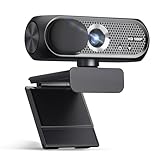
- 1080P Webcam with Cover for Video Calls - EMEET computer webcam provides design and Optimization for professional video streaming. Realistic 1920 x 1080p video, 5-layer anti-glare lens, providing smooth video. C960 computer camera delivers 1920x1080 video with fixed focus (11.8–118.1 inches), so as to provide a clearer image. C960 USB webcam has a cover and can be removed automatically to meet your needs for privacy. For optimal image performance, use the webcam in a well-lit environment.
- Built-in 2 Omnidirectional Mics - EMEET webcam with microphone for desktop features 2 built-in omnidirectional microphones, picking up your voice to create clear audio for communication. When installing the webcam, select EMEET C960 as the default microphone input device in your computer and video applications and select C960 as the default device in Zoom/Teams and ensure microphone permissions are enabled for proper use. Please note that C960 does not include built-in speakers.
- Automatic Light Adjustment - Automatic exposure adjustment is applied in EMEET HD webcam 1080p so that the streaming webcam can deliver stable image performance. EMEET C960 camera for computer also features color adjustment and exposure optimization to help you look your best. For optimal video quality, it is recommended to use the webcam in normal or well-lit environments and select suitable video settings in your application. Proper lighting helps achieve a clearer and more balanced image.
- Plug-and-Play & Upgraded USB Connectivity - New C960 webcam features both USB Type-A & A-to-C adapter connections for wider compatibility. For stable performance, connect the webcam directly to the computer's main USB port and ensure the device is recognized correctly. If a hub or docking station is used, please ensure it provides sufficient power and stable data transmission, as limited ports may affect performance. 90° wide-angle lens captures more participants without frequent adjustments.
- High Compatibility & Multi Application - C960 webcam for laptop is compatible with Windows 10/11, macOS 10.14+, and Android TV 7.0+. Not supported: Windows Hello, TVs, tablets, or game consoles. It works with Zoom, Teams, Facetime, Google Meet, YouTube and more. Please select C960 webcam as the default camera and microphone device in your application and ensure camera/microphone permissions are enabled, especially on macOS. (Tips: Incompatible with Windows Hello)
15- and 16-inch class
A 15- or 16-inch screen is more comfortable when several people watch together or when the laptop sits farther away. It adds viewing area but makes the computer less convenient to carry. The Galaxy Book6 Ultra represents the premium 16-inch end of this shortlist; the 15-inch MacBook Air offers a larger screen in a lighter-duty design.
IPS versus OLED
Both MacBook Air models list IPS panels. The Zenbook configuration uses OLED. OLED can appeal to viewers who value deep blacks and strong contrast, while IPS can provide consistent, bright general-purpose viewing. Room lighting, reflections, calibration and the quality of the stream also affect perceived picture quality. No cited test establishes a universal winner between these panel types.
Brightness and reflections
The two M5 Air displays are listed at 500 nits. That specification helps in brighter rooms, but a glossy surface can still reflect a window or lamp. Before buying, consider whether you can change the laptop’s angle or control the light around your viewing seat.
Operating-system and service compatibility
Do not assume that a service’s highest resolution is available simply because a laptop has a high-resolution screen. Check the exact operating system, browser or app, plan level and hardware support for the service you use most.
Netflix 4K on Windows
Netflix’s Windows guidance says Ultra HD 4K requires a qualifying plan and quality setting, a stable internet connection of at least 15 megabits per second, current Windows 11, a supported browser or the Windows app, and eligible hardware. The computer must have a built-in 4K 60 Hz display or connect to an external 4K 60 Hz display through an HDCP 2.2-compatible connection. Netflix also notes that some Windows 11 computers may require a separately obtained HEVC video extension.
Best Value

- Compatible with Nintendo Switch 2’s new GameChat mode
- HD lighting adjustment and autofocus: The Logitech webcam automatically fine-tunes the lighting, producing bright, razor-sharp images even in low-light settings. This makes it a great webcam for streaming and an ideal web camera for laptop use
- Advanced capture software: Easily create and share video content with this Logitech camera that is suitable for use as a desktop computer camera or a monitor webcam
- Stereo audio with dual mics: Capture natural sound during calls and recorded videos with this 1080p webcam, great as a video conference camera or a computer webcam
- Full HD 1080p video calling and recording at 30 fps. You'll make a strong impression with this PC webcam that features crisp, clearly detailed, and vibrantly colored video
These are Netflix requirements, not a rule shared by every streaming service. Recheck Netflix’s current help information and the laptop’s exact display and graphics configuration before paying extra for a 4K setup. A panel advertised as 3K or a laptop that can drive an external monitor does not, by itself, guarantee Netflix Ultra HD playback.
Browser, app and account checks
- Install current browser and operating-system updates.
- Use the service’s supported app or browser for your platform.
- Confirm that your subscription tier includes the desired quality.
- Check whether your network consistently meets the service’s speed recommendation.
- On Windows, verify display protection and codec requirements when 4K playback is involved.
Match a laptop to how you watch
| Your priority | Most suitable direction | Why | Trade-off |
|---|---|---|---|
| Carry it every day and watch alone | 13-inch MacBook Air (M5) | Compact 13.6-inch display and Apple’s direct streaming claim | Smaller viewing area |
| Watch from a desk or couch and want more picture | 15-inch MacBook Air (M5) | 15.3-inch, higher-resolution display with the same quoted streaming ceiling | Less compact than the 13-inch model |
| Need Windows compatibility | Surface Laptop 8th Edition or Zenbook 14 | Windows platform; choose Surface for conventional portability or Zenbook for OLED | Battery evidence is not a direct online-streaming comparison |
| Want OLED specifically | Zenbook 14 (UX3480, Intel) | 3K 120 Hz OLED in the cited configuration | Exact suffix and test configuration must be verified |
| Want a premium 16-inch Windows machine | Galaxy Book6 Ultra | Large screen and higher performance class | Premium price and large footprint |
Buying checklist: verify the exact laptop before checkout
- Choose the viewing size. Decide whether your usual seat favors a 13-inch portable screen, a 15-inch middle ground or a 16-inch premium footprint.
- Confirm the operating system. Check that your essential services, apps, browser extensions and peripherals work on macOS or Windows as appropriate.
- Inspect the complete model number. Especially for the Zenbook 14, confirm the processor, panel, memory, storage and battery configuration rather than relying on a family name.
- Check resolution support. For Netflix 4K on Windows, verify the plan, Windows 11 status, supported app or browser, 15 Mbps connection, 4K 60 Hz display path, HDCP 2.2 and possible HEVC requirement.
- Compare like-for-like battery tests. Label each number as streaming, local playback or web browsing. Do not rank unlike tests as though they were one benchmark.
- Check current local price and availability. Prices, stock and included configurations change by country and date. The evidence here does not establish a consistent, current price comparison.
- Read an independent review of the retail configuration. Look for screen reflections, speakers, fan behavior, wireless stability and a test method that resembles your use.
Common streaming problems and practical fixes
The video is blurry despite a high-resolution screen
Check the account’s quality setting, network speed and the service’s browser or app requirements. A high-resolution panel cannot create detail that the stream or subscription does not provide.
4K is unavailable on a Windows laptop
Verify every Netflix condition together: qualifying plan, quality setting, stable 15 Mbps-or-faster connection, current Windows 11, supported app or browser, eligible hardware, 4K 60 Hz display and HDCP 2.2 path. Check whether your system needs the HEVC video extension. An external monitor or a 3K panel alone does not satisfy all conditions.
Do these 3 things before closing this tab:
1Clear out junk files and repair common Windows errors2Scan for outdated or missing drivers - takes under a minute3Repair Windows errors before they cause bigger problemsThe battery falls far short of the advertised hours
Compare your use with the published test. Local playback at 150 nits is lighter than online streaming at high brightness. Reduce unnecessary brightness, close unused tabs and apps, update the system, and test again on a strong Wi-Fi connection. If the result remains abnormal for the exact retail configuration, consult the manufacturer’s battery-health diagnostics or support service.
Reflections make dark scenes hard to see
Move the laptop so windows and lamps are not directly behind you, lower nearby light sources and adjust the hinge angle. A brighter setting can help with glare but consumes more battery.
Playback stutters or drops quality
Test the connection near the access point, pause large downloads and update the browser or app. If only one service has the problem, check that service’s status and supported-platform guidance before blaming the laptop.
How much should you spend?
There is no defensible single “best value” price from the available evidence because the candidates are not listed with one date-and-region-matched price table. Current prices, storage and memory bundles and regional availability can change independently. Compare the exact configuration you can buy locally, including display type, processor, memory and storage, rather than comparing names alone.
Quick wins for a faster PC:
Clear out junk files and repair common Windows errorsFree Scan →Scan for outdated or missing drivers - takes under a minuteDriver Scan →Repair Windows errors before they cause bigger problemsFix Now →For a viewing-only laptop, spending more is justified when it buys a screen size or panel you will use every day, a platform your services require, or enough battery and portability for your routine. A premium performance model is harder to justify if you only need browser-based video and do not use demanding creative or computational software.
Quick Recap
Final recommendation by viewer type
- Choose the 13-inch MacBook Air (M5) if portability and macOS are your priorities and a smaller screen is comfortable.
- Choose the 15-inch MacBook Air (M5) if you want a larger built-in picture while retaining Apple’s quoted streaming specification.
- Choose the Surface Laptop 8th Edition if you need Windows and are evaluating its long local-playback claim, while remembering that it is not an online-streaming test.
- Choose the Zenbook 14 UX3480 if an OLED Windows display is central to your decision and you verify the exact configuration.
- Choose the Galaxy Book6 Ultra only when a premium 16-inch Windows machine and extra performance justify its cost and size.
Product prices and availability are accurate as of the date/time indicated and are subject to change. Any price and availability information displayed on Amazon at the time of purchase will apply.

