
iTechGuides is reader-supported. When you buy through links on our site, we may earn an affiliate commission. As an Amazon Associate I earn from qualifying purchases. Learn more
For heavy Excel, SQL, Power BI, browsing and video calls, buy a performance-class laptop with a current multi-core processor, at least 16 GB of RAM and an SSD. Choose 32 GB of RAM if you routinely work with large data models, Power Query refreshes or many applications at once. Select SSD capacity according to the files you keep locally: Microsoft’s current buying guidance spans 256 GB to 1 TB or more. No published, matched test in the available evidence proves one current laptop is the fastest for Excel, so the right choice depends on your workbook size, add-ins, portability needs and storage habits.
What a heavy-Excel laptop actually needs
“Heavy Excel” can mean very different things. A financial model with thousands of formulas, several Power Query connections, a Power Pivot data model, SQL tools, a browser with dozens of tabs, Power BI, Python and a video meeting puts more pressure on memory and sustained processor performance than a worksheet used for occasional totals.
Start with the largest realistic session, not the smallest file you open. Microsoft advises allowing enough physical memory for the largest set of workbooks open simultaneously, Excel and the operating system, and every other application you use at the same time. That principle is more useful than treating a single RAM number as a universal minimum.
Free tools Windows power users keep installed
One-click scans. No signup required.
| Typical workload | Practical RAM target | Storage planning | Display approach |
|---|---|---|---|
| Large office workbooks, browser research, email and video calls | 16 GB is a sensible floor for heavier office use | 256 GB can work if most files are cloud-based; choose more for a local archive | 14–15 inches balances workspace and portability |
| Power Query refreshes, financial models, SQL tools and several applications open together | 16 GB is workable; 32 GB gives more headroom | 512 GB is a practical middle ground for applications and local workbooks | 15–17 inches reduces spreadsheet scrolling when weight is acceptable |
| Large data workbooks, Power BI, browser-heavy research and beginner Python at the same time | Start at 32 GB, following HP’s 2026 guidance for analysts with larger datasets | 1 TB or more is useful when many workbooks, extracts and projects stay on the laptop | Prioritize a comfortable resolution and an external monitor for desk use |
These are buying targets rather than Excel system requirements. A smaller workbook can run well on less capable hardware, while a poorly designed or unusually large workbook can remain slow on an expensive laptop.
#1 Best Overall

- Performance: Powered by Intel Celeron N4500 dual-core processor with up to 2.8 GHz burst frequency and 4MB L3 cache, this HP Chromebook delivers smooth multitasking for everyday computing. With 4GB LPDDR4x-2933 RAM and Intel UHD Graphics, enjoy seamless web browsing, video streaming, and productivity apps. Chrome OS boots in seconds and updates automatically, keeping your laptop secure and running at peak performance for students, professionals, and home users.
- Immersive 14-Inch HD Display: Experience clear, vibrant visuals on the 14-inch diagonal HD (1366 x 768) anti-glare display with 250 nits brightness and 62.5% sRGB color accuracy. The micro-edge design maximizes your viewing area with an impressive 80% screen-to-body ratio, perfect for streaming movies, video calls, and document editing. The anti-glare coating reduces eye strain during extended use, making it ideal for all-day productivity and entertainment in any lighting condition.
- Advanced Connectivity & Ports: Stay connected with Wi-Fi 6 (2x2) for faster wireless speeds and Bluetooth 5.3 for seamless device pairing. Equipped with versatile ports including 1 USB Type-C 10Gbps (with USB Power Delivery and DisplayPort 1.4), 2 USB Type-A 5Gbps ports, 1 HDMI 1.4b, and 1 headphone/microphone combo jack. Connect external monitors, transfer files quickly, charge your device, and expand your workspace effortlessly for maximum productivity and flexibility.
- All-Day Battery & Premium Design: The battery keeps you powered throughout your day, while the included 45W USB Type-C power adapter ensures fast charging. Featuring a sleek modern grey finish with vertical brushing pattern on the keyboard deck, this lightweight 3.35 lb Chromebook combines style and portability. The full-size modern grey keyboard and HP Imagepad provide comfortable typing and precise navigation for work, school, or entertainment on the go.
- Enhanced Security & Multimedia: Built-in H1 secure microcontroller protects your data and privacy with enterprise-grade security. The HP True Vision 720p HD camera with integrated dual array digital microphones delivers crystal-clear video calls and online meetings. HD Audio with stereo speakers provides rich, immersive sound for music, videos, and calls. With 64GB eMMC storage, you have ample space for essential files while Chrome OS seamlessly integrates with Google Drive for cloud storage.
Why the processor is important—but cannot fix every slow workbook
Recent Excel versions can use more than one processor for calculations and common data operations. That makes processor generation, core performance and the laptop’s power design relevant when a workbook is recalculating or refreshing data.
However, Microsoft Learn states: “However, the most important factor that influences Excel calculation speed is still the way your worksheet is designed and built.” This is an official Microsoft statement, not a claim that a particular laptop model wins every workload.
Compare the exact processor, not just a family name
- Record the complete processor model and generation from the listing. A broad label such as “performance” or “AI PC” does not establish Excel speed.
- Check whether the laptop is designed for sustained performance or thin, quiet operation. Two systems with similar processor names can use different power limits and cooling.
- Look for current-generation silicon appropriate to your budget, then compare memory and upgrade options before paying for a higher tier.
- Remember that Excel’s calculation engine, Power Query steps, external connections and workbook structure determine how much of the processor is actually used.
What a faster processor can and cannot do
A stronger processor can shorten work that is genuinely compute-bound, including portions of recalculation, data transformation and compression. It will not automatically remove delays caused by inefficient formulas, excessive links, slow network sources, manual refresh steps or a workbook that does not fit comfortably in memory.
Do not convert a general laptop benchmark into an Excel promise. Tom’s Guide’s 2026 testing, for example, describes a Dell 14S handling many browser tabs and 4K video. That supports a general multitasking observation only; it is not a controlled comparison of identical Excel workbooks.
How much RAM should you buy?
16 GB: the practical floor for heavier office work
HP’s 2026 workload guidance says 16 GB is better for heavy Excel and Power Query use. It is a reasonable starting point for large spreadsheets, regular browser research, Office applications and video calls, provided the workbook set is not unusually large.
Rank #2

- FULL HD IPS DISPLAY - Enjoy vibrant, crystal-clear images with 178-degree wide-viewing angles
- AMD RYZEN 3 30 PROCESSOR - Everyday performance you can count on; Multitask, stream, game casually, and edit photos smoothly with responsive power and vibrant HDR visuals
- ENJOY UP TO 14 HOURS AND 15 MINUTES OF BATTERY LIFE - HP Fast Charge restores battery from 0 to 50% in approximately 45 minutes
- AMD RADEON 610M GRAPHICS - Experience smooth entertainment; Built for streaming and multitasking, enjoy realistic visuals and efficient performance for work and play
- STORAGE AND MEMORY - 512 GB PCIe NVMe M.2 SSD offers fast speed and efficient storage; and 8 GB LPDDR5 RAM memory boosts performance with higher bandwidth
Check whether the advertised 16 GB is the complete installed amount. If the memory is soldered, you may not be able to increase it later. A configuration that appears inexpensive at purchase can become limiting when you add Power BI, a local database, an IDE or several large workbooks.
32 GB: the better starting point for analysts
HP’s same 2026 guidance says analysts handling larger datasets should start at 32 GB. This is a practical recommendation, not a universal Excel requirement. It gives the operating system, Excel, browser tabs, Power Query, Power BI and other tools more room to coexist without constant memory pressure.
What’s actually slowing this PC down?
Pick the symptom - the matching free tool is one click away.
For a reader combining advanced Excel, SQL, Power BI, beginner Python, Microsoft Office, online classes and video calls, 32 GB is the safer choice when the budget and model availability allow it.
Check upgradeability before ordering
- Read the exact SKU’s service documentation, not a review of a similar-looking chassis.
- Determine whether memory is soldered, socketed or partly soldered with one open slot.
- Confirm that the retailer’s configuration matches the advertised RAM; manufacturers often sell several memory variants under one family name.
- If you cannot upgrade, buy the capacity you expect to need during the laptop’s useful life.
SSD capacity: choose for files, not calculation speed
Microsoft’s current Windows buying guide presents a broad range of 256 GB to 1 TB or more. The right point in that range depends on how many workbooks, data extracts, programs, photos and course files you keep locally. Cloud-first users may need less local capacity; users who retain historical models and offline data should choose more.
| Local-storage habit | Capacity decision | What to verify |
|---|---|---|
| Mostly cloud storage, few large extracts | 256 GB may be sufficient, but leave free space for Windows, updates and applications | Actual usable capacity and whether files are synchronized locally |
| Regular local workbooks, Power BI files and SQL tools | 512 GB is a balanced target | Space consumed by existing projects, caches and offline course material |
| Many historical models, exports, virtual environments or media files | 1 TB or more is more comfortable | Whether the SSD can be replaced or expanded on the exact model |
An SSD improves application launch and file access compared with older storage, but the evidence here does not show that a larger SSD makes Excel calculations faster after the workbook is loaded into memory. Treat capacity as file-management planning, not as a substitute for RAM or processor performance.
Rank #3
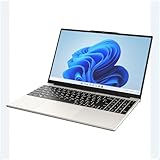
- POWERFUL AMD PERFORMANCE: Features AMD A9-9400 dual-core processor (2.4GHz-3.2GHz) with Radeon R5 graphics, delivering smooth multitasking, streaming, and everyday computing performance
- BRILLIANT 15.6" FULL HD DISPLAY: Crisp 1920x1080 resolution provides sharp text and vibrant images, perfect for productivity, online learning, and entertainment
- WINDOWS 11 & LIFETIME OFFICE 365: Pre-installed Windows 11 Home with included lifetime Office 365 subscription featuring Word, Excel, PowerPoint, Teams, Outlook, and more
- MEMORY & EXPANDABLE STORAGE: Equipped with 4GB LPDDR4 RAM and 128GB built-in storage with MicroSD slot for expansion, providing ample space for documents, apps, and media files
- PORTABLE & CONNECTED: Lightweight at just 3.6 pounds with up to 8 hours battery life, includes USB 3.0, USB 2.0, Type-C port, headphone jack, Bluetooth 4.0, Wi-Fi, and carrying case
Use external storage as protection, not a speed upgrade
An external SSD can hold archived workbooks or backups and reduce the need to buy the largest internal drive. Keep active files on reliable local or cloud storage and maintain an independent backup. Moving a workbook to an external drive does not turn a calculation-heavy model into a faster one.
Do these 3 things before closing this tab:
1Repair Windows errors before they cause bigger problems2Scan for outdated or missing drivers - takes under a minute3Clear out junk files and repair common Windows errorsScreen size, resolution and desk setup
HP suggests 15–17-inch displays can reduce spreadsheet scrolling. That extra physical area is useful when a model has many columns, a formula bar, a query editor and reference material open together. Microsoft notes that resolution affects image sharpness, so compare both the physical size and the pixel dimensions.
When a larger display is worth the weight
- Choose 15–17 inches when the laptop is mainly desk-bound and you often view wide tables or two windows side by side.
- Choose 14–15 inches when commuting, attending classes or working in small spaces matters more than reducing scroll.
- Consider an external monitor for a fixed desk. It expands the workspace but is an ergonomic option, not a processor or memory upgrade.
Verify the exact panel resolution, brightness, viewing angle and hinge design. A listing that says only “high resolution” does not tell you how much content fits on screen.
Battery life and portability: read the test method
Battery figures are highly dependent on the workload. Web browsing, video playback and continuous Excel recalculation draw power differently. Tom’s Guide reports 20 hours 41 minutes for a Dell 14S continuous web-surfing test in 2026. That is a test-specific result, not a promise of typical Excel battery life.
For mobile work, compare the stated battery capacity, charger size, weight and independent test method. A thin laptop may be easier to carry but have less cooling headroom for sustained calculations. A larger system may run longer at a fixed desk while adding weight to every commute.
Recommended Free Tools
Rank #4

- 【17.3" LARGE SCREEN FOR PRODUCTIVITY】 Enjoy more room for spreadsheets, documents, web browsing and side-by-side multitasking on the spacious 17.3-inch display. A practical choice for office work, home use and everyday productivity.
- 【10-CORE INTEL CORE 5 PERFORMANCE】 Powered by the Intel Core 5 120U 10-Core processor, this HP business laptop is built for smooth everyday multitasking, spreadsheets, video meetings, browser tabs and office applications.
- 【FULL-SIZE KEYBOARD WITH NUMERIC KEYPAD】 Work more efficiently with a full-size keyboard and dedicated numeric keypad, ideal for Excel, accounting, bookkeeping, data entry and other number-heavy tasks.
- 【FAST STORAGE & MODERN CONNECTIVITY】 Responsive solid-state storage helps provide quick startup and fast file access, while Wi-Fi 6, HDMI and multiple USB ports make it easy to connect monitors, accessories and other everyday devices.
- 【BUILT FOR BUSINESS & HOME OFFICE】 Designed for professionals, students and home-office users who value a large screen, comfortable typing and dependable everyday performance. A practical laptop for Excel, accounting, remote work, studying and daily tasks.
Software and compatibility checks before purchase
Hardware is only useful if it supports the software your work requires. Before ordering, list the exact edition of Excel and Microsoft 365 used by your employer or school, then verify every dependency.
- Excel features: confirm that Power Query, Power Pivot, macros and any required add-ins are supported in your edition.
- Operating system: check whether employer security tools, database drivers and VPN software require Windows or a specific release.
- SQL and Power BI: verify the supported operating system, memory expectations and whether your organization permits local installations.
- Python: confirm that the interpreter, packages and development tools you plan to use run on the chosen processor platform.
- Video calls and browsers: allow memory for camera, microphone, screen sharing and a large number of tabs at the same time.
The public workload description that combines Excel, SQL, Power BI, beginner Python, Office, browsing, classes and video calls is a useful example of multitasking, but it does not prove that every laptop configuration supports every specialized tool equally. Check each tool’s current compatibility information.
Current examples and what they do—and do not—prove
Examples can illustrate trade-offs, but none of the configurations below is an independently verified “best laptop for Excel.” Current listings change, and the available evidence does not contain matched heavy-Excel benchmarks.
| Example | Published configuration or observation | How to interpret it |
|---|---|---|
| HP OmniBook 7 line | HP identifies the line in its 2026 guidance for heavy Excel users and analysts | A candidate to investigate. Confirm the exact SKU’s RAM, processor, display, storage and upgradeability before buying. |
| Dell 14S configuration reported by Tom’s Guide | 15-inch 1920 × 1200 LCD touchscreen, Snapdragon X2 Plus X2P42100, 16 GB RAM and 512 GB storage | Useful as a current configuration example. The reported 20 hours 41 minutes is from continuous web surfing, not Excel calculation. |
| Lenovo IdeaPad Slim 5x Gen 11 configuration reported by Tom’s Guide | 16 GB RAM and 512 GB storage; the listing notes limitations with more power-hungry applications | Shows why processor platform and workload notes matter. It is not a matched Excel result. |
Use these examples to learn what to verify, not as a ranking. Confirm current availability, regional keyboard and warranty terms, RAM configuration, storage type and software compatibility at the time of purchase.
A step-by-step buying process
- Write down the largest real session. Include the number and size of workbooks, Power Query or Power Pivot use, SQL tools, Power BI, browser tabs, video calls and any local Python environment.
- Set the memory target. Use 16 GB as the practical floor for heavier office and Power Query work; choose 32 GB when larger datasets and broad multitasking are normal.
- Filter for a current performance-class processor. Compare the exact model, generation and laptop power design rather than relying on a brand or marketing label.
- Choose local storage. Use Microsoft’s 256 GB to 1 TB-plus range as a planning frame, then add space for applications, synchronized files, extracts and backups.
- Check the exact screen and chassis. Select 15–17 inches if reduced scrolling matters, or a smaller panel if portability dominates. Confirm resolution and weight.
- Verify upgradeability and ports. Look for memory and SSD service information, external-display support, USB ports and any dock required for your desk.
- Validate software. Confirm Excel edition, macros, add-ins, Power Query, Power BI, SQL drivers, Python packages and employer security requirements.
- Read battery claims carefully. Record whether the result is web browsing, video playback or another standardized test; do not treat it as Excel endurance.
- Recheck the SKU immediately before purchase. Manufacturer families can contain different processors, RAM amounts, screens and storage devices under nearly identical names.
Workbook design still determines a large share of Excel speed
If a new laptop does not make a workbook feel smooth, inspect the workbook before replacing hardware. Microsoft’s performance guidance places worksheet design above processor choice as the most important influence on calculation speed.
Best Value

- 💻【For Data Analysts & Multitaskers – FHD+ Visual Clarity】Stop squinting at spreadsheets and dashboards. This Dell Pro 16 Laptop features a 16-inch FHD+ (1920x1200) anti-glare display with 300 nits brightness and 45% NTSC, engineered for long-haul data review and dual-window productivity. The taller 16:10 aspect ratio reveals 11% more rows in Excel than standard 15.6" screens—perfect for financial modeling, SQL query outputs, and BI dashboards. Note: Upgraded to 64GB RAM | 1TB SSD (seal opened for professional upgrade only).
- 💻【For Hybrid Professionals & Road Warriors – Elite Processing Power】Outperform the Latitude and ThinkPad series with the Intel Core Ultra 5 Processor 235U (12 cores, 14 threads, 12MB cache, boost up to 4.9 GHz). This dell pro 16 premium business laptop handles heavy virtual meetings + local data processing simultaneously without throttling. Whether you are crunching Python scripts or running Tableau during a flight layover, this Dell Pro 16 AI laptop delivers desktop-level responsiveness.
- 💻【For Creative & Content Managers – Seamless Memory & Storage】Boot in seconds and load 5GB project files instantly. Our Dell Pro 16 Ultra 5 laptop comes professionally upgraded with 64GB DDR5 RAM and 1TB SSD, eliminating lag when switching between Adobe Acrobat, Teams, and large presentation decks. The backlit keyboard ensures error-free typing in dimly lit conference rooms or overnight flights—an essential for remote consultants and traveling executives.
- 💻【For Security-Conscious Developers & IT Managers – Enterprise-Grade Connectivity】Stay protected and connected anywhere. This dell business laptop integrates WiFi 6E and Bluetooth 5.3 for interference-free connections in dense office towers and co-working spaces. With AI-driven performance tuning, the system intelligently allocates power to active apps, extends battery life during offline work, and proactively detects security threats—making it the preferred choice for data analysts, engineers, and privacy-first professionals.
- 💻【 Windows 11 Pro】Pre-installed with windows 11 pro operating system, enjoy the latest operating system with enhanced security features, productivity tools, and a sleek user interface. Whether for remote work, content creation, video conferencing (Zoom/streaming), or educational applications, this dell pro premium laptop is the ultimate tool for high-performance business computing.
- Identify which action is slow: opening, editing, recalculation, sorting, query refresh, saving or loading external data.
- Measure the largest workbook session with the same add-ins, data connections and browser applications you use in practice.
- Separate calculation delays from network or data-source delays; a faster local processor cannot remove a slow remote source.
- Review whether you truly need every workbook, extract and application open simultaneously. Closing unused files is a diagnostic step, not a hardware replacement.
- Keep independent backups before changing formulas, connections or calculation settings.
These checks prevent an expensive upgrade from being used to mask a model-structure problem.
Common buying mistakes and fixes
Buying the highest processor tier with 16 GB of soldered RAM
A premium processor does not compensate for memory pressure when Excel, Power BI, a browser and a meeting application compete for RAM. Fix this by comparing total memory and upgradeability first.
Assuming a 1 TB SSD accelerates calculations
Capacity helps you retain files locally; it does not replace working memory. Buy the capacity your archive requires and direct the remaining budget toward RAM, processor class or a better display.
Using general benchmark charts as Excel rankings
Browser, video and synthetic tests can reveal broad responsiveness, but they do not establish performance on your formulas, data model or refresh process. Look for a workload test that matches your files—or evaluate your own representative workbook during a return period.
Ignoring regional or edition differences
The same model name can ship with different memory, storage, keyboard layouts, operating systems and processors. Record the full SKU and region, then verify every specification on the seller’s page.
Choosing a large screen without checking mobility
A 17-inch panel may reduce scrolling but can be inconvenient for classes or travel. Balance the display benefit against weight, charger size and battery-test evidence.
Bottom-line buying decision
For most people doing genuinely heavy Excel and internet work, the safest specification is a current performance-class laptop with 32 GB of RAM, an SSD sized to the files kept locally, and a 15–17-inch display if the machine will spend much of its life at a desk. A well-configured 16 GB system can be sufficient for heavy office and Power Query work when datasets are moderate. Processor capability matters, but Excel speed remains strongly dependent on workbook design, data connections and the number of applications open together. Treat model examples and battery figures as context, verify the exact SKU, and do not accept a general laptop benchmark as proof of Excel performance.
PC Slower Than It Used to Be?
A free scan shows the junk files, broken settings and background clutter dragging Windows down - then fixes them in one click.Free scan · Windows 10 & 11Outdated Drivers Are Slowing You Down
One free scan finds every outdated or missing driver and matches the right update for your exact hardware.Free scan · exact hardware matchQuick Recap
Product prices and availability are accurate as of the date/time indicated and are subject to change. Any price and availability information displayed on Amazon at the time of purchase will apply.

