
What’s actually slowing this PC down?
Pick the symptom - the matching free tool is one click away.
iTechGuides is reader-supported. When you buy through links on our site, we may earn an affiliate commission. As an Amazon Associate I earn from qualifying purchases. Learn more
For a wired HyperX Cloud III, start with correct device routing before changing sound. On Windows, set HyperX Cloud III as both the default playback and recording device, then select the same endpoints inside your game and chat app. Keep EQ changes modest: there is no HyperX-published numeric “best clarity” preset, so reduce bass only when it masks detail and make small presence changes when speech is difficult to distinguish.
The best starting setup
The Cloud III can sound unclear when Windows, a game and a voice-chat application are using different audio endpoints. Fix that routing first. HyperX’s PC setup instructions support selecting HyperX Cloud III as both the default playback device and the default recording device in Windows’ Sound control panel. Open the game and chat application afterward and verify their own output and microphone selectors.
This is a baseline rather than a universal tuning profile. Listening goals, game mixes and hearing preferences differ, and the reviewed HyperX material does not publish a measured EQ curve or a manufacturer-approved clarity preset.
The Tool Desk
Outbyte Driver Updater FREEScan for outdated or missing drivers - takes under a minuteDriver Scan →Outbyte PC Repair FREEClear out junk files and repair common Windows errorsFree Scan →Set up the Cloud III on Windows
1. Connect the headset using the intended PC connection
Use the included USB connection option for the PC. HyperX lists the wired Cloud III as compatible with PC and includes a USB dongle plus a USB-C-to-USB-A adapter. The product page also lists 3.5 mm, USB-C and USB-A connection options and compatibility with PS5, PS4, Xbox Series X|S, Xbox One, Nintendo Switch, Mac and mobile devices: HyperX Cloud III product page.
#1 Best Overall

- Comfort is King: Comfort’s in the Cloud III’s DNA. Built for gamers who can’t have an uncomfortable headset ruin the flow of their full-combo, disrupt their speedrun, or knocking them out of the zone.
- Audio Tuned for Your Entertainment: Angled 53mm drivers have been tuned by HyperX audio engineers to provide the optimal listening experience that accents the dynamic sounds of gaming.
- Upgraded Microphone for Clarity and Accuracy: Captures high-quality audio for clear voice chat and calls. The mic is noise-cancelling and features a built-in mesh filter to omit disruptive sounds and LED mic mute indicator lets you know when you’re muted.
- Durability, for the Toughest of Battles: The headset is flexible and features an aluminum frame so it’s resilient against travel, accidents, mishaps, and your ‘level-headed’ reactions to losses and defeat screens.
Connect the headset before opening the game or chat program. This gives Windows and the application a chance to enumerate the Cloud III endpoints. If you switch from a direct USB connection to an adapter, unplug and reconnect it, then recheck the selected devices rather than assuming the old route remains active.
2. Make it Windows’ playback and recording device
- Open Windows Sound settings.
- Open the Sound control panel from those settings.
- In the playback-device list, select HyperX Cloud III and make it the default playback device.
- In the recording-device list, select HyperX Cloud III and make it the default recording device.
These are the system defaults described in HyperX’s setup article: Cloud III setting up with a PC. If Windows shows more than one Cloud III endpoint, choose the one that appears when the headset’s USB connection is attached rather than leaving the selection to an unrelated monitor, webcam or motherboard input.
3. Match the game and chat application
System defaults do not guarantee that every application follows them. In the game’s audio menu, choose HyperX Cloud III for output and, when the game handles voice chat, for microphone input. In Discord, Teams or another chat program, open its voice settings and select the Cloud III for both output and input. Apply the change, then use that application’s built-in microphone test or a private channel to confirm that the correct signal is being received.
Some games separate master audio, voice-chat output and voice-chat input. Check each selector instead of changing only the master output. Likewise, a chat application may have a separate notification or ringtone device. Those extra routes are not covered by HyperX’s Windows setup article, but checking them explains why game sound can work while chat is silent, or why teammates hear you while you cannot hear them.
If game audio works but chat does not, or chat works while game audio is silent, this per-application check is the first branch to follow. HyperX documents the Windows defaults; individual application menus can use different labels.
4. Check the headset’s physical controls
The Cloud III has a physical volume wheel and a microphone-mute control. HyperX says the microphone LED is lit when the microphone is muted and off when it is active. Turn the wheel up gradually while a known audio source is playing, and check the LED before changing software gain: Cloud III mic mute button and volume wheel.
A comfortable listening level is preferable to simply increasing volume. Excessive level can make the mix tiring and does not restore detail that is being masked by a game’s own effects or by an incorrect device selection. Make the wheel adjustment while a familiar menu, music track or training area is playing so you can hear whether the change affects the intended endpoint.
Do these 3 things before closing this tab:
1Scan for outdated or missing drivers - takes under a minute2Clear out junk files and repair common Windows errors3Fix the driver behind crashes, sound loss and screen glitchesWhy routing comes before EQ
EQ changes only affect the signal that reaches the headset. They cannot make a monitor output become a Cloud III output, unmute a microphone, or repair a game that is sending voice chat to a different device. Starting with routing also gives you a repeatable baseline: once the same game scene and chat test reach the intended endpoints, you can judge whether a tonal change actually helps.
Rank #2

- Comfort is King: Comfort’s in the Cloud III’s DNA. Built for gamers who can’t have an uncomfortable headset ruin the flow of their full-combo, disrupt their speedrun, or knocking them out of the zone.
- Audio Tuned for Your Entertainment: Angled 53mm drivers have been tuned by HyperX audio engineers to provide the optimal listening experience that accents the dynamic sounds of gaming.
- Upgraded Microphone for Clarity and Accuracy: Captures high-quality audio for clear voice chat and calls. The mic is noise-cancelling and features a built-in mesh filter to omit disruptive sounds and LED mic mute indicator lets you know when you’re muted.
- Durability, for the Toughest of Battles: The headset is flexible and features an aluminum frame so it’s resilient against travel, accidents, mishaps, and your ‘level-headed’ reactions to losses and defeat screens.
There are three separate paths to verify. Playback is the game and chat audio you hear. Recording is the Cloud III microphone signal sent to teammates. Application-specific routing can override Windows defaults for either path. A fault in one path should not lead you to change the other; for example, a silent microphone is not fixed by boosting bass in playback EQ.
Use NGENUITY without losing track of what it changes
HyperX lists the Cloud III among devices supported by its NGENUITY software. The current NGENUITY page lists Windows availability and provides microphone and playback controls for supported devices: NGENUITY software download. NGENUITY is a free configuration route, so existing owners do not need to buy an upgrade to try software-side adjustments.
- Install and open NGENUITY on a Windows PC with the Cloud III connected.
- Select the Cloud III in the device list.
- Change one playback or microphone variable at a time.
- Play the same short game segment or voice test after each change.
- Keep the change only if it improves the specific problem you are trying to solve.
Write down the original value before changing a control. If a new setting sounds worse, restoring the previous value is faster than trying to reconstruct it. Test playback controls with a repeatable scene containing both quiet details and louder effects. Test microphone controls by recording the same sentence or using the application’s input meter.
For the wired Cloud III, HyperX says settings configured in NGENUITY are not saved onto the USB headset. They are software-side settings, so they do not automatically follow the headset to another computer. If you move the headset, reconnect it to a different PC or reinstall Windows, check NGENUITY and the application device selections again. Treat a computer change as a fresh verification step, not as evidence that the headset hardware has failed.
A clarity-focused EQ approach
There is no single “best” Cloud III EQ for every game. The official HyperX sources reviewed for this guide do not publish numeric bands, gain values or a measured clarity preset. Treat any numbers found elsewhere as experiments rather than as a HyperX-confirmed standard.
Start from a neutral baseline
Disable extra EQ changes temporarily, set a comfortable volume with the physical wheel and listen to a repeatable section containing both environmental detail and dialogue. A repeatable section makes it easier to tell whether a change helped instead of relying on a different game scene. Use the same scene at the same approximate volume for each comparison, and change only one control between tests.
Reduce bass only when it masks detail
Low-frequency energy can make explosions, engine sounds and music feel larger, but too much of it can cover footsteps, speech consonants and quiet effects. If dialogue becomes easier to understand when the low end is reduced slightly, keep the smallest reduction that solves the problem. Do not boost every other band to compensate for a bass-heavy preset. A large cut can make the game thin, so stop as soon as speech and detail separate from the effects.
Make small presence changes for difficult speech
If voices remain hard to distinguish after correcting routing and reducing masking bass, try a modest presence adjustment rather than a dramatic treble boost. Change one control, listen for both speech and harshness, and stop when consonants are clear. This is general listening guidance, not a laboratory result or a Cloud III-specific measured recommendation. If sibilants become piercing or sustained effects become fatiguing, return partway toward the baseline.
Rank #3

- Up to 120 Hours of Gaming on a Single Charge: Achieve up to 120 hours of gameplay on 2.4GHz. Push the limits even further with up to 200 hours in Bluetooth Mode.
- Works With PC, PS5, PS4, Nintendo Switch, Mac, and Mobile: Connect with the included USB-C or USB-A 2.4GHz dongle, Bluetooth, or Instant Pair with select OMEN laptops. Not compatible with Xbox.
- Connect via 2.4GHz, Bluetooth, or Instant Pair: Gain the convenience and versatility of wireless freedom with 2.4GHz wireless or Bluetooth connectivity. Instant Pair is also available with select OMEN gaming laptops, no dongle required.
- Audio Tuned for Your Entertainment: Angled 53mm drivers have been tuned by HyperX audio engineers to provide an optimized listening experience that accents the dynamic sounds of gaming.
- HyperX Signature Comfort: Comfort is in the Cloud III's DNA. HyperX signature memory foam in the headband and ear cushions wrapped in soft, premium leatherette make for a plush, comfortable fit all around.
Evaluate game audio and chat separately
A game’s mix, an application’s voice-chat processing and the microphone signal are different stages. A playback EQ that makes footsteps clearer can also make teammates’ voices sharp. Test a game scene, then a real or recorded chat sample, and choose a compromise that keeps both intelligible. If the microphone itself is unclear, fix input selection and mute state before altering playback EQ.
Do not confuse spatial processing with EQ
Spatial-audio options and tonal EQ solve different problems. A spatial mode may change positional presentation, while EQ changes the balance of frequencies. The reviewed HyperX material does not establish that every spatial-audio control is available or behaves identically on every Cloud III platform. Test such a feature separately from EQ so you can identify which change helped.
Make voice chat intelligible
Confirm the input endpoint and mute state
Set the Cloud III as the recording device in Windows and in the chat application. Then check the headset LED: lit means muted; off means active, according to HyperX’s control guide. Speak while watching the application’s input meter or microphone test. If the meter never moves, the problem is routing or mute state, not EQ.
Outdated Drivers Are Slowing You Down
One free scan finds every outdated or missing driver and matches the right update for your exact hardware.Free scan · exact hardware matchPC Slower Than It Used to Be?
A free scan shows the junk files, broken settings and background clutter dragging Windows down - then fixes them in one click.Free scan · Windows 10 & 11Keep microphone adjustments conservative
NGENUITY can expose microphone settings for supported Cloud III devices on Windows. Adjust one setting at a time and test with the same sentence. Excessive processing or gain can make speech noisy or clipped, while insufficient gain can make teammates raise their own volume and lose game detail. Ask one listener whether the change improved intelligibility before making another adjustment.
HyperX describes the product microphone with the sentence, “The upgraded 10mm microphone captures crystal clear in-game voice chat and calls.” That is manufacturer product language, not an independent measurement: HyperX Cloud III product page.
Keep the microphone physically positioned as you normally use it while testing. A setting that sounds good when the mic is close may not be appropriate when it is moved away. If only one application sounds poor, compare its input selector and voice-processing options with a second application before changing the headset profile.
Platform-specific settings and limits
Xbox
Do not expect the bundled Cloud III DTS license to work through Xbox. HyperX states that the included USB adapter is unsupported on Xbox, so the bundled DTS license is usable on PC through that adapter, not on Xbox. HyperX identifies Windows Sonic as a free Xbox alternative: Cloud III DTS not available on Xbox.
On Xbox, use the console’s supported headset connection and select the Cloud III where the console and game expose headset or chat devices. The DTS limitation is a platform restriction; it does not mean the headset’s physical volume wheel or mute indicator stops being useful. Do not spend time reinstalling PC NGENUITY to solve an Xbox DTS limitation.
Rank #4
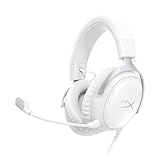
- Comfort is King Comfort’s in the Cloud III’s DNA. HyperX signature memory foam in the headband and ear cushions wrapped in soft, premium leatherette make for a plush, comfortable fit all around.
- Audio Tuned for Your Entertainment Angled 53mm drivers have been tuned by HyperX audio engineers to provide the optimal listening experience that accents the dynamic sounds of gaming.
- Upgraded Microphone for Clarity and Accuracy Captures high-quality audio for clear voice chat and calls. The mic is noise-cancelling and features a built-in mesh filter to reduce disruptive sounds. It also features an LED mic mute indicator that lets you know when you’re muted.
- Durability, for the Toughest of Battles The headset is flexible and features a full metal frame so it’s resilient against travel, accidents, mishaps, and those ‘level-headed’ reactions to losses and defeat screens.
- Quick, Convenient Audio and Mic Controls: Dodge annoying in-game and system menus. Quickly adjust the headphone volume and mute your microphone with controls right on the Cloud III’s earcup.
PlayStation, Switch, Mac and mobile
HyperX lists the Cloud III as compatible with PS5, PS4, Xbox Series X|S, Xbox One, Nintendo Switch, Mac and mobile, using the connection options provided for those devices. The reviewed support material does not establish that every NGENUITY control, EQ function or spatial-audio feature works identically on each platform. Configure audio in the platform or application that is actually producing the sound, and do not assume a Windows software profile has transferred to another device.
On these platforms, begin with the host’s own headset output and microphone selectors. If a device offers separate chat and game controls, balance those controls before trying to compensate with a Windows profile that the host cannot access. A 3.5 mm connection may place all routing controls on the console, computer or phone, while USB-C or USB-A behavior depends on the host and adapter it supports.
Choose a connection path deliberately
| Decision | What to check | Why it matters |
|---|---|---|
| USB on Windows | Windows playback and recording defaults, then each app’s device selectors | This is the setup path covered by HyperX’s PC instructions and the path where NGENUITY is available on Windows. |
| 3.5 mm connection | The console, computer or mobile device’s headset output and microphone input | Device-side routing is handled by the host; the reviewed material does not establish identical software controls for every host. |
| USB-C or USB-A adapter | Whether the host supports the connected adapter and exposes the Cloud III endpoints | The included adapter is intended to provide PC connection flexibility; Xbox does not support that adapter for the bundled DTS license. |
The practical choice is the one that matches your goal: use the Windows USB path when you need PC-side NGENUITY controls, and use the host’s supported headset connection on consoles or mobile devices. If you are shopping rather than troubleshooting, the exact product is sold as the HyperX Cloud III wired gaming headset; purchasing it is not required to apply any of the routing or listening steps above.
Recommended Free Tools
Troubleshoot the common failures
There is no game audio
- Confirm the Cloud III is connected and selected as Windows’ default playback device.
- Open the game’s audio menu and select the Cloud III instead of relying only on the Windows default.
- Turn the physical volume wheel up to a comfortable level.
- Check whether the game is muted or routed to another output, such as a monitor.
- Close and reopen the game after connecting the headset if the game does not refresh its device list.
Others cannot hear you
- Check the microphone LED; lit means the headset is muted.
- Set the Cloud III as Windows’ default recording device.
- Choose the Cloud III as the input device in the chat application.
- Use the application’s input meter or test recording to verify signal before changing gain or EQ.
- If only one game fails, compare its voice-chat input selector with the selector used by your chat application.
Voices are buried under explosions or music
- Verify that the game and chat app are using the intended endpoints.
- Reduce excessive low-frequency emphasis slightly and retest.
- Make only a small presence adjustment if speech is still difficult to distinguish.
- Keep the change that improves speech without making effects harsh.
- Test a chat sample separately from the game scene so a playback change does not hide a microphone problem.
The profile disappeared after changing computers
That behavior is expected for the wired Cloud III when the settings were made in NGENUITY: HyperX says they are not stored on the USB headset. Reopen NGENUITY on the new Windows computer and repeat the software-side setup, then check each game and chat application’s device selections.
DTS is unavailable on Xbox
This is not fixed by reinstalling PC software. HyperX states that the bundled DTS license uses the included USB adapter on PC and that the adapter is unsupported on Xbox. Use Windows Sonic as the free Xbox alternative identified by HyperX, or use the console’s standard headset processing.
The sound changes after switching connection types
Changing between USB, USB-C, USB-A and 3.5 mm changes which host controls the signal. Recheck the host’s output and input selectors after every connection change. Do not judge an EQ adjustment made in one route until you have confirmed that the same route and application are active in the new setup.
Independent reader supportYour contribution helps us test, update, and keep practical guides available for everyone.Recommended baseline checklist
- Cloud III connected through the host-compatible connection.
- HyperX Cloud III selected as Windows playback and recording default on PC.
- Cloud III selected separately inside the game and chat application.
- Microphone LED off when you intend to speak.
- Volume wheel set to a comfortable level.
- NGENUITY changes made one variable at a time on Windows.
- No assumption that wired NGENUITY settings persist on another computer.
- No assumption that the bundled DTS license works on Xbox.
- EQ changes kept modest and judged with repeatable game and speech samples.
- Playback and microphone problems tested as separate signal paths.
Once routing, mute state and volume are correct, the most reliable clarity setting is the least aggressive one that solves your specific masking problem. The Cloud III’s official setup guidance supports that order: establish the correct devices first, then use the available Windows software and careful listening to refine playback and microphone behavior.
Quick wins for a faster PC:
Clear out junk files and repair common Windows errorsFree Scan →Fix the driver behind crashes, sound loss and screen glitchesFind Drivers →Frequently Asked Questions
What are the best HyperX Cloud III settings for clear game audio on Windows?
Set HyperX Cloud III as both the Windows default playback and recording device, then select it separately in the game and chat application. Start with a neutral EQ, reduce bass only if it masks detail, and use small presence changes for difficult speech. HyperX does not publish a universal numeric clarity preset.
Best Value

- Up to 120 Hours of Gaming on a Single Charge: Achieve up to 120 hours of gameplay on 2.4GHz. Push the limits even further with up to 200 hours in Bluetooth Mode.
- Works With PC, PS5, PS4, Nintendo Switch, Mac, and Mobile: Connect with the included USB-C or USB-A 2.4GHz dongle, Bluetooth, or Instant Pair with select OMEN laptops. Not compatible with Xbox.
- Connect via 2.4GHz, Bluetooth, or Instant Pair: Gain the convenience and versatility of wireless freedom with 2.4GHz wireless or Bluetooth connectivity. Instant Pair is also available with select OMEN gaming laptops, no dongle required.
- Audio Tuned for Your Entertainment: Angled 53mm drivers have been tuned by HyperX audio engineers to provide an optimized listening experience that accents the dynamic sounds of gaming.
- HyperX Signature Comfort: Comfort is in the Cloud III's DNA. HyperX signature memory foam in the headband and ear cushions wrapped in soft, premium leatherette make for a plush, comfortable fit all around.
Why can I hear the game but not voice chat?
The game and chat application may be using different output endpoints. Select HyperX Cloud III in the game’s audio menu and in the chat program’s voice settings, checking separate voice-chat output controls where available.
Why can’t teammates hear my Cloud III microphone?
Check the physical microphone LED first: HyperX says lit means muted and off means active. Then choose HyperX Cloud III as the Windows recording device and as the chat application’s input, and confirm movement on the application’s microphone meter.
Do NGENUITY EQ settings stay on the wired Cloud III?
No. HyperX says wired Cloud III settings configured in NGENUITY are not saved onto the USB headset. They are software-side settings, so repeat them on another Windows computer and recheck each application’s device selections.
Does the bundled Cloud III DTS license work on Xbox?
No. HyperX states that the included USB adapter is unsupported on Xbox, so the bundled DTS license is for PC through that adapter. HyperX identifies Windows Sonic as a free Xbox alternative.
Can I use the Cloud III with PlayStation, Switch, Mac or mobile?
HyperX lists compatibility with PS5, PS4, Nintendo Switch, Mac and mobile, as well as Xbox consoles. The available software and spatial-audio controls are not established as identical on every platform, so configure audio on the host device.
Should I buy new hardware to make the Cloud III clearer?
Not necessarily. Correct routing, the mute state, a comfortable volume and modest problem-focused EQ changes are the first steps. NGENUITY is a free Windows tool for supported devices. The HyperX Cloud III wired gaming headset is an optional purchase only if you do not already own it.
Is there a manufacturer-approved EQ number for footsteps or voice chat?
The official HyperX material covered here does not provide numeric bands, gain values or a measured clarity preset. Treat third-party numbers as experiments and keep the smallest change that improves your own game and speech samples.
Free tools Windows power users keep installed
One-click scans. No signup required.
The Bottom Line
For clearer HyperX Cloud III audio, route the headset correctly first: make it the Windows playback and recording default, match it inside every game and chat app, check the mute LED and set a comfortable wheel level. Use NGENUITY on Windows for one-change-at-a-time testing, remembering that wired settings do not travel with the headset. Keep EQ modest, and on Xbox use Windows Sonic rather than expecting the bundled PC DTS license to work.
Quick Recap
Product prices and availability are accurate as of the date/time indicated and are subject to change. Any price and availability information displayed on Amazon at the time of purchase will apply.

