
What’s actually slowing this PC down?
Pick the symptom - the matching free tool is one click away.
iTechGuides is reader-supported. When you buy through links on our site, we may earn an affiliate commission. As an Amazon Associate I earn from qualifying purchases. Learn more
You can run a genuine STEAM investigation with paper, water, ice, boxes and kitchen ingredients already at home. The key is to have children predict, observe, build, test, measure, explain and improve—not simply copy a craft. The seven activities below are free when you use what you have, and each includes a question or design constraint that turns ordinary materials into a learning challenge.
What makes a household activity STEAM?
STEAM combines science, technology, engineering, art and mathematics. An activity does not need to include all five areas at once. A sink-or-float test emphasizes science and mathematics; a paper rocket emphasizes engineering, measurement and design; decorating a maze adds an art and communication choice.
Use the same cycle for almost any activity:
- Ask: Choose one question, such as “Which rocket design travels farther?”
- Predict: Have the child draw, point to or describe an expected result.
- Build or set up: Use safe materials already available.
- Test: Change one variable when practical and observe what happens.
- Record: Count, measure, map, draw or describe the result.
- Explain and redesign: Ask what the evidence shows and what should change next.
None of the featured activities requires a phone, tablet or purchased kit. “Technology” can mean discussing a tool—such as a straw launcher, measuring cup or route map—and how people use it to solve a problem.
Outdated Drivers Are Slowing You Down
One free scan finds every outdated or missing driver and matches the right update for your exact hardware.Free scan · exact hardware matchWindows Errors? Fix Them Before They Spread
Repair common Windows errors and clear accumulated junk for a smoother, more stable PC - no reinstall needed.Free scan · no reinstallChoose the right activity before you start
| Activity | Main question or challenge | Materials | Strongest STEAM lenses | Supervision considerations |
|---|---|---|---|---|
| Paper-straw rocket | Which design change makes it fly farther? | Paper and a drinking straw | Engineering, mathematics, science, art | Launch in a clear area; supervise younger children. |
| Box-lid maze | How can the route become harder or more reliable? | Clean box lid and recycled household pieces | Engineering, mathematics, art | Use pieces too large to be choking hazards. |
| Sink or float | What patterns predict whether an object sinks? | Water and safe objects; optional salt or baking soda | Science, mathematics | Prevent spills and keep small objects away from toddlers. |
| Ice-melting investigation | Which location or material changes melting speed? | Ice and one or more household variables | Science, mathematics | Protect surfaces from water. |
| Baking-soda volcano | What happens when two household ingredients react? | Baking soda, vinegar, playdough or dirt/sand, spoon and measuring cup | Science, mathematics, art | Keep the reaction small, open and supervised; never seal it. |
| Obstacle course | How can a route meet a rule such as “do not touch the floor”? | Pillows, boxes and other stable objects | Engineering, mathematics, art | Clear walkways; do not climb on unstable furniture. |
| Water xylophone | How does water level change pitch? | Several glasses or sturdy plastic bottles, water and an approved utensil | Science, mathematics, art | Use plastic for young children or keep glass out of reach. |
1. Redesign a paper rocket launched through a straw
NASA’s at-home activity collections and NASA/JPL’s family resources use simple paper aircraft and straw-launched rockets to introduce flight. The free version needs only paper and a drinking straw. The engineering question is not merely whether the rocket flies; it is which deliberate change improves its distance or stability.
#1 Best Overall

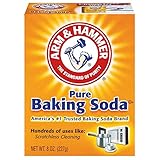
- A HOUSEHOLD CLASSIC: This 2.7 lb resealable bag of ARM & HAMMER Baking Soda unlocks 100+ uses across your home—from kitchens and laundry rooms to crafting tables and beyond
- PURE & NATURAL: America’s Most Trusted Baking Soda Brand is safe to use around kids and pets; no additives or chemicals, no cornstarch, and no fragrance
- FOOD-GRADE FOR BETTER RESULTS: USP-grade 1 crystals create fluffier cakes, muffins, cookies, and breads; use it in gluten free, kosher, vegan, paleo-friendly, and organic baking recipes
- DIY HOME HACKS: A multi-purpose essential to help freshen carpets, brighten laundry, freshen drains, scrub sinks, clean jewelry, craft kids’ sensory play & science experiments with one ingredient
- SUSTAINABLY MADE IN THE USA: Proudly made and packaged in Green River, Wyoming, using 100% certified renewable energy for a more sustainable, quality baking soda you can trust
Set up
- Use a sheet of scrap paper and a clean drinking straw.
- Make a small paper rocket that fits over the straw. A simple tube with a closed or folded nose and fins is enough; the child can choose the shape.
- Mark a launch line and remove breakable or valuable objects from the flight path.
Run the investigation
- Ask the child to predict which feature matters most: nose shape, fin size, body length or paper thickness.
- Build a first version and launch it from the same line each time.
- Measure distance with a ruler, tape measure, footsteps or floor tiles. Use the same measuring method for every trial.
- Change one feature only, then launch again under as similar conditions as possible.
- Record the design and result in a table or drawing. Discuss whether the evidence supports the prediction.
Children can add an art goal—an easily recognizable color pattern or a team symbol—without changing the test variable. If the rocket falls immediately, check that the tube is not too tight on the straw and that the nose is not carrying unnecessary weight. If launches vary widely, practice releasing the straw at the same angle and use several trials before deciding which design is better.
2. Build and improve a box-lid maze
PBS KidVision’s Full STEAM Ahead collection includes box-lid mazes as an engineering challenge. A clean box lid becomes a shallow frame, while cardboard strips, craft scraps, folded paper or other large recycled pieces form the walls.
Build the first route
- Place a start and finish on opposite sides of the lid.
- Lay out walls without permanently attaching them so they can be moved after testing.
- Choose a movable object that is large enough not to be a choking hazard, such as a large pom-pom, bottle cap used only with older children, or a rolled paper ball.
- Tilt or gently move the lid to guide the object from start to finish.
Turn it into an engineering test
Ask the child to add turns, create a dead end, widen a difficult passage or redesign a section that causes repeated failures. Count the number of moves, time a run with a household clock, or compare how many attempts are needed. A map drawn before and after the redesign makes the reasoning visible. Younger children can focus on one large route and directional language; older children can impose constraints such as “use exactly three dead ends” or “make the shortest route longer than the first version.”
Recommended Free Tools
Keep the lid on the floor or a stable table. Avoid tape or pieces that leave residue if the box will be reused.
Rank #2
3. Investigate what sinks and what floats
PBS KIDS’ water investigations compare objects in different kinds of water, including freshwater, saltwater and water with baking soda. You can begin with plain water and add a second water condition only if the child is ready to compare variables.
Materials and preparation
- Use a clear bowl, basin or cooking pot filled deep enough for the selected objects.
- Choose a few safe household objects with different materials and shapes. Exclude anything sharp, breakable, toxic, electrical or small enough to be swallowed.
- For a comparison, prepare a second container with salt or baking soda dissolved in water. Label containers so the child knows which is which.
Question, test and classify
- Before placing each object in water, ask for a prediction and the reason behind it.
- Test one object at a time and record “sink,” “float” or “partly submerged.”
- Group the results by material, shape or water type. Ask whether a heavy-looking object always sinks or whether shape changes the outcome.
- If comparing water conditions, keep the object, container depth and release method consistent.
- Have the child explain one result using evidence from the table rather than a guess.
Do not present the activity as proof that weight alone determines buoyancy. The investigation is an opportunity to notice patterns and identify exceptions. Dry the objects and floor promptly to prevent slips.
4. Test what makes ice melt fastest
PBS KIDS lists “What Makes Ice Melt Fastest?” as an investigation of how variables affect melting speed. The household version works best when you change one condition at a time and observe over a shared time period.
Do these 3 things before closing this tab:
1Repair Windows errors before they cause bigger problems2Scan for outdated or missing drivers - takes under a minute3Clear out junk files and repair common Windows errorsChoose a fair comparison
Use several similar ice cubes or pieces. Possible variables include location (for example, a shaded counter versus a warmer room), a material sprinkled on the surface, or the container underneath. Do not combine several changes in the same trial, because you will not know which change caused the difference.
Rank #3

- A HOUSEHOLD CLASSIC: This bulk 7 lb resealable bag of ARM & HAMMER Baking Soda unlocks 100+ uses across your home—from kitchens and laundry rooms to crafting tables and beyond
- PURE & NATURAL: America’s Most Trusted Baking Soda Brand is safe to use around kids and pets; no additives or chemicals, no cornstarch, and no fragrance
- FOOD-GRADE FOR BETTER RESULTS: USP-grade 1 crystals create fluffier cakes, muffins, cookies, and breads; use it in gluten free, kosher, vegan, paleo-friendly, and organic baking recipes
- NATURAL HOME HELPER: Freshen carpets, brighten laundry, scrub sinks, wash fruits and vegetables, refresh grills and cookware, and cut pet odors without harsh chemicals
- DIY HACKS: A multi-purpose essential for small spaces and apartments; create exfoliating scrubs, freshen drains, or clean jewelry with one versatile ingredient
- Place equal ice pieces in labeled locations or containers.
- Predict which will melt first and explain why.
- Check at regular, agreed intervals. Instead of relying on exact clock readings, children can draw each cube’s size or count checks until a cube disappears.
- Record the order and compare the observations.
- Repeat with a new variable if the child wants to test whether the pattern holds.
Keep ice away from electronics and use a tray or towel to contain water. If results are unclear, make the pieces more similar, space them apart and avoid touching them during checks.
5. Make an open baking-soda-and-vinegar volcano
PBS KIDS’ “Build Your Own Volcano” activity uses baking soda, vinegar, playdough or dirt/sand, a spoon and a measuring cup. It demonstrates a visible chemical reaction; it does not recreate the causes or scale of a natural volcanic eruption.
Set up safely
- Place a small mound of playdough or dirt/sand on a protected surface, leaving an opening at the top.
- Put a modest amount of baking soda in the opening.
- Keep vinegar in a measuring cup and add it slowly with an adult present.
- Leave the opening fully exposed. Never cap, cork or seal the container.
Observe the reaction
- Ask what the child expects to see when the liquids meet.
- Add a little vinegar and watch the bubbles and foam.
- Describe what changed: volume, speed, sound, overflow or color if a food-safe coloring is used.
- Repeat with a different amount only when the work area is reset and the adult controls the ingredients.
Use only a small-scale demonstration, protect the surface and wash hands afterward. Baking soda can be replenished as an ordinary household ingredient if none is available; no specialized product is required. If the mixture barely fizzes, check that the baking soda and vinegar are fresh and that the ingredients actually contact each other.
6. Engineer an obstacle course
PBS KidVision includes an obstacle-course engineering challenge. Pillows, empty boxes and other stable objects can define a route, but the goal is to design and revise a system, not to encourage risky climbing.
Rank #4

- POP ONE IN, STOP ODOR: Pack of 12 x 14 oz ARM & HAMMER Fridge-n-Freezer Baking Soda Odor Absorbers helps food taste as it should by absorbing and deodorizing lingering odors without harsh chemicals
- SPILL-PROOF DESIGN: Built-in Flo-Thru technology lets air circulate through dual-panel vents for maximum odor control while preventing spills, a must-have for home or commercial kitchens
- SMALL SPACE SUPERSTAR: Works to neutralize odors, not just mask them, in enclosed spaces like the pantry, cabinets, closets, under bathroom sinks, pet areas, and beyond
- LONG-LASTING UP TO 30-DAYS: To use, remove perforated panels on the front and back; place upright to absorb unwanted odors, and replace every 30 days for best results
- UNSCENTED ODOR ABSORBER: No fragrance or essential oils added; made with ARM & HAMMER Pure & Natural Baking Soda, sustainably made in Green River, Wyoming
Design with a constraint
Start with a simple rule such as “follow the route without touching the floor,” “carry a soft object from start to finish” or “complete the course using exactly four stations.” The child can draw a top-down map, number the stations and predict which section will be hardest.
- Clear the area of sharp corners, cords, breakable objects and slippery rugs.
- Place only stable, low objects that will not tip when lightly touched.
- Walk the route slowly once before attempting it at normal speed.
- Count steps, stations or successful completions rather than racing near furniture.
- Redesign one section to make it easier, harder or more accessible, then test again.
A seated version can use hand movements, a tabletop route for a toy, or a map-based planning role. Never use unstable furniture as a climbing platform, and stop if the path becomes crowded or unsafe.
Independent reader supportYour contribution helps us test, update, and keep practical guides available for everyone.7. Explore pitch with a water xylophone
PBS KIDS lists a bottle-water xylophone for investigating tones and pitch. Several identical containers make the comparison clearer, but sturdy plastic cups or bottles are suitable when glass would be unsafe.
Make the instrument
- Arrange three or more containers in a row on a stable, non-slip surface.
- Fill them to different water levels and leave enough room to tap without spilling.
- Use an adult-approved utensil and tap each container gently in the same place.
- Ask the child to order the sounds from lowest to highest and draw the order.
- Change one water level, then tap again to hear whether the pitch changes.
Do not hit hard; the aim is a controlled comparison, not volume. Keep glass containers out of reach of young children and use plastic when necessary. If the sounds are difficult to distinguish, use containers of the same shape and size, reduce background noise and alter the water levels more noticeably.
Best Value

- One 4-pound resealable bag of Baking Soda
- Great for baking, cleaning & freshening
- Amazon Grocery has all the favorites you love for less. You’ll find everything you need for great-tasting meals in one shopping trip
- Feed your every day with Amazon Grocery
How to add all five STEAM lenses without forcing them
Science
Ask children to observe and explain patterns in floating, melting, fizzing, flight or sound. Encourage “What evidence makes you think that?” rather than requiring a formal scientific vocabulary.
Technology
Discuss the tools and systems involved: a straw transfers a push to a rocket, a measuring cup controls liquid, and a map communicates a route. These activities can address technology without a digital device.
Engineering
Engineering is clearest when children define a goal, work within a constraint, test a design and improve it. The rocket, maze and obstacle course naturally support this cycle.
The Tool Desk
Outbyte PC Repair FREEClear out junk files and repair common Windows errorsFree Scan →Outbyte Driver Updater FREEScan for outdated or missing drivers - takes under a minuteDriver Scan →Art
Invite intentional choices about color, pattern, shape, sound arrangement, volcano landscape or route presentation. Decoration is most meaningful when the child can explain why the choice communicates an idea.
Mathematics
Count launches, steps, attempts or stations; measure distance; compare melting order; map turns; and organize results in a simple table. Exact instruments are optional—consistent units such as tiles or hand spans can still support comparison.
Safety, supervision and inclusion
- Choose materials that are safe for the child’s age and too large to pose a choking risk. Keep scissors, sharp tools, glass and small parts under adult control.
- Supervise water play and chemical demonstrations. Keep the volcano open and small; never seal a baking-soda-and-vinegar reaction.
- Protect floors and tables, clean spills promptly and wash hands after handling ingredients.
- Provide a seated option, larger materials, a partner role or an observing, measuring, drawing or explaining job for children with limited mobility, sensory needs or different motor skills.
- Stop an activity when the child is tired, frustrated or unsafe. A useful redesign can be changing the rule, material size or role rather than making the challenge harder.
The NASA/JPL “STEM Activities for Families” collection was updated September 26, 2025 and spans engineering, science, technology/computer science and mathematics activities for grades K–9. NASA and the Challenger Center describe home activities using common household items or readily available products. PBS KIDS’ volcano page is dated July 23, 2018, and its water collection includes the sink-or-float, ice and water-xylophone investigations. PBS KidVision’s Full STEAM Ahead collection supplies the box-lid maze and obstacle-course examples. These source pages provide activity ideas, not a complete safety standard, so adapt every setup to the child and environment.
Quick Recap
Product prices and availability are accurate as of the date/time indicated and are subject to change. Any price and availability information displayed on Amazon at the time of purchase will apply.

