
What’s actually slowing this PC down?
Pick the symptom - the matching free tool is one click away.
iTechGuides is reader-supported. When you buy through links on our site, we may earn an affiliate commission. As an Amazon Associate I earn from qualifying purchases. Learn more
Inscryption is the best overall fit if you want a roguelike deckbuilder with a meaningful story and a real ending. Choose Griftlands for three authored campaigns with substantial variation, or Dicey Dungeons for a lighter, episode-by-episode completion checklist.
Here, “finite” means that you can complete a defined narrative campaign or episode set and reach a satisfying endpoint. A finite game may still offer optional challenge modes, alternate choices, or repeatable runs afterward; the point is that completion is possible rather than permanently deferred by an endless unlock track.
| # | Preview | Product | Price | |
|---|---|---|---|---|
| 1 |

|
Blue Prince - Nintendo Switch 2 | $49.99 | Buy on Amazon |
| 2 |
|
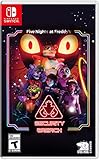
Five Nights at Freddy's: Security Breach Nintendo Switch | $32.50 | Buy on Amazon |
| 3 |

|
Minecraft - Nintendo Switch | $29.82 | Buy on Amazon |
| 4 |

|
The Karate Kid: Street Rumble - Nintendo Switch | $17.00 | Buy on Amazon |
What makes a roguelike deckbuilder finite?
Roguelike deckbuilders normally loop through a pattern: start a run, assemble a deck, fight through encounters, lose or win, unlock something, and begin again. That structure is excellent for experimentation, but it can become exhausting when the game never gives you a clear “you are done” state.
A finite-friendly game puts a boundary around its authored content. The boundary might be a story campaign, a set of episodes, or a defined sequence of character arcs. You can still replay individual runs, pursue harder modes, or explore alternate outcomes, but those activities are optional extensions rather than prerequisites for seeing the main conclusion.
#1 Best Overall
- DRAFTING YOUR JOURNEY - Upon reaching a closed door in Mt. Holly, you decide what room appears behind it and each decision shapes your path as you navigate through the manor. Every door can reveal new and exciting chambers that contain their own unique challenges and secrets. But be careful how you draft, for each day the manor’s floor plan resets and the rooms you saw today may not be the same rooms you see tomorrow.
- EVERY STEP COUNTS - Your progress each day is shaped by the rooms you select to draft and the tools you find within them. Items in the game can be used in a number of creative ways to fuel your exploration deeper into the house, allowing you to adopt unique strategies to combat the challenges that each day brings.
- A HISTORY IN THE MAKING - As the heir of Mt. Holly, you have been tasked to explore its shifting halls in search of Room 46. Yet as your journey takes you further into the mansion’s depths, you start to discover that there is more lurking under the surface than a missing room. Investigate a past woven with the threads of blackmail, political intrigue, and the mysterious disappearance of a local children’s book author.
- PACK-IN BONUSES - Include 18” x 12” fold-out poster of the magnificent Mt. Holly Manor and a download code for the official game soundtrack.
Use these questions to judge whether a game will satisfy your need for closure:
- Is there a defined endpoint? You should be able to finish the campaign or all listed episodes.
- Does the ending feel authored? A narrative conclusion or explicit completion screen is more satisfying than an arbitrary high score.
- What remains afterward? Optional challenges and repeat runs are welcome when they do not block the main ending.
- How much restarting is required? Procedural variety can add value, but repeated early-game setup can feel like work if the story is your priority.
- How much deck complexity is expected? Some games ask you to manage one combat deck; others add negotiation decks, multiple characters, or several systems at once.
On those criteria, the recommendations separate naturally: Inscryption emphasizes a memorable narrative endpoint, Griftlands offers the broadest authored campaign package, and Dicey Dungeons makes progress easiest to track through its episode structure.
Quick comparison
| Game | Why it fits a finite brief | Story and structure | Replay after completion | Main source of restart friction |
|---|---|---|---|---|
| Inscryption | A focused card odyssey with a story you can finish | One unusual, puzzle-infused narrative journey centered on Leshy’s cabin | Optional challenge content can continue after the main story | Returning for optional challenges is separate from completing the central odyssey |
| Griftlands | Three authored character campaigns, each with an endpoint | Sal, Rook, and Smith have distinct decks, abilities, maps, factions, and locations | Different enemies, quests, events, outcomes, and card choices make repeat attempts meaningful | Each character requires learning both combat and negotiation decks, and its narrative runs are comparatively involved |
| Dicey Dungeons | A documented episode checklist with a final unlock area | Characters begin with one episode and unlock additional episodes, including six listed Bonus Round episodes | Individual dungeon attempts remain replayable after episodes are cleared | Randomized dice builds can require repeated attempts before an episode is mastered |
| Wildfrost | Weak strict fit because its official positioning stresses endless replayability | Tactical roguelike runs rather than a finite campaign-first structure | Daily runs and Challenges are explicitly part of the long-term loop | The core appeal is continued mastery, not reaching a final endpoint |
| Monster Train | Better for build experimentation than campaign closure | Each run and strategy is presented as unique | Designed around repeated runs and combinations | The run loop is the content, so completion is less clearly bounded |
| Across the Obelisk | Only a fit when co-op and variety matter more than a finish line | A co-op roguelite deckbuilder with three in-depth game modes | Official descriptions emphasize endless replayability | Long-term run variety and progression are central rather than optional |
No reliable completion-time figures are established for these games in published descriptions, so the comparison avoids invented hour counts.
Do these 3 things before closing this tab:
1Fix the driver behind crashes, sound loss and screen glitches2Repair Windows errors before they cause bigger problems3Scan for outdated or missing drivers - takes under a minuteInscryption: best for a memorable narrative endpoint
Why it is the strongest first recommendation
Inscryption is the clearest answer to “I want a roguelike deckbuilder with an actual story and ending.” Its official description combines a deckbuilding roguelike with escape-room-style puzzles and psychological horror. The result is not merely a sequence of mechanically similar battles: the card game is part of a larger mystery that keeps changing what the player thinks the game is.
The Steam description places you in Leshy’s cabin, where you acquire woodland-creature cards, uncover secrets, and begin an unexpected odyssey. That framing gives the run structure a narrative purpose. Winning encounters is a way to advance through the mystery, not just a method of filling an ever-expanding collection.
What the progression feels like
Expect the game to alternate between card battles, deck decisions, environmental discovery, and puzzles. The cabin itself matters, so pay attention to objects and clues instead of treating every non-battle moment as a menu. The unusual presentation is part of the payoff: systems that appear familiar in a conventional deckbuilder may be connected to the story in surprising ways.
Because the central experience is authored, you can play toward a conclusion rather than wondering whether the next unlock will finally reveal the point of the campaign. The narrative endpoint is the reason to choose Inscryption over a game whose main reward is another randomized run.
Free tools Windows power users keep installed
One-click scans. No signup required.
What remains after the story
Inscryption should not be described as a purely one-and-done card game. Optional challenge content can extend the experience after the main story. That is compatible with a finite definition: the central odyssey can be completed, while players who enjoy the mechanics have additional reasons to return.
Rank #2
- INCLUDED - Five Nights at Freddy’s: Security Breach will feature an exclusive sticker sheet
- THE HUNTERS AND THE HUNTED - Once nighttime protocols are initiated, the animatronics at Freddy Fazbear’s Mega Pizzaplex will relentlessly pursue all intruders
- ADAPT TO SURVIVE - Access security cameras to survey the environment and plan your route through danger; Distract enemies by knocking over paint cans and toys; Hop into hiding spots and allow danger to pass, or try to outrun your pursuers
- EXPLORE AND DISCOVER - Freddy Fazbear’s Mega Pizzaplex offers a variety of attractions for guests to enjoy - Monty Golf, Roxy Raceway, Bonnie Bowl, the sewers, and… Sewers; The Pizzaplex is vast and has no shortage of goodies to discover
This split is useful for people tired of endless progression. You can stop when the story is complete without leaving an unfinished campaign behind, then decide independently whether the optional material is worth your time.
Who should choose it
- Choose Inscryption if narrative atmosphere and a meaningful ending matter more than a large roster of campaigns.
- Choose it if you enjoy card battles that are interrupted or enriched by puzzles and exploration.
- Choose it if you want optional post-story challenges without making those challenges the route to the main conclusion.
Inscryption is available on Nintendo Switch according to its official site, making it a practical choice for players who want the finite-friendly recommendation on a console as well as on a computer.
Griftlands: best for several authored campaigns
Three campaigns instead of one long loop
Klei describes Griftlands as a deck-building roguelike in which you fight and negotiate through a broken-down science-fiction world. Its biggest advantage for finite-minded players is scope with boundaries: there are three unique character campaigns, built around Sal, Rook, and Smith.
Each campaign has its own specialized decks, abilities, maps, factions, and locations. Completing one character’s story gives you a clear endpoint while leaving two substantially different campaigns available. That is a more authored form of replay than simply restarting the same protagonist with a new seed.
The two-deck commitment
Every character asks you to learn two related but distinct systems: a combat deck and a negotiation deck. Combat resolves physical conflicts, while negotiation lets you pursue goals through arguments and influence. Cards and upgrades that are excellent in one context do not automatically solve the other, so deck planning is broader than in a single-purpose battle game.
This dual-deck structure is also the main source of friction. New players must understand how to build and pilot two toolkits while following a longer narrative run. If you want the shortest possible route to a conclusion, Inscryption or an individual Dicey Dungeons episode may feel more immediate. If you enjoy learning a system deeply and then applying it across a campaign, Griftlands rewards that investment.
Why repeat attempts remain worthwhile
Griftlands does not treat procedural generation as an excuse to erase the story. The official description says attempts can produce different enemies, quests, events, and outcomes. Your choices can alter relationships and the situations you encounter, while card decisions shape how each character handles conflict.
That makes the game campaign-complete but replayable. You can finish Sal’s arc, for example, and return later to see how different choices change the path, then move on to Rook or Smith for a different set of tools and locations. The endpoint is real, but the route is not identical every time.
Rank #3
- Minecraft is a game about placing blocks and going on adventures
- Explore randomly generated worlds and build amazing things from the simplest of homes to the grandest of castles
- Play in creative mode with unlimited resources or mine deep into the world in survival mode, crafting weapons and armor to fend off the dangerous mobs
- Play on the go in handheld or tabletop modes
- Includes Super Mario Mash-Up, Natural Texture Pack, Biome Settlers Skin Pack, Battle & Beasts Skin Pack, Campfire Tales Skin Pack; Compatible with Nintendo Switch only
Who should choose it
- Choose Griftlands if you want more authored story than a single-campaign game can provide.
- Choose it if alternate quests, factions, and outcomes are a reason to replay rather than evidence that the game lacks closure.
- Choose it if learning separate combat and negotiation decks sounds interesting rather than burdensome.
- Look elsewhere if you strongly dislike long narrative runs or managing two card systems for each character.
Dicey Dungeons: best for a visible completion checklist
Episodes make progress concrete
Dicey Dungeons uses an episode-based structure that is unusually easy to track. According to the official wiki, characters start with one episode and unlock more through completion. Each character has up to six listed episodes, and the Backstage area unlocks after all six Bonus Round episodes are completed.
That structure directly addresses the fear of an unbounded meta-progression treadmill. You can see what remains, clear episodes one by one, and identify a final milestone. The individual dungeon attempts are still replayable, but the episode set gives the overall game a finite shape.
How the runs fit the episode model
Dicey Dungeons randomizes the details inside a run while keeping the larger checklist stable. Dice results and available equipment affect how you solve encounters, so a failed attempt does not invalidate the episode structure; it simply gives you another chance to find a workable combination.
Quick wins for a faster PC:
Clear out junk files and repair common Windows errorsFree Scan →Scan for outdated or missing drivers - takes under a minuteDriver Scan →The result is lighter and more modular than a single continuous narrative. You are not following one long mystery in the way you do in Inscryption, and you are not managing three character campaigns with two decks each as in Griftlands. Instead, each episode acts as a self-contained scenario within a broader set.
Trade-offs for finite-focused players
The checklist is a strength if visible progress motivates you, but randomness can still require repeated attempts before an episode is cleared. Finite does not mean deterministic. You can know exactly which episodes remain and still need several runs to overcome an awkward build or an unfavorable sequence of rolls.
The tone is also lighter than the psychological horror of Inscryption or the political science-fiction setting of Griftlands. Pick Dicey Dungeons when you want clearly bounded scenarios, a playful presentation, and replayable mechanics without needing one continuous story to connect every run.
Who should choose it
- Choose Dicey Dungeons if a numbered or named episode list helps you measure completion.
- Choose it if you prefer compact, self-contained scenarios to a single long campaign.
- Choose it if you enjoy randomness but want the overall content set to have a known boundary.
- Choose another game if a serious, continuous narrative is the main reason you play.
Why Wildfrost is a poor strict match
Wildfrost is a strong tactical roguelike deckbuilder, but its official positioning conflicts with a strict request for a finish line. The description emphasizes “endless replayability” through Daily runs and Challenges.
Recommended Free Tools
That wording matters. Daily runs and Challenges are not merely optional decorations after a campaign; they are part of the game’s identity as a repeatable mastery experience. If your priority changes from “I need an endpoint” to “I want a system I can practice indefinitely,” Wildfrost becomes a sensible alternative. For the original brief, however, it is better treated as a counterexample than a recommendation.
Rank #4
- CLASSIC STORYLINE: Relive the adventures of The Karate Kid while facing the challenges put forth by Cobra Kai and other foes. The game follows the narrative of the original trilogy, allowing you to experience the highs and lows of The Karate Kid journey.
- DYNAMIC COMBAT SYSTEM: Master the art of karate with an intuitive and responsive combat system. Execute powerful combos, perform signature moves like the crane kick, and defend against the enemy dojo's relentless attacks. Each level presents new challenges and enemies inspired by the films’ memorable characters.
- BOSS BATTLES: Face off against classic villains such as Johnny Lawrence, John Kreese, Terry Silver, and other formidable opponents across 12 intense levels. Each boss battle is a test of skill and strategy, challenging players to remember the lessons of Mr. Miyagi.
- ICONIC LOCATIONS FROM THE ORIGINAL CLASSIC FILMS: Brawl your way through 12 levels inspired by The Karate Kid original trilogy such as Topanga Beach, West Valley High, Cobra Kai Dojo, the All Valley Tournament, and more!
- PIXEL ART MASTERY: Dive into a visually stunning pixel art world that pays homage to the golden era of gaming. Every punch, kick, and iconic scene is beautifully crafted in classic 16-bit-era glory, delivering a truly nostalgic experience.
Why Monster Train is better for replay-first players
Monster Train is officially presented as a strategic roguelike deck-building game in which each run and strategy is unique. Its appeal comes from trying different combinations and solving the next run, not from moving through a finite set of authored chapters.
That makes it excellent for players who were using “finite” as shorthand for “I want meaningful variety rather than repetitive grinding.” It is a weaker choice when you literally want to finish a campaign and put the game down with the main content resolved. The run loop is the product, so completion is less clearly bounded than in Inscryption, Griftlands, or Dicey Dungeons.
Why Across the Obelisk is a conditional recommendation
Across the Obelisk is described officially as a co-op roguelite deckbuilder with three in-depth game modes and endless replayability. Those features make it attractive to a group that wants a long-running shared game, but they work against a strict endpoint requirement.
Consider it only when co-op coordination and continuing run variety outweigh your dislike of endless progression. If your group needs a campaign it can finish and then leave complete, start with one of the three finite-friendly recommendations instead.
How to choose among the three finite-friendly picks
Choose by the kind of endpoint you want
| Your priority | Best choice | Reason |
|---|---|---|
| A story ending that feels central to the experience | Inscryption | The card game, puzzles, horror, and cabin mystery form one authored odyssey. |
| Several substantial stories in one purchase | Griftlands | Sal, Rook, and Smith each have distinct campaigns and systems. |
| A checklist you can clear in episodes | Dicey Dungeons | Episodes unlock through completion, with six listed Bonus Round episodes leading to Backstage. |
Choose by replay tolerance
- Low tolerance for restarting: Inscryption keeps the main reason to continue tied to its authored mystery. Optional challenges can be ignored after the story.
- Moderate tolerance for restarting: Dicey Dungeons gives you clear episode goals while asking you to retry randomized dungeon attempts.
- High tolerance for restarting: Griftlands offers the most room to revisit decisions, encounters, and outcomes across multiple campaigns.
Choose by narrative continuity
Inscryption is the most continuous and atmospheric. Griftlands provides continuity within each character campaign but separates the experience into three protagonists and two interaction systems. Dicey Dungeons is the most modular: episodes supply structure, while the tone and scenarios remain lighter and more self-contained.
A practical completion plan
- Define your stopping point before you start. For Inscryption, make the central story your finish line; for Griftlands, treat each character campaign as a separate completed unit; for Dicey Dungeons, use the episode list and the Backstage unlock as the checklist.
- Separate required content from optional mastery. Do not assume Daily runs, Challenges, alternate outcomes, or repeat attempts must all be cleared to call the main game complete.
- Keep a simple progress note. Record the campaign or episode you finished, the character you used, and any optional branches you intentionally skipped. This prevents a finite game from feeling endless merely because its post-completion modes remain visible.
- Change games when the endpoint is reached. The value of these recommendations is that you can stop without abandoning an unfinished central story. Return only if the underlying card system still interests you.
Final recommendation by reader type
For “I want a roguelike deckbuilder with an actual story and ending,” start with Inscryption. It gives the strongest sense that the mechanics are carrying you toward a designed conclusion, while optional challenge content remains available for players who want more.
For “I want several campaigns so finishing one does not end the whole game,” choose Griftlands. Its three characters, separate combat and negotiation decks, and changing quests and outcomes provide the broadest authored package without abandoning replayability.
The Tool Desk
Outbyte PC Repair FREERepair Windows errors before they cause bigger problemsFix Now →Outbyte Driver Updater FREEFix the driver behind crashes, sound loss and screen glitchesFind Drivers →For “I want to know exactly what remains,” choose Dicey Dungeons. Its episode progression and six listed Bonus Round episodes create a visible route to the Backstage unlock, even though each dungeon attempt can be repeated.
Wildfrost, Monster Train, and Across the Obelisk are worthwhile when endless experimentation, challenge runs, or co-op variety are the goal. They are simply less suitable when the defining requirement is a clear endpoint.
Quick Recap
Product prices and availability are accurate as of the date/time indicated and are subject to change. Any price and availability information displayed on Amazon at the time of purchase will apply.

