
The Tool Desk
Outbyte Driver Updater FREEScan for outdated or missing drivers - takes under a minuteDriver Scan →Outbyte PC Repair FREEClear out junk files and repair common Windows errorsFree Scan →iTechGuides is reader-supported. When you buy through links on our site, we may earn an affiliate commission. As an Amazon Associate I earn from qualifying purchases. Learn more
Start with the Castlevania Anniversary Collection. It is Konami’s explicitly recommended first step, gives you Simon, Trevor and Christopher Belmont in one digital purchase, and lets you sample the series’ original linear action before deciding whether to move into exploration-heavy games such as Symphony of the Night and Aria of Sorrow.
After that introduction, choose your route by what interests you most: the Belmont family’s classic chronology, the later exploration games, Richter’s two-game arc, or the separate Lords of Shadow continuity. The guide below keeps those paths distinct so you know which games belong together and what kind of play each one demands.
The best first step: Castlevania Anniversary Collection
Konami describes the Castlevania Anniversary Collection as “the best first step for anyone to take into the world of Castlevania and the fight against Dracula.” That recommendation fits a newcomer because the package spans the series’ foundational 8-bit and 16-bit adventures rather than dropping you into one isolated sequel.
The collection is a digital download for PlayStation 4, Xbox One, Nintendo Switch and Steam. Its principal games are:
#1 Best Overall

- Classics that defined the Castlevania series.
- Includes the "History of Castlevania - Book of the Crescent Moon" ebook.
- This includes eight classic Castlevania games preserved on one disc with a full-color manual.
- The Castlevania Anniversary Collection on physical disc for the PlayStation 4. Also works on PlayStation 5. Region-free.
| Game | Belmont connection | What you learn from it |
|---|---|---|
| Castlevania | Simon Belmont | The basic castle assault and the series’ foundational whip-based structure |
| Castlevania II: Simon’s Quest | Simon Belmont | A different, more open quest built around Simon’s continuing fight |
| Castlevania III: Dracula’s Curse | Trevor Belmont | The earlier Belmont generation and the strongest direct prequel to Simon’s adventures |
| Super Castlevania IV | Simon Belmont | A 16-bit version of Simon’s mission with expanded whip control |
| Castlevania: The Adventure | Christopher Belmont | The start of Christopher’s handheld arc |
| Castlevania II: Belmont’s Revenge | Christopher Belmont | The continuation of Christopher’s story after his victory over Dracula |
| Castlevania Bloodlines | An allied vampire-hunting branch rather than a Belmont-led chapter | How the classic formula works outside the central family line |
| Kid Dracula | Bonus title | A lighter side entry included with the collection |
The first Castlevania entry in the collection is listed with original 1987/1988 release years, depending on the market. Super Castlevania IV is listed with an original US release in 1991. Those dates describe the original games, not a modern remaster schedule.
Choose a route by the kind of Castlevania you want
For Belmont family history: Trevor, then Simon
Play Castlevania III: Dracula’s Curse first, followed by Castlevania. Konami identifies Trevor Belmont as Simon’s forefather and the original vampire slayer in Dracula’s Curse, making it the clearest family-history prequel. The original game then shows Simon carrying that fight into the best-known castle assault.
- Begin with Castlevania III: Dracula’s Curse to meet Trevor and establish the earlier generation.
- Continue to Castlevania to experience Simon’s foundational mission.
- Play Castlevania II: Simon’s Quest as Simon’s follow-up rather than treating it as a remake of the first game.
- Use Super Castlevania IV as another Simon-led interpretation, with smoother 16-bit presentation and more flexible whip control.
This order is a story-oriented choice, not the order in which the games originally reached players. If you prefer to see the series evolve technically, play the collection in release order instead; if you care about ancestry, Trevor before Simon is the more informative opening.
What’s actually slowing this PC down?
Pick the symptom - the matching free tool is one click away.
For Christopher’s two-game handheld arc
Castlevania: The Adventure and Castlevania II: Belmont’s Revenge follow Christopher Belmont. Belmont’s Revenge takes place after Christopher defeats Dracula and describes his son Soleil being turned into a demon. Playing the two together makes Christopher’s family responsibilities and the sequel’s personal stakes easier to follow.
For exploration and character progression
Choose Symphony of the Night, then Aria of Sorrow, Dawn of Sorrow, Portrait of Ruin and Order of Ecclesia. This route moves away from short, stage-by-stage whip challenges and toward interconnected castles, ability upgrades, backtracking and character progression.
The route is not a continuous Belmont-only saga. It includes allies and successors, and its appeal is the changing exploration system as much as the family name. Start with Symphony of the Night if you want the landmark transition into the exploration format, then use the Game Boy Advance and Nintendo DS titles to see that design refined.
For Richter’s connected pair
Play Rondo of Blood before Symphony of the Night. Konami packages these two games together in Castlevania Requiem, presenting a useful Richter-to-Symphony progression within the Belmont lineage. Rondo gives you a classic action structure, while Symphony follows with a much larger exploratory design.
Do these 3 things before closing this tab:
1Repair Windows errors before they cause bigger problems2Scan for outdated or missing drivers - takes under a minute3Clear out junk files and repair common Windows errorsFor an alternate continuity
Treat Lords of Shadow as a separate continuity rather than inserting it into the classic family chronology. Gabriel Belmont is the first game’s protagonist. Mirror of Fate takes place 57 years later and follows Gabriel’s descendants Trevor and Simon. Lords of Shadow 2 returns to Gabriel, now Dracula, in a modern setting.
The Belmont family and the games attached to each name
| Figure | Games or route | Why the character matters |
|---|---|---|
| Trevor Belmont | Castlevania III: Dracula’s Curse; Lords of Shadow continuity | He is Simon’s forefather in the classic setting and a descendant in the rebooted setting, so the same name does not indicate one shared timeline. |
| Simon Belmont | Castlevania; Castlevania II: Simon’s Quest; Super Castlevania IV | He anchors the best-known classic castle assaults and appears in both the original 8-bit and 16-bit interpretations. |
| Christopher Belmont | Castlevania: The Adventure; Castlevania II: Belmont’s Revenge | His two-game handheld arc expands the family story beyond Simon’s era. |
| Richter Belmont | Rondo of Blood and the connected Symphony of the Night route | He provides the bridge from a traditional action game into the exploration format represented by Symphony. |
| Gabriel Belmont | Lords of Shadow; Lords of Shadow 2 | He belongs to the rebooted continuity, where his story eventually places him in the role of Dracula. |
| Trevor and Simon in Mirror of Fate | Mirror of Fate | They are Gabriel’s descendants in the separate Lords of Shadow setting, not a continuation of the classic timeline. |
| Rose Belmont | Castlevania: Belmont’s Curse | She is Trevor Belmont’s daughter in a story set in Paris in 1499. |
The family is the franchise’s central vampire-hunting bloodline, but not every important game is led by a Belmont. Some entries place allies, descendants or other hunters at the center, so use the protagonist as your continuity clue instead of assuming that every title shares one hero.
A classic chronology that makes the family easy to follow
1. Castlevania III: Dracula’s Curse
This is the best starting point when your priority is lineage. Trevor is presented as Simon’s forefather and as the original vampire slayer in this branch of the story. Beginning here gives the later Simon games a clear generational context before you encounter the more familiar castle assault.
2. Castlevania
Simon’s first listed collection appearance is the compact, foundational route through Dracula’s castle. Its linear structure teaches the core rhythm: advance through dangerous rooms, control your jumps and whip timing, and learn enemy patterns instead of relying on a large inventory or ability tree.
3. Castlevania II: Simon’s Quest
This sequel is intentionally different from the first game. Simon’s journey is broader and less strictly stage-based, so newcomers who expect another short castle run should approach it as an experiment in open-ended progression. Playing it after the original lets you see the change as a historical step rather than a confusing first impression.
Rank #2
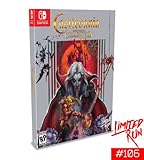
- Classic edition includes Konami-style silver box, physical game and soundtrack CD, 18 by 24" poster, and a NES-style dust sleeve to protect the game.
- Games Included in collection: Castlevania, Castlevania II Simon's Quest, Castlevania III Dracula's Curse, Super Castlevania IV, Castlevania The Adventure, Castlevania II Belmont's Revenge, Castlevania Bloodlines, and Kid Dracula.
- Box features all new art from legendary Konami cover artist Tom duBois.
4. Super Castlevania IV
This is another Simon-led classic, but its 16-bit presentation and expanded whip control make it a strong second sample of the same hero. If the original feels severe, the additional control options can make this version easier to read while preserving the deliberate movement and enemy patterns associated with classic Castlevania.
5. Christopher’s handheld sequence
Move to The Adventure and then Belmont’s Revenge when you want a focused side branch of the family tree. The sequel’s premise—Christopher has already defeated Dracula, but his son Soleil is transformed into a demon—gives the second game a direct continuation rather than a loosely related retelling.
6. Richter into Symphony of the Night
After the earlier family chapters, Rondo of Blood followed by Symphony of the Night shows how the series can keep the Belmont lineage while changing its structure. The pair is especially useful if you want to understand why exploration-focused Castlevania became a distinct lane rather than simply another set of linear stages.
The exploration-first route in detail
Symphony of the Night: begin with the format change
Symphony of the Night is the natural gateway for players who want a castle that opens up as they gain abilities. Its place after Rondo of Blood makes the Richter connection meaningful, but you do not need to finish every earlier game to understand why its exploration, map growth and progression feel different.
Aria of Sorrow: move to the Game Boy Advance era
Aria of Sorrow keeps the interconnected exploration approach while shifting the setting, systems and playable identity. It is a good next step when you want a compact adventure with progression rather than another direct Simon or Trevor chapter.
Dawn of Sorrow: continue the handheld design
Dawn of Sorrow follows Aria in the suggested route. Playing them consecutively makes the evolution of the Game Boy Advance formula into the Nintendo DS period easier to appreciate.
Portrait of Ruin: add a different exploration structure
Portrait of Ruin belongs in the same exploration lane but changes the way you move through its environments. Treat it as a variation on the formula, not as a required Belmont-family prequel.
PC Slower Than It Used to Be?
A free scan shows the junk files, broken settings and background clutter dragging Windows down - then fixes them in one click.Free scan · Windows 10 & 11Outdated Drivers Are Slowing You Down
One free scan finds every outdated or missing driver and matches the right update for your exact hardware.Free scan · exact hardware matchOrder of Ecclesia: finish the DS trilogy
Order of Ecclesia completes the three Nintendo DS titles collected in the Dominus Collection. If you want all three in one modern package, this is the final stop on the exploration-first path.
Why the Dominus Collection is the convenient modern route
Konami’s Dominus Collection brings together the three DS-era games and adds practical options: rewind, quick saves, regional-version switching, music playlists, and a compendium covering enemies, items, glyphs and tactical souls. Those features matter most if you are new to older games, want to practice a difficult room without replaying a long section, or prefer to compare regional versions without finding separate hardware.
The convenience tools do not change the games’ place in the chronology. They simply reduce the friction of playing a handheld trilogy on a current system.
Understanding the separate Lords of Shadow continuity
The Lords of Shadow games reuse the Belmont name but establish a different history. Gabriel Belmont leads the first game. The official synopsis places Mirror of Fate 57 years later, where Gabriel’s descendants Trevor and Simon become the focus. Lords of Shadow 2 then returns to Gabriel as Dracula and moves the story into a modern setting.
Use this route when you want a self-contained reimagining with a modern presentation, not when you are trying to reconstruct the ancestry that runs from Trevor to Simon in the classic chronology. The shared surnames are a deliberate thematic link, but the 57-year interval and changed roles belong to the rebooted setting.
Rank #3
- 819976026033
- 1186668
Current release context and where each route fits
Anniversary Collection
The Castlevania Anniversary Collection is available as a digital download on PlayStation 4, Xbox One, Nintendo Switch and Steam. It is the broadest beginner package because it includes multiple classic eras and more than one Belmont.
Castlevania Requiem
Castlevania Requiem packages Rondo of Blood and Symphony of the Night together. Choose it when your priority is Richter’s connected route and the transition from traditional action to exploration. The supplied release information identifies the paired content but does not establish a single platform list here, so check the storefront for your region before buying.
Dominus Collection
Dominus Collection is the modern compilation for Dawn of Sorrow, Portrait of Ruin and Order of Ecclesia. Its rewind, quick-save and reference features make it the least demanding way to approach the DS trilogy, while the games themselves retain their exploration-focused design.
Castlevania: Belmont’s Curse
Konami’s 40th-anniversary announcement lists Castlevania: Belmont’s Curse as released on October 15 for PlayStation 5, Xbox Series X|S, Xbox on PC, Steam and Nintendo Switch. The story is set in Paris in 1499, 23 years after Castlevania III, and follows Rose Belmont, Trevor Belmont’s daughter. That placement makes it a particularly interesting modern-era choice for readers who started with Trevor and want to see a later generation of the family.
| Collection or release | Best use | Convenience or access detail |
|---|---|---|
| Castlevania Anniversary Collection | First exposure to classic Belmont adventures | Digital download on PlayStation 4, Xbox One, Nintendo Switch and Steam |
| Castlevania Requiem | Richter’s Rondo of Blood-to-Symphony of the Night route | Two connected games in one package |
| Dominus Collection | The three Nintendo DS exploration games | Rewind, quick saves, regional-version switching, music playlists and a reference compendium |
| Castlevania: Belmont’s Curse | A newer story about Rose Belmont | Released October 15 on PlayStation 5, Xbox Series X|S, Xbox on PC, Steam and Nintendo Switch, according to Konami’s 2026 anniversary announcement |
How to choose between linear action and exploration
Choose linear classics if you want short, focused challenges
- Stages have a clear forward direction.
- Whip range, jump timing and enemy patterns matter more than building a character.
- Dracula’s Curse, the original Castlevania and Super Castlevania IV provide the clearest view of that design.
- The difficulty is part of the historical experience, so expect repetition while you learn rooms and bosses.
Choose exploration games if you want freedom and progression
- Maps open as you gain abilities or tools.
- Returning to earlier areas is part of solving the castle rather than a sign that you took a wrong turn.
- Symphony of the Night, Aria of Sorrow, Dawn of Sorrow, Portrait of Ruin and Order of Ecclesia are the core route.
- The Dominus Collection reduces frustration with rewind and quick-save options.
Choose the alternate continuity if you want a modern retelling
- Lords of Shadow begins with Gabriel rather than Simon or Trevor from the classic timeline.
- Mirror of Fate and Lords of Shadow 2 develop that rebooted family history.
- Do not use this route to infer the chronology of the original games.
A practical beginner plan
If you want a simple sequence without committing to every title immediately, use this six-step plan:
- Buy or download the Castlevania Anniversary Collection on a supported platform.
- Play Castlevania III: Dracula’s Curse first if family ancestry is your priority; otherwise begin with the original Castlevania to learn the basic controls.
- Play the other Simon-led classic that interests you: Simon’s Quest for a more open structure or Super Castlevania IV for the smoother 16-bit interpretation.
- Continue with The Adventure and Belmont’s Revenge if Christopher’s branch is what drew you in.
- Move to Rondo of Blood and Symphony of the Night when you want the Richter connection and exploration format.
- Choose the Dominus Collection for the three DS-era exploration games, or switch to Lords of Shadow if you want a separate continuity.
When you reach a game that does not suit you, change format rather than assuming the whole series is incompatible with your taste. The franchise deliberately contains both precise stage-based action and ability-driven exploration.
Common mistakes when starting the series
Mixing the two timelines
The classic Trevor-to-Simon relationship and the Lords of Shadow Gabriel-to-Trevor-and-Simon relationship are not the same history. Keep the rebooted trilogy in its own route.
Recommended Free Tools
Expecting every game to star a Belmont
The family is the series’ anchor, but several exploration games emphasize other heroes and allies. A title can be essential to Castlevania’s design history without being a direct Belmont chapter.
Assuming the collection order is the story order
A compilation groups games for access, not necessarily by fictional chronology. Dracula’s Curse is the useful prequel to Simon even though the original Castlevania is the more famous starting point.
Judging the series from one control style
The original games’ deliberate movement and the exploration titles’ ability progression ask for different habits. Try at least one game from each format before deciding whether Castlevania suits you.
Ignoring regional and platform details
Availability differs by storefront and can change over time. The confirmed platform lists above apply to the releases identified by Konami; verify the current listing in your country before purchase, especially for paired collections whose platform information is not established here.
Free tools Windows power users keep installed
One-click scans. No signup required.
Recommended routes at a glance
| Your priority | Start | Continue with |
|---|---|---|
| One broad introduction | Castlevania Anniversary Collection | Try Trevor, Simon and Christopher before choosing a longer route |
| Belmont ancestry | Castlevania III: Dracula’s Curse | Castlevania, Simon’s Quest, Super Castlevania IV |
| Christopher’s story | Castlevania: The Adventure | Castlevania II: Belmont’s Revenge |
| Richter and exploration | Rondo of Blood | Symphony of the Night |
| Handheld exploration | Symphony of the Night or Aria of Sorrow | Dawn of Sorrow, Portrait of Ruin, Order of Ecclesia |
| Rebooted continuity | Lords of Shadow | Mirror of Fate, then Lords of Shadow 2 |
| Newest Belmont-focused setting in this guide | Castlevania: Belmont’s Curse | Use its Paris 1499 story as a later-generation follow-up to Trevor’s era |
The safest overall recommendation remains the Castlevania Anniversary Collection: it is the officially identified beginner entry point and gives you enough variety to discover whether you prefer classic whip action, family chronology or the road toward exploration. From there, Rondo of Blood and Symphony of the Night form the cleanest bridge to the exploration games, while Lords of Shadow should stay on its own continuity track.
Quick Recap
Product prices and availability are accurate as of the date/time indicated and are subject to change. Any price and availability information displayed on Amazon at the time of purchase will apply.

