
The Tool Desk
Outbyte PC Repair FREEClear out junk files and repair common Windows errorsFree Scan →Outbyte Driver Updater FREEScan for outdated or missing drivers - takes under a minuteDriver Scan →iTechGuides is reader-supported. When you buy through links on our site, we may earn an affiliate commission. As an Amazon Associate I earn from qualifying purchases. Learn more
Best brain training apps and games 2024 depend on your goal: BrainHQ is the strongest evidence-led candidate, Elevate is best for language and practical skills, Peak offers the best variety, CogniFit has the most clinical-style positioning, Brilliant is best for structured learning, and traditional puzzles are the lowest-cost entertainment option. None is proven to make everyone smarter or prevent dementia.
Brain-training software is most defensible as structured practice and enjoyable mental engagement. Users commonly improve at the games they repeat, while evidence for unrelated cognitive abilities and everyday functioning is mixed. The right choice is therefore the app you can use comfortably and consistently for a clearly defined purpose—not an app making the broadest “brain boost” claim.


Key takeaways
- BrainHQ is the best evidence-first candidate, particularly for structured processing-speed training and research involving older adults, but its evidence does not prove broad improvement for every user.
- Elevate fits vocabulary, reading, communication and numeracy practice better than a general-purpose memory-game app.
- Peak is the strongest choice for variety and polished short daily sessions, while CogniFit is better suited to assessment-oriented or clinically framed use.
- Brilliant teaches mathematics, logic, science and computer science; it should be judged as an educational platform rather than a general brain-training treatment.
- A 2021 meta-analysis of commercial programs found small near-transfer effects but insufficient evidence for broad improvements in memory, general cognition or everyday functioning.
Best brain training apps and games 2024 at a glance
The following is a category-based ranking, not a claim that one product is universally superior. “Best” means best for the stated use case, evidence standard and type of activity.
Quick wins for a faster PC:
Repair Windows errors before they cause bigger problemsFix Now →Scan for outdated or missing drivers - takes under a minuteDriver Scan →Clear out junk files and repair common Windows errorsFree Scan →| Category | Best pick | Why choose it | Important limitation |
|---|---|---|---|
| Evidence-first cognitive training | BrainHQ | Strong research history, especially around processing-speed-style exercises and older adults | Research is task- and population-specific; broad “smarter brain” effects are unproven |
| Language and practical skills | Elevate | Practice targets vocabulary, reading, communication, math and processing | Practice value does not establish broad transfer to daily cognition |
| Variety and daily play | Peak | Short, polished games span memory, attention, problem-solving and language | App-specific independent evidence remains limited |
| Assessment-oriented training | CogniFit | Offers cognitive assessments, personalization and research or healthcare positioning | Clinical positioning is not proof that a consumer subscription improves real-world function |
| Recognizable general brain-game platform | Lumosity | Established brand and broad game-library appeal | Popularity and a large research footprint do not automatically establish strong transfer |
| Learning rather than brain training | Brilliant | Interactive lessons teach mathematics, logic, science and computer science | It is not primarily a general cognitive-training or clinical program |
| Low-cost puzzle entertainment | Sudoku, crosswords, chess, Go and logic games | Familiar, inexpensive, social and easy to sustain as a hobby | They are not validated treatments or guaranteed dementia-prevention tools |
How were the best brain training apps and games 2024 choices judged?
The comparison uses seven practical criteria: goal fit, research quality, evidence of transfer beyond the trained task, exercise design, usability, cost transparency, privacy and suitability for the intended user. A polished interface can improve adherence, but it cannot substitute for a randomized controlled trial. An app-store rating mainly reflects enjoyment, usability and expectations rather than cognitive transfer.
#1 Best Overall
Evidence quality also depends on the study. The strongest questions are whether research was independent, randomized, properly controlled, conducted in a relevant population and measured outcomes outside the app. Company-funded research should be identified as such rather than treated as independent confirmation.
Do brain training apps actually work?
Brain-training apps reliably help users practice the tasks they repeat, but evidence is much less consistent for unrelated thinking skills or everyday functioning. Researchers usually separate the outcomes into five levels:
| Outcome | What it means | What the evidence supports |
|---|---|---|
| Game-specific improvement | Higher scores or faster completion in the same exercise | Common, partly because users learn the rules and interface |
| Near transfer | Improvement on a similar task or closely related test | Possible and supported by some studies |
| Far transfer | Improvement on an unrelated cognitive test | Mixed and often small |
| Functional transfer | Better work, school, driving, medication management or other daily activities | Insufficient or inconsistent evidence |
| Clinical benefit | Meaningful improvement for a diagnosed condition or rehabilitation goal | Requires condition-specific evidence and professional guidance |
A 2021 systematic review and meta-analysis of commercial brain-training programs examined 43 studies involving 2,636 participants. The review found small near-transfer effects, no far-transfer effect for participants with mild cognitive impairment, and insufficient evidence for broad improvements in memory, general cognition or everyday functioning.
Free tools Windows power users keep installed
One-click scans. No signup required.
A 2024 systematic review of standalone digital interventions included 76 randomized controlled trials and 5,214 participants. The interventions were highly varied, only four studies used an app or web-app delivery format, and most commercially available digital self-guided interventions remained untested in randomized controlled trials. The review found a small-to-moderate pooled cognitive effect but no significant overall improvement in activities of daily living.
That distinction explains why a rising app score can be real but easy to overinterpret. A higher score may reflect memorizing recurring stimuli, learning a strategy, becoming comfortable with touchscreen controls or simply reducing mistakes caused by unfamiliarity. It does not, by itself, demonstrate higher intelligence, better general memory or improved daily decision-making.
Which app has the best research?
BrainHQ is the best evidence-led candidate, not a universally proven best app. A review of commercial programs placed BrainHQ and CogniFit in its highest evidence category, with BrainHQ having the largest number of studies among the programs assessed. The review’s discussion is summarized in BrainHQ’s account of the commercial-program evidence review, so readers should still distinguish the independent review from the company’s presentation of it.
BrainHQ’s strongest case concerns structured exercises, especially processing-speed-style training and research involving older adults. Those findings should not be generalized to every BrainHQ exercise, every age group or every outcome. Research on Lumosity, Peak and Elevate does not make those products equivalent to BrainHQ simply because they are popular or have published studies. A popular-app comparison study is useful for understanding how products differ, but content quality and popularity are not the same as proof of broad cognitive benefit.
What is BrainHQ best for?
BrainHQ is best for readers who want a structured, evidence-conscious program, especially for attention and processing-speed practice. The BrainHQ platform positions its exercises around areas including attention, memory and processing speed.
- Best fit: Evidence-conscious users, older adults, caregivers and people who prefer a systematic routine.
- Strength: A stronger independent research history than the other major commercial names discussed here, particularly in processing-speed-style training.
- Weakness: The evidence does not show that ordinary use prevents dementia, raises IQ or broadly improves everyday cognition.
- Who should skip it: People seeking a fully free casual game, multiplayer entertainment or broad educational lessons.
For an older adult, BrainHQ may be a sensible first trial if the exercises are readable, comfortable and enjoyable. Consistency matters more than selecting a theoretically optimal program that the user abandons after a week.
Rank #2
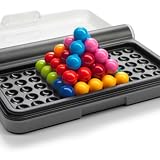
- Premium Quality, Built to Last – Unlike other games in its class, IQ Puzzler Pro is crafted with durable, high-grade materials and a sturdy travel case. It offers a premium tactile experience that stands out from lower-quality alternatives.
- Compact Yet Deeply Challenging – Don’t be fooled by its size—IQ Puzzler Pro packs in more layers of complexity and replay value than typical travel games.
- Perfect for Gifting and Brain Training – A favorite for puzzle lovers ages 6 to adult, this game delivers hours of solo brain training, making it an ideal gift for sharp minds.
- Set Includes: 1 compact game board with transparent lid, 12 colorful puzzle pieces, and 1 booklet with 120 challenges and solutions. Don’t forget to download our free app with features that enhance the experience of physical SmartGames.
- Trusted SmartGames Quality – From the award-winning SmartGames line, known for intelligent design and fan, educational play, IQ Puzzler Pro reflects the brand’s commitment to quality and innovation.
Is Elevate best for language and communication?
Elevate is the natural leading choice for vocabulary, reading, verbal precision, communication and numeracy practice. The Elevate product page describes personalized daily training in language, reading, math, memory and related skills.
- Best fit: Users whose real goal is stronger vocabulary, reading comprehension, grammar, communication or practical math.
- Strength: Exercises are easier to connect to a concrete skill than abstract reaction-time games.
- Weakness: Better performance inside language exercises does not prove broad improvement in work, school or everyday cognition.
- Alternative: If the goal is genuinely to learn a language, a dedicated language-learning course may be more meaningful than generic brain training.
Elevate is a good example of why “brain training” and useful practice are not identical. Practicing a relevant skill can be worthwhile even when the evidence does not support a claim that the app makes users generally smarter.
Is Peak the best app for variety?
Peak is best for users who want a varied, game-like daily routine across several cognitive domains. The Peak platform presents short games covering areas such as memory, attention, problem-solving and language.
- Best fit: People motivated by variety, short sessions and polished mini-games.
- Strength: A broad mixture can reduce boredom and make regular use easier.
- Weakness: A 2024 study included Peak in a comparison of popular apps, but app-specific evidence remains limited.
- Interpretation: Treat improved Peak scores as evidence of practice in Peak’s tasks, not as a general cognitive assessment.
Is CogniFit a clinical brain-training app?
CogniFit is the best fit for assessment-oriented personalization and clinically framed training, but it should not be treated as a diagnostic tool without professional oversight. The CogniFit platform positions itself around cognitive assessments, personalized programs and research or healthcare use cases.
- Best fit: Users interested in cognitive testing, personalized exercises or clinician-oriented features.
- Strength: More assessment- and healthcare-oriented positioning than a casual puzzle app.
- Weakness: “Clinical” or “trusted by doctors” language does not prove that a consumer subscription improves real-world functioning.
- Safety boundary: A CogniFit score—or any app score—cannot diagnose memory loss or explain why symptoms are occurring.
People using an app alongside stroke, traumatic brain injury, ADHD, Parkinson’s disease, multiple sclerosis, cancer-related cognitive symptoms or mild cognitive impairment should discuss the activity with a qualified clinician. An app may be a supplementary exercise, but it should not replace assessment or rehabilitation.
Should you choose Lumosity?
Lumosity is a reasonable entertainment-first choice for users who want a recognizable general brain-game platform, but it should not be presented as the strongest evidence option. The Lumosity research page documents the company’s published research history.
Do these 3 things before closing this tab:
1Scan for outdated or missing drivers - takes under a minute2Clear out junk files and repair common Windows errors3Fix the driver behind crashes, sound loss and screen glitchesLumosity’s brand recognition and broad game library can make regular use appealing. However, a large published footprint does not automatically establish strong independent evidence for far transfer or everyday benefits. The available review literature has described Lumosity’s evidence as methodologically weaker than the evidence for BrainHQ and CogniFit. Choose Lumosity for the games and routine you enjoy, not for an implied promise of dementia prevention or a higher IQ.
Is Brilliant a brain-training app or an educational platform?
Brilliant is better categorized as an interactive learning platform than as general brain training. The Brilliant platform teaches mathematics, logic, science and computer science through interactive lessons and problem-solving.
- Best fit: Readers who want to acquire knowledge and develop structured problem-solving skills.
- Strength: The value proposition is concrete learning rather than a vague promise to “boost” the brain.
- Weakness: Brilliant is not primarily a memory-drill program, cognitive assessment service or aging-specific intervention.
- Pricing: The current price was not reliably exposed in this research pass; check the official pricing page before publication or purchase.
If the reader’s real objective is to learn mathematics, programming or logic, an educational platform may offer more meaningful long-term value than repeatedly solving abstract mini-games.
Rank #3
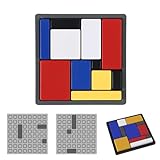
- Logic Puzzle Game for Children and Adults: This engaging puzzle game is suitable for all ages, offering a screen-free way to develop critical thinking and problem-solving skills. It's loved by children and trusted by educators.
- 88 Brain-Teasing Levels, 4 Difficulty Levels: Challenge yourself with 88 carefully designed puzzles, progressing from beginner to master level. Each level enhances critical thinking, logic and problem-solving abilities, ensuring continuous mental stimulation.
- Portable Set: This complete, portable puzzle game set includes 11 durable base puzzle pieces and a challenge booklet with illustrated puzzles, perfect for home, school, or friend gatherings, making fun accessible anywhere.
- Single-Player Brain Challenge Toy: These brain challenge toys are perfect for solo play and designed for ages 7 to 107! Ideal for independent play, family challenges, or group brain training. They inspire creativity, boost confidence, and provide hours of educational entertainment, keeping brains active and engaged.
- Developed by Educators, Classroom Tested: Developed in collaboration with educators and child development experts, this logic puzzle game is perfect for homeschooling, classroom centers, or family game nights, ensuring high-quality interactive learning time.
Which app is best for memory?
BrainHQ, Peak, Lumosity and CogniFit can all provide memory-task practice, but no app can honestly be called proven to improve everyday memory for everyone. Before choosing, check whether the exercises target working memory, recognition, recall or episodic memory; whether difficulty adapts; and whether the stimuli vary enough to discourage simple memorization.
Traditional matching games and memory puzzles are valid recreational alternatives. They can help users practice the specific demands of those games, but a better score should not be described as proof of improved medication management, remembering appointments or general intelligence.
Which app is best for attention and processing speed?
BrainHQ is the strongest evidence-led candidate for attention and processing-speed-style training, while Peak and Lumosity offer more accessible game-based alternatives. Some research programs have reported benefits beyond the trained exercise, particularly among older adults, but those results do not automatically apply to every commercial app or age group.
Fast reaction games also measure factors beyond attention, including eyesight, motor speed, device familiarity, fatigue and touchscreen accuracy. A person with visual, motor or language impairments may perform poorly because of the interface rather than because of a general attention problem.
Which app is best for reasoning and problem-solving?
Brilliant is best for structured learning, while chess, Go, logic puzzles and strategy games are best for sustained recreational problem-solving. Peak and Lumosity offer shorter abstract exercises, but repeated success in a mini-game is not the same as learning a transferable body of knowledge.
PC Slower Than It Used to Be?
A free scan shows the junk files, broken settings and background clutter dragging Windows down - then fixes them in one click.Free scan · Windows 10 & 11Outdated Drivers Are Slowing You Down
One free scan finds every outdated or missing driver and matches the right update for your exact hardware.Free scan · exact hardware matchChess and other strategy games can be excellent hobbies because they are engaging, social and sustainable. Observational links between puzzle activity and later cognitive outcomes do not prove that starting a particular game prevents cognitive decline.
What is best for older adults?
The best brain-training app for an older adult is the accessible program the person can use regularly without stress, confusing controls or misleading medical claims. BrainHQ is the evidence-first candidate, but usability and adherence should decide between otherwise reasonable options.
| Check before choosing | Why it matters |
|---|---|
| Large text and clear controls | Small text and complex gestures can make an otherwise suitable app unusable |
| Adjustable difficulty | Tasks should be challenging without becoming frustrating |
| Limited time pressure | Timed play can measure motor speed, eyesight or anxiety as well as cognition |
| Simple account recovery | Lost passwords and confusing accounts can end a routine |
| Clear cancellation | Free trials and annual subscriptions may renew automatically |
| Privacy controls | Cognitive results and health-related information deserve careful review |
How much should you practice?
Start with 10 to 15 minutes several days per week, then adjust according to enjoyment, fatigue and adherence rather than chasing a universal score target. This is a practical, non-medical starting point—not a proven prescription.
The 2024 review reported study durations ranging from two weeks to six months, with a median duration of eight weeks and a median schedule of three sessions per week lasting about 45 minutes. Those research schedules describe the studies; they should not automatically be treated as a consumer requirement.
- Choose one goal, such as vocabulary, processing speed or entertainment.
- Use a difficulty level that is challenging but not overwhelming.
- Track how often you practice and whether you enjoy it, not just the internal score.
- Switch activities if the routine becomes stressful, painful or compulsive.
- Combine digital play with sleep, physical activity, social engagement, reading and purposeful learning.
What are the best free alternatives?
Sudoku, crosswords, chess, Go, word games and logic puzzles are the best low-cost alternatives when the goal is enjoyable mental engagement. Reputable publishers, public libraries and free educational content can provide many options without committing to a subscription.
Free app tiers vary by country, device and date. A free download may contain only a small amount of content, advertisements or a trial that converts to a paid plan. Verify the current iOS or Android listing and the billing terms before calling an app “free.”
| Alternative | Best use | What not to claim |
|---|---|---|
| Sudoku | Number-pattern and logic entertainment | Guaranteed improvement in general reasoning |
| Crosswords and word games | Vocabulary retrieval and language enjoyment | Guaranteed protection against dementia |
| Chess and Go | Strategic thinking and social play | Proven prevention of cognitive decline |
| Logic and spatial puzzles | Focused problem-solving practice | Broad intelligence enhancement |
| Educational courses | Acquiring mathematics, language, science or programming knowledge | Automatic transfer to every cognitive domain |
What should you check before paying?
- Price and billing interval: Record the currency, platform, monthly or annual term and date checked. Prices and promotions change by country and store.
- Trial renewal: Confirm whether a free trial automatically renews and where cancellation must occur.
- Subscription location: Apple and Google subscriptions generally need to be managed through the platform used to subscribe; verify the exact instructions in the account settings.
- Free-tier limits: Check daily exercise limits, advertising, locked lessons and whether web and mobile access differ.
- Privacy: Read what cognitive results, health information, identifiers, advertising data and analytics the service collects, and how account deletion works.
- Accessibility: Check text size, color contrast, audio, timing, gestures, keyboard or mouse support and offline availability.
- Purpose: Confirm whether the product is entertainment, education, general cognitive practice or a clinician-supported tool.
Do not transfer a price from one app store, country or billing period to another. Current pricing for BrainHQ, Elevate, Peak, CogniFit, Lumosity and Brilliant was not reliably exposed in this research pass, so this article does not publish stale price claims.
When should you speak with a clinician?
Speak with a qualified clinician about new or worsening memory or thinking problems instead of using an app score as a diagnosis. Cognitive symptoms can have many causes, including sleep problems, medication effects, mood disorders and neurological conditions. A consumer app cannot determine which cause applies.
Recommended Free Tools
People seeking help for stroke, traumatic brain injury, ADHD, Parkinson’s disease, multiple sclerosis, cancer-related cognitive symptoms or mild cognitive impairment should ask a clinician whether a particular app is appropriate. Do not use ordinary brain-training apps as a substitute for medical assessment, treatment or rehabilitation.
Final recommendations by reader goal
| If you want… | Start with… | Keep your expectations realistic |
|---|---|---|
| The strongest evidence-led option | BrainHQ | Evidence is strongest for particular tasks and populations, not universal brain improvement |
| Language and practical communication practice | Elevate | Practice a relevant skill without assuming far transfer |
| Variety and daily game play | Peak | Enjoyment and adherence are the main advantages; independent evidence is limited |
| Personalized or assessment-oriented features | CogniFit | Clinical framing does not make the app a diagnosis or treatment |
| A familiar general brain-game library | Lumosity | Brand recognition is not equivalent to the strongest evidence |
| Actual mathematics, logic or programming learning | Brilliant | Judge progress by knowledge and skills learned, not a brain-health promise |
| Inexpensive, social entertainment | Sudoku, crosswords, chess, Go and logic games | Enjoyment is well supported; dementia prevention is not established |
Frequently Asked Questions
Can brain-training apps prevent dementia?
No. Ordinary consumer brain-training apps have not been established as dementia-prevention tools. Some structured programs show improvements in particular trained abilities or specific populations, but that evidence does not prove prevention of dementia or Alzheimer’s disease.
What is the best brain training app for older adults?
BrainHQ is the best evidence-first candidate for older adults, particularly for structured processing-speed-style training. The best practical choice is the accessible program the person will use consistently, with readable text, adjustable difficulty and clear subscription terms.
Are free brain-training apps really free?
Not necessarily. A free download may provide limited exercises, advertisements or a trial that automatically renews into a paid subscription. Check the current app-store listing, trial terms, billing interval and cancellation method for your country and device.
Can an app diagnose memory loss?
No. An app score cannot diagnose memory loss or identify its cause. New or worsening cognitive symptoms should be discussed with a qualified clinician, especially when the person has a neurological condition or is seeking rehabilitation.
The Bottom Line
Choose the best brain training apps and games 2024 by purpose, not by the biggest promise. BrainHQ is the evidence-led starting point, Elevate suits language practice, Peak suits variety, CogniFit suits assessment-oriented users, Brilliant suits learning, and traditional puzzles suit low-cost entertainment. Use any of them as structured practice or a hobby—not as a proven way to raise intelligence, replace medical care or prevent dementia.
Quick Recap
Product prices and availability are accurate as of the date/time indicated and are subject to change. Any price and availability information displayed on Amazon at the time of purchase will apply.

