
iTechGuides is reader-supported. When you buy through links on our site, we may earn an affiliate commission. As an Amazon Associate I earn from qualifying purchases. Learn more
The AMD Radeon RX 7700 XT is the strongest like-for-like alternative when its local price is reasonably close to the Intel Arc B580 and you want more native-raster performance. The NVIDIA GeForce RTX 4060 Ti is the practical Nvidia ecosystem choice, but its 8GB model gives up memory headroom to the B580. The GeForce RTX 4070 belongs in a higher budget tier for heavier 1440p settings and stronger ray tracing rather than as a same-price replacement.
What the Intel Arc B580 sets as the baseline
The Arc B580 is a 1440p-oriented graphics card whose appeal comes from combining 12GB of memory with an aggressive launch price. Intel announced a $249 launch price in 2024. In Intel’s own launch-MSRP testing at 1440p Ultra, the company reported 132% of the value of the GeForce RTX 4060 and 123% of the value of the Radeon RX 7600. Those percentages are vendor-selected results, not an independent industry-wide benchmark, so use them as context for Intel’s positioning rather than a guarantee for every game.
Intel’s launch brief also reported that the B580 was 24% faster than the Arc A750 across selected 1440p Ultra games. Independent testing from GamersNexus placed the B580 in a competitive 1440p class and compared it directly with the RTX 4060 Ti and RX 7700 XT. In that review’s pricing context, the competing cards were about 60% more expensive, at roughly $400. Prices change by country, retailer, stock level and sales period, so that historical comparison should not be treated as a current quote.
TechSpot recorded a 41-frame-per-second result for the B580 in one demanding 1440p test, where it was nearly 60% faster than the RTX 4060. That is a workload-specific result; it does not predict the gap in every title. Game engine, graphics API, driver version, ray-tracing settings and the chosen quality preset can all change the ranking.
#1 Best Overall
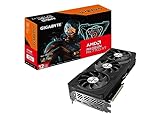
- Powered by Radeon RX 7700 XT
- Integrated with 12GB GDDR6 192-bit memory interface
- WINDFORCE cooling system, RGB Fusion, Protection metal backplate
The right alternative therefore depends on what you are trying to improve. If you want a clear native-raster step up without moving into a premium class, start with the RX 7700 XT. If Nvidia software, ray-tracing behavior or application compatibility is more important than memory capacity, examine the RTX 4060 Ti carefully. If you can spend substantially more for additional 1440p headroom, the RTX 4070 is the relevant upgrade tier.
Quick comparison
| GPU | Position against the B580 | VRAM stated in the available evidence | 1440p native raster | Ray tracing | Price evidence | Best fit |
|---|---|---|---|---|---|---|
| Intel Arc B580 | Baseline | 12GB | Competitive 1440p class; results vary by game | Game- and setting-dependent; no cross-card figure established here | $249 launch price in 2024; current street price not stated | Value-focused 1440p buyers who want 12GB |
| Radeon RX 7700 XT | Like-for-like performance upgrade | 12GB | Intended as a meaningful step above the B580 when priced reasonably higher | Compare in the games you play; no single aggregate figure established here | Current local price not stated; GamersNexus review context was about $400 | Higher raster performance without jumping to the RTX 4070 tier |
| GeForce RTX 4060 Ti | Close Nvidia alternative | 8GB or 16GB, depending on model | Competitive class; exact advantage varies by title and settings | Nvidia’s ecosystem may matter for your games and applications; no universal ranking established here | Current local price not stated; historical comparison context was about $400 for competing cards | Buyers prioritizing Nvidia features or compatibility |
| GeForce RTX 4070 | Higher-budget upgrade | Not stated in the available evidence | More 1440p headroom than the alternatives listed above | Stronger choice for demanding ray-traced settings | Current local price not stated | Higher settings, higher refresh targets and longer upgrade intervals |
The table separates established facts from decisions that require current local listings and game-specific testing. Do not choose from a price label alone: compare the complete card, including cooler design, warranty, power requirements and physical dimensions.
Radeon RX 7700 XT: the closest performance alternative
Why it is the first card to check
The RX 7700 XT is the most direct alternative when your goal is more conventional, or rasterized, 1440p performance. It keeps the same 12GB memory capacity stated for the B580 while moving into the higher performance tier identified in the testing comparisons. That makes it easier to reason about than an 8GB card if you expect to keep modern texture settings enabled.
Windows Errors? Fix Them Before They Spread
Repair common Windows errors and clear accumulated junk for a smoother, more stable PC - no reinstall needed.Free scan · no reinstallOutdated Drivers Are Slowing You Down
One free scan finds every outdated or missing driver and matches the right update for your exact hardware.Free scan · exact hardware matchIts purchase case is entirely price-sensitive. A modest premium can be sensible when it buys a visible frame-rate increase in the games you play; a large premium may push you toward the RTX 4070 instead. Because the supplied evidence does not establish a current street price, use the price on the day you buy and calculate the premium over the B580 in your region.
What to compare before paying more
- Native-raster averages: Look for results at your intended resolution and quality preset, not 1080p figures that may hide the difference between cards.
- One-percent lows: Average frames per second do not show every hitch. If a review reports lows, check whether the RX 7700 XT keeps frame delivery steadier in your games.
- Ray tracing: A raster advantage does not automatically become a ray-tracing advantage. Use tests with the exact effects you plan to enable.
- Power and cooling: Compare the board’s recommended power supply, connector arrangement, cooler thickness and exhaust pattern with your case and power supply.
- Local warranty: A discount is less attractive if return shipping or warranty service is difficult in your country.
When the RX 7700 XT is the better buy
Choose it when your library is mostly raster-heavy games, the local premium over the B580 is acceptable, and you want to retain 12GB of memory. It is also a logical choice if you are replacing an older card and want a clear step up without paying for the RTX 4070 class.
When to keep the B580 instead
Keep the B580 on your shortlist when its local price is substantially lower, your monitor is 1440p at a moderate refresh target, and you are comfortable checking game-specific benchmarks. The B580’s 12GB capacity can be more useful than a small theoretical speed advantage from a card with less memory, especially when a game’s texture preset approaches an 8GB limit.
GeForce RTX 4060 Ti: the Nvidia ecosystem option
Choose the memory version deliberately
The RTX 4060 Ti is sold in both 8GB and 16GB configurations. The 8GB model has less memory headroom than the B580’s 12GB, while the 16GB model changes the price calculation and may not deliver a proportional performance increase in every title. Treat the two capacities as separate buying decisions rather than assuming the larger model is automatically better value.
Before choosing the 8GB card, check the games you actually play at 1440p and the texture settings you want to use. If a title already approaches the card’s memory limit, reducing textures or other memory-heavy options can undermine the reason for buying a faster GPU. If the 16GB model costs close to a faster alternative, compare complete benchmark data instead of paying solely for capacity.
Why Nvidia-specific features can outweigh raw frames
Nvidia’s software ecosystem may be decisive if your games, creative applications or streaming workflow depend on it. Upscaling and frame-generation support can alter the experience in supported titles, but those features are not interchangeable with native rendering: latency, image quality and game support differ. Evaluate the games you play rather than assuming a feature appears everywhere.
Ray-tracing behavior is another reason some buyers accept a narrower memory configuration. If you routinely enable demanding ray-traced effects, compare results at the exact preset you intend to use. A card that looks close in native raster may behave differently once those effects and an upscaler are enabled.
Rank #2

- Powered by Radeon RX 9070 XT
- WINDFORCE Cooling System
- Hawk Fan
- Server-grade Thermal Conductive Gel
- RGB Lighting
When the RTX 4060 Ti makes sense
- You need Nvidia-specific software or application compatibility.
- Your most-played games have strong support for the features you intend to use.
- The local price is close enough to the B580 or RX 7700 XT to justify the trade-offs.
- You have verified that the selected 8GB or 16GB capacity suits your settings.
If none of those conditions applies, compare the RX 7700 XT’s raster performance and the B580’s 12GB capacity before paying an Nvidia premium.
GeForce RTX 4070: a higher-budget 1440p upgrade
Why it is not a same-price substitute
The RTX 4070 belongs in a higher spending tier. It is appropriate when the B580, RX 7700 XT and RTX 4060 Ti do not provide enough headroom for your target refresh rate, quality settings or ray-traced effects. Calling it an alternative without acknowledging the price step can lead to a misleading comparison.
Who should move up to it
Consider the RTX 4070 if you are building around a high-refresh 1440p display, want to leave more performance margin for demanding releases, or prioritize ray tracing enough to pay for the upgrade. The extra budget may also be rational if you keep graphics cards for several years and would otherwise replace a less capable card sooner.
Check the rest of the system
A higher-tier GPU does not fix a processor bottleneck at high frame rates. Confirm that your CPU, memory configuration and game settings can feed the card at your target refresh rate. Also verify the power supply, connector layout and case clearance for the exact board partner model; these details can differ even within one GPU family.
How to compare 1440p performance fairly
Use native-raster results for the baseline
Native raster testing renders the game without an upscaler or frame-generation layer. It is the cleanest way to compare the underlying GPU performance. Match resolution, quality preset, texture setting, API and driver version whenever possible. A result from one demanding game, such as the 41-fps B580 measurement reported by TechSpot, is useful evidence for that workload but cannot stand in for an entire game library.
The Tool Desk
Outbyte Driver Updater FREEScan for outdated or missing drivers - takes under a minuteDriver Scan →Outbyte PC Repair FREERepair Windows errors before they cause bigger problemsFix Now →Read one-percent lows with the average
The average frame rate describes throughput; one-percent lows help reveal dips during traversal, combat or shader compilation. A card with a slightly lower average but steadier lows can feel better than a card that wins the average and stutters. Not every review publishes identical low-frame metrics, so compare like with like.
Separate raster and ray tracing
Ray tracing adds a different workload. Keep a separate column in your notes for ray-traced tests and record whether an upscaler or frame generation was enabled. Do not combine a native-raster score from one card with an upscaled ray-tracing score from another.
Account for drivers and APIs
Graphics APIs and driver maturity can change the order between cards. Intel, AMD and Nvidia may show different results in DirectX or Vulkan titles, and a game update can alter performance after a review is published. Give more weight to tests that include several games similar to your own library and that identify driver versions.
Memory capacity and texture settings
The B580 and RX 7700 XT are identified with 12GB of VRAM. The RTX 4060 Ti is available with either 8GB or 16GB. Capacity is not a substitute for GPU speed, but it determines how much room you have for high-resolution textures, large worlds and future updates before you must lower a setting.
Do these 3 things before closing this tab:
1Clear out junk files and repair common Windows errors2Scan for outdated or missing drivers - takes under a minute3Repair Windows errors before they cause bigger problemsWhen a game reports high memory use, distinguish allocated memory from an actual performance problem. A title may reserve available VRAM without needing all of it. The practical test is whether frame-time spikes, texture pop-in or forced setting reductions occur at your chosen resolution. Use reviews that test the same game and preset rather than relying on a specification sheet alone.
Rank #3

- Axial-tech fans now feature a smaller fan hub that facilitates longer blades and a barrier ring that increases downward air pressure
- Phase-change GPU thermal pad helps ensure optimal heat transfer, lowering GPU temperatures for enhanced performance and reliability
- 2.5-slot design allows for greater build compatibility while maintaining cooling performance
- Dual-ball fan bearings last up to twice as long as standard conventional sleeve bearings designs
- 0dB technology lets you enjoy light gaming in relative silence
If you are deciding between the two RTX 4060 Ti capacities, compare the complete system price and the benchmarks for your games. The 16GB version can remove a capacity constraint, but the value depends on its premium and on whether the GPU core can render your selected settings fast enough.
Independent reader supportYour contribution helps us test, update, and keep practical guides available for everyone.Power, thermals and physical fit
Exact power draw, temperatures and connector counts vary by board design, and the available evidence does not provide a single comparable figure for these cards. Check the manufacturer specification for the exact model you intend to purchase rather than applying a number from a different cooler or factory-overclocked version.
Power-supply checklist
- Confirm the card’s recommended power-supply capacity and required connectors.
- Check that your supply has dedicated cables where the manufacturer requests them; avoid relying on a marginal adapter arrangement.
- Leave headroom for the CPU, storage, fans and transient loads instead of matching the GPU number exactly.
- Inspect the age and quality of an existing supply before carrying it into a new build.
Case and motherboard checklist
- Measure maximum GPU length with front radiators, drive cages and front fans installed.
- Count the card’s slot thickness and leave space for adjacent expansion cards.
- Ensure the power connector can bend without pressing against the side panel.
- Provide front-to-back airflow so the cooler can exhaust heat instead of recycling it.
Thermal expectations
Two cards using the same GPU can have different temperatures and noise because of heatsink size, fan curves, case airflow and ambient room temperature. Compare independent measurements taken under a documented gaming load, and check noise as well as peak temperature. A quieter card may be worth a small premium if your computer is near your desk.
What’s actually slowing this PC down?
Pick the symptom - the matching free tool is one click away.
Upscaling, frame generation and compatibility
Upscaling renders internally below the output resolution and reconstructs the image, while frame generation inserts generated frames between rendered frames. Both can raise displayed frame rates in supported games, but they do not erase the underlying rendering cost or input latency. Record whether a benchmark uses native output, upscaling, frame generation or a combination.
Feature support is game-specific. Check the game’s current graphics menu and the GPU vendor’s support documentation before assuming a mode is available. If you play a narrow set of titles, give their support more weight than a broad feature list.
Driver and game compatibility should be evaluated over the applications you actually run. Read reports that identify the driver version, API and game build, and look for recurring issues rather than a single anecdote. Keeping a rollback option for a recently updated driver can help when a new release introduces a problem, but use the vendor’s documented installation and recovery process.
A buying process that works with local pricing
- Set the real budget: Include the card, shipping, tax, possible power-supply replacement and any return-cost risk.
- Record the B580 price: Use an in-stock listing from a retailer that serves your location. The $249 figure is the 2024 launch price, not a current worldwide price.
- Calculate each premium: Write the RX 7700 XT, RTX 4060 Ti 8GB, RTX 4060 Ti 16GB and RTX 4070 prices beside the B580 rather than comparing MSRP labels from different years.
- Match your games: Gather 1440p native-raster and ray-tracing results for the titles you play most.
- Choose memory deliberately: Decide whether 8GB, 12GB or 16GB fits your texture and longevity expectations.
- Verify the exact model: Check dimensions, slot thickness, connectors, recommended power supply, warranty and return policy.
- Recheck stock at checkout: A sale price, rebate or marketplace listing may disappear or carry different warranty terms.
Decision guide by buyer type
You want the best value near the B580 class
Start with the RX 7700 XT. Buy it when the local premium is reasonable and independent tests show the games you play benefiting from its higher raster tier. If the premium is large, the B580 may deliver the better balance because both cards have 12GB in the supplied specifications.
Free tools Windows power users keep installed
One-click scans. No signup required.
You want Nvidia features first
Compare both RTX 4060 Ti capacities and select the one that fits your software and memory needs. Do not let an 8GB model win solely because its sticker price is lower if your target games already pressure that capacity.
You want a substantial upgrade and can spend more
Move to the RTX 4070 when the budget supports it and your monitor or settings justify the additional headroom. Treat the purchase as an upgrade tier, then verify system power and case clearance.
You are replacing an older card on a tight budget
Keep the B580 in contention. Its 12GB memory and $249 launch positioning explain why it remains a useful reference point even when alternatives appear faster. Compare current sale prices and game-specific results before assuming a more expensive card is automatically a better experience.
Common mistakes to avoid
- Using launch prices as current prices: The B580’s $249 figure is historical launch MSRP. Retail prices must be checked locally and on the purchase date.
- Generalizing one benchmark: The 41-fps and nearly 60% gap reported in one TechSpot test describe that workload, not every game.
- Ignoring memory capacity: The RTX 4060 Ti 8GB, 16GB and the 12GB B580 or RX 7700 XT are not interchangeable choices.
- Mixing test methods: Native, upscaled and frame-generated results should not be placed in one ranking without labels.
- Buying by GPU name alone: Board length, thickness, connectors, cooler and warranty differ by manufacturer.
- Forgetting the monitor: A 60Hz display may not expose the value of a much faster card, while a high-refresh 1440p panel can justify more headroom.
- Assuming ray tracing follows raster performance: Test the effects and preset you will actually use.
Final recommendation
For most shoppers seeking an alternative to the Intel Arc B580 at 1440p, check the Radeon RX 7700 XT first and buy it when the local price premium is justified by your games. Choose the GeForce RTX 4060 Ti when Nvidia-specific software, ray-tracing behavior or application compatibility matters more than the B580’s 12GB-versus-8GB memory advantage, and compare the 16GB version separately. Choose the GeForce RTX 4070 when you are deliberately moving to a higher performance tier for demanding settings or stronger ray tracing. Keep the B580 as the value benchmark: its 12GB capacity and 2024 launch price are meaningful, but today’s decision must be based on current local listings and matched 1440p tests.
Recommended Free Tools
Quick Recap
Product prices and availability are accurate as of the date/time indicated and are subject to change. Any price and availability information displayed on Amazon at the time of purchase will apply.

