
iTechGuides is reader-supported. When you buy through links on our site, we may earn an affiliate commission. As an Amazon Associate I earn from qualifying purchases. Learn more
If your NAS has a 2.5-inch SATA bay, the closest current enterprise replacements are Kingston DC600M and Samsung PM893a. Both publish 1 DWPD endurance for five years, and both include power-loss safeguards; the 1.92TB DC600M is rated for 3,504 TBW. Micron’s 5400 family is the alternative when you need a lighter PRO endurance tier or a MAX tier rated up to 5 DWPD. Confirm the NAS interface, carrier, sector format and power-loss-protection requirements before ordering, because a physically similar SAS or NVMe drive will not work in a SATA slot.
What the discontinued PM1733 tells you about the replacement
Samsung lists the PM1733 as discontinued. It was a 2.5-inch enterprise SSD family with capacities from 1.92TB through 15.36TB and a published endurance rating of 1 drive write per day (DWPD) for five years. That rating is the useful baseline for a replacement, but the model name alone does not prove that your particular PM1733 installation was SATA: enterprise families can appear in different interface variants. Read the label, NAS documentation and controller information before assuming that a SATA replacement is electrically compatible.
For a homelab, the replacement target is not simply “an SSD that fits.” It is a drive with the same interface class, a suitable endurance rating for the workload, predictable firmware and seller support, and protection against data loss when power fails during a write.
Do these 3 things before closing this tab:
1Repair Windows errors before they cause bigger problems2Fix the driver behind crashes, sound loss and screen glitches3Clear out junk files and repair common Windows errorsCheck compatibility before comparing models
- Identify the controller and backplane interface. Confirm whether the bay is SATA, SAS or NVMe. A SATA SSD requires a SATA path; a SAS controller or NVMe backplane requires a matching drive and protocol. A 2.5-inch enclosure by itself does not establish compatibility.
- Verify the physical carrier. Check the required 2.5-inch height, mounting holes, caddy or tray, hot-swap mechanism and connector position. Some NAS trays accept only a particular height or require a drive carrier for the activity light and retention system to work.
- Match the array layout. Choose a capacity that fits the existing RAID group, mirror or ZFS vdev plan. Replacing one member with a smaller usable capacity can prevent a rebuild. If you are creating a new pool, keep the same capacity class across members unless your NAS documentation explains how mixed sizes are handled.
- Check sector format. Do not mix unknown sector formats in one array. Confirm the NAS documentation and the drive’s specification for logical and physical sector size before deployment, especially when combining old pulls with new stock.
- Confirm firmware and support terms. Ask the seller for the current firmware revision, exact model suffix, return period and warranty terms. Enterprise drives can have firmware variants intended for a particular OEM platform.
Current SATA enterprise replacement classes
| Drive or tier | Interface and form factor | Endurance published | Power-loss and data protection | Capacity or performance figures | Warranty and sustained-latency information |
|---|---|---|---|---|---|
| Kingston DC600M | 2.5-inch SATA | 1 DWPD for five years; the 1.92TB model is rated at 3,504 TBW | Hardware power-loss protection and enterprise SMART monitoring are listed in Kingston’s datasheet | Capacity range is not stated in the supplied specification summary | Warranty duration and sustained-latency figures are not stated in the supplied specification summary |
| Samsung PM893a | 2.5-inch SATA 6.0Gb/s | 1 DWPD for five years | Samsung describes end-to-end data protection and power-loss safeguards | Up to 7.68TB; sequential performance up to 560MB/s read and 530MB/s write | Warranty duration and sustained-latency figures are not stated in the supplied specification summary |
| Micron 5400 PRO | Data-center SATA; verify the exact SKU’s 2.5-inch form factor and carrier requirements | PRO is the lower-endurance tier in Micron’s 5400 portfolio; a DWPD figure is not stated in the supplied summary | Power-loss-protection details are not stated in the supplied summary, so verify the SKU before using it for write-back or synchronous workloads | The 5400 family is specified at a 3-million-hour MTTF; capacity and throughput depend on the SKU | Warranty and sustained-latency figures are not stated in the supplied specification summary |
| Micron 5400 MAX | Data-center SATA; verify the exact SKU’s form factor and carrier requirements | Up to 5 DWPD for the MAX endurance tier | Power-loss-protection details are not stated in the supplied summary; confirm them in the SKU documentation | The 5400 family is specified at a 3-million-hour MTTF; capacity and throughput depend on the SKU | Warranty and sustained-latency figures are not stated in the supplied specification summary |
The DC600M and PM893a are the clearest like-for-like choices when you need a 2.5-inch SATA data-center drive with a published 1-DWPD, five-year rating and documented power-loss features. Micron’s 5400 is a portfolio rather than one endurance level: PRO is aimed at lighter write duty, while MAX is designed for write-heavy use and is listed at up to 5 DWPD. Treat MTTF as a statistical reliability metric, not as a service-life promise or a guarantee that a particular drive will run for three million hours.
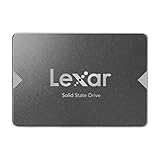
#1 Best Overall

- High-Efficiency Performance: The SSD 1TB SATA adopts 3D NAND flash memory, which achieves a read speed of up to 560MB/s and a write speed of up to 510MB/s. Get a faster data transfer experience and improve your work efficiency.
- Upgrate Your Computer: The SATA 1TB SSD achieved faster app load and response times, and faster boot-up and shut-down, compared to HDDs. The internal SSD adopts advanced SLC Cache Technology, which improves overall computer performance.
- Reliability and Stability: The 2.5 SSD 1TB supports garbage collection, advanced wear-leveling technology, RAID, ECC, TRIM, and S.M.A.R.T, which makes the SATA SSD more reliable and stable. With the characteristics of shockproof, the SSD hard drive can keep your data safe, without worry even if your computer drops.
- Wide Compatibility: The 2.5'' SSD built-in SATA III 6Gb/S interfaces, witch backwards compatible with SATA II and SATA interfaces. The Internal SATA SSD is compatible with Windows, Linux, and Mac OS, and compatible with laptops, desktops, and all-in-one computers.
- 3-Year Service: Our SSDs come with a 3 years after-sales service and lifetime technical support. If you have any questions, please contact us and we will sincerely and professionally solve the problem for you.
Choose by NAS workload, not by sequential benchmark alone
Read-mostly media and backup storage
A media library, photo archive or backup target usually writes in bursts and then serves reads. A lower endurance tier can be adequate when the NAS is not constantly rewriting data. Micron’s 5400 PRO can fit this pattern if the exact model’s protection features and form factor meet your requirements. Keep backups independent of the NAS pool; endurance suitability does not protect against deletion, filesystem damage or a failed array.
NAS cache
Cache behavior changes the risk calculation. A read cache mostly absorbs reads, while a write-back cache can acknowledge data before it reaches the main pool. For write-back use, require hardware power-loss protection and verify how the NAS flushes and barriers writes. A drive with no documented PLP should not be treated as safe merely because it is labeled enterprise.
Databases, containers and synchronous workloads
Databases and container volumes can generate frequent small, synchronous writes. Prioritize documented PLP, end-to-end data protection and a higher endurance class. The DC600M and PM893a publish the relevant protection features and 1 DWPD for five years. If you select a 5400 MAX, confirm that the specific SKU provides the protection behavior your controller expects; the portfolio summary alone does not establish it.
Virtual-machine datastores
VM boot disks, snapshots and swap files can create sustained mixed writes and latency-sensitive bursts. Use the same selection logic as for databases: match the interface first, then choose the higher endurance tier and documented PLP. Do not infer sustained latency from the sequential figures in a product sheet; the supplied specifications do not state sustained-latency results for these candidates.
Rank #2

- THE SSD ALL-STAR: The latest 870 EVO has indisputable performance, reliability and compatibility built upon Samsung's pioneering technology. S.M.A.R.T. Support: Yes
- EXCELLENCE IN PERFORMANCE: Enjoy professional level SSD performance which maximizes the SATA interface limit to 560 530 MB/s sequential speeds,* accelerates write speeds and maintains long term high performance with a larger variable buffer, Designed for gamers and professionals to handle heavy workloads of high-end PCs, workstations and NAS
- INDUSTRY-DEFINING RELIABILITY: Meet the demands of every task — from everyday computing to 8K video processing, with up to 600 TBW** under a 5-year limited warranty***
- MORE COMPATIBLE THAN EVER: The 870 EVO has been compatibility tested**** for major host systems and applications, including chipsets, motherboards, NAS, and video recording devices
- UPGRADE WITH EASE: Using the 870 EVO SSD is as simple as plugging it into the standard 2.5 inch SATA form factor on your desktop PC or laptop; The renewed migration software takes care of the rest
Why power-loss protection and end-to-end protection matter
When power disappears during a write, an SSD may have data in volatile buffers or in the middle of a flash translation update. Hardware PLP is designed to give the drive enough stored energy to complete protected housekeeping and flush acknowledged data. End-to-end data protection adds checking across the path from the host to NAND so corrupted data can be detected rather than silently committed.
These features matter most when the NAS is acknowledging synchronous writes, running a database, hosting VMs or using a write-back cache. They do not replace an uninterruptible power supply, filesystem checksums, snapshots or backups. A UPS reduces the number of abrupt outages; PLP reduces the drive-level risk when an outage still occurs.
Understand DWPD and TBW before sizing endurance
DWPD means the amount of the drive’s advertised usable capacity that can be written each day during the stated rating period. A 1-DWPD, five-year rating is a workload specification, not a promise that the SSD will fail on the first byte after the limit. TBW expresses the same idea as a total amount of host writes. Kingston’s 1.92TB DC600M, for example, is listed at 3,504 TBW while also carrying the 1-DWPD, five-year rating.
The Tool Desk
Outbyte Driver Updater FREEFix the driver behind crashes, sound loss and screen glitchesFind Drivers →Outbyte PC Repair FREEClear out junk files and repair common Windows errorsFree Scan →Use the rating to compare your measured write workload with the candidate’s class. Include scheduled scrubs, snapshots, replication, VM snapshots, database logs, downloads and cache churn, not just the size of files copied by users. Write amplification inside the NAS and SSD means host writes are not the entire NAND workload, so leave headroom rather than sizing exactly to the average.
Rank #3

- SPEED UP COMPUTER: The fanxiang 1TB SSD 2.5 Inch SATA SSD achieves blazing read and write speeds of 520MB/s, facilitating rapid file and data transfers
- UPGRADE YOUR COMPUTER: Compared to HDDs, the 1TB SATA SSD boots up at least 50% faster, enabling instant productivity or gaming sessions
- LONG-LASTING DURABILITY: The 2.5 SATA SSD 1TB incorporates 3D NAND TLC chips, offering a longer lifespan in writes compared to QLC, ensuring a more reliable data storage solution
- EXTENSIVE COMPATIBILITY: The S101 1TB SATA III SSD is compatible with desktops, laptops, all-in-one PCs, supporting various operating systems like Windows, Linux, and Mac OS, meeting the needs of diverse devices
- 3-Year Service: Fanxiang S101 1TB SSD solid state drive provides 3 years after-sales service and lifetime technical support. If you have any questions, please contact us and we will sincerely and professionally solve the problem for you
Do not convert the PM1733’s 1-DWPD figure into a universal TBW number without its exact capacity. The total writes scale with capacity, and the published figure applies to the specified five-year period. Likewise, “up to 5 DWPD” describes the 5400 MAX tier’s upper endurance class; it does not mean every 5400 model has that rating.
A purchase and installation workflow that avoids common mistakes
- Record the existing drive. Write down the model, interface, capacity, firmware revision and the NAS slot in which it is installed. If the old drive is a PM1733, confirm its interface from the NAS controller rather than relying on the family name.
- Measure real writes. Use the NAS’s storage or pool statistics to estimate daily host writes over several weeks. Separate read cache from write-back cache and include maintenance jobs. If you cannot measure yet, classify the workload conservatively as mixed or write-heavy.
- Set a minimum endurance class. For read-mostly storage, a lower tier may be sufficient. For cache, databases, containers and VMs, start with a documented 1-DWPD enterprise model or a higher tier such as 5400 MAX, then verify PLP and the exact SKU.
- Verify the part number with the seller. Enterprise SSD names can cover multiple capacities and firmware revisions. Request a photograph or listing that shows the complete model suffix, capacity, interface and firmware family. Confirm that the seller is an authorized channel or provides a clear return policy for tested pulls.
- Check array capacity and sector format. Ensure the replacement’s usable capacity is not smaller than the member it replaces and that sector formatting is compatible with the pool.
- Update NAS firmware first when practical. A current NAS firmware can contain drive-compatibility fixes. Follow the NAS vendor’s documented process and keep a configuration backup before changing the pool.
- Install one drive and test it. In a redundant pool, replace or add one device according to the NAS procedure. Confirm that the controller identifies the expected capacity and interface before starting a rebuild.
- Run health checks. Review SMART health, percentage used, power-on hours, media errors and the endurance counter. Start a short and extended diagnostic if the NAS offers both, then monitor the rebuild rather than assuming a successful insertion proves the drive is healthy.
- Observe the pool after the rebuild. Watch temperature, media errors, latency and endurance consumption during normal workload and scheduled maintenance. Keep alerts enabled for rising error counts or a sudden change in percentage used.
Buying used enterprise pulls
Used enterprise SSDs can be attractive when a discontinued capacity is hard to find, but the label does not reveal remaining life. A pull may have unknown write history, power-on hours, firmware intended for an OEM system or a warranty that is not transferable. Seller provenance is therefore part of the specification.
- Request SMART output or a screenshot showing percentage used, unsafe shutdowns, media errors, total host writes and power-on hours.
- Ask whether the drive was secure-erased and whether its firmware can be updated with the standard vendor tool.
- Confirm the exact capacity, interface, sector format and carrier compatibility rather than accepting a generic “enterprise SATA” description.
- Get the return period and warranty in writing. A seller’s test guarantee is not the same as a manufacturer warranty.
- Reject listings that hide the model suffix, report zeroed SMART data without explanation or cannot state the source system and firmware history.
For a homelab pool that stores irreplaceable data, a new drive with traceable channel provenance can cost less than troubleshooting an undocumented pull after a rebuild has already started.
What’s actually slowing this PC down?
Pick the symptom - the matching free tool is one click away.
Can a consumer SSD replace an enterprise SATA SSD?
It can be electrically compatible if it is the correct SATA interface, 2.5-inch size and sector format, but compatibility is not equivalence. Consumer models may lack hardware PLP, publish lower or no enterprise DWPD rating, expose fewer health counters and receive firmware support intended for desktop burst workloads. Those differences are most important for write-back cache, synchronous database writes and VM datastores.
Rank #4

- Boot up faster. Load files quicker. Improve overall system responsiveness
- 300% faster than a typical hard drive
- Improves battery life because it’s 45x more energy efficient than a typical hard drive
- Micron 3D NAND – advancing the world's memory and storage technology for 40 years
- Crucial 3-year limited warranty
A consumer SSD is a reasonable risk trade-off only for noncritical, mostly-read storage or a disposable scratch workload, with backups and a cache mode that does not acknowledge data before it is safely stored. For anything that must survive an outage without losing acknowledged writes, choose a model with documented PLP and endurance appropriate to the measured workload.
Failure modes and practical fixes
The NAS does not see the replacement
Recheck SATA versus SAS versus NVMe, the caddy connection, drive height and the controller’s supported capacities. If the old drive was a different interface variant of the same family, a matching model name will not make the new drive work.
The drive appears but the pool will not accept it
Check usable capacity, sector format and metadata expectations. A nominally equal-capacity drive can have fewer usable sectors, and a sector-format mismatch can prevent admission to a RAID or ZFS layout.
Quick wins for a faster PC:
Clear out junk files and repair common Windows errorsFree Scan →Fix the driver behind crashes, sound loss and screen glitchesFind Drivers →Rebuilds are unexpectedly slow
Look for thermal throttling, a degraded source member, controller limits and concurrent scrub or backup jobs. The published sequential figures for PM893a are peak values, not a guarantee of rebuild speed or sustained latency.
Best Value
- Upgrade your laptop or desktop computer for faster startups, data transfers, and application loads
- Sequential read speeds of up to 550MB/s
- Faster performance and more reliable than traditional hard drives
- Shock and vibration resistant with no moving parts
- [1TB] 480TBW
SMART shows high percentage used
Stop treating the drive as new. Record the counter, compare it with the drive’s endurance rating and evaluate the seller’s return terms. A used enterprise pull with little remaining life should not become the only copy of a dataset.
Writes are acknowledged but data is lost after an outage
Review the NAS cache mode, UPS event logs and the drive’s documented PLP behavior. If PLP is not established for the exact SKU, disable write-back or move the workload to a drive with documented protection before trusting synchronous applications.
Final selection checklist
- Interface is confirmed as SATA, SAS or NVMe and matches the controller.
- 2.5-inch height, tray, hot-swap and connector requirements are verified.
- Capacity and sector format fit the RAID or ZFS layout.
- Endurance class matches measured writes, including cache and maintenance amplification.
- Hardware PLP and, where needed, end-to-end protection are documented for the exact model.
- Firmware, SMART counters, seller provenance and return or warranty terms are known.
- Temperature, media errors and endurance counters will be monitored after installation.
Use Micron’s official cross-reference tool when you need to map a discontinued part to current families from Micron, Samsung, Solidigm, Western Digital, Kingston and other vendors. Treat its results as a starting point, then verify the exact NAS interface, SKU documentation and seller terms before purchase.
Free tools Windows power users keep installed
One-click scans. No signup required.
Quick Recap
Product prices and availability are accurate as of the date/time indicated and are subject to change. Any price and availability information displayed on Amazon at the time of purchase will apply.

