
iTechGuides is reader-supported. When you buy through links on our site, we may earn an affiliate commission. As an Amazon Associate I earn from qualifying purchases. Learn more
For hobbyists shopping before Bambu Lab’s scanner arrives, the most defensible alternatives are Revopoint POP 3 Plus and Creality CR-Scan Otter. Choose between them by object size, reverse-engineering demands, software workflow, and the amount of mesh cleanup you are prepared to do—not by a single advertised accuracy number. Bambu Lab announced the S1 3D scanner on October 12, 2026 with the wording “coming November,” but that announcement does not establish specifications, price, software compatibility, or shipping availability. There is therefore no fair, measured S1-versus-alternative winner yet.
Which alternatives are worth considering?
The documented shortlist has two hobbyist-oriented scanners: Revopoint POP 3 Plus and Creality CR-Scan Otter. Both are intended to turn physical objects into digital meshes, but the available manufacturer information is not a controlled, like-for-like test. Treat the figures below as product specifications, not as a promise that a finished mesh will meet a particular dimensional tolerance.
| Scanner | What is established | Best fit in a hobby workflow | What is not established |
|---|---|---|---|
| Revopoint POP 3 Plus | Revopoint states dual-camera infrared structured light, up to 0.08 mm single-frame accuracy, up to 0.04 mm single-frame precision, up to 18 fps, and a 150–400 mm working distance. Its Revo Scan software supports capture and post-processing on Windows, macOS, iOS, and Android; the support material includes an x86_64 architecture note. | Small to medium objects where a stated working distance, mobile capture option, and an identified capture-to-mesh application are useful. | Independent accuracy, guaranteed part-fit capability, complete computer and phone requirements for every software version, and a verified current price. |
| Creality CR-Scan Otter | Creality maintains an Otter-specific download page listing Creality Scan and a CR-Scan Otter user manual. | Hobbyists who prefer to work in Creality’s documented software path and want an Otter-specific manual and downloads page. | A sourced comparative accuracy result, independently tested scan quality, complete compatibility matrix, and a verified current price. |
| Bambu Lab S1 | A Bambu Lab community announcement dated October 12, 2026 is titled “Bambu Lab S1: 3D scanner, coming November.” | Waiting may make sense if you already use that ecosystem and can accept an unconfirmed product plan. | Specifications, price, software compatibility, regional availability, and a firm shipping date. |
Because the evidence does not include an independent benchmark set, naming one of the two current scanners “best overall” would overstate what is known. The better question is which workflow you can complete reliably.
Quick wins for a faster PC:
Fix the driver behind crashes, sound loss and screen glitchesFind Drivers →Repair Windows errors before they cause bigger problemsFix Now →Scan for outdated or missing drivers - takes under a minuteDriver Scan →What the Bambu Lab S1 announcement means for a purchase today
The October 12, 2026 community post says the S1 is “coming November.” That is an announcement, not a complete product specification or a confirmed delivery promise. It does not say how the scanner will track objects, which operating systems it will support, what file formats it will export, or how much it will cost. It also does not establish whether availability will be global or limited to particular regions.
#1 Best Overall
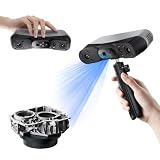
- 【Industrial-Grade Accuracy】Achieve single-frame accuracy up to 0.03 mm and volumetric accuracy of 0.03 mm + 0.05 mm x L(m), faithfully reproducing the finest surface details and complex geometries with exceptional consistency. Full-Field Structured Light accuracy reaches 0.08 mm; VCSEL mode delivers 0.10 mm @ 300-500 mm and 0.20 mm @ 500-800 mm. Engineered to meet the demanding requirements of 3D printing, reverse engineering, and precision modeling applications.
- 【Ultra-Fast Scanning & Robust Frame Rate】Multi-line Laser mode delivers up to 105 fps with NVIDIA GPU acceleration. Full-Field Structured Light mode achieves up to 5,000,000 points/s. The high frame rate ensures a smooth, uninterrupted scanning experience, especially suited for rapidly capturing large objects and complex scenes, significantly boosting overall workflow efficiency.
- 【AI-Powered & Photo-Grade Retopology】 AI object segmentation (Windows only) identifies your target in one click, tracks it throughout the scan, and auto-filters background noise — delivering clean data and streamlining post-processing. The patented 3D Gaussian Splatting converts point cloud and RGB data into true-to-life 1:1 photorealistic models; import photos from your phone or camera to apply real textures, then export in splat format for gaming, animation, and VR.
- 【All-Weather Outdoor Scanning】Multi-line Laser mode operates reliably up to 50,000 lux; with an outdoor filter attached, scanning remains stable in lighting conditions of up to 100,000 lux; VCSEL mode operates reliably in up to 100,000 lux ambient light. Designed to overcome lighting challenges, it provides consistent all-weather performance for construction sites, archaeological digs, and industrial fieldwork.
- 【5 Scanning Modes】NIR band supports Full-Field HD Scanning (markerless, fine structured light), Hybrid HD Scanning (dual projectors, fast high-quality modeling), and VCSEL Rapid Scanning (high-density pattern, fast markerless capture). Blue light band supports 30-Cross Laser Lines Scanning (handles high-reflectivity metals & dark objects) and Single-Line Deep Hole Scanning (captures from deep holes & narrow grooves). Five modes for comprehensive indoor and outdoor coverage.
If you need to scan parts for a current project, buy on the basis of a scanner with documented software and a return policy you can use. If your project can wait, monitor an official product page for the S1’s actual accuracy definitions, supported devices, export formats, included accessories, and shipping regions. Do not reserve a budget based on an unverified price or assume that compatibility with a Bambu Lab printer will make a mesh dimensionally correct.
POP 3 Plus specifications: how to read the numbers
Accuracy and precision are different claims
Revopoint lists up to 0.08 mm single-frame accuracy and up to 0.04 mm single-frame precision for the POP 3 Plus. Accuracy describes closeness to a reference value; precision describes repeatability. A scanner can repeat the same measurement closely while still being offset from the true dimension, or it can be accurate on average while individual captures vary. Neither figure alone tells you that a scanned bracket will fit a mating part.
These are manufacturer specifications for a single frame, not an independently measured tolerance for a completed, aligned, fused, and cleaned mesh. Alignment errors, missing surfaces, object movement, calibration, lighting, and the settings used to generate the mesh all affect the result. For reverse engineering, verify critical dimensions with calipers and rebuild functional geometry in CAD rather than treating the scan as a finished drawing.
The Tool Desk
Outbyte Driver Updater FREEScan for outdated or missing drivers - takes under a minuteDriver Scan →Outbyte PC Repair FREERepair Windows errors before they cause bigger problemsFix Now →Capture speed and working distance
Revopoint lists up to 18 frames per second. The practical speed depends on the computer or mobile device, scene complexity, tracking quality, and whether you must pause to reposition the object. The listed 150–400 mm working distance is the scanner-to-object range specified by Revopoint. Staying inside that range helps the cameras see the structured-light pattern; it is not a statement that every object in that range will scan equally well.
Rank #2

- EASY TO USE FOR BEGINNERS – Perfect for entry-level users, DIY creators, and 3D printing enthusiasts. Quick start, with simple practice giving optimal scan results.
- SMOOTH WIRELESS SCANNING – WiFi6-powered Ferret Pro ensures fast, stable scanning. Works with Windows, macOS, Android, and iOS for flexible cross-platform use.
- HIGH-PRECISION 3D MODELS – Capture detailed 3D models with full-color 24-bit scanning and anti-shake technology. Offers up to 0.1mm accuracy with full-color scanning. Ideal for objects from 50mm to 2000mm. Not suitable for very small or highly detailed items like jewelry or precision parts.cccc
- VERSATILE OUTPUT & ENVIRONMENT – Export in OBJ, STL, or PLY. Works reliably in most settings, including outdoor light (<30,000 lux). Avoid reflective, transparent, or very dark surfaces for best results.
- LIGHTWEIGHT & PORTABLE – Weighing just 105g, carry and scan anywhere—home, studio, or on the go. Compact, convenient, and ready for travel.
Infrared structured light
The POP 3 Plus uses dual-camera infrared structured light, according to Revopoint. Structured-light systems project a pattern and infer surface shape from how that pattern deforms across two camera views. Infrared projection can be less visually distracting than visible patterns, but it does not remove the usual problems with shiny, transparent, very dark, or textureless surfaces. Surface preparation and stable tracking still matter.
Revo Scan compatibility and workflow
Revopoint’s support information identifies Revo Scan for Windows, macOS, iOS, and Android, with an x86_64 architecture note. Check the software release and your specific device before ordering: operating-system support and phone requirements can change. Revo Scan is described as handling capture and post-processing, so the intended path is scanner to Revo Scan to an exported mesh, followed by repair or CAD work in whatever downstream application suits your project.
What is documented about the CR-Scan Otter?
Creality maintains an Otter-specific downloads page that lists Creality Scan and a CR-Scan Otter user manual. That is useful evidence of a named software and setup path, but it does not establish comparative scan quality. The surfaced material does not provide a verified accuracy figure, frame rate, working distance, complete operating-system matrix, or current price that can be fairly placed beside the POP 3 Plus numbers.
PC Slower Than It Used to Be?
A free scan shows the junk files, broken settings and background clutter dragging Windows down - then fixes them in one click.Free scan · Windows 10 & 11Crashes, No Sound, or Screen Glitches?
Random freezes, missing sound and display glitches usually trace back to one bad driver. Find and replace yours safely.Free scan · under a minuteUse the Otter manual as the authority for connection steps, calibration, supported modes, export choices, and accessory requirements for the hardware revision you purchase. Before checkout, confirm that the manual and software download match the exact Otter model and your computer. A scanner can be attractive on paper yet impractical if the required application will not run on your machine or if its export format does not fit your modeling workflow.
Rank #3
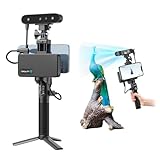
- 【High Accuracy & Fast Scanning】The Creality CR-Scan Ferret Pro 3D scanner delivers up to 0.1mm accuracy, 0.16mm resolution, and 30FPS scanning speed. It captures detailed dimensional data and complex shapes smoothly, creating highly realistic 3D models with ease.
- 【WiFi6 Wireless Transmission】Featuring advanced WiFi6, this handheld 3D scanner offers speeds 3x faster than WiFi5. The high bandwidth ensures stable, efficient data transfer for high-precision scanning and smoother workflow.
- 【Outdoor Scanning & Flexible File Export】Powered by upgraded optical technology and intelligent algorithms, the scanner delivers reliable performance in outdoor environments with ambient light up to 30,000 lux. Export models in OBJ, STL, or PLY formats for seamless integration with 3D printing, design, and reverse engineering workflows. For optimal results, avoid scanning highly reflective, transparent, or extremely dark surfaces.
- 【Anti-Shake Tracking】Equipped with one-shot 3D imaging, the Ferret Pro improves tracking accuracy and scanning success rates. Even with hand movements or quick object shifts, it ensures smooth, error-free scanning—perfect for beginners.
- Ferret Series Performance requirements: Windows: i5-Gen8 CPU or later Windows 10/11 (64-bit), RAM: >8GB, Software: >V2.3.0 Mac OS: M1/M2/M3/M4 series, macOS 11.7.7+ or Intel i5-Gen8+, RAM: >8GB Android: OS: Android 10.0+, RAM: >8GB, Connectivity: Wi-Fi 6, App: V2.0.2 iOS: Model: iPhone 11+, iOS 15+, RAM: >4GB
Choose by the object you need to digitize
Small mechanical parts and reverse engineering
For a bracket, housing, knob, or replacement cover, the goal is usually not a pretty mesh. You need stable scale, clear edges, and enough data to recreate holes, planes, bosses, and mating surfaces. The POP 3 Plus has published single-frame figures and a stated working distance, which gives you more documented starting information for this use case. It still does not guarantee fit: use physical measurements as references and inspect the scan for warped edges or holes filled by the meshing process.
The Otter can also be considered, but the available evidence does not provide a number-based comparison. Download its manual and confirm how it handles alignment, calibration, and export before committing to a precision-sensitive job. In either case, expect to remodel functional geometry in CAD. A polygon mesh records sampled surface points; it is not automatically a parametric model with editable dimensions.
Medium figurines, props, and hobby models
For a figurine, ornament, cosplay prop, or enclosure prototype, complete coverage and easy alignment may matter more than a sub-tenth-millimeter specification. Plan several passes around the object, capture the underside separately if necessary, and merge only after checking that distinctive features line up. A turntable can reduce hand movement, but it is a workflow aid rather than a universal requirement. Use one only if the scanner and software support that capture method.
Larger objects
Large objects require a strategy for maintaining tracking as you move around them. Work in sections with overlapping features, keep the scanner at its documented range when that information is available, and place the object so it cannot shift between passes. The POP 3 Plus’s 150–400 mm specification describes its working distance, not a maximum object size. Neither the surfaced POP evidence nor the Otter evidence supports a claim that either scanner is the best choice for furniture, vehicles, or room-scale capture.
Rank #4

- AI Visual Tracking Technology: Equipped with a new generation of single-frame encoded structured light units that improve surface feature detection for smooth, marker free scanning
- High Precision Scanning: Achieves 0.05mm accuracy using blue light technology, making your model size closely approach reality for detailed reproduction
- Fine Resolution Capability: Features 0.10mm resolution with detailed point clouds that preserve object details providing refined models for printing or display projects
- Versatile Scan Range: Capable of scanning objects ranging from 15mm to 1500mm, accommodating a wide variety of object sizes
- Integrated Software Solution: JMStudio scanning software integrates scanning, editing, and optimizing into one seamless process for efficient workflow
Color and appearance capture
If you need color texture for a digital asset, verify that the exact scanner, software version, and export format capture and preserve color. The available documentation for this comparison does not establish a color-capture specification for either shortlist candidate. Do not infer color capability from the fact that a scanner produces a mesh; geometry and texture are separate outputs.
A scan-to-print workflow that avoids common surprises
1. Define the required result
- For visual reference, prioritize complete coverage and a clean surface.
- For a replacement part, list the dimensions and interfaces that must be measured independently.
- For reverse engineering, decide which features will be rebuilt as planes, cylinders, holes, or freeform surfaces in CAD.
- For 3D printing, decide whether you need a watertight solid, a surface shell, or only a visual prop.
2. Check the software and hardware first
- Install or inspect the current capture application for the scanner you are considering.
- For the POP 3 Plus, verify that your Windows, macOS, iOS, or Android device meets the current Revo Scan requirements and that the x86_64 architecture note applies to your computer.
- For the Otter, use the Otter-specific Creality Scan download and user manual, and confirm that the software recognizes the exact hardware revision.
- Reserve storage for raw captures and exported meshes. Keep the original project files so you can reprocess a scan after changing alignment or meshing settings.
3. Prepare the object and scene
- Remove dust and anything that can move during capture.
- Use diffuse, even lighting and avoid direct glare into the cameras.
- Shiny, transparent, very dark, or textureless surfaces may need a removable scanning spray or temporary markers, but these are conditional supplies. Confirm that the spray, marker pattern, and cleaning method are compatible with the scanner and the object before applying them.
- Mount the object securely. A turntable is optional and useful only when the scanner’s tracking workflow supports it.
4. Capture overlapping views
- Start at a distance and angle that keep the object inside the scanner’s usable field; for the POP 3 Plus, Revopoint specifies a 150–400 mm working distance.
- Move smoothly and slowly enough for tracking to maintain overlap. The POP 3 Plus’s advertised maximum is 18 fps, but your usable rate can be lower when the scene is difficult.
- Make a complete pass around the visible surfaces.
- Reposition the object for hidden faces, keeping distinctive geometry or markers in common between passes.
- Pause and rescan a feature if tracking drifts instead of allowing a bad alignment to contaminate the entire project.
5. Align and fuse the data
Use the capture application’s alignment tools to combine passes, then inspect seams, duplicate surfaces, holes, and floating fragments. Automatic alignment is a starting point, not proof that the parts are registered correctly. If the software offers marker-based or feature-based alignment, choose the method that matches the object’s texture and geometry.
6. Create and repair the mesh
Generate a mesh only after removing obvious stray points. Check wall thickness, open boundaries, inverted normals, non-manifold edges, and overly aggressive smoothing. A watertight mesh may be necessary for slicing, but closing holes can also invent geometry. Preserve a high-resolution copy and create a lighter working copy for CAD or sculpting.
7. Validate before printing or modeling
- Measure several known distances with calipers and compare them with the mesh.
- Check circular holes and flat faces separately; these are common places for smoothing and alignment errors to become functional problems.
- Export in the format your next application accepts, then reopen the export to confirm scale and orientation.
- For a print, run the mesh through your slicer and inspect wall thickness, normals, supports, and bed orientation.
- For reverse engineering, use the mesh as a reference and create editable CAD features. Do not promise a part fit from a manufacturer’s single-frame specification alone.
Surface, tracking, and post-processing pitfalls
Reflective or transparent surfaces
Structured light can scatter or pass through glossy and transparent materials, producing holes or unstable points. A removable matte spray may help, but test it on an inconspicuous area and verify that it will not damage the object. For valuable, porous, or painted items, choose a method that can be removed without residue.
Best Value

- HIGH ACCURACY & FASTER: Boasting an impressive accuracy of up to 0.1mm, a resolution of 0.16mm, and a scanning speed of 30FPS, the Creality CR-Scan Ferret SE 3D scanner demonstrates outstanding performance in capturing extensive dimensional data and intricate details to shape highly realistic models smoothly and quickly
- ANTI-SHAKE TACKING: CR-Scan Ferret SE 3D scanner equipped with the new one-shot 3D imaging technology, this advanced feature enhances tracking efficiency and significantly increases the success rate of scans , ensures smooth, error-free scanning results even with shaky hands or rapid movements, ideal for beginners
- COLORFUL & VIVID TEXTURES: The CR Scan Ferret SE color 3D scanner built-in with the 2MP high-resolution color camera, captures intricate details and colored 3D models in their original colors, vividly bringing every intricate detail to life
- FLEXIBLE SCANNING RANGE: Provides a flexible scanning range of 150mm to 2000mm and a single capture range of up to 560*820mm, easily and efficiently handles the scanning of medium to large objects
- SCAN BLACK/METAL OBJECTS WITHOUT SPRAYING: The Ferret SE is optimized for scanning black or metal objects, it doesn't required you to use a white powder or spray to create a contrasting surface for black objects, much easier and faster to help you to finish your work
Uniform color and missing texture
A plain, featureless surface gives software little information for frame-to-frame tracking. Temporary removable markers or a controlled pattern can add reference points. Use enough overlap that the software sees the same features in adjacent views, and remove marker data during cleanup if it is not part of the object.
Moving parts and flexible materials
Doors, hinges, cables, fabric, and soft plastics can move while you scan. Lock the object in the exact pose you want, scan separate positions as separate projects when necessary, and avoid merging states that were not physically aligned.
Over-smoothing and hole filling
Smoothing can make a mesh look attractive while rounding a sharp edge or changing a mating surface. Hole filling can create a plausible cap where no measurement was captured. Keep an untouched capture, apply cleanup selectively, and validate critical dimensions afterward.
Cost, availability, and what to verify before ordering
Pricing is volatile and regional. A Revopoint product-page sale price appeared in indexed results, but displayed prices varied between indexed versions; no current regional price should be quoted without checking the live store at the time of purchase. No verified Creality price was captured in the available material. Treat any marketplace listing as a separate offer whose tax, shipping, warranty, and included accessories must be checked.
Before paying, confirm:
- The exact model name and included cables, stands, calibration targets, or accessories.
- Return and warranty terms for your country.
- Current operating-system and architecture requirements.
- Whether the software exports the mesh format your CAD, sculpting, or slicing application accepts.
- Whether optional spray, markers, or a turntable are actually needed for your object.
- Availability of replacement parts and software updates.
Do not add supplies automatically. A stable object with useful texture may scan without spray or markers, while a glossy black part may need preparation regardless of which scanner you choose.
A practical decision framework
| Your priority | More defensible starting point | Why | Qualification |
|---|---|---|---|
| You want published numerical specifications and a named capture/post-processing application. | POP 3 Plus | Revopoint publishes the 0.08 mm single-frame accuracy, 0.04 mm single-frame precision, up to 18 fps, 150–400 mm working distance, and Revo Scan platform details. | These are maker specifications, not independent finished-mesh results. |
| You want an Otter-specific software and manual path. | CR-Scan Otter | Creality’s Otter download page lists Creality Scan and a CR-Scan Otter user manual. | The available evidence does not establish a comparative quality or accuracy advantage. |
| You need a dimensionally exact replacement part. | Either, with independent measurement and CAD reconstruction | Both workflows require validation; a scanner mesh is not automatically a certified measurement or editable CAD model. | Choose based on software compatibility, object surface, and your cleanup skills. |
| You need a scanner immediately and are considering the S1. | A currently documented model | The S1 announcement says “coming November” but supplies no verified specifications, price, or availability. | Waiting is reasonable only if your project can tolerate an unconfirmed timetable. |
Bottom line for hobbyists
Start with the job, not the brand. The POP 3 Plus is the easier choice to evaluate on paper because Revopoint publishes defined single-frame figures, working distance, frame rate, scanning technology, and a cross-platform Revo Scan workflow. The CR-Scan Otter remains a plausible alternative when its Creality Scan software and Otter-specific documentation fit your setup, but the available evidence does not support declaring it faster, more accurate, or better. Whichever you buy, budget time for controlled capture, alignment, mesh repair, dimensional checks, and CAD remodeling. Bambu Lab’s S1 may become another option after its specifications and availability are published; the October 2026 announcement alone is not enough for a purchase comparison.
Quick Recap
Product prices and availability are accurate as of the date/time indicated and are subject to change. Any price and availability information displayed on Amazon at the time of purchase will apply.
Recommended Free Tools

