
Free tools Windows power users keep installed
One-click scans. No signup required.
iTechGuides is reader-supported. When you buy through links on our site, we may earn an affiliate commission. As an Amazon Associate I earn from qualifying purchases. Learn more
For an acoustic-electric guitar going to an amp or PA, an acoustic preamp/DI pedal is the most direct fit: it shapes the pickup signal and provides stage connections. The BOSS AD-10 is a feature-rich dual-channel option; the compact BOSS AD-2 focuses on essential tone shaping and feedback reduction; and Orange’s Acoustic pedal pairs preamp and EQ controls with a sweepable notch filter and effects loop. These are feature-based choices from manufacturer specifications, not independently tested sound-quality rankings.
What are the best acoustic guitar pedals?
The best choice depends on whether you need a simple pickup preamp, more control over feedback, or an all-in-one pedal with effects and recording tools. This shortlist compares what each manufacturer says its pedal includes; it does not establish which sounds best, lasts longest, or offers the best value.
| Pedal | Best fit | Feedback and outputs | Other listed features |
|---|---|---|---|
| BOSS AD-10 | Players who want two channels, extensive controls, and onboard utility features | Anti-feedback functions; XLR and quarter-inch outputs | Four-band EQ, low-cut, compressor, boost, ambience, delay, chorus, 80-second looper, USB audio, tuner, and memory for 10 setups |
| BOSS AD-2 | Players looking for a compact acoustic preamp with core stage connections | Notch filter; balanced DI and normal amp outputs | Acoustic Resonance, ambience, and mute |
| Orange Acoustic Pedal | Players who want EQ, a sweepable feedback filter, and an effects loop | Sweepable notch filter; balanced XLR output with phase reverse | Three-band EQ, preamp, and buffered effects loop |
| AVSL Stageman Floor / NAP-5 | Players interested in combining EQ, effects, and looping in one floor unit | Adjustable notch filter; amp output and balanced XLR DI | Three-band EQ, chorus, reverb, 60-second looper, aux input, and TRS insert |
All listed product features come from manufacturer or product pages. They do not amount to independent comparative testing, and this information does not establish current availability or pricing.
Do I need an acoustic preamp pedal?
You may benefit from one if you plug an acoustic-electric guitar directly into a PA or an amplifier and need to shape its pickup signal at the instrument end of the setup. A preamp pedal can put EQ and other controls within reach onstage; a DI-equipped model can also provide a balanced connection to a PA. Whether you need one depends on the outputs and controls already available in your guitar, mixer, or amp.
#1 Best Overall

- Analog Preamp and Digital Reverb
- Built-in Notch Filter and Mute with gain and frequency range adjustment capabilities to quickly eliminate whistling and shape your sound in detail
- High impedance input and XLR balanced output, 10M Ohms high-impedance input prevents tone loss
- Specially designed Buffer Bypass Circuit keeps the sound Pristine
- Designed for use with acoustic guitars, violins, mandolins, and other acoustic instruments requiring amplification
For two channels and a broad set of built-in functions, BOSS describes the AD-10 as a dual-channel acoustic preamp/DI. Its listed controls include Acoustic Resonance, four-band EQ, low-cut, compressor, and boost. Orange describes its Acoustic pedal as a preamp, EQ, and DI, with three-band EQ. The AD-2 offers Acoustic Resonance in a compact preamp format. Those descriptions indicate different feature sets, not proven differences in tone quality.
Which acoustic pedal stops feedback?
No pedal can be guaranteed to stop feedback in every guitar, room, speaker position, and volume setting. The models here offer tools for reducing or targeting feedback: BOSS lists anti-feedback functions on the AD-10 and a notch filter on the AD-2, while Orange lists a sweepable notch filter. AVSL lists an adjustable notch filter on the Stageman Floor / NAP-5.
Rank #2

- Adjustable gain for both passive and active pickups
- 5 band EQ with tunable low-mid and high-mid bands
- Garret Null notch filter for effective feedback control
- Full chromatic tuner with footswitch mute/tune function
- Adjustable volume boost footswitch
A notch filter lets you target a problematic frequency rather than treating every feedback situation the same way. A sweepable or adjustable control gives you a range to search; the available product descriptions do not provide independent measurements of how effectively each unit reduces feedback.
Recommended Free Tools
How do the stage connections differ?
Check the destination as well as the guitar connection. A balanced XLR output is useful when sending a signal to a PA; an amp output serves a guitar amplifier. The listed connections vary:
Rank #3
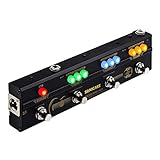
- One-Stop Gig Solution for Acoustic Instruments Players with Main Effects needed
- Analog Preamp with 2-Band EQ recreates a Classic Acoustic Guitar Amplifier, provide a warm, natural sound
- High Quality Chorus, Delay, Reverb Effects for Different Playing Scenarios
- Tap Tempo and Tail On/Off function for Delicate Control
- XLR Output for directly connecting to PA, Mixer or Audio Interface.
- BOSS AD-10: XLR and quarter-inch connections.
- BOSS AD-2: balanced DI output and normal amp output.
- Orange Acoustic Pedal: balanced XLR output with phase reverse, plus a buffered effects loop.
- AVSL Stageman Floor / NAP-5: balanced XLR DI and amp output.
Confirm the exact routing and connection requirements for your rig before buying; the feature listings alone do not establish compatibility with every pickup, mixer, or amplifier.
Which pedal has the effects or looper you want?
For built-in effects and recording features
The AD-10 has the broadest listed set of onboard functions in this shortlist: ambience, delay, chorus, an 80-second phrase looper, USB audio, a tuner, and memory for 10 setups. BOSS lists operation from an AC adaptor or six AA batteries. These are manufacturer specifications; the product page does not state a publication year for the figures.
Rank #4

- 5-Band EQ specially voiced for acoustic instruments
- True Bypass with options for Buffered Bypass or Mute
- Feedback-Fighting Phase Control
- Innovative Dual Path Routing and super compact design fits almost anywhere
- 9V external power required (sold separately)
The AD-2 lists ambience but not the AD-10’s broader effects, looper, or USB audio features. AVSL lists chorus, reverb, and a 60-second looper on the Stageman Floor / NAP-5. Its product page does not state a publication year for the looper figure.
What’s actually slowing this PC down?
Pick the symptom - the matching free tool is one click away.
For external effects
Orange’s buffered effects loop provides a way to connect external effects rather than relying only on effects built into the preamp pedal. The listed loop is a connection feature; the product page does not specify a built-in looper.
Best Value
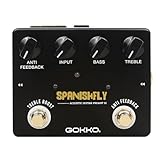
- Acoustic Preamp DI Pedal: Designed for acoustic guitars to help shape pickup tone before sending the signal to an amp, mixer, or pedalboard
- Anti Feedback Control: Built with an anti feedback footswitch and control knob to help reduce unwanted feedback during live acoustic playing
- Treble Boost Function: Independent treble boost footswitch increases brightness and presence when your acoustic tone needs more clarity
- Simple Tone Shaping: Input, Bass, and Treble controls let you adjust signal level and EQ for a cleaner, more controlled acoustic guitar sound
- Pedalboard Ready Design: True bypass operation, 9V DC center negative power, 30mA current draw, 11.9 x 9.4 x 3.8 cm size, power supply not included
Should you buy a pedal or an acoustic amplifier?
An acoustic amplifier is a different purchase from a pedal. It may combine amplification, effects, and looping in one unit, but it is not a substitute if your specific need is a floor preamp/DI to use with an existing amp or PA.
- Fender Acoustic SFX II: an acoustic amplifier with two combination inputs, channel effects, a 90-second looper, and an optional four-button footswitch.
- MOOER SD50A: an acoustic amplifier whose manufacturer lists two preamp channels, effects, a 150-second looper, drum patterns, Bluetooth, and XLR output modes.
The looper durations above are manufacturer-stated specifications, not independent test results. Choose an amp only if you want an amplifier as part of the purchase.
Quick Recap
What should you check before choosing?
- Signal path: Decide whether you need a balanced output to a PA, an amp output, or both.
- Feedback control: Look for an anti-feedback function or an adjustable notch filter if feedback is a recurring issue in your setup.
- Tone shaping: Compare the listed EQ controls and any pickup-voicing features, such as Acoustic Resonance.
- Channels: If you need to blend or manage more than one source, check channel count and routing; the AD-10 is explicitly described as dual-channel.
- Effects and looping: Decide whether onboard ambience, modulation, delay, or a looper matters, or whether an effects loop is more useful.
- Power and complexity: The AD-10 is listed for AC-adaptor or six-AA-battery operation. For other models, confirm power requirements and the exact controls in the current product documentation.
- Availability: The cited product descriptions do not establish current stock, regional availability, street prices, reliability, or user-review consensus. Verify those details with a current seller before purchasing.
Product prices and availability are accurate as of the date/time indicated and are subject to change. Any price and availability information displayed on Amazon at the time of purchase will apply.
Do these 3 things before closing this tab:
1Scan for outdated or missing drivers - takes under a minute2Clear out junk files and repair common Windows errors3Fix the driver behind crashes, sound loss and screen glitches
