
PC Slower Than It Used to Be?
A free scan shows the junk files, broken settings and background clutter dragging Windows down - then fixes them in one click.Free scan · Windows 10 & 11Outdated Drivers Are Slowing You Down
One free scan finds every outdated or missing driver and matches the right update for your exact hardware.Free scan · exact hardware matchiTechGuides is reader-supported. When you buy through links on our site, we may earn an affiliate commission. As an Amazon Associate I earn from qualifying purchases. Learn more
Bank First Home Contents Standard is a sum-insured contents policy for renters, distributed by Bank First and issued by Insurance Australia Limited under the CGU brand. Its published summary includes cover for common insured events and legal liability, while accidental damage and portable contents are optional. The actual cover depends on the PDS and the terms, limits and excess shown in your quote and Certificate of Insurance.
Who issues and distributes the policy?
Bank First markets Home Contents Standard, but it is not the insurer. Insurance Australia Limited issues the insurance under the CGU brand; Bank First (Victoria Teachers Limited) distributes it under its own Australian financial services licence and an agreement with CGU. Bank First says it receives commission when it sells CGU insurance. Its product information is general and does not take account of an individual’s objectives, financial situation or needs. Consider the applicable Product Disclosure Statement (PDS) and Target Market Determination (TMD) before deciding whether the policy suits you. Bank First’s Home Insurance page and disclosure information describe these arrangements.


What does the renters contents policy cover?
CHOICE identifies Home Contents Standard as a sum-insured policy available across Australian states and territories. You select a sum insured, but that figure is not a promise that every claim will be paid up to that amount: definitions, exclusions, sub-limits, excesses and settlement rules can affect the payment. The following are features reported in CHOICE’s policy summary, not guarantees for every policy version or claim. CHOICE’s Bank First policy summary notes that its detailed scoring is available to members and price data was not supplied for its price score, so it does not establish a premium or value ranking.
The Tool Desk
Outbyte Driver Updater FREEScan for outdated or missing drivers - takes under a minuteDriver Scan →Outbyte PC Repair FREERepair Windows errors before they cause bigger problemsFix Now →Insured events
CHOICE lists theft and attempted theft, fire and bushfire, flood and rainwater run-off, storm and cyclone, tsunami, explosion, earthquake, vandalism, impact damage, escape of water and breakage among the events covered. Its summary also reports a 72-hour waiting period for bushfire or grassfire and a 14-day waiting period for flood. The exact definitions, start of a waiting period and exclusions depend on the applicable contract; check the PDS rather than relying on event names alone.
#1 Best Overall
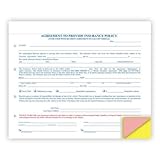
- DIMENSIONS: Standard 8 1/2" x 7" carbonless form size, perfect for professional vehicle sales documentation
- MULTI-PART DESIGN: 4-part snap-out format with white, canary, pink, and goldenrod paper for organized record keeping
- QUANTITY: Pack includes 100 forms to handle multiple vehicle transactions efficiently
- COLOR CODING: Printed in blue and red ink for clear visibility and easy readability across all copies
- COMPATIBILITY: Print alignment matches R&R form 228RS-U for seamless integration with existing documentation systems
Legal liability
The CHOICE summary reports legal liability cover up to $20 million for named policyholders and family members who live with them, for incidents in Australia. Confirm who is insured, what counts as a covered incident, and any exclusions in the policy documents.
Temporary accommodation and other limits
For renters, Bank First says contents cover includes reasonable additional rent costs for temporary accommodation, subject to limits, exclusions and conditions. CHOICE reports temporary accommodation for up to 12 months or 20% of the sum insured. Its summary also reports:
- An overall $2,500 sub-limit for jewellery and watches, artworks and collections.
- Contents in the open air up to 20% of the sum insured.
- Debris removal up to 10% overall.
- Emergency storage for up to 12 months.
- Spoiled food up to $500 overall.
These figures are summary-level limits, not an assurance that a particular loss qualifies or that each limit applies to your contract. Check the relevant PDS and Certificate of Insurance for definitions, conditions and any changes by policy version.
Do these 3 things before closing this tab:
1Fix the driver behind crashes, sound loss and screen glitches2Repair Windows errors before they cause bigger problems3Scan for outdated or missing drivers - takes under a minuteWhich options are available?
Accidental damage
Bank First identifies accidental damage as optional on Contents Standard. CHOICE describes it as cover for accidental loss or damage, subject to exclusions. Check the quote to see whether you selected it, what it costs and how the PDS defines covered accidental damage; do not assume it is included in the standard policy.
Portable contents
CHOICE describes portable contents as optional cover for certain categories of belongings away from the insured address. Its summary reports up to $10,000 per item, a $250 excess, and a combined worldwide limit of $10,000 for belongings outside Australia and New Zealand. Categories and conditions matter: verify which items qualify, whether they must be listed, and the territorial and item limits before relying on cover away from home.
Motor burnout
CHOICE lists motor burnout as optional and reports cover for motors up to 15 years old. It also notes a limit for spoiled food above. Verify the applicable motor definition, age test, excess and conditions in the policy documents.
Rank #4
What exclusions and conditions need close attention?
The CHOICE summary identifies exclusions or restrictions for action of the sea; certain theft by household members or people admitted with consent; certain animal damage; water leakage; accidental damage; and contents in use. The summary is not exhaustive. A covered-event list should not be read as “everything is covered”: check the PDS wording for the circumstances and property relevant to your household, especially water-related losses and high-value belongings.
How should renters assess whether it fits?
Contents insurance is intended to protect your belongings and can also provide legal liability cover. Your landlord’s building insurance protects the home, not your possessions. ASIC’s Moneysmart contents insurance guide recommends checking definitions, insured events, accidental damage, portable items, exclusions, item limits, replacement value, settlement and excess.
Compare like with like
Get quotes from more than one insurer using the same sum insured and comparable options. Compare the individual premium and excess alongside the cover, rather than treating a lower quote as equivalent protection. Check:
- Whether claims are settled on a replacement or new-for-old basis, or another valuation method.
- Event definitions, waiting periods, exclusions, and the treatment of flood and escape of water.
- The liability limit and exactly who is insured.
- Availability and cost of accidental-damage and portable-contents options, including category and item limits.
- Sub-limits for valuables, open-air contents, temporary accommodation and storage.
- What the policy says about vacancy, moving belongings and high-value items.
Moneysmart cautions that comparison websites may earn money from promoted links and may not show every available option, so consider quotes beyond a single comparison site.
Set a realistic sum insured
Make an inventory of the belongings you would need to replace and estimate their current replacement prices. Record useful details such as serial numbers, receipts, warranties and photographs. Review the inventory and cover at renewal so the sum insured and item details remain relevant.
Recommended Free Tools
Which documents should you check before buying?
Bank First’s disclosure index lists the Home Insurance PDS, Premium, Excess & Discounts Guide, Key Facts Sheet for Home Contents and TMD. Read the versions that apply to your quote, and compare them with the Certificate of Insurance, which records the cover selected and policy-specific details. Bank First says customers whose policies were issued before 27 May 2025 should contact CGU for the corresponding older documents. The PDS and certificate are essential for confirming whether the summary limits and options described above match your policy. Bank First’s disclosure index.
Can you judge the price or value from the published summary?
No reliable personal premium or overall value ranking follows from the public summary. Your quote is needed to know the price and excess for your circumstances and selected options. CHOICE says price data was not shared for its price score, and its detailed scoring is member-only. Compare your own quote with alternatives on the same sum insured and cover settings, then assess exclusions, limits and settlement terms—not just the premium.
Quick Recap
Product prices and availability are accurate as of the date/time indicated and are subject to change. Any price and availability information displayed on Amazon at the time of purchase will apply.

