
The Tool Desk
Outbyte Driver Updater FREEScan for outdated or missing drivers - takes under a minuteDriver Scan →Outbyte PC Repair FREERepair Windows errors before they cause bigger problemsFix Now →iTechGuides is reader-supported. When you buy through links on our site, we may earn an affiliate commission. As an Amazon Associate I earn from qualifying purchases. Learn more
For a smoother Avowed experience on PC, start with a Custom profile based on High quality: turn ray tracing and V-Sync off, set motion blur to Low or Off, and choose the least aggressive upscaling mode that keeps frame times stable. At 1080p, use native rendering if your GPU can hold your target; at 1440p, start with DLSS or FSR Quality; at 4K, start with Balanced. Recheck these choices after every major patch because Avowed’s upscaling and effects behavior has changed in official updates.
The best Avowed settings at a glance
There is no single “best” preset for every PC. Resolution, GPU headroom, CPU limits, display refresh rate, and your tolerance for softer image quality all change the right choice. The profile below is a reliable starting point because it protects image quality while removing the features most likely to hurt frame-time consistency.
| Setting | Recommended starting value | Why |
|---|---|---|
| Quality profile | Custom, based on High | High retains detail while allowing targeted cuts where performance is weak. |
| Display mode | Windowed Fullscreen | PCGamesN used this mode in its independent baseline and it is convenient for switching applications. |
| Field of view | 90 | A wider view is useful without adding the extreme peripheral distortion of a very high value. |
| Ray tracing | Off | The cited independent guide found a relatively subtle visual gain for a substantial performance cost. |
| V-Sync | Off | Disabling it avoids adding a synchronization delay while you diagnose frame pacing. |
| Motion blur | Low or Off | Reduces blur during camera movement and makes stutter easier to see and diagnose. |
| Textures | High, unless you run out of VRAM | Texture reductions are often more noticeable than small cuts to other settings. |
| Upscaling at 1080p | Off when the GPU sustains your target; otherwise Quality | Native rendering is clearest when you have enough headroom. |
| Upscaling at 1440p | DLSS Quality or FSR Quality | Quality modes usually preserve more detail than Balanced while reducing GPU work. |
| Upscaling at 4K | Balanced to start | 4K requires substantially more rendering work, so Balanced is a practical first test. |
These are editorial recommendations, not a guarantee of a locked frame rate. PCGamesN’s observations came from its own test setup, and the same settings can behave differently on another GPU, CPU, driver, or patch.
Do these 3 things before closing this tab:
1Fix the driver behind crashes, sound loss and screen glitches2Clear out junk files and repair common Windows errors3Scan for outdated or missing drivers - takes under a minuteChoose a target before changing options
Settings work best when you define what “smooth” means for your display. A 60 Hz monitor, a 120 Hz screen, and a variable-refresh display do not have the same ideal target. Pick a frame-rate goal that your system can maintain in demanding areas rather than a peak number seen in a quiet corridor.
#1 Best Overall

- MEET THE NEXT GEN: Consider this a cheat code; Our Samsung 990 PRO Gen4 SSD helps you reach near max performance with lightning-fast speeds; Whether you’re a hardcore gamer or a tech guru, you’ll get power efficiency built for the final boss
- REACH THE NEXT LEVEL: Gen4 steps up with faster transfer speeds and high-performance bandwidth; With a more than 55% improvement in random performance compared to 980 PRO, it’s here for heavy computing and faster loading
- THE FASTEST SSD FROM THE WORLD'S FLASH MEMORY BRAND: The speed you need for any occasion; With read and write speeds up to 7450/6900 MB/s you’ll reach near max performance of PCIe 4.0 powering through for any use
- PLAY WITHOUT LIMITS: Give yourself some space with storage capacities from 1TB to 4TB; Sync all your saves and reign supreme in gaming, video editing, data analysis and more
- IT’S A POWER MOVE: Save the power for your performance; Get power efficiency all while experiencing up to 50% improved performance per watt over the 980 PRO; It makes every move more effective with less consumption
- Consistent 60 FPS: prioritize stable frame times. A setting that produces 90 FPS in light scenes but drops sharply in combat will feel worse than a lower, steadier result.
- High-refresh play: begin with the same High-based profile, then test whether your CPU or GPU is limiting performance before lowering image quality.
- 40 FPS target: Avowed’s official Steam announcements added a 40 FPS option. This can be a useful middle ground on a 120 Hz display, provided your frame pacing is consistent.
- Image-quality priority: keep textures, effects, and global illumination high where possible, and accept a lower frame-rate target instead of immediately using aggressive upscaling.
Use an on-screen frame-time graph if your monitoring software provides one. Average FPS tells you how much work the system completes; frame-time consistency tells you whether camera movement and combat feel even.
Build the custom profile step by step
Open Avowed’s video or graphics settings from the main menu or pause menu, select a Custom profile, and make the changes below in order. Apply the profile, load a demanding save, and test the same area after each major group of changes so you know which adjustment helped.
- Set the display mode. Start with Windowed Fullscreen. If you experience unusual latency or inconsistent frame delivery, test exclusive fullscreen if the game and your display expose that option.
- Set field of view to 90. Keep this value while benchmarking settings so your comparisons are consistent. A wider field of view can increase the amount of visible scene geometry.
- Turn V-Sync off. This removes one source of synchronization delay during troubleshooting. If tearing is distracting after performance is stable, revisit synchronization through your display or graphics-driver configuration.
- Set motion blur to Low or Off. This is a preference setting with little benefit for players who want a crisp view, and removing it makes hitching easier to spot.
- Disable ray tracing. Ray tracing is a high-cost feature in the cited independent guide, while its visual difference is comparatively subtle. It is the first advanced feature to disable when chasing smoother play.
- Choose the appropriate upscaler mode. Use the resolution guidance in the next section rather than assuming one technology is always superior.
- Leave the main quality groups on High. Start with view distance, shadows, textures, shading, effects, foliage, post-processing, reflections, and global illumination at High, then make targeted reductions only if testing shows a need.
- Test a demanding scene. Walk through an area with long sightlines, dense foliage, several light sources, and active combat. Record both average FPS and whether camera pans produce uneven frame delivery.
- Lower settings in the recommended order. Reduce shadows, view distance, and global illumination before lowering textures. Re-test after each change instead of dropping every option at once.
DLSS, FSR, native rendering, and frame generation
Upscaling renders the game internally at a lower resolution and reconstructs the output at your display resolution. It can raise GPU-limited performance, but it also changes fine-detail clarity, motion stability, and the appearance of foliage or thin geometry. Native rendering avoids reconstruction artifacts when your GPU has enough headroom.
Quick wins for a faster PC:
Scan for outdated or missing drivers - takes under a minuteDriver Scan →Repair Windows errors before they cause bigger problemsFix Now →Fix the driver behind crashes, sound loss and screen glitchesFind Drivers →At 1080p
Leave upscaling off if the GPU can sustain your frame-rate target. At 1080p, the lower output resolution gives reconstruction less source detail to work with, so aggressive modes can look soft or shimmer in motion. If native rendering cannot maintain the target, try a Quality mode before moving to a more aggressive setting.
At 1440p
Start with DLSS Quality on supported NVIDIA hardware or FSR Quality on supported hardware. Compare the same scene while rotating the camera slowly and while moving through foliage. If the image remains clear and frame times improve, keep Quality. If performance still falls short, test Balanced, then reassess whether a targeted setting reduction is preferable to additional reconstruction.
Rank #2

- HUGE SPEED BOOST: Get random read/write speeds that are 40%/55% faster than 980 PRO; Experience up to 1400K/1550K IOPS, while sequential read/write speeds up to 7,450/6,900 MB/s reach near the max performance of PCIe 4.0*
- BREAKTHROUGH POWER EFFICIENCY: Use less power and get more performance; Enjoy up to 50% improved performance per watt over 980 PRO, plus optimal power efficiency with max PCIe 4.0 performance**
- SMART THERMAL CONTROL: Samsung's own nickel-coated controller delivers effective thermal control; With its slim size, 990 PRO is a perfect fit for desktops and laptops that meet the PCI-SIG D8 standard***
- THE CHAMPION MAKER: Up to 65% improvement in random performance enables faster loads for an ultimate gaming experience on PS5 and DirectStorage PC games****
- SAMSUNG MAGICIAN SOFTWARE: Get the most out of your SSD with Samsung Magician's advanced yet intuitive optimization tools; Monitor drive health, protect valuable data, and receive important updates for your 990 PRO
At 4K
Start with Balanced. Rendering a 4K frame natively is substantially more demanding, so Balanced often provides a more practical compromise. Inspect distant foliage, hair, particles, and thin geometry in motion; these areas reveal reconstruction artifacts more readily than a static wall or floor.
Native AA and labeling changes
Official Steam announcements recorded clearer labeling for FSR Native AA and corrected behavior when upscaling is disabled. Native AA is not the same as a performance-oriented lower-resolution upscaling mode: it applies anti-aliasing at native output resolution, so it should not be expected to deliver the same GPU savings. After an update, confirm that the selected mode still matches your intention.
What’s actually slowing this PC down?
Pick the symptom - the matching free tool is one click away.
Frame generation
Frame generation can increase the displayed frame rate by inserting generated frames, but it does not remove the underlying simulation and input latency associated with the original frames. Treat it as a separate decision from upscaling. Re-test it after every major patch, and judge success by frame-time consistency and control response, not the counter alone. If you are diagnosing crashes or severe hitching, disable frame-generation features along with the other diagnostic options.
Why there is no universal winner
DLSS and FSR can differ by GPU, driver, game version, and scene. One mode may preserve fine foliage detail better on your system while another produces a steadier frame time. Avoid presenting either as universally best; compare them at the same output resolution, preset, and scene, then keep the one that meets your image-quality and latency priorities.
What to lower first when performance is poor
Lowering every slider to Medium is rarely the best first move. The following order preserves the parts of the image that are usually most obvious while reducing expensive scene work.
Rank #3

- BLAZING SPEED. COOL VICTORY: Consider this a cheat code; Our Samsung 990 PRO Gen 4 with Heatsink SSD helps you reach near max performance* with lightning-fast speeds and Heatsink for improved temperature control
- REACH THE NEXT LEVEL: Gen4 steps up with faster transfer speeds and high-performance bandwidth; With a more than 55% improvement in random performance compared to 980 PRO, it’s here for heavy computing and faster loading
- THE FASTEST SSD FROM THE WORLD'S #1 FLASH MEMORY BRAND**: The speed you need for any occasion; With read and write speeds up to 7450/6900 MB/s* you’ll reach near max performance of PCIe 4.0*** powering through for any use
- PLAY WITHOUT LIMITS: Give yourself some space with storage capacities from 1TB to 4TB; Sync all your saves and reign supreme in gaming, video editing, data analysis and more
- MADE w/ PS5 IN MIND: Ultra-slim Integrated Heatsink is designed to dissipate heat from your device to stabilize its temperature and prevent performance issues; It’s compatible with PlayStation 5 and PCI-SIG D8 standard desktops and laptops****
| Setting group | What a reduction usually changes | When to reduce it |
|---|---|---|
| Ray tracing | Removes costly ray-traced lighting or reflections, with a comparatively subtle visual change in the cited guide. | First, if enabled. |
| Shadows | Reduces shadow resolution, distance, or filtering quality. Medium and Low make shadow edges and contact detail visibly less refined. | Early GPU-side adjustment after ray tracing. |
| View distance | Reduces how far detailed objects and scene features are maintained. | Useful when wide outdoor views cause drops. |
| Global illumination | Reduces indirect-lighting complexity and the subtle bounce-light contribution to interiors and exteriors. | Useful when lighting-heavy scenes are GPU-bound. |
| Foliage | Reduces vegetation density or quality. Medium and Low can make environments look noticeably thinner. | Use when forested areas are the problem. |
| Effects | Changes particles and elemental or spirit effects. High effects can avoid blocky edges around objects according to PCGamesN’s guide. | Reduce only after checking whether combat effects are causing the dips. |
| Reflections | Reduces reflection quality or detail in reflective surfaces. | Target reflective areas if they are the main performance bottleneck. |
| Textures | Uses less VRAM and can reduce texture quality or streaming detail. | Lower only when VRAM pressure, texture streaming, or stutter points to it. |
PCGamesN reported visible losses in shadow and foliage quality at Medium and Low. That does not mean those settings are unusable; it means they are better treated as deliberate trade-offs than as harmless performance switches.
Diagnose whether the CPU, GPU, or storage is limiting you
GPU-limited symptoms
If GPU utilization is near its ceiling and lowering resolution or enabling a less demanding upscaling mode raises performance, the GPU is the immediate limit. Keep textures as high as VRAM allows, then reduce ray tracing, shadows, view distance, global illumination, or effects.
CPU-limited symptoms
If GPU utilization falls while frame time remains high, especially in busy areas, the CPU or game-thread workload may be limiting performance. Lowering resolution may do little. Test view distance, foliage, and other settings that affect scene population, and close background applications that compete for CPU time.
Frame-time spikes without a sustained limit
Brief hitches can come from shader compilation, asset streaming, drivers, overheating, unstable overclocks, or storage delays. A high average FPS does not rule out these problems. Use the troubleshooting sequence below rather than assuming a lower preset will fix them.
Official PC requirements and what they do—and do not—promise
Obsidian Entertainment’s official requirements page, dated February 28, 2025, lists the following baseline. The requirements call for an SSD and DirectX 12. They describe supported hardware tiers, not a promise of a locked frame rate at a particular resolution or preset.
Outdated Drivers Are Slowing You Down
One free scan finds every outdated or missing driver and matches the right update for your exact hardware.Free scan · exact hardware matchPC Slower Than It Used to Be?
A free scan shows the junk files, broken settings and background clutter dragging Windows down - then fixes them in one click.Free scan · Windows 10 & 11Rank #4

- High-performance PCIe 4.0 NVMe SSD for high-end PC gaming as well as 4K video and 3D editing, data analytics and more.
- Exceptional speed: Sequential read/write speeds of up to 7,450 MB/s and 6,900 MB/s respectively for all variants from 1 to 4 TB of storage capacity.
- High reliability and long-lasting performance thanks to Heat Spreader and Dynamic Thermal Guard technology to protect against overheating
- Storage capacities of up to 4 TB in compact M.2 form factor (2280), Ideal for high-performance (gaming) PCs and notebooks/ultrabooks
- Easy drive management, with user-friendly Samsung Magician software for drive updates and performance optimisation
| Requirement | Minimum | Recommended |
|---|---|---|
| Operating system | Windows 10/11 | Windows 10/11 |
| Processor | AMD Ryzen 5 2600 or Intel Core i5-8400 | AMD Ryzen 5 5600X or Intel Core i7-10700K |
| Memory | 16 GB RAM | 16 GB RAM |
| Graphics | AMD Radeon RX 5700, NVIDIA GeForce GTX 1070, or Intel Arc A580 | AMD Radeon RX 6800 XT or NVIDIA GeForce RTX 3080 |
| API | DirectX 12 | DirectX 12 |
| Storage | 75 GB on an SSD | 75 GB on an SSD |
Meeting the minimum tier does not mean every High setting is appropriate. Use it as a compatibility floor, then select resolution and upscaling according to measured frame times. The recommended tier still does not guarantee a particular frame rate because patches, drivers, areas, and settings change the workload.
Fix stuttering, crashes, and sudden performance drops
Follow this order so each step addresses a known cause and leaves a clear recovery path. Obsidian’s support guidance specifically recommends checking specifications, updating drivers, verifying files, updating Windows, checking temperatures and overclocks, and updating BIOS for certain Intel processors.
- Confirm the hardware and storage. Check that the PC meets the Windows, CPU, RAM, GPU, DirectX 12, 75 GB, and SSD requirements. If the game is on a hard disk, move it to an SSD before trying to tune advanced graphics.
- Update the graphics driver. Obsidian states: “If your system meets the minimum requirements, we recommend updating your graphics card drivers to the latest version.” If graphics issues remain, perform a clean driver installation rather than installing over a damaged or conflicting driver state.
- Install Windows updates. Restart after updates complete, then launch the game again. Pending system components can affect DirectX behavior and stability.
- Verify the game files. Use the file-verification command in your PC game launcher. Corrupted or incomplete files can cause crashes, missing assets, or unusual stutter that settings changes cannot repair.
- Return overclocks and undervolts to stock. Test the CPU, GPU, and RAM at default settings. A configuration that is stable in other games can still fail under Avowed’s workload.
- Check temperatures and cooling. Watch CPU and GPU temperatures during the same demanding scene. If clocks fall as temperatures rise, improve airflow or cooling before lowering visual quality.
- For 13th- or 14th-generation Intel CPUs, check BIOS updates. Obsidian’s support guidance specifically calls out BIOS updating for these processors. Follow your motherboard manufacturer’s instructions and do not interrupt a firmware update.
- Disable diagnostic features. Temporarily turn off ray tracing, upscaling, and NVIDIA Reflex Low Latency while diagnosing crashes or severe performance problems. Re-enable one feature at a time after stability returns so you can identify a trigger.
- Reset and rebuild the profile. After a major update, load defaults, then recreate the Custom High-based profile. This avoids carrying forward a setting that an update changed or misapplied.
- Escalate with reproducible details. Record the GPU driver version, CPU and GPU model, RAM amount, resolution, upscaling mode, ray-tracing state, temperatures, and the exact scene or action that triggers the issue. That information is more useful to support than “low FPS” alone.
Patch-sensitive behavior to check after updates
Official Steam announcements document several changes that can alter the way a previously tuned profile behaves:
- A 40 FPS option was added.
- FSR Native AA received clearer labeling.
- Behavior when upscaling is off was corrected.
- Elemental and spirit effects were optimized.
- An issue that caused upscaling to default to DLSS on launch was fixed.
After each major patch, verify the output resolution, upscaler, quality mode, ray-tracing state, frame-generation state, and frame-rate cap. Do not assume that a mode selected before the update is still active or that the same upscaler remains the best choice.
Is an SSD upgrade worthwhile for Avowed?
An SSD is part of Avowed’s official PC requirement, so storage is not merely an optional speed upgrade. Faster storage can help asset streaming and reduce the chance that a hard-disk bottleneck is mistaken for a graphics-setting problem, but it cannot compensate for an underpowered GPU or CPU.
Best Value
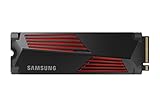
- OUR ULTIMATE SSD: Reach near max performance with PCIe 4.0*; The in-house controller's smart heat control delivers our best power efficiency while maintaining ferocious performance that always keeps you at the top of your game
- MAXIMIZED PCIE 4.0 SPEED: Get random read/write speeds that are 40%/55% faster than 980 PRO; Experience up to 1400K/1550K IOPS and read/write speeds up to 7450/6900 MB/s for gaming, video editing, 3D modeling, data analysis and more**
- BREAKTHROUGH POWER EFFICIENCY: Get more performance while using less power; Enjoy up to 50% improved performance per watt over 980 PRO***
- THERMAL CONTROL: Samsung's nickel-coated high-end controller delivers thermal control and prevents performance drops from overheating; 990 PRO with Heatsink is a perfect fit for PlayStation 5, desktops, laptops that meet the PCI-SIG D8 standard****
- THE CHAMPION MAKER: A more than 55% improvement in random performance enables faster loads for an ultimate gaming experience on PS5 and DirectStorage PC games; With RGB LED lights, Heatsink’s futuristic design adds style to function*****
Check compatibility before buying
- Interface: determine whether your motherboard supports the M.2 NVMe interface or requires a 2.5-inch SATA drive.
- Available slot: confirm that an unused M.2 slot exists and that the slot is not disabled when another storage or expansion connector is populated.
- Capacity: Avowed lists 75 GB, but leave additional free space for updates and normal operating-system overhead.
- Thermal clearance: an M.2 drive may sit beneath a motherboard heatsink or near a graphics card; check physical clearance and cooling.
- Migration plan: decide whether to install the game on the new drive or clone the existing system before you purchase.
PCGamesN identifies the Samsung 990 Pro as one gaming-SSD option, but the correct drive for your system depends on the motherboard interface, available slot, capacity, and budget. Verify those constraints first rather than treating one model as a universal requirement.
Practical profiles for common situations
1080p system with GPU headroom
Use Custom High, native rendering, ray tracing off, V-Sync off, motion blur Low or Off, and FOV 90. Keep textures and effects High. If frame times dip, lower shadows or view distance before moving away from native rendering.
1440p system seeking a stable 60 FPS
Start with DLSS Quality or FSR Quality. Keep the High-based settings, then lower shadows, view distance, or global illumination one at a time if demanding areas still produce uneven frame times. Move to Balanced only when those targeted changes are insufficient or when the GPU remains saturated.
Free tools Windows power users keep installed
One-click scans. No signup required.
4K system prioritizing smooth camera movement
Start with Balanced upscaling, ray tracing off, and High quality for textures and most effects. Test foliage, distant scenery, and combat particles in motion. If the image is acceptably clear but frame times still spike, reduce shadows, view distance, and global illumination before dropping textures.
PC that meets only the minimum tier
Use a lower output target if necessary, keep ray tracing off, and begin with Quality upscaling where available. Reduce shadows, view distance, foliage, and global illumination in that order as testing demands. The official minimum list is a compatibility baseline, not evidence that High settings at 1440p or 4K will be comfortable.
Quick Recap
A repeatable tuning checklist
- Record your resolution, target frame rate, driver version, and patch version.
- Start from Custom High rather than changing every option simultaneously.
- Disable ray tracing, V-Sync, and unnecessary motion blur.
- Select native, Quality, or Balanced upscaling according to resolution and measured GPU load.
- Test the same demanding scene after every change.
- Judge 1% lows and frame-time stability as well as average FPS.
- Lower shadows, view distance, and global illumination before textures.
- Check foliage and effects for visible quality loss before accepting Medium or Low.
- After a patch, verify that upscaling, Native AA, frame generation, and frame-rate options did not change.
- If crashes or severe hitching persist, follow the driver, file-verification, Windows, temperature, overclock, and BIOS checks before further visual compromises.
Product prices and availability are accurate as of the date/time indicated and are subject to change. Any price and availability information displayed on Amazon at the time of purchase will apply.

