
iTechGuides is reader-supported. When you buy through links on our site, we may earn an affiliate commission. As an Amazon Associate I earn from qualifying purchases. Learn more
There is no canon answer that makes one Avatar element objectively strongest. Each bending style solves a different problem: water excels at change and containment, earth turns terrain into force and protection, fire delivers direct pressure without requiring a carried supply, and air prioritizes movement, evasion and defense.
The most useful comparison is therefore situational. A bender’s surroundings, objective, distance, stamina, control and willingness to attack matter as much as the element itself. The analysis below separates what Avatar Studios explicitly says about each style from practical tactical conclusions drawn from those descriptions.
Avatar bending styles compared: The strengths and limits of water, earth, fire and air
What does “strongest” mean in Avatar?
“Strongest” can mean several different things. It might mean the greatest destructive force, the best chance of avoiding injury, the widest range of techniques, the most reliable performance in unfamiliar surroundings, or the ability to keep fighting when resources are scarce. Those definitions produce different winners.
Quick wins for a faster PC:
Repair Windows errors before they cause bigger problemsFix Now →Fix the driver behind crashes, sound loss and screen glitchesFind Drivers →Clear out junk files and repair common Windows errorsFree Scan →Avatar Studios does not publish a numerical power ranking for the four elements. Its descriptions instead emphasize distinct identities: water uses its solid, liquid and gaseous states to control and contain; earth draws strength from the ground; fire is fierce, direct and generated from the practitioner’s own energy; and air is fundamentally defensive, with fighting treated as a last resort. Treating those descriptions as a universal ranking would erase the trade-offs that make the styles different.
#1 Best Overall

- WATERBENDER: Master the element of water with Katara (Book One)
- BOOK ONE: 4.5-inch scale figure is based on “Book One” of Avatar: The Last Airbender
- ARTICULATED: Features 14 points of articulation for play and display
- ACCESSORIES: Includes removable water pouch plus water whip effect
- BATTLE ACTION: Performs unique battle action by pulling the left arm back
A fair comparison uses four questions:
- Environmental access: Can the bender use the element wherever a fight happens?
- Attack versus defense: Is the style built mainly to strike, withstand, redirect or escape?
- Mobility and positioning: Does it reward movement, stable footing, distance or close control?
- Adaptability: How many useful jobs can the style perform when the situation changes?
These are analytical axes, not official statistics. They help explain why the best choice changes from one encounter to another.
All four styles at a glance
| Bending style | Primary emphasis | Environmental relationship | Major advantages | Main limitation |
|---|---|---|---|---|
| Waterbending | Change, redirection, restraint and containment | Most dependable when usable water is available | Works with solid, liquid and gaseous states; adapts between control and attack | May need preparation or nearby water before its full flexibility is available |
| Earthbending | Grounded force, barriers and terrain control | Relies on contact with or access to solid ground | Can create localized earthquakes and propel slabs of stone | Heavier actions can be easier to anticipate and are less convenient away from solid terrain |
| Firebending | Direct power and sustained pressure | Practitioners generate fire from their own energy | Does not require carrying a separate elemental supply; strong line and distance control | Power-focused attacks demand control, positioning and stamina |
| Airbending | Movement, evasion, redirection and defense | Air is broadly present, but invisible and difficult to shape precisely | Exceptional mobility and non-obvious angles; defensive options are central | Less straightforward for someone seeking immediate destructive impact |
The environmental statements in the table combine Avatar Studios’ descriptions with tactical interpretation. The material dependence of water and earth is a practical inference from what those elements are, not a published numeric rule. Likewise, the comments about attack speed, telegraphing and stamina are comparisons rather than measured canon statistics.
Waterbending: the most adaptable control style
What waterbending does best
Waterbending’s defining advantage is change. A skilled practitioner can manipulate water as a solid, liquid or gas, allowing the same element to serve as a flexible tool rather than a single type of projectile. Avatar Studios describes its combat strength as using “water’s solid, gaseous and liquid states to control and contain.”
Recommended Free Tools
That description points to several practical jobs:
- Redirection: Flowing movement lets a bender turn an opponent’s momentum into a different line instead of meeting it with equal force.
- Restraint: Water can surround, bind or pin rather than relying only on impact.
- Containment: Ice and other solid forms can create temporary boundaries or deny a route.
- Adaptation: The bender can change the element’s state as distance, terrain or the opponent’s behavior changes.
Water therefore suits a fighter who wants options between attack and defense. It can answer a threat without committing to a single kind of exchange, and it can turn the opponent’s need to move into a liability by narrowing available space.
Where waterbending is limited
The largest constraint is access. Waterbending is most dependable when usable water is nearby. That is an environmental inference, not a stated rule that forbids bending in every dry location. It means the style’s full range is easier to realize around rivers, coastlines, rain, snow, stored water or another accessible source than in a place with nothing to manipulate.
Flexibility can also require setup. A bender may need to draw water into position, choose a state and establish control before a technique becomes decisive. Against an immediate attack, that preparation can matter. Water’s versatility is valuable, but versatility is not the same as instant impact.
When water is the practical choice
Choose water when the objective is to capture, separate, redirect or survive rather than simply overpower. It is especially attractive when the environment supplies abundant water and when the bender expects the fight to move through several phases: initial defense, repositioning, restraint and possibly a controlled counterattack.
Earthbending: force and protection from the ground
What earthbending does best
Earthbending converts the terrain into both weapon and shield. Avatar Studios calls “the ground under their feet” an earthbender’s greatest tool. That wording captures the style’s central relationship with footing: the environment is not merely a backdrop but a source of force, cover and control.
Rank #2

- THE AVATAR: Master all four elements with Aang (Book Three)
- BOOK THREE: 6.5-inch scale figure is based on “Book Three” of Avatar: The Last Airbender
- SOFT TUNIC: Features 22 points of articulation and a soft goods tunic
- ACCESSORIES: Includes four swappable hands one alternate faceplate
- AIR EFFECT: Also includes a staff and an air bending effect to recreate iconic battles
Official descriptions also note that earthbenders can create localized earthquakes or propel slabs of stone through the air. Those examples show why earth is associated with decisive impact and durable defenses. A bender can alter the space itself, raise a barrier, deny a path or force an opponent to deal with the ground before reaching the bender.
- Terrain control: Walls, ridges and altered surfaces can divide the battlefield.
- Durable defense: Solid barriers can absorb or interrupt incoming attacks.
- Mass and impact: Stone carries substantial force when moved or launched.
- Positional strength: A stable stance lets the bender draw power from the ground rather than constantly retreating.
Where earthbending is limited
Earth’s strength is tied to contact with or access to solid ground. A location with little workable earth, unstable footing or a large gap between the bender and the terrain can reduce the style’s options. The exact boundaries depend on the fictional situation; Avatar Studios does not provide a universal distance or quantity rule.
Earth’s heavier attacks may also be easier to anticipate than a flowing water technique or an evasive air maneuver. This is a tactical judgment, not a canon measurement. The same weight that makes an earth technique powerful can make it less subtle, particularly when the opponent has room to see it develop and move away.
What’s actually slowing this PC down?
Pick the symptom - the matching free tool is one click away.
When earth is the practical choice
Earth is the natural fit when holding ground, protecting others or reshaping a battlefield matters more than rapid retreat. It rewards a bender who can read terrain, establish a strong position and make the opponent pay for crossing controlled space.
Firebending: direct pressure without a carried resource
What firebending does best
Firebending is the most immediately direct of the four styles. Avatar Studios calls fire “the element of power” and describes firebending as fierce and direct. Its unusual logistical advantage is that practitioners can generate fire from their own energy, rather than depending on a visible pool of material that must be collected first.
That independence changes how a fight begins. A firebender can apply pressure immediately, maintain a line of threat and force an opponent to react even when the surroundings offer little useful material. Fire is therefore well suited to controlling distance and deciding the tempo of an exchange.
- Immediate availability: The practitioner generates the element from personal energy.
- Direct offense: The style emphasizes straightforward pressure rather than waiting for terrain or a reservoir to become useful.
- Range management: Fire can make an approach costly and help a bender keep an opponent at a chosen distance.
- Tempo: Continuous pressure can prevent an opponent from comfortably setting up a slower technique.
Where firebending is limited
A direct, power-focused style can expose a practitioner who lacks control, good positioning or stamina. Avatar Studios does not publish a quantified endurance limit, maximum output or universal rule for how long a bender can generate fire. It is therefore inaccurate to attach invented figures to firebending or claim that every firebender can maintain the same intensity.
Do these 3 things before closing this tab:
1Clear out junk files and repair common Windows errors2Fix the driver behind crashes, sound loss and screen glitches3Repair Windows errors before they cause bigger problemsFire also creates a tactical burden: pressure must be managed. An attack that misses, overextends or forces the bender into a poor position can leave fewer defensive options than a style built around redirection or barriers. The element’s independence from local resources is a major advantage, but it does not remove the need for judgment.
Rank #3
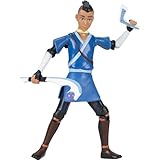
- MASTER PLANNER: Make a master plan with Sokka (Book One)
- BOOK ONE: 4.5-inch scale figure is based on “Book One” of Avatar: The Last Airbender
- ARTICULATED: Features 14 points of articulation for play and display
- ACCESSORIES: Includes boomerang and club accessories
- BATTLE ACTION: Performs unique battle action by twisting the torso
When fire is the practical choice
Fire suits a bender who needs immediate pressure, reliable access to an element and control over open distance. It is attractive when the fight cannot be postponed while the practitioner gathers material, but it is less forgiving of careless output or poor stamina management.
Airbending: mobility, evasion and defense
What airbending does best
Airbending’s central advantage is movement. Avatar Studios describes its strength as defensive and states that fighting is a last resort. That is not a claim that airbenders cannot attack; it identifies the style’s priority. Airbending seeks to avoid the opponent’s strongest line, redirect force and preserve freedom to move.
Because air has no visible fixed projectile in the ordinary sense, an opponent may have less information about the exact path of a technique. Combined with rapid movement, that supports unusual angles, sudden changes in distance and attacks that are difficult to read before they arrive.
Crashes, No Sound, or Screen Glitches?
Random freezes, missing sound and display glitches usually trace back to one bad driver. Find and replace yours safely.Free scan · under a minutePC Slower Than It Used to Be?
A free scan shows the junk files, broken settings and background clutter dragging Windows down - then fixes them in one click.Free scan · Windows 10 & 11- Evasion: The style is built to avoid a clean hit rather than absorb one.
- Mobility: Constant repositioning can make a stronger but slower attack miss.
- Redirection: Air can alter an opponent’s balance, trajectory or approach without matching force directly.
- Defensive creativity: The bender can use movement and space as part of the defense, not just a stationary block.
Where airbending is limited
Readers looking for immediate destructive force may find air less straightforward. Its defensive priority can lengthen an encounter or require the bender to win through positioning rather than a single overwhelming strike. That is a comparison of tactical emphasis, not evidence that airbending lacks offensive capability.
Air is broadly present, but it is invisible and harder to shape with the same visual certainty as a stone slab or a pool of water. Precision, timing and awareness are especially important because the bender cannot rely on a clearly visible mass to judge in the same way.
When air is the practical choice
Air is the strongest fit for escape, protection, reconnaissance and survival against a more forceful attacker. It rewards patience and spatial awareness. A fighter who values never being where the opponent expects may gain more from air than from a style with greater apparent impact.
Comparing the elements on four fair axes
1. Environmental access
Water and earth are materially dependent on their surroundings: waterbenders need usable water for their broadest options, while earthbenders draw on solid ground. Firebenders can generate their element from their own energy, giving them a notable level of independence from carried resources. Air is broadly present almost everywhere, but its invisibility and precision demands make “available” different from “easy to control.”
Free tools Windows power users keep installed
One-click scans. No signup required.
This axis does not produce a permanent winner. A river, shoreline or rainstorm improves water’s practical position; open ground improves earth’s; a resource-poor location favors fire’s independence; and a large, unobstructed space can reward air’s movement.
Rank #4

- FIRE BENDER: Master the element of fire with Zuko (Book Three)
- BOOK THREE: 6.5-inch scale figure is based on “Book Three” of Avatar: The Last Airbender
- SOFT TUNIC: Features 22 points of articulation and a soft good tunic
- ACCESSORIES: Includes five swappable hands one alternate faceplate
- FIRE EFFECT: Also includes fire bending effect to recreate iconic battles
2. Attack versus defense
Fire is the most explicitly direct and power-focused. Air is the most explicitly defensive. Water can move between restraint and attack, while earth combines force with durable barriers. The useful question is not which style attacks hardest in every circumstance, but whether the mission requires stopping an opponent, surviving them, holding a location or taking someone alive.
3. Mobility and positioning
Air leads in evasive movement. Water rewards flowing adaptation and can change the shape of an engagement as the bender changes the element’s state. Earth rewards footing and control of a chosen position. Fire rewards line control and distance, but its direct pressure is most effective when the bender has room and discipline.
4. Adaptability
Water’s solid, liquid and gaseous states give it the clearest built-in variety. Earth gains flexibility from the terrain it can reshape. Fire offers dependable generation and consistent pressure. Air offers adaptable movement, redirection and angles. “Most adaptable” therefore depends on whether adaptability means more elemental states, more terrain options, more reliable access or more ways to change position.
Which element fits a specific objective?
The following recommendations are tactical interpretations of the official descriptions, not canon rankings or guaranteed outcomes.
| Objective | Best-aligned style | Reason |
|---|---|---|
| Capture or restrain without relying on a knockout | Water | Control and containment are its stated strengths, with multiple physical states available. |
| Hold a position or protect a group behind cover | Earth | The ground can become barriers, altered terrain and concentrated force. |
| Apply immediate pressure where no elemental supply is prepared | Fire | Practitioners generate fire from their own energy. |
| Escape, evade or defend while minimizing direct engagement | Air | Mobility, redirection and defense are the style’s stated priorities. |
| Adapt repeatedly as the situation changes | Water | Its solid, liquid and gaseous states create especially varied control options. |
| Control a battlefield made of usable solid terrain | Earth | The environment itself supplies force, cover and route denial. |
These are starting points, not automatic results. A skilled practitioner, an unfavorable environment or a conflicting mission can reverse the advantage. A waterbender without accessible water, an earthbender away from workable ground, a firebender who exhausts personal energy or an airbender forced into a confined space may all lose the conditions that make their style attractive.
What real-world martial arts influenced the styles?
A TIME feature reports that each bending type was inspired by a different Chinese martial-art form, within a wider production design influenced by Asian and Indigenous cultural references. The feature specifically identifies Nanquan as an influence for earthbending and Changquan as an influence for firebending.
Those influences help explain why the fictional elements feel physically distinct. Earth’s lower, rooted power is compatible with a style associated with grounded force, while fire’s broader, extended movements fit a form associated with dynamic reach. The available account does not identify every martial-art pairing in the material here, so it is more accurate to name the documented examples than to assign unsupported forms to water or air.
Avatar: The Last Airbender — Quest for Balance on Nintendo Switch
For readers who want to use the four elements interactively, Nintendo’s official listing describes Avatar: The Last Airbender: Quest for Balance for Nintendo Switch. The listing says players can use “the unique abilities of water, earth, fire and air,” names GameMill as publisher and gives an Australian release date of 22 September 2023.
That product is a natural follow-on for experiencing the elemental distinctions through play rather than only comparing them conceptually. Release timing, regional availability and retailer inventory can differ, so check the current Nintendo listing for the market where you plan to buy or play it.
How to choose a favorite style without forcing a ranking
- Define the job first. Decide whether you care most about restraint, defense, terrain control, direct pressure, escape or broad adaptability.
- Check the setting. Look for usable water, solid ground, open space, cover and the distance at which the encounter begins.
- Choose your acceptable risk. Direct styles can end an exchange quickly but may expose mistakes; defensive styles can reduce immediate danger but may take longer to create a decisive result.
- Account for the practitioner. Control, positioning, awareness and stamina determine how well an element’s theoretical strengths become practical results.
- Re-evaluate when conditions change. A style that is ideal at the start of an encounter may become less useful after the terrain, distance or objective changes.
The clearest answer to “which bending style is strongest?” is therefore conditional. Water is the standout for flexible control and containment, earth for grounded force and defensive terrain, fire for direct pressure and resource independence, and air for mobility and defense. The strongest element is the one whose strengths match the environment and the outcome the bender actually needs.
Quick Recap
Product prices and availability are accurate as of the date/time indicated and are subject to change. Any price and availability information displayed on Amazon at the time of purchase will apply.

