
PC Slower Than It Used to Be?
A free scan shows the junk files, broken settings and background clutter dragging Windows down - then fixes them in one click.Free scan · Windows 10 & 11Outdated Drivers Are Slowing You Down
One free scan finds every outdated or missing driver and matches the right update for your exact hardware.Free scan · exact hardware matchiTechGuides is reader-supported. When you buy through links on our site, we may earn an affiliate commission. As an Amazon Associate I earn from qualifying purchases. Learn more
I use “hypervisor” as a personal metaphor for navigating the overlapping demands I associate with autism and ADHD: sensory input, planning, task switches, social presentation and predictability. It is not a clinical model, and autism and ADHD are not separate operating systems inside me—or a conflict every person with both experiences. “AuDHD” is a commonly used term for co-occurring autism and ADHD.
What I mean by a mental hypervisor
A computer hypervisor manages virtual machines and their access to a device’s resources. The analogy helps me describe a different kind of coordination: noticing what a situation is asking of me, deciding what I can attend to, and working out how to move between demands without losing track of everything else.
The metaphor has limits. Autism is not an illness to cure, and neither autism nor ADHD is a malfunction to hide. The NHS describes autism as “a difference in how your brain develops that affects how you see and experience the world.” My image of a hypervisor is one way to talk about effort and context—not a diagnosis, a treatment plan or a universal account of AuDHD.
What’s actually slowing this PC down?
Pick the symptom - the matching free tool is one click away.
Why I use “dual-OS” language carefully
Autism and ADHD can co-occur. NHS England guidance reports a 40.2% lifetime prevalence of ADHD among autistic people, citing an external reference; that figure belongs to the guidance and should not be read as a universal estimate for every population. NHS England also notes that ADHD can be diagnosed in people who are autistic.
#1 Best Overall

- ADHD FRIENDLY DAILY PLANNER A simple, structured ADHD planner designed to help neurodivergent adults organise tasks, reduce overwhelm and stay focused on what matters each day
- PRIORITISE WHAT NEEDS DOING FIRST Guided daily prompts help you choose your most important tasks, break down your day and avoid getting lost in a long, stressful to do list.
- BRAIN DUMP SPACE FOR BUSY MINDS Capture all the thoughts, reminders, ideas and distractions in one place, then turn them into clearer actions when you are ready.
- CHECKLISTS, REWARDS & MOTIVATION Includes task checklists and reward prompts to help make planning feel more positive, motivating and manageable.
- UNDATED A5 PRODUCTIVITY NOTEBOOK Use it any time of year with no wasted pages. Compact A5 size, ideal for work, study, home admin, routines, appointments and everyday organisation.
Calling this a dual-OS mind is shorthand for the sensation of managing demands that can pull in different directions. A preference for routine may sit alongside difficulty keeping a routine going. A focused interest may make deep attention possible, while a new or urgent demand can require a jarring switch. Those examples describe possible experiences, not rules about how any individual must think or behave.
Autistic people differ in sensory experiences, interests, routines, social communication and support needs. ADHD also affects people differently. The metaphor should make room for that variation, not turn two identities into cartoon characters arguing over control.
Where the coordination work shows up
Sensory input is contextual
Sound, light, touch, movement, smell or a busy environment can demand attention before I have chosen to focus on them. Sensory response varies: someone may be over-responsive to one input, under-responsive to another, or seek particular sensations. Sleep, emotional state, surroundings and the people present can change what feels manageable. A sound that is easy to ignore on one day may become the detail that overwhelms everything on another.
Rank #2
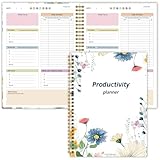
- Stay Organized and Focused: This planner is specifically designed to help individuals with ADHD or busy lifestyles prioritize their day with clear prompts, ensuring that the most important tasks are tackled first
- Comprehensive Layout: With 100 thoughtfully designed pages, including sections for daily scheduling, task prioritization, self-care, and brain dumps, this planner helps reduce distractions and keep your thoughts organized
- Motivation Through Rewards: Keep yourself engaged and motivated with built-in checklists and reward systems that make completing tasks more satisfying
- Flexible and Undated Design: Use this planner at your own pace—it's undated, so you can start anytime without worrying about wasted pages
- Durable and Convenient: Featuring a 7" x 10" size, a sturdy hardcover, and spiral binding for durability, this planner is easy to carry and perfect for daily use
For noisy settings, some people may choose ear defenders or noise-cancelling headphones as practical aids. These are options, not treatments or universal solutions: comfort, safety and the setting matter, and sensory preferences differ.
Switching tasks has a cost
Planning, organizing, multitasking, remembering information, maintaining routines and switching between tasks can all be difficult for some people. These executive-function difficulties can affect everyday activities and even access to services. The problem may not be that a task is impossible; it may be that starting it, holding its steps in mind, or returning to it after an interruption takes more effort than others can see.
That distinction matters. “Just do the next thing” assumes the next thing is obvious, the sequence is available in memory, and the transition is free. When those assumptions fail, a clearer prompt, written steps or fewer simultaneous demands may help more than pressure.
Rank #3

- 【Motivation Through Reward】Tailored for ADHD Cleaning Needs. Bright, colorful pages designed bring energy and joy to your cleaning routine. The cleaning checklist has easy-to-tick boxes provide dopamine rewards. Mark each cleaning task by checking or coloring to clearly display the results.Enable people with ADHD to gain a sense of achievement during the cleaning proces
- 【Practical Layout】Undated Daily, Weekly, Monthly, Quarterly, and Yearly Cleaning Schedule Planner help you break tasks into bite-sized wins.Deep Cleaning ensure nothing is overlooked. Make cleaning manageable
- 【Durable】 Waterproof PVC cover design, prevents pages from water and oil sprinkle | Large size 8.5" X 11"| Premium double-sided pages | Twin-wire Spiral Bound, pages are not easily scattered | 100GSM thick paper
- 【Family Chore Chart】Includes team templates to assign tasks to partners/kids.Also great for those who have kids that share cleaning responsibilities.Help ADHD adults and families stay organized
- 【Ideal Present Suggestion】The ultimate support for overwhelmed moms. Help them away from cleaning anxiety. Perfect for Mother’s Day or self-care
Social presentation can hide the load
Masking means managing social presentation to minimize or hide autistic traits. Some people do this to get through interactions or meet expectations. It can be exhausting, and it can make distress less visible to other people, including professionals. A person who appears composed may still be spending substantial effort monitoring how they sound, respond or behave.
That does not mean every social interaction is masking, or that every autistic person masks in the same way. It means outward appearance alone may not tell the whole story about someone’s effort or support needs.
What helps me think through a demanding situation
Rather than asking which “operating system” should win, I can look at the situation through a few practical questions. They are an organizing framework, not a validated assessment or a scorecard.
Rank #4

- Designed to help those with ADHD stay organized and focused
- No more distractions - prioritize what needs to get done and brain dump everything else
- Checklist with rewards to keep yourself motivated
- Undated - so you can use any year
- 50 sheets included - Enough to plan for the whole year!
- Sensory comfort: What input is taking up attention, and can I reduce or change it?
- Predictability: Do I know what will happen next, or would a clearer sequence make the situation easier to navigate?
- Switching effort: How many transitions are being asked of me, and can I finish one step before taking on another?
- Effort required: Is the task hard because of its content, its timing, the environment, or the number of things I must hold in mind?
- Fit for this context: Does this approach work for me here and now? A strategy that helps in one setting may not help in another.
The point is not to optimize myself into someone else’s idea of normal. It is to notice where the friction comes from and, when possible, change the conditions rather than blame the person experiencing them.
Independent reader supportYour contribution helps us test, update, and keep practical guides available for everyone.Making support more workable
Support can be more useful when it reflects an individual’s strengths, preferences and access needs. NHS England’s guidance gives examples of flexible appointment formats when clinically feasible, including video or telephone appointments where travel or punctuality is difficult. These are service-design possibilities, not instructions for everyone; the suitable format depends on the person and the clinical situation.
Quick wins for a faster PC:
Scan for outdated or missing drivers - takes under a minuteDriver Scan →Clear out junk files and repair common Windows errorsFree Scan →Fix the driver behind crashes, sound loss and screen glitchesFind Drivers →In ordinary routines, the same principle can mean making expectations explicit, allowing room for transitions, reducing avoidable sensory strain or agreeing on a predictable plan. What matters is whether a change addresses the actual barrier, rather than assuming that one adjustment fits everyone.
If you are wondering whether you might be autistic
A list of traits or a metaphor cannot diagnose you. The NHS advises adults who think they might be autistic to speak to a GP; a GP may refer them for an assessment and discuss local support. You can describe the situations that are difficult, the patterns you have noticed and the adjustments that help, without needing to arrive with a settled explanation.
For me, the hypervisor image is useful when it describes coordination and effort without treating difference as failure. It is a personal lens, not a map of everyone’s mind.
Quick Recap
Sources
- NHS: What is autism?
- NHS England: Meeting the needs of autistic adults in mental health services
- NHS: Signs of autism in adults
- Autism Central: Sensory differences
- NHS England: Report of the independent ADHD Taskforce: Part 2
- NHS Dorset: Language guide – Neurodiversity
Product prices and availability are accurate as of the date/time indicated and are subject to change. Any price and availability information displayed on Amazon at the time of purchase will apply.

