
Do these 3 things before closing this tab:
1Scan for outdated or missing drivers - takes under a minute2Repair Windows errors before they cause bigger problems3Fix the driver behind crashes, sound loss and screen glitchesiTechGuides is reader-supported. When you buy through links on our site, we may earn an affiliate commission. As an Amazon Associate I earn from qualifying purchases. Learn more
Yes—barn owls are primarily nocturnal. They usually spend daylight in a sheltered roost, become active around dusk, and do most hunting at night. “Nocturnal” describes their usual schedule, not an absolute rule: daylight hunting is documented in some places and seasons, especially in winter in the United Kingdom. Roosting, nesting, and raising young also overlap, but a nest site is not necessarily a bird’s only or permanent daytime refuge.
What “nocturnal” means for a barn owl
Barn owls (Tyto alba) are adapted to find small mammals in low light. Their facial discs funnel sound toward the ears, and their pale underwings can make a flying bird difficult to track visually at night. In practical terms, a barn owl’s main activity period begins near dusk, continues through the night, and often extends into dawn.
The Indiana Department of Natural Resources summarizes the pattern this way: “Barn owls are nocturnal, roosting during the day in manmade structures (like barns and grain silos), caves, or dense trees.” That description fits the normal daily rhythm, while observations from the Barn Owl Trust in the United Kingdom emphasize the crepuscular edges—dusk and dawn—when activity often rises.
What’s actually slowing this PC down?
Pick the symptom - the matching free tool is one click away.
Daylight is usually a resting period
During the day, a barn owl generally seeks a quiet, protected place rather than flying over open fields. A sheltered roost reduces exposure to weather, predators, and disturbance, and allows the bird to conserve energy for nighttime hunting. Pairs may roost together, particularly where a cavity, barn, or nest box provides enough cover.
#1 Best Overall
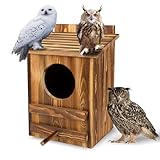
- High-Quality Natural Materials: Owl Houses for Outdoors are made of carbonized cedar wood to provide a safe perch for wild owls, preventing warping, cracking, and moisture, and effectively preventing rot, cracking, and discoloration
- Perfect Size: The Barred Owl Nesting Box measures 11.8 inches long, 9.5 inches wide, and 16.1 inches high, the larger size of the Outdoor Owl House provides a comfortable shelter for larger birds, and the entrance hole ensures that the owls have easy access to meet their resting and foraging needs
- Easy Installation: The Owl Nest Box comes with everything you need to install and is quick and easy to set up in minutes and can be quickly installed on trees, fences or gardening poles to attract owls to nest there
- Ventilated And Moisture-Proof: Owl Boxes for Outside features new design ,waterproof roof and ventilated side holes protect against rain while maintaining airflow, moisture and preservation, dry environment for long-term nesting owls have vital health issues
- Add a Touch Of Glamour To Your Your Patio: Ideal for birders, gardeners or nature lovers, an Owl Nesting Boxes for Outside enhances the biodiversity of your backyard, can provide years of reliable and safe habitat for wild owls, facilitates human observation and conservation, and adds rustic charm to your outdoor space
Daylight hunting can happen
Calling barn owls “night-only” is inaccurate. The British Trust for Ornithology (BTO) reports that birds in Britain can be seen hunting in daylight during winter. Seasonal food pressure, short winter days, weather, and the needs of growing young can all alter the usual schedule. This is a documented United Kingdom observation, not a claim that every barn owl population routinely hunts in full daylight.
Where barn owls roost
A roost is a resting place; it does not have to be the location where eggs are laid. Suitable shelter can include:
- Tree cavities and hollow limbs
- Old buildings, barns, and agricultural structures
- Grain silos and other large man-made structures
- Caves or rock openings
- Artificial barn owl nest boxes
The same cavity or building can serve as both a roost and a nest site, and a successful site may be reused in a later season. Reuse does not mean that every owl has one permanent address. Birds may shift between available shelters as food, weather, disturbance, or access changes.
Free tools Windows power users keep installed
One-click scans. No signup required.
Signs of a daytime roost
Pellets are the most useful clue. Barn owls cough up compact pellets containing indigestible bones and fur. A regular roost can accumulate pellets beneath a beam, ledge, box, or cavity entrance. Whitewash (droppings) and feathers may also be present. These signs show that an owl uses the area, but they do not prove that it is currently nesting.
Rank #2

- Thoughtful Design: The owl nesting box door features a bird stand and grooves to make climbing easier. Wood shavings are included to protect the chicks.
- Large Size: The owl nesting box measures 8 x 9 x 14.3 inches and can accommodate most wild birds, allowing them to live comfortably inside.
- Natural and healthy materials: Owl nest boxes are made of Fir, providing excellent protection for wild birds and withstanding harsh weather conditions.
- Good Ventilation and Moisture Prevention: The bottom of the owl nesting box has four ventilation holes that allow moist air to escape and promote air circulation, providing a healthy environment for the birds inside.
- Easy Installation: The packaging box includes instructions to guide you through the process. All necessary screws are included, so no additional preparation is required. Each part is clearly labeled, so you won't have to worry about installing them incorrectly. The entire process takes only a few minutes.
Do barn owls build a nest?
Not in the conventional songbird sense. The Barn Owl Trust states: “Barn Owls do not ‘build’ a nest as such, but lay their eggs directly onto the previous years’ nest debris – a compacted layer of owl pellets.” The material may be several seasons of broken-down pellets. If debris is absent, eggs can be laid directly on another suitable surface inside a cavity or box.
This strategy explains why a nest can look untidy or powdery rather than woven. The owl does not need to collect twigs, grass, or leaves before laying. A dry, dark, stable cavity with enough room for the adults and chicks matters more than a constructed cup.
Roost site versus nest site
A roost is selected primarily for daytime security. A nest site must also protect eggs and chicks, allow the adults to enter and leave, and remain close enough to productive hunting ground. Because those requirements overlap, one location may serve both purposes, but the terms are not interchangeable.
When barn owls breed: regional calendars
There is no single worldwide breeding season. Latitude, climate, rainfall, prey abundance, and local agricultural conditions all affect when laying begins. The following figures come from specific regional accounts and should not be merged into one global timetable.
Rank #3

- WildYard Owl Box: Make your backyard a wildlife paradise with the WildYard Owl House Cedar. It's a fantastic nesting box for owls, perfect for those looking to attract owls and support local ecosystems while adding charm to your garden
- Sturdy and Stylish: Built with durable cedar, this bird house is made to withstand the weather and look great doing it. Whether you're into bird houses for outside or a cedar box enthusiast, this model is designed for longevity and style
- Easy Access Cleanup: Keep your owlbox neat with the large front door that makes cleaning super easy. This feature ensures your birdhouses remain a welcoming spot for screech owls and other feathered friends without any hassle
- Bird-Friendly Hotel: More than just an owl house, this wooden haven welcomes a variety of birds, turning your yard into a bustling birdhouse community. It's an ideal nesting box for owls and a treat for birdwatching fans who love to see wildlife flourish
- Versatile Wildlife Shelter: This owl house doubles as an outdoor wildlife shelter, supporting local biodiversity and offering a safe haven for various species. It's a must-have for those who love birdhouses for outdoors and want to contribute to a healthier backyard ecosystem
| Region and source | Reported timing | What the figure describes |
|---|---|---|
| United Kingdom — Barn Owl Trust | Main season March–August; nests can occur in other months | General UK breeding-season guidance with substantial annual and regional variation |
| United Kingdom — BTO BirdFacts | Average first clutch date: 6 May; observed range: 30 March–4 July | Nest-record statistics for first clutches, not a promise that every pair follows those dates |
| Indiana, United States — Indiana Department of Natural Resources | Season can begin in March and continue until October | A long Indiana breeding season |
| Florida and broader U.S. account — University of Florida IFAS Extension | February–June; February laying is noted in Florida | General account with a specific early-laying example for Florida |
The Barn Owl Trust also reports that its historical UK average first-egg date moved from 9 May before 1990 to 17 April afterward. The Trust attributes that change almost certainly to climate change. This is a UK comparison of historical averages, not a universal date and not an independently tested estimate for every population.
Clutch size varies
BTO records for the United Kingdom give a typical clutch of four to six eggs, with an observed range of two to 12. Food supply is a major influence: abundant small mammals can support larger clutches or repeated attempts, while poor conditions can shorten or prevent breeding.
How eggs hatch and young develop
Incubation starts with the first egg
Eggs are laid over several days, and incubation begins with the first one. As a result, hatching is asynchronous: the oldest chick may be noticeably larger than the youngest. This age spread can help a brood make use of food when prey deliveries fluctuate, although the smallest chicks are most vulnerable when food is scarce.
| Stage | Timing reported by sources | Important qualification |
|---|---|---|
| Incubation | About 31–32 days in the Barn Owl Trust’s UK account; 30–34 days in Indiana DNR’s account | Regional figures overlap but are not a single worldwide constant |
| Early care | The female incubates while the male supplies food until the young are around three weeks old in the Barn Owl Trust account | Describes the UK account’s division of labor |
| Leaving the nest area | Generally 8–10 weeks in Indiana DNR’s account | Young may leave the box or cavity before they are fully independent |
| Learning after fledging | IFAS says fledglings roost near the nest while learning to fly and hunt and continue receiving food for a few more weeks | Leaving the nest is not the same as becoming self-sufficient |
Parents continue to provision young after the first flights. A fledgling perched near a barn or calling at dusk may still depend on adults, so an apparently empty nest box does not necessarily mean the breeding attempt has ended.
Rank #4

- The Barn Owl box is manufactured in the USA by JCS Wildlife.
- Outside is treated with Linseed oil to protect wood from elements. Wood is exterior grade plywood and is ready for outdoor exposure.
- The entrance hole is elliptical in shape measuring 4.5" high and 5.5" wide with 8 grip grooves below to aid in owl entry.
- Box comes assembled with mounting strips included with drain holes in the bottom and holes under the roof overhang allowing for air circulation
- Recommended placement is 12'-20' high. Dimensions: on box are 21" long, 24" wide, and 19.25" tall (roof overhangs box by 2 in front).
Why habitat and prey determine breeding success
A cavity alone cannot support a brood. Barn owls need open hunting territory with enough small mammals, especially in landscapes where vegetation allows them to hear and reach prey. The Barn Owl Trust identifies rough grassland with field voles as particularly valuable foraging habitat.
Conservation concerns identified by Cornell Lab of Ornithology for American Barn Owls include loss of nesting sites, changes in agricultural habitat and prey, rodent poisons, and vehicle strikes. Cornell also cautions that “American Barn Owls are difficult to count because they’re nocturnal and secretive, so population sizes are hard to estimate.” Local nest or sighting counts should therefore not be treated as a precise global population total.
Why rodent poison is a serious risk
Poison intended for rats or mice can move through the food chain. A barn owl that eats a poisoned rodent may be exposed to the same toxin. Avoiding unnecessary rodenticide use, securing food waste, and choosing non-poison control methods where feasible can reduce that risk.
Should you install a barn owl nest box?
A properly designed box can provide a roost, a nest site, or both, but occupancy is never guaranteed. The box must be placed where owls can reach it safely and where nearby habitat can supply prey. The Barn Owl Trust publishes free plans and design criteria; use those criteria rather than assuming that any generic wildlife box is suitable.
Best Value

- Easy to Assemble:This owl nesting box is designed for quick and hassle-free setup. Even beginners can install owl house effortlessly with the included step-by-step guide and complete hardware kit, providing owls a cozy and secure home in minutes.
- Check habitat first. Look for open foraging areas, rough grassland, field edges, and signs that small mammals are present. A box in an intensively paved or treeless area is unlikely to solve the food problem.
- Select a stable structure. Barns, large outbuildings, and other quiet buildings can work when the entrance remains accessible and the interior is protected from rain.
- Use a species-appropriate design. Follow the Barn Owl Trust’s published design criteria or plans, including entrance, internal space, and predator-protection details. Do not improvise from a small songbird-box pattern.
- Reduce hazards around the approach. Keep the flight path clear and consider nearby roads, exposed wires, domestic animals, and other obstacles that could injure adults or fledglings.
- Leave the box undisturbed once occupied. Indiana DNR advises avoiding disturbance while owls are present. Do not open, clean, photograph with a flash, or handle eggs and chicks during an active attempt.
Indiana DNR reports installing more than 400 nest boxes in suitable structures over the preceding 30 years and records 43 reported Indiana nests in 2017. Those are Indiana program figures, not evidence that a box will be occupied everywhere.
What to do if you find a barn owl in a building
- Keep your distance. A bird pressed into a dark corner during the day is usually roosting, not trapped.
- Do not seal the entrance. Check that adults can leave at dusk and return with prey.
- Postpone repairs. If a building needs work, obtain advice from a qualified local wildlife or bird-conservation organization before blocking a cavity or box.
- Do not remove pellets from an occupied site. Pellet debris may be the nesting surface itself.
- Seek help for an injured bird. Contact a licensed wildlife rehabilitator rather than attempting treatment or release.
Common misconceptions, answered
Are barn owls awake only at midnight?
No. Activity commonly rises around dusk and dawn, and hunting can occur at other daylight hours when conditions or food demands require it.
Does seeing an owl in daylight mean it is sick?
Not automatically. Winter daylight hunting is documented in Britain, and breeding adults may adjust schedules. However, a bird that cannot fly, is lying on the ground, or shows an obvious injury needs professional assessment.
Windows Errors? Fix Them Before They Spread
Repair common Windows errors and clear accumulated junk for a smoother, more stable PC - no reinstall needed.Free scan · no reinstallCrashes, No Sound, or Screen Glitches?
Random freezes, missing sound and display glitches usually trace back to one bad driver. Find and replace yours safely.Free scan · under a minuteDoes a nest box guarantee a family of owls?
No. Occupancy depends on prey, habitat, access, competition, disturbance, and box design. A box is a potential resource, not a substitute for a functioning hunting landscape.
Do barn owls use the same nest every year?
Some sites are reused, but individual birds can change roosts or nest locations. Reuse is common enough to plan for, yet it should not be interpreted as a permanent attachment to one box.
Quick Recap
Product prices and availability are accurate as of the date/time indicated and are subject to change. Any price and availability information displayed on Amazon at the time of purchase will apply.

