
Do these 3 things before closing this tab:
1Fix the driver behind crashes, sound loss and screen glitches2Repair Windows errors before they cause bigger problems3Scan for outdated or missing drivers - takes under a minuteiTechGuides is reader-supported. When you buy through links on our site, we may earn an affiliate commission. As an Amazon Associate I earn from qualifying purchases. Learn more
Not by default. An AI wellbeing tool used through work may keep conversations private from managers, may provide an employer with identifiable information, or may send only aggregated participation reports. The answer depends on the tool’s data flows, administrator settings, contracts, retention rules, the program structure and the law that applies—not on the words “private,” “secure” or “AI-powered” in a product description.
Before entering sensitive details, establish what is collected, who can see identifiable records, what the employer receives, how long information is kept and whether participation is genuinely optional. UK and US rules draw important distinctions, so a legal protection that applies in one arrangement may not apply in another.
What “confidential” should mean in a workplace AI tool
People often use “confidential” to mean that an employer cannot read an individual conversation. Privacy has several separate layers, however:
- Content confidentiality: whether anyone besides you and the service can read chat messages, screening answers or journal entries.
- Identity separation: whether records are linked to your name, work email, employee number, device or IP address.
- Reporting confidentiality: whether administrators receive individual results or only totals and trends for a group.
- Purpose limitation: whether information is used only for support, or also for attendance, performance, safety, insurance or employment decisions.
- Operational privacy: whether the provider, hosting company, analytics service or customer-support staff can access the data.
A tool can encrypt traffic and still disclose identifiable information to an employer. Conversely, an employer might receive participation statistics while the provider keeps individual conversations inaccessible to administrators. You need the actual configuration and agreements to know which situation applies.
#1 Best Overall
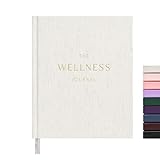
- 【DAILY WELLNESS JOURNEY】Unlike blank notebooks, this daily journal provides undated pages, each designed to guide you through gratitude, self-reflection, habit tracking, and goal setting. No complex phases—just a simple, sustainable practice to build consistency and self-awareness, one day at a time.
- 【ALL-IN-ONE HEALTH TRACKER】Stop juggling multiple apps. This wellness journal helps you track sleep, meals, water intake, exercise, emotional patterns, and gratitude—all in one elegantly designed layout.
- 【LAY-FLAT HARDCOVER + PREMIUM MATERIALS】Say goodbye to fighting with your journal. Our lay-flat binding allows 180° smooth writing on any surface. The hardcover with gold foil stamping feels luxurious in hand, while 100gsm premium paper prevents ink bleed—so your thoughts stay beautiful, page after page.
- 【UNDATED & FLEXIBLE – START ANYTIME】Life is messy. Your journal should adapt, not demand. With undated pages, you can begin your wellness journey today—no need to wait for Monday or January 1st. Skip days when life gets busy and pick up right where you left off.
- 【THOUGHTFUL, GIFT-READY PRESENT】More than a journal for women, this is a daily reminder that someone cares about their well-being. Beautifully packaged and ready to give, it’s the perfect alternative to generic flowers or chocolates. Whether for your partner, friend, or yourself—give the gift of inner clarity, 91 days at a time.
Can my employer see what I tell an AI wellbeing app?
Possibly. A workplace administrator may be able to see only that you enrolled, may receive an identifiable assessment, or may receive a report that combines many workers. The same service can behave differently for different customers because the employer chooses settings, contracts and integrations.
| How the service is provided | Information that may be collected | What the employer might receive | Questions to verify |
|---|---|---|---|
| Employer contracts directly with an app provider | Chat text, mood scores, screening answers, usage times, identifiers and device data, depending on the system | Individual records, administrator dashboards, participation data or aggregate reports | Is the employer a controller or customer administrator? Are individual entries blocked from administrators? Which integrations are enabled? |
| Wellness program offered through a group health plan | Health information collected by the plan or its service providers | Plan-administration information, aggregate reporting or other access allowed by the plan documents and applicable law | Is the program part of the group health plan? What plan-document changes, certifications and safeguards govern sponsor access? |
| Independent clinician or clinical service | Information entered for assessment or care, subject to the clinician’s professional and legal duties | Usually information permitted by the clinical arrangement, but the employer’s role and the service contract still matter | Who is the clinician’s patient or client? Does the employer receive a referral, fitness-for-work opinion or any underlying notes? |
| Outside app used without an employer account | Information described in the app’s privacy notice, potentially including content, identifiers, device and analytics data | Normally no direct employer dashboard, unless you connect a work account or the provider shares data through another arrangement | Which providers receive data? Can the account be identified through a work email, device management or a workplace integration? |
This table describes possible arrangements, not a guarantee for any particular product. A meaningful comparison requires the current privacy notice, administrator settings, data-processing terms and the employer’s staff privacy notice.
What UK law says about workplace wellbeing data
Health information is special category data
The UK Information Commissioner’s Office (ICO) says information about a worker’s physical or mental health is health data when it reveals health status. Under the UK GDPR and the Data Protection Act 2018, it is special category data. An employer therefore needs both a lawful basis under Article 6 and an additional special category condition under Article 9. The correct conditions depend on the purpose and circumstances; there is no single workplace-wellness permission that covers every use.
The ICO’s organisational guidance, accessed 13 October 2026, says employers should explain why information is collected, who can access it and the circumstances in which it may be disclosed. The page is under review following the Data (Use and Access) Act, so employers should check the current version when making a decision.
Monitoring must be necessary and proportionate
ICO health-monitoring guidance includes workplace wellbeing. Its example describes an office fitness app whose logged exercise data is provided to an employer and notes that wellbeing monitoring can include mental health. The existence of an app, chatbot or AI label does not establish confidentiality or make monitoring lawful.
Rank #2
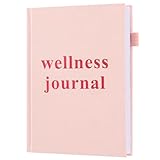
- 90 DAY HEALTH AND SELF CARE LOG: This Wellness Journal covers various aspects of physical and mental health, including dietary habits, sleep, goal setting, self-care, motivation, and self reflection. It will help you regulate your physical and mental health and develop self-care habits.
- SET hEALTH GOALS: It is a 13 week health planning log that can help you care more about your own health in daily life. The connotative diet plan and open-ended questions help you easily achieve your health goals.
- SIZE AND QUALITY: The size of this health log is A5 (8.27 inches * 5.23 inches), made of linen material, and is a deluxe edition. The thickness is 100gsm, providing a comfortable and sufficient space for writing.
- SUITABLE FOR PEOPLE OF ALL AGES: This health journal is a great choice. It will help you establish a long-term life goal, allowing you to maintain a comfortable and healthy lifestyle at all times.
- PERFECT GIFT: Our health journal would be a perfect gift, give them a gift they use every day.
Before processing, an employer should consider less intrusive alternatives and be able to justify why the monitoring is necessary and proportionate. Monitoring must not be unfair or discriminatory. A data protection impact assessment (DPIA) should be considered for sensitive health-information processing and is required before processing likely to result in high risk.
Consent is rarely a safe shortcut
Because of the power imbalance in employment, the ICO says consent is rarely an appropriate basis for processing workers’ health data. The analysis can differ for a genuinely optional program where a worker can decline or leave without negative consequences. Calling a program “voluntary” is not enough if refusing it affects access to work, benefits, scheduling or promotion.
AI and automated decisions add another layer
The ICO’s worker-monitoring guidance says the employer remains responsible for deciding why and how monitoring occurs, even when a third-party system performs the collection or analysis. Employers should assess the specific software, put necessary contracts in place and consider additional requirements when AI or automated decision-making processes worker data. Buying a commercial system does not transfer the employer’s accountability.
Does HIPAA protect my employer’s wellness app?
In the United States, the answer depends heavily on how the program is offered. The U.S. Department of Health and Human Services (HHS) distinguishes between a wellness program that is part of a group health plan and one offered directly by an employer outside such a plan.
Program offered as part of a group health plan
HHS says individually identifiable health information collected from or created about participants in a wellness program offered as part of a group health plan is protected health information (PHI) under HIPAA. If a group health plan allows the employer, as plan sponsor, to access PHI for plan administration without each person’s written authorization, HHS describes conditions including changes to plan documents, certification and safeguards that separate plan administration from employment functions.
Rank #3

- ✅ Focus On Self-Care With 91 Days For Well - Being: This manifestation journal is a 13-week guided mental health journal that will help you prioritize your well-being and enhance your confidence and happiness -improve productivity, create a vision and thrive in the moment. effective strategies to increase your overall happiness and self-love.
- EDR✅ Daily Journal with Quotes and Space for Reflection,Manifestation & Self-Assessment: Start each day by considering your daily goals and things you are grateful for. In the evening, Reflect on the daily quote and write down your dreams, thoughts, and plans to manifest them into reality so you can easily accomplish your goals. A simple, yet effective way to invite positivity, gratitude, and well-being into your life.
- ✅ Durable and High-Quality: This journal for men and women features an elegant and durable linen hardcover with gold foil lettering, measuring 8.3x5.8 inches , with FSC certified 100gsm sustainably sourced thick paper. It includes 3 colored ribbon bookmarks, a pen loop, an elastic closure for easy storage, and a pocket for loose papers or bills.
- ✅ Ideal Gratitude Gifts for Your Loved Ones - Everybody deserves a life of peace and happiness. So our mental health journal can be as a ideal gift to your friends and family experience the serenity of a grateful heart and mind. Give them a mindfulness journal and explore ways to improve their emotional well-being that they can use daily.
- ✅ Easy-to-Follow Guided Journal - Don’t know where to start your a journey of self-reflection ? Don’t worries! Our five minute therapy journal provides simple daily Guide design to set the flow. The motivational journal is undated so you can begin jotting down your thoughts whenever you”re ready to help your stay easy life.please contact to us via an Amazon message for a hassle-free refund or exchange If there are any question on our affirmation journal.
Those conditions are not a general rule that an employer can see all information held by a health plan. You need to know what the plan documents permit, which entity holds the data and whether the requested access is for plan administration rather than an employment purpose.
Windows Errors? Fix Them Before They Spread
Repair common Windows errors and clear accumulated junk for a smoother, more stable PC - no reinstall needed.Free scan · no reinstallOutdated Drivers Are Slowing You Down
One free scan finds every outdated or missing driver and matches the right update for your exact hardware.Free scan · exact hardware matchProgram offered directly by the employer
When an employer offers a wellness service directly and it is not part of a group health plan, HHS says information collected from employees by the employer is not protected by HIPAA. Other federal or state laws may still apply, and the employer’s privacy notices, contracts and technical settings remain important. “HIPAA-covered” is therefore not a synonym for confidential workplace use.
FTC rules still matter for health apps
The Federal Trade Commission’s Mobile Health App Interactive Tool emphasizes that an app’s privacy statements must match its actual data practices. Health-information exposure can affect employment, insurance and reputation and can cause emotional distress or embarrassment. A notice that promises one use while the system makes data available for another creates a serious compliance and trust problem, regardless of whether the app is marketed as an AI assistant.
Questions to answer before entering sensitive information
Use this checklist with the tool’s privacy notice, the employer’s staff privacy notice and any enrollment materials. Ask for written clarification when the documents do not answer a question.
- Identify every data type. Ask whether the service stores chat text, mood ratings, screening answers, free-text journals, voice or image inputs, usage metadata, device identifiers, location or work-account details.
- Map the recipients. Find out whether identifiable entries are available to the provider, employer administrators, HR, a health plan, a clinician, support personnel or subcontractors.
- Separate individual from aggregate reporting. Confirm whether managers receive names and scores, or only group totals. Ask what minimum group size is used before a report is shown and whether small teams can be inferred; if the documentation does not state this, treat the protection as unknown.
- Check the purpose. Look for language covering coaching, care, program evaluation, analytics, health and safety, absence, performance, insurance or employment decisions. A broad “business purposes” clause deserves clarification.
- Check optionality. Determine whether declining, pausing or leaving the program has any effect on pay, benefits, scheduling, promotion, performance reviews or access to work.
- Check retention and deletion. Ask how long records remain, whether you can delete or correct them, what happens when you leave the employer and whether backups or de-identified copies remain.
- Check onward transfers. Identify cloud hosts, analytics companies, customer-support providers and other external recipients, including transfers across borders.
- Check automated decisions. Ask whether an algorithm generates risk scores, recommendations or alerts about individuals and whether a human reviews them before any employment action.
- Check the responsible organisation. In the UK, identify the controller and processor roles. In the US, identify whether the service is operated by the employer, a group health plan or another covered entity.
If these answers are unavailable, do not assume confidentiality. Use the service only for information you are comfortable sharing under the documented arrangement, and consider an independent clinical or support channel when you need stronger separation from employment records.
Quick wins for a faster PC:
Clear out junk files and repair common Windows errorsFree Scan →Scan for outdated or missing drivers - takes under a minuteDriver Scan →Repair Windows errors before they cause bigger problemsFix Now →Rank #4

- 【DAILY WELLNESS JOURNEY】Unlike blank notebooks, this daily journal provides undated pages, each designed to guide you through gratitude, self-reflection, habit tracking, and goal setting. No complex phases—just a simple, sustainable practice to build consistency and self-awareness, one day at a time. Perfect as a guided journal or self care journal.
- 【ALL-IN-ONE HEALTH TRACKER】Stop juggling multiple apps. This wellness journal helps you track sleep, meals, water intake, exercise, emotional patterns, and gratitude—all in one elegantly designed layout. Works as a fitness journal, food journal, or mood tracker.
- 【LAY-FLAT HARDCOVER + PREMIUM MATERIALS】Say goodbye to fighting with your journal. Our lay-flat binding allows 180° smooth writing on any surface. The hardcover with gold foil stamping feels luxurious in hand, while 100gsm premium paper prevents ink bleed—so your thoughts stay beautiful, page after page.
- 【UNDATED & FLEXIBLE – START ANYTIME】Life is messy. Your journal should adapt, not demand. With undated pages, you can begin your wellness journey today—no need to wait for Monday or January 1st. Skip days when life gets busy and pick up right where you left off.
- 【THOUGHTFUL, GIFT-READY PRESENT】More than a journal for women, this is a daily reminder that someone cares about their well-being. Beautifully packaged and ready to give, it’s the perfect alternative to generic flowers or chocolates. Whether for your partner, friend, or yourself—give the gift of inner clarity, 91 days at a time. Also a wonderful gratitude journal or mental health journal.
How employers should evaluate an AI wellbeing service
Define the minimum necessary data
Start with the outcome the program is meant to achieve. If the goal is to measure participation or improve resources, collecting full conversation transcripts may be unnecessary. Limit fields, access and retention to what the purpose requires, and document why each sensitive field is needed.
Set access boundaries in the contract and the product
Contracts should state whether the provider acts on the employer’s instructions, which staff may access identifiable data, what support personnel can see, how subcontractors are used and when data is deleted. Technical settings should enforce those promises through role-based access, audit logs and separate administrator and employment systems where appropriate.
Assess risks before launch and after changes
A DPIA or equivalent risk assessment should examine discrimination, inference, re-identification of small groups, inappropriate manager access, security incidents and secondary uses. Reassess when the provider introduces a new AI feature, connects a new data source or changes retention. The employer remains responsible for the monitoring purpose even when a vendor supplies the software.
Be candid with workers
Explain the data collected, recipients, purposes, retention, rights and complaint routes in plain language before enrollment. State clearly whether participation is optional and what “aggregate” means in practice. Do not describe a service as confidential unless the configuration and agreements support that statement.
Common workplace questions
Can HR see my individual mood score?
Only the actual system design and agreement can answer that. A mood score may be visible to the provider, a clinician, an administrator or no one outside your account. Look for an explicit statement about identifiable results and administrator access rather than relying on a general privacy slogan.
Best Value

- FOCUS ON SELF-CARE WITH 90 DAYS OF WELLNESS PLANNING: Clever Fox Self-Сare Journal is a 3-month guided mental health journal that will help you prioritize your well-being and develop a habit of daily self-care.
- BUILD A HAPPIER & HEALTHIER MINDSET FOR YEARS TO COME: This self care notebook is filled with prompts, open-ended questions, wellness trackers, and many other tools to help you pinpoint the changes you can make to improve your well-being.
- SUPPORT A POSITIVE OUTLOOK ON LIFE WITH DAILY JOURNALING: Every morning, practice gratitude and choose your affirmation to foster positivity. Every evening, reflect on your day and build self-awareness by answering two questions that change daily.
- A5 SIZE, STICKERS & OTHER FEATURES: This A5-sized mood journal (5.8x8.3 inches) has an eco-leather hardcover, thick 120gsm paper, pen loop, elastic closure, and 3 bookmarks. The mood journal comes with 3 sheets of stickers and user guide.
- 60-DAY MONEY-BACK GUARANTEE: We will exchange or refund your meditation journal if you aren’t satisfied with your daily reflection journal for women for any reason. Reach out to us via message to refund your personal development journal.
Can my manager use a wellbeing result in a performance review?
That depends on the stated purpose, access controls and applicable law. If employment decisions are a possible use, the employer should disclose it and assess the additional fairness, transparency and automated-decision issues. A support tool should not silently become a performance-monitoring system.
Is an anonymous survey actually anonymous?
Not necessarily. Names may be removed while small-team reports, timestamps, login records, device details or free-text descriptions make a person identifiable. Ask how anonymity is tested, what group-size threshold applies and whether raw responses are retained.
What should I do if the employer will not answer?
Request the privacy notice, retention schedule, administrator-access policy and provider terms in writing. In the UK, ask which Article 6 lawful basis and Article 9 condition are relied on and whether a DPIA was completed where required. In the US, ask whether the program is part of a group health plan and which entity controls the information. If the answers remain vague, avoid entering details that could affect your employment, health insurance or reputation and seek independent advice appropriate to your jurisdiction.
Recommended Free Tools
Bottom line for workers and employers
AI wellbeing tools are not confidential by default. Treat confidentiality as a claim that must be demonstrated by data flows, settings, contracts, retention controls and the governing law. Workers should verify access and purpose before sharing sensitive information. Employers should use the least intrusive design, complete the required legal assessments, separate wellbeing support from employment decisions and describe the arrangement accurately.
The ICO captures the expectation behind these safeguards: “workers can legitimately expect that employers will respect their privacy when handling their health information.” That expectation is not a promise that every workplace tool meets it; the concrete configuration and legal structure determine what protection you actually have.
Quick Recap
Product prices and availability are accurate as of the date/time indicated and are subject to change. Any price and availability information displayed on Amazon at the time of purchase will apply.

