
Windows Errors? Fix Them Before They Spread
Repair common Windows errors and clear accumulated junk for a smoother, more stable PC - no reinstall needed.Free scan · no reinstallCrashes, No Sound, or Screen Glitches?
Random freezes, missing sound and display glitches usually trace back to one bad driver. Find and replace yours safely.Free scan · under a minuteiTechGuides is reader-supported. When you buy through links on our site, we may earn an affiliate commission. As an Amazon Associate I earn from qualifying purchases. Learn more
An AI training pass is one traversal of the training dataset, and it is usually called an epoch. The model processes each training example once during that pass. The batch size determines how many examples are handled together, so it also affects how many iterations or training steps fit into an epoch.
What does one AI training pass mean?
One training pass—one epoch—covers the training set so each example is processed once. Google’s Machine Learning Glossary defines an epoch as “a full training pass over the entire training set such that each example has been processed once.”
An epoch measures coverage of the dataset, not the number of times the model updates its weights. In ordinary minibatch training, the dataset is split into batches, and multiple updates may occur before the epoch ends.
How are epochs, batches, and steps different?
- Epoch (training pass): one traversal of the training set.
- Batch: a group of examples processed together. In the basic PyTorch optimization setup, the batch size is the number of samples propagated through the network before parameters are updated. See PyTorch’s optimization tutorial.
- Iteration or training step: typically the processing and update cycle for one batch in minibatch training. In Hugging Face Trainer’s description, a training step calculates loss, calculates gradients, and updates weights; exact logging conventions can vary with framework and configuration. See the Transformers v4.52.3 Trainer documentation.
Do not confuse these dataset-level and batch-level terms with a model’s forward and backward passes. A forward pass computes predictions; a backward pass calculates gradients from the loss. These are operations within training, not a traversal of the whole dataset. PyTorch illustrates the distinction in its Introduction to PyTorch.
#1 Best Overall

- PLEASE NOTE: Exporting an NVIDIA RTX Pro 6000 GPU outside the US requires strict adherence to the U.S. Export Administration Regulations (EAR) and issuance of an export license from the Bureau of Industry and Security (BIS). Compliance and Know Your Customer (KYC) screening may be required as a condition of order acceptance. [NVIDIA Blackwell Streaming Multiprocessor] The new SM features increased processing throughput, and new neural shaders that integrate neural networks inside of programmable shaders | DLSS 4: Multi Frame Generation ensures ultra-smooth frame pacing for lifelike simulations.
- [Double-Flow-Through Design] The RTX PRO 6000 Blackwell features a double-flow-through cooling design, optimizing efficiency and airflow to sustain peak performance under 600W power loads. | [5th Gen Tensor Cores] Deliver up to 3X the performance of the previous generation and support for FP4 precision for faster AI model processing times with reduced memory usage, enabling local fine-tuning of LLMs and generative AI | [4th Gen Ray Tracing Cores] Double the ray-triangle intersection rate of the previous generation to create photoreal, physically accurate scenes and immersive 3D designs with RTX Mega Geometry, which enables up to 100X more ray-traced triangles.
- [PCIe Gen 5] Support for PCIe Gen 5 provides double the bandwidth of PCIe Gen 4, improving data-transfer speeds from CPU memory and unlocking faster performance for data-intensive tasks like AI, data science, and 3D modeling. | [GDDR7 Memory] With 96 GB of GPU memory and 1.8 TB ps bandwidth, it can tackle massive 3D and AI projects, fine-tune AI models locally, explore large-scale VR environments, and drive larger multi-app workflows.
- [DisplayPort 2.1] Achieve unparalleled visual clarity and performance, driving high resolution displays at up to 8K at 240 Hz and 16K at 60 Hz. Increased bandwidth enables seamless multi-monitor setups while HDR and higher color depth support ensures superior color accuracy for precision work, such as video editing, 3D design, and live broadcasting.
- [Universal MIG] Divide a single RTX PRO 6000 Blackwell into multiple isolated instances, each with dedicated resources, allowing for concurrent execution of multiple workloads, optimized GPU utilization, and secure isolation of different applications or users. [WARRANTY] 3 YR Manufacturer's Warranty. Bulk OEM Packaging. Retail Packaging is NOT included.
How many steps are in one epoch?
When the dataset divides evenly into batches, the calculation is:
Iterations per epoch = number of training examples ÷ batch size
Rank #2

- NVIDIA Ampere Architecture-based CUDA Cores - Double-speed processing for single-precision floating point (FP32) operations and improved power efficiency provide significant performance improvements for graphics and simulation workflows, such as complex 3D computer-aided design (CAD) and computer-aided engineering (CAE), on the desktop.
- Second-Generation RT Cores - With up to 2X the throughput over the previous generation and the ability to concurrently run ray tracing with either shading or denoising capabilities, second-generation RT Cores deliver massive speedups for workloads like photorealistic rendering of movie content, architectural design evaluations, and virtual prototyping of product designs. This technology also speeds up the rendering of ray-traced motion blur for faster results with greater visual accuracy.
- Third-Generation Tensor Cores - New Tensor Float 32 (TF32) precision provides up to 5X the training throughput over the previous generation to accelerate AI and data science model training without requiring any code changes. Hardware support for structural sparsity doubles the throughput for inferencing. Tensor Cores also bring AI to graphics with capabilities like DLSS, AI denoising, and enhanced editing for select applications.
- Third-Generation NVIDIA NVLink - Increased GPU-to-GPU interconnect bandwidth provides a single scalable memory to accelerate graphics and compute workloads and tackle larger datasets.
- 48 Gigabytes (GB) of GPU Memory - Ultra-fast GDDR6 memory, scalable up to 96 GB with NVLink, gives data scientists, engineers, and creative professionals the large memory necessary to work with massive datasets and workloads like data science and simulation.
For example, Google’s glossary uses 1,000 examples and a batch size of 50: one epoch takes 20 iterations. Google’s Machine Learning Crash Course gives another explanatory example: 1,000 examples divided into mini-batches of 100 takes 10 iterations per epoch. These are arithmetic examples, not measured results; see Google’s hyperparameters lesson.
Free tools Windows power users keep installed
One-click scans. No signup required.
If the dataset size is not divisible by the batch size, the last batch may be partial or may be dropped, depending on the training setup. That affects the actual step count, so the division formula alone does not determine an exact integer in every implementation.
Rank #3
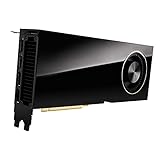
- Memory: 48GB, GDDR6
- PCI Express x16 4.0 interface
- Maximum resolution: 7680 x 4320 pixels
- Ports: 4 x DisplayPorts
- Backed by a 3 years manufacturers warranty
What does a training epoch do?
During an epoch, the training loop works through batches of examples. For each batch, the model produces predictions, a loss measures the error, gradients are calculated, and the optimizer updates the weights. PyTorch’s training tutorial equates two epochs with two passes over the training dataset and demonstrates the batch-based loop.
Once the run has completed its configured epochs, the model has had the corresponding number of opportunities to learn from the training data—subject to how the loop handles sampling, streaming data, and partial batches.
Rank #4

- A M D R9-9900X 4.4GHz 12 core | 256GB DDR5 RAM
- N V I D I A - G e F o r c e 2X5090 64 GB | 1600W Power Supply
- 360mm Liquid Cooler | 8 TB NVMe SSD Boot Drive
- Ready to work, preloaded with Windows 11 Pro and the latest drivers
- Custom built Dual GPU AI Workstation, professional cable management, fully tested
Does training for more epochs make a model better?
Not necessarily. The epoch count is a hyperparameter: it is chosen for a particular training setup, and Google notes that selecting it may require experimentation. More passes mean more training exposure, but epoch count alone does not establish model quality or generalization. Training duration and step choices also depend on workload characteristics, batch size, data augmentation, regularization, and other tuning decisions described in Google’s step-count tuning guidance.
Do these 3 things before closing this tab:
1Scan for outdated or missing drivers - takes under a minute2Clear out junk files and repair common Windows errors3Fix the driver behind crashes, sound loss and screen glitchesQuick Recap
Best Value

- Experience the raw power of the NVIDIA GB10 Grace Blackwell Superchip. Delivering 1 PFLOPS of FP4 AI performance, this workstation handles 200B+ parameter models locally with sparsity. This is the same architecture powering the world’s most advanced data centers, brought directly to your desk for zero-latency development.
- Pre-installed with NVIDIA DGX OS, the GN100 is tuned for the full NVIDIA AI stack—CUDA, PyTorch, NIM microservices, and the NeMo Framework. The NVIDIA GB10 Grace Blackwell Superchip pairs a 20-core Arm CPU with a Blackwell GPU featuring fifth-generation Tensor Cores, delivering 1 PFLOP of FP4 AI performance with sparsity. Prototype reasoning models locally and deploy to DGX cloud or data centers with zero code changes.
- Eliminate the bottleneck between CPU and GPU. The GN100 unified memory architecture lets the Blackwell GPU and 20-core Arm CPU access a shared 128GB pool of LPDDR5X-8533 memory over NVLink-C2C—coherent, addressable, and bottleneck-free. This architecture enables 200B+ parameter models to run locally on hardware that would choke a standard desktop, providing the capacity and bandwidth required for real-time inference at scale.
- Two 200Gbps ConnectX-7 ports. Direct-attach a second GN100 for 405B-parameter inference. Add a RoCE 200 GbE switch and link up to four units in a high-speed cluster—the standard configuration for university labs and B2B teams scaling distributed training. Combined with 128GB of LPDDR5X coherent unified memory per node, the GN100 scales as your models scale. Quiet luxury, server-class throughput.
- For proprietary models and regulated datasets, every byte stays on-device. The GN100 ships with a 4TB self-encrypting NVMe SSD, an integrated Kensington lock, and a tamper-resistant 1.2kg sealed chassis. Pair with NVIDIA NemoClaw for sandboxed agentic workflows and policy-based privacy controls. Build, fine-tune, and run sensitive workloads without a single packet leaving your lab.
A quick way to read training settings
- Use epochs to understand how many dataset passes are configured.
- Use batch size to understand how many examples are processed together.
- Use steps per epoch to estimate how many batch cycles make up a pass, accounting for any partial or dropped final batch.
- Use total training steps to understand the number of batch-level update cycles across the run; this is not automatically the same number as the epoch count.
Product prices and availability are accurate as of the date/time indicated and are subject to change. Any price and availability information displayed on Amazon at the time of purchase will apply.

