
Free tools Windows power users keep installed
One-click scans. No signup required.
iTechGuides is reader-supported. When you buy through links on our site, we may earn an affiliate commission. As an Amazon Associate I earn from qualifying purchases. Learn more
There is no universal winner: cameras support visual monitoring, drones provide aerial surveys and progress views, and wearables can alert individual workers to nearby equipment or monitor physiological and environmental conditions. Choose according to the hazard, the area or person that must be observed, how quickly someone must respond, site conditions, implementation burden, and privacy impact. These tools can complement one another, but the evidence does not establish a single best system, an accuracy ranking among products, or that AI can replace a legally required competent safety monitor.
What each approach can—and cannot—observe
“AI construction site monitoring” can describe several different tasks, not one interchangeable capability. A camera observes a scene; a drone captures an aerial view or survey; a wearable stays with a worker or measures conditions near that person. The data and resulting alerts are useful only when matched to a defined hazard and an operational response.
| Approach | Typical coverage | Documented construction uses | Important boundary |
|---|---|---|---|
| Cameras | A fixed or mobile visual area | Visual monitoring intended to support occupational safety and health | The cited EU-OSHA material does not establish a particular AI feature, accuracy rate, or camera’s suitability for a specific site. |
| Drones | An aerial overview or mapped area, captured during a flight | Mapping, site surveys, and work-progress monitoring; they may reduce the need for workers to enter dangerous areas. | They are task-specific, and safety challenges in human-drone collaboration remain an area of concern. |
| Wearables and sensors | A particular worker, body, or nearby environment | Proximity alerts around heavy equipment; physiological monitoring that may warn of heat stress; environmental sensing for gases, temperature, humidity, or noise | Cost, maintenance, privacy, sensor selection, and performance characteristics affect deployment. |
These use cases are described by EU-OSHA’s overview of digitalisation at work and NIOSH materials on construction wearables and construction automation and robotics. They do not amount to a controlled comparison of competing products. In particular, the available material does not show that one modality detects hazards more accurately than another.
PC Slower Than It Used to Be?
A free scan shows the junk files, broken settings and background clutter dragging Windows down - then fixes them in one click.Free scan · Windows 10 & 11Outdated Drivers Are Slowing You Down
One free scan finds every outdated or missing driver and matches the right update for your exact hardware.Free scan · exact hardware matchThese modes are complementary rather than interchangeable. A drone can give an aerial view for mapping or progress documentation, but that is not the same as a continuous view of a work area or an alert tied to one worker’s proximity to equipment. A camera can observe a visual scene, but its view does not automatically become a worker-worn warning or a measurement of heat, gas, humidity, or noise. A wearable can provide a personal or local signal, but it does not provide the same broad visual or aerial overview. A site with several distinct monitoring tasks may therefore need different tools for different tasks, alongside ordinary safety procedures.
#1 Best Overall
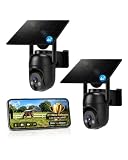
- 【4G LTE Network & No WiFi Needed】Cellular security camera include a pre-installed SIM card with 7-day unlimited trial data; auto-connects to the strongest U.S. network (Verizon/T-Mobile/AT&T). After the 7-day trial ends, subscribe to unlimited data for $19.90/month or $169.90/year via the UBox app to maintain remote access. Note: Each device requires a separate data plan subscription and cannot be shared. 100% wireless & no wifi needed—ideal for ranches, construction sites, vacation homes, or home security. (SIM card is non-replaceable)
- 【High-capacity Battery & Non-stop Solar Powered】 No wifi security camera that works without WiFi comes with a rechargeable battery and a 6W solar panel; the high-capacity battery and solar panel together provide continuous power for 365 days of uninterrupted operation, so you don't need to worry about it running out of power. Plus, with an IP65 weatherproof rating, this solar outdoor camera withstands rain, dust, heat, and cold, delivering reliable performance in harsh outdoor environments year-round. (Do not support WiFi)
- 【2K Color Night Vision & 360° Wide View】 This jobsite camera offers a 360° wide view and 4X digital zoom. You can remotely pan 355° and tilt 100° via the UBox App, which increases the flexibility of the 360 camera to get the broadest view without blind spots. By adopting color 2K HD night vision mode, the non wifi security camera could capture colorful footage up to 65ft. Even in the dark, the full-color night vision lets you always keep an eye on your assets. (Do not support auto-tracking)
- 【Smart Motion Detection & Real-Time Alerts】 Solar security cameras wireless outdoor features an advanced PIR motion sensor that detects movement and immediately sends an alarm notification to your mobile phone when humans or animals are detected. Built-in microphone and speaker let you listen and speak through the app to deter intruders. If you turn on white light alarm & siren alarm, solar camera will also emit dazzling lights and sirens, and you can customize detection zones and sensitivity to reduce unnecessary notifications.
- 【Flexible Dual Storage Options & Multi-Sharing】 Enjoy 30-day free trial cloud storage with easy playback anytime via the app— subscription is required after the 30-day trial ends. For added flexibility and data security, the 4g camera also supports local storage with a TF card up to 128GB (not included). Easily share cellular camera access with family members through the app, allowing remote property monitoring anytime, anywhere, even when abroad. (TF Card not included)
How to choose: start with the hazard and the action
Do not begin by asking which device has the most impressive AI label. Define what must be noticed, who or what is exposed, and what a person should do when the system identifies a problem. The right coverage follows from that answer.
Moving equipment near workers
If the central concern is a worker approaching or being approached by heavy construction equipment, a worker-worn proximity alert is a use case NIOSH describes. Decide who receives the warning, how the worker or equipment operator is expected to react, and how the warning is handled if it is missed or unclear. A camera’s view of a scene is not automatically an equivalent personal proximity alert.
That distinction matters when selecting the intended recipient and response. A signal intended for an individual worker, one intended for an equipment operator, and an observation intended for a supervisor are not the same workflow. Specify which person is expected to notice the warning and what safe action should follow; the cited NIOSH material identifies the proximity-alert use case but does not prescribe a universal alert protocol for every site.
Do these 3 things before closing this tab:
1Clear out junk files and repair common Windows errors2Fix the driver behind crashes, sound loss and screen glitches3Repair Windows errors before they cause bigger problemsWork progress, site mapping, or aerial surveys
If the task is documenting site layout or work progress from above, a drone is the directly relevant option. NIOSH reports construction uses for mapping, site surveys, and progress monitoring, and notes that drones can reduce the need for workers to enter dangerous areas. That benefit does not make every flight safe by default: the site still needs controls for the interaction between people and drones.
Use the drone for the aerial task it is intended to support rather than assuming that one survey answers every safety question. A progress view and a worker-specific proximity warning serve different purposes. Human-drone collaboration is also a safety consideration: NIOSH’s 2024 construction automation and robotics discussion says challenges in this area remain unexplored, so the presence of a drone should not be treated as proof that the surrounding work is risk-free.
Rank #2

- NO WIFI NEEDED — WORKS ANYWHERE WITH CELL SIGNAL — Connects over LTE cellular, not your home network, so it works at a remote gate, barn, or cabin with zero WiFi setup or dropped connections.
- 360° PAN, TILT & ZOOM FROM YOUR PHONE — Remotely rotate the camera to check any angle of your property on demand, instead of installing multiple fixed cameras to cover the same ground.
- SOLAR + RECHARGEABLE BATTERY — RUNS OFF-GRID — Solar charging keeps the built-in battery topped off, so the DEFEND 360 runs continuously anywhere, with no wall outlet required.
- 4K PHOTOS, 1080P VIDEO, INSTANT MOTION ALERTS — Get real-time notifications and imagery the moment motion is detected, sent straight to your phone.
- WEATHER-RESISTANT, BUILT TO STAY OUTSIDE — Handles rain, heat, cold, and years of exposure without missing a trigger.
Visual observation of an area
If the need is to observe a location visually, a camera may support that purpose. EU-OSHA lists mobile monitoring cameras among digital systems developed with the aim of monitoring and enhancing occupational safety and health. That broad description should not be read as proof that any camera or AI analytics can identify a particular hazard reliably. Establish the exact scene, condition, and decision the system is meant to support.
Before deployment, define the visual area the camera is meant to cover and the safety decision it is intended to support. The cited EU-OSHA overview does not provide a model-level feature list, accuracy figure, or validation method. Do not infer from the word “AI” that a camera will reliably recognize every relevant condition or that an alert has been acted on.
Heat, gases, noise, or other local conditions
If the risk is physiological or environmental, a wearable or direct-reading sensor may be more relevant than an aerial view. NIOSH describes wearables that may warn of heat stress and environmental sensing for gases, temperature, humidity, and noise. Its Direct Reading and Sensor Technologies Center says sensors can detect and monitor hazardous conditions, help assess interventions, and trigger alarms immediately. It also identifies a need for guidance on selecting sensors and evaluating their performance.
“Sensor” is not a guarantee of suitability. Selection depends on the condition to be measured and the sensor’s performance characteristics. NIOSH’s sensor center highlights the need for guidance in choosing and evaluating direct-reading technologies; the cited sources do not give a universal model-selection rule or a single specification that fits every hazard. Identify the relevant measurement and how the site will use it before relying on a reading or alarm.
Compare the operational trade-offs
| Decision factor | Cameras | Drones | Wearables and sensors |
|---|---|---|---|
| What is covered | A fixed or mobile visual area | An aerial view, survey area, or progress capture | A specific worker or a local body/environment condition |
| Best-aligned tasks in the cited sources | Visual monitoring | Mapping, surveying, progress monitoring | Equipment proximity, physiological monitoring, environmental measurement |
| Alert or response design | Must be defined for the visual-monitoring task; no universal design is established. | Must account for site controls and interaction with people. | Sensors can trigger alarms, but a site must define who receives an alert and what action follows. |
| Known deployment concerns | Privacy and worker trust where video is used; actual performance depends on site conditions and the system. | Human-drone collaboration presents safety challenges. | NIOSH identifies cost, maintenance, privacy, and sensor selection/performance as concerns. |
| Evidence available here | Monitoring use is described, but product-level AI features and accuracy are not established. | Construction use cases are described, but no model-level accuracy ranking is established. | Use cases and ethical considerations are described, but no universal sensor-selection rule or product ranking is established. |
Cost deserves a practical, not speculative, comparison. NIOSH identifies cost and maintenance as issues that could affect how widely wearable technologies are adopted, but the cited material provides no general price, installation estimate, or lifetime cost for cameras, drones, or sensors. Ask what equipment and infrastructure a particular system requires, what upkeep it entails, and who is responsible for it. Compare those site-specific demands against the hazard and coverage the system is meant to address instead of assuming a category is inexpensive or costly.
Rank #3

- Forever Power: Empower your viewing to go anywhere you desire. Enjoy off-the-grid freedom with the upgraded solar panel and a powerful 9,400 mAh battery.
- Seamless Connectivity with 4G and Wi-Fi: The Dual-Mode technology of eufy 4G LTE Cam S330 Ultimates security with uninterrupted access compared to traditional cellular no wifi cameras. If Wi-Fi signal is lost, the auto-switching 4G feature swaps to mobile data. Guaranteeing continuous use.
- Works with EIOTCLUB to Automatically Switch to the Strongest Network:eufy 4G LTE Cam S330 includes an EIOTCLUB SIM card, which is compatible with the three major U.S. networks: AT&T, T-Mobile, and Verizon. For consistent, reliable coverage, we recommend using the provided EIOTCLUB SIM, which supports cross-network roaming to connect to the strongest signal automatically. If you prefer using SIMs from AT&T, T-Mobile, or Verizon, please ensure they are data-only plans.
- 4K in Color, Day and Night: The color 4K camera gives you the clarity to identify a license plate 30 feet (10 meters) away. Shine a light on your surroundings with the 100-lumen spotlight to continue seeing colorful details up to 26 feet (8 meters) away, all through the night.
- 360° Viewing with AI Tracking:All-around viewing with pan and tilt. AI detects and tracks people, and vehicles, with an extensive range of motion.
Some site conditions can undermine sensing regardless of the chosen technology. A 2026 NIOSH bulletin on construction robotics identifies dust, rain, glare, and poor lighting as potential causes of sensor degradation. Construction layouts and activities also change quickly, so a system that works in one location or under one set of conditions should not simply be assumed to work everywhere on the site. Validate it under the conditions in which it is expected to operate.
Consider the full response path, not just whether a sensor can generate an alert. NIOSH says direct-reading sensors can trigger alarms, but its material does not prescribe one universal response design. Before relying on an alert, specify who receives it, how quickly it needs attention, what safe action follows, and what happens if the alert is missed. A signal without an understood response may fail to change the exposure it was intended to address.
Plan a deployment around the site
The following sequence is a practical way to translate the documented use cases into a site decision. It is not a substitute for a hazard assessment, applicable regulations, or manufacturer-specific instructions.
- Write down the hazard and the decision it requires. Be specific: for example, recognizing a visual condition in an area, documenting progress, warning a worker about nearby equipment, or detecting a local environmental condition. Do not choose a modality before defining the task.
- Choose the coverage that matches the task. Use visual monitoring for a visual observation need, aerial capture for mapping or progress work, and a wearable or sensor for a worker-specific or local measurement need. If the task has more than one part, consider complementary tools rather than treating them as substitutes.
- Map the response path. Identify who sees or receives the information, who can act on it, and what safe action is expected. For an alarm, decide how it is communicated and handled on the site. Do not assume an automated alert itself controls a hazard.
- Evaluate actual site conditions. Check relevant work areas and operating conditions, including dust, rain, glare, poor lighting, and changing layouts. Determine whether the selected system remains useful under those conditions and how the site will recognize a degraded or unavailable signal.
- Assess installation and upkeep. Account for infrastructure and maintenance needs, particularly for wearable systems. NIOSH identifies cost and maintenance as factors that can affect adoption; the sources do not provide a universal cost estimate or infrastructure specification, so establish those for the actual system and site.
- Set data and privacy rules before collection starts. State the purpose, what data is collected, who can access it, how long it is retained, and whether it may be disclosed for another purpose. Involve workers in the design and explain the program before using it.
- Check the system against the real task. Confirm that it supports the intended observation, measurement, or alert in the conditions where it will be used. NIOSH’s sensor center emphasizes the need for guidance on sensor selection and performance characteristics; do not treat a generic claim or an AI label as proof of fitness for a safety-critical task.
- Keep the safety process effective without the technology. Make clear what workers and supervisors do when equipment is unavailable, an alert is uncertain, or conditions change. Technology should fit into the site’s safety arrangements rather than become an unexamined replacement for them.
AI monitoring does not erase legal safety duties
For U.S. construction fall-hazard safety monitoring, OSHA’s FAQ describes a monitor who is competent to recognize fall hazards, within visual sighting distance of the employee, close enough to communicate orally, and not assigned other duties that could distract from monitoring. Do not claim that AI camera monitoring alone satisfies these conditions. The applicable rule depends on the work and jurisdiction; consult the governing regulation and the specific monitoring plan.
This is a crucial distinction between technology that may assist observation and a legally defined human monitoring role. A camera feed or automated alert should not be presented as a substitute for the monitor OSHA describes. OSHA’s answer is specifically about its fall-hazard safety monitoring requirements; it is not a blanket statement about every construction hazard or every jurisdiction. See OSHA’s FAQ on requirements for safety monitoring systems.
What’s actually slowing this PC down?
Pick the symptom - the matching free tool is one click away.
Rank #4

- 【Built-in SIM Card & Data Service】Comes with a pre-installed & pre-activated 4G LTE SIM card with a 7-day free data trial. Multiple flexible plan options are available, including unlimited data plans with both monthly and annual billing cycles. (For US use only)
- 【Wireless Solar-Powered & 4G LTE Network】: Forget about messy wires! This wireless camera no internet needed is completely wire-free in design, no need power or wifi connection, this Cell camera is powered by solar panel and rechargeable battery, connected to internet via its own SIM card, 100% wire-free, very easy to install.
- 【PTZ & 2K HD Color Night Vision】: This non wifi camera supports 270° pan, 90° tilt and 4x digital zoom, fully cover all around, the cellular camera has 2K HD image sensor and 4pcs spotlight, which can offer stunning clear color pictures for day and night.
- 【Human Motion Detection & Phone Notification】: The 4G camera is built-in sensitive PIR sensor, that can detect moving people, vehicles and animals, once it is triggered, the no wifi security camera outdoor will push instant alerts to your mobile phone. 4G Security camera no WIFI needed, allows you to leave one eye on what you care.
- 【Remote Playback & Two-Way Audio】: Ubox camera can save events to the local micro SD card (excluded) and free cloud storage(Need to apply), allows playback on the free Ubox phone app. Built-in speaker and microphone help you to talk to visitors under the LTE security camera through your mobile phone.
Protect privacy and worker trust
Safety monitoring can affect workers even when the system is intended to prevent injury. Video, wearable measurements, and location or proximity signals raise questions about purpose, access, retention, secondary use, and how the program affects the people being monitored. EU-OSHA identifies regulatory, ethical, privacy, and psychosocial concerns associated with digitalisation at work. Treat those issues as part of system design, not as an administrative detail to resolve after collection begins.
NIOSH’s ethical framework for wearable sensors sets three objectives: justify the monitoring, optimize it through the least intrusive means necessary, and minimize harm. It also calls for informed consent, clear disclosure of the program’s purpose and future data disclosures, and an opportunity for nonparticipants to work outside a videotaping area. Those principles are especially relevant when monitoring is not limited to a narrowly defined safety signal.
- Explain the safety purpose in plain language before deployment.
- Tell workers what is collected, who can access it, how it will be used, and what future disclosures are possible.
- Collect only what is necessary for the stated purpose and consider less intrusive alternatives.
- Set access, retention, and deletion rules before data collection.
- Where videotaping is involved, consider how nonparticipants can work outside the videotaping area.
These are ethical design considerations, not a complete statement of legal requirements. Applicable privacy, employment, aviation, and safety rules depend on the location and work. NIOSH’s framework is available at Wearable Sensors: An Ethical Framework for Decision-Making.
What the evidence does—and does not—establish
NIOSH quoted historical CPWR figures in its 2019 construction wearables bulletin: nearly 20% of work-related fatalities in a given year occurred on construction sites, while construction employed about 6% of the U.S. workforce. Those figures are attributed to CPWR 2018 in the NIOSH article; they are historical context, not current estimates.
The 2019 bulletin’s authors—Scott Earnest, PhD, PE, CSP; CAPT Alan Echt, DrPH, CIH; CDR Elizabeth Garza, MPH, CPH; John Snawder, PhD, DABT; and Rick Rinehart, ScD—summarized an important adoption constraint: “Cost, maintenance, and privacy are all issues that could affect how widely these technologies are adopted.” That caution is about wearable technologies, and it reinforces why a site should assess practical upkeep and worker trust along with technical fit.
Best Value

- 4G LTE outdoor security camera with included SIM card, ideal for construction sites, and storage areas where Wi-Fi is not available.
- Wireless surveillance powered by a frameless solar panel and high-capacity battery, delivering up to 6 months of autonomy with no external power.
- Detects motion up to 100 ft and sends instant photo alerts or 15-second video clips on demand, giving real-time visibility of your tools, equipment, and site.
- Integrated deterrent light signals the camera’s presence and repels intruders, protecting valuable materials, trailers, and storage containers.
- Rugged antenna, IP65 weather resistance, and durable solar design ensure continuous operation in rain, snow, dust, and harsh jobsite conditions.
The cited official materials establish distinct use cases and important design concerns. They do not provide controlled side-by-side testing, product-specific accuracy results, a current inventory of available products, or evidence that one approach is best for all sites. Nor do they establish an AI accuracy threshold or prove that monitoring technology can replace a required human role. Accordingly, a defensible comparison is about matching coverage and task to a real hazard, validating performance at the site, and ensuring that the information leads to an appropriate response—not ranking cameras, drones, and wearables by an unsupported score.
Frequently Asked Questions
Which monitoring approach is best for construction site safety?
There is no universal winner in the cited official sources. A camera supports visual monitoring, a drone is used for mapping, surveys, and progress views, and wearables can provide proximity alerts or physiological and environmental sensing. Start with the hazard, required coverage, response pathway, site conditions, maintenance burden, and privacy impact.
Can AI cameras replace a required construction safety monitor?
Do not assume they can. OSHA’s U.S. fall-hazard monitoring FAQ describes a competent human monitor who can see the employee, communicate orally, and avoid distracting duties. AI camera monitoring alone should not be presented as meeting those conditions. Check the governing rule for the specific work and jurisdiction.
What are drones used for in construction monitoring?
NIOSH reports uses including mapping, site surveys, and work-progress monitoring. Drones can reduce the need for workers to enter dangerous areas, but human-drone collaboration still presents safety challenges; a drone is not inherently risk-free.
What should a construction site check before relying on a sensor alert?
Define the condition being measured, select a sensor with appropriate performance characteristics, and test it under site conditions such as dust, rain, glare, and poor lighting. Decide who receives an alarm, what safe action follows, and what happens if the signal is missed or unavailable. NIOSH identifies the need for guidance on sensor selection and evaluation.
How much do construction monitoring cameras, drones, or wearables cost?
The cited materials do not provide comparable prices or a universal cost estimate. NIOSH identifies cost and maintenance as adoption concerns for wearable technologies. Obtain system-specific information about equipment, infrastructure, and upkeep, then assess it against the site’s defined task.
How can a site address worker privacy when using monitoring technology?
Explain the safety purpose, disclose what data is collected and who may access it, clarify retention and future disclosures, and use the least intrusive approach that meets the purpose. NIOSH’s ethical framework also calls for informed consent and, where videotaping is involved, an opportunity for nonparticipants to work outside the videotaping area.
Recommended Free Tools
The Bottom Line
Bottom line: Match the tool to the task: cameras for visual observation, drones for aerial mapping and progress views, and wearables or sensors for worker proximity and local physiological or environmental conditions. Define the response to alerts, validate performance in real site conditions, plan for cost and maintenance, and address privacy with workers. None of these technologies should be treated as a universal winner or as a replacement for a required competent human monitor.
Quick Recap
Product prices and availability are accurate as of the date/time indicated and are subject to change. Any price and availability information displayed on Amazon at the time of purchase will apply.

