
iTechGuides is reader-supported. When you buy through links on our site, we may earn an affiliate commission. As an Amazon Associate I earn from qualifying purchases. Learn more
Market.us estimates the global AI-based defect detection software market at USD 2.4 billion in 2025 and projects approximately USD 7.3 billion by 2035, a 11.6% compound annual growth rate (CAGR) for 2026–2035. That is a publisher-specific forecast, not a universal industry consensus. Mordor Intelligence’s 2026 assessment uses a narrower market definition and estimates USD 1.07 billion in 2025, USD 1.24 billion in 2026 and USD 2.26 billion by 2031, with a 12.76% CAGR for 2026–2031.
What the latest market estimates show
The two recent assessments point to a fast-growing market, but their totals should not be combined. They cover different segments, forecast periods and estimation methods.
| Measure | Market.us (2026 assessment) | Mordor Intelligence (2026 assessment) |
|---|---|---|
| 2025 market value | USD 2.4 billion | USD 1.07 billion |
| 2026 market value | Not stated | USD 1.24 billion |
| Forecast endpoint | Approximately USD 7.3 billion in 2035 | USD 2.26 billion in 2031 |
| Forecast CAGR | 11.6% from 2026–2035 | 12.76% from 2026–2031 |
The practical conclusion is that both publishers expect annual double-digit expansion. The often-quoted “11.6% CAGR” specifically belongs to Market.us’s 2026–2035 forecast and should not be presented as an all-industry consensus rate.
PC Slower Than It Used to Be?
A free scan shows the junk files, broken settings and background clutter dragging Windows down - then fixes them in one click.Free scan · Windows 10 & 11Outdated Drivers Are Slowing You Down
One free scan finds every outdated or missing driver and matches the right update for your exact hardware.Free scan · exact hardware matchWhy the published numbers differ
“AI-based defect detection software” can include more than an inspection application. Depending on the publisher, the scope may include integrated machine-vision systems, standalone software, application programming interfaces (APIs), edge computers, cameras, model-management services or inspection services. One taxonomy may count dimensional measurement and assembly verification; another may focus mainly on software used with cameras and embedded inference.
#1 Best Overall

- 1) Camera transfer speed is fast.
- 2) Provide SDK, easy to use and convenient.
- 3) Support external trigger and flash.
- 4) SDK supports Windows and Linux systems.
- 5) SDK supports VC/C++, VB6, VB.NET, Delphi, C#, JAVA, Python, OpenCV.
Forecast windows also change the result. A 2025 baseline projected to 2035 captures a different mix of adoption cycles than a 2025 baseline projected to 2031. Currency conversion, regional allocation and whether hardware or support revenue is included can further widen the estimates.
Where the market is concentrated
Deployment model
Market.us reports that cloud deployment represented 67.3% of the market in 2025. Cloud systems centralize model training, version control and governance across plants, which is useful for organizations managing many inspection lines.
Mordor Intelligence reports a 39.28% share for edge and embedded AI in 2025. Edge inference runs near the production line, reducing network dependence and keeping image data local. The two percentages are not opposites: cloud and edge can be counted under different taxonomies, and a hybrid installation may use cloud services for training while performing real-time decisions on an edge device.
The Tool Desk
Outbyte Driver Updater FREEScan for outdated or missing drivers - takes under a minuteDriver Scan →Outbyte PC Repair FREEClear out junk files and repair common Windows errorsFree Scan →Defect type and inspection task
In Market.us’s segmentation, surface defects were the largest category at 43.2% in 2025. The broader opportunity also includes:
Rank #2

- Ultra High Definition 8000x6000 Lightburn Camera for Laser Engraver, USB2.0 Machine Vision Industrial Camera for Computer,Raspberry Pi
- Super Image reality, real color reproduction, ultra crystal shooting image. The camera works like human eye, get sharp image and accurate color reproduction in every detail
- 5-50mm Zoom Lens, Pro industrial grade 12mp ultra hd optical zoom lens, manual focus, iris and zoom. Pefect for close-ups and quality inspection
- USB Plug & Play, UVC compliant usb camera, just connect the camera to PC, laptop, Android device or Raspberry Pi with the included USB cable without extra drivers to be installed.
- Wide Applications: Well used for industrial camera, Medical device, Quality Inspection, Scientific research and development, image processing, computer and machine vision.
- Dimensional measurement and tolerance checking
- Assembly and presence/absence verification
- Structural or internal inspection
- Packaging, label and seal verification
- Anomaly detection for parts with few or no defect examples
Application industry
Market.us assigns 32.3% of 2025 revenue to semiconductors and electronics. Mordor Intelligence identifies electronics and semiconductor manufacturers as its largest end-user group at 25.47% in 2025. The percentages use different segment definitions, but both assessments identify this manufacturing area as the leading demand center.
Geographic concentration
Market.us puts North America at 36.5% of global revenue in 2025, equivalent to USD 0.9 billion in that assessment. Mordor Intelligence also describes North America as the leading region, although the figure reported there is not the same and should not be substituted for Market.us’s share.
Cloud, edge or hybrid: which architecture fits?
| Architecture | Strengths | Trade-offs to check |
|---|---|---|
| Cloud or SaaS | Centralized training, fleet-wide model governance, easier multi-site rollouts | Network dependence, data-residency review and recurring service costs |
| On-premises | Local control of data and systems, predictable plant connectivity | More responsibility for servers, updates, backups and scaling |
| Edge or embedded | Low-latency decisions, local image handling and operation when connectivity is limited | Compute, storage and model-update limits at each line |
| Hybrid | Cloud model development with local, real-time inference | Requires disciplined versioning, security and synchronization between sites |
Choose cloud-first when centralized governance and cross-site learning matter most. Choose edge-first when the inspection decision must occur within the machine cycle or images cannot leave the facility. A hybrid design is often the logical choice when both requirements apply.
Do these 3 things before closing this tab:
1Repair Windows errors before they cause bigger problems2Scan for outdated or missing drivers - takes under a minute3Clear out junk files and repair common Windows errorsWhich industries use AI defect detection?
- Electronics and semiconductors: surface, solder, component-placement and packaging checks on high-volume lines.
- Automotive, electric vehicles and batteries: weld, coating, assembly and cell or module inspection.
- Aerospace and defense: traceable inspection of parts where manual rechecking and documentation are significant.
- Pharmaceuticals and medical devices: packaging, labeling, fill-level and assembly verification subject to validation requirements.
- Food and beverage: seal, package, contamination and appearance checks.
- Photovoltaics and other manufacturing: panel, coating, material and process-anomaly detection.
The appropriate model depends on the defect distribution, lighting stability, acceptable false-alarm rate and the evidence required to release a product.
Rank #3
- 1) Camera transfer speed is fast.
- 2) Provide SDK, easy to use and convenient.
- 3) Support external trigger and flash.
- 4) SDK supports Windows and Linux systems.
- 5) SDK supports VC/C++, VB6, VB.NET, Delphi, C#, JAVA, Python, OpenCV.
What buyers should compare
Market share alone does not establish whether a system will work on a particular line. Compare these capabilities using representative production images and the plant’s actual cycle time:
- Detection performance: recall for critical defects, false-positive rate and performance on new variants.
- Inference latency: time from image capture to pass/fail signal, including any PLC handoff.
- Optics compatibility: camera interfaces, resolution, frame rate, lenses and machine-vision lighting.
- Training workflow: annotation tools, few-shot or anomaly-learning options, retraining triggers and rollback controls.
- Lifecycle governance: model versioning, audit trails, drift monitoring and approval gates.
- Factory integration: MES, ERP, SCADA, PLC and quality-database connectivity.
- Data handling: residency, encryption, access controls and retention policies for production images.
- Validation burden: documentation and repeatability needed for regulated or safety-critical production.
- Total cost of ownership: cameras, lighting, compute, licenses, integration, support and ongoing model maintenance.
What camera and hardware are required?
Software cannot compensate for an unstable image. An industrial machine-vision camera should be selected with the defect’s physical size, line speed and lighting in mind. Specify the required field of view and pixel density first, then check sensor resolution, frame rate, global- or rolling-shutter behavior, lens compatibility, triggering and enclosure requirements.
Use controlled machine-vision lighting to make the defect visible and repeatable. The inspection computer may be a plant server, an industrial PC or an embedded edge AI inspection system, depending on latency and data-handling requirements. Confirm that the camera, lighting controller, inference hardware and factory-control interface are supported together; a nominally compatible component can still fail to meet the cycle-time or synchronization requirement.
Vendor and product landscape
Market.us names Cognex, Keyence, Omron, Optimax, DAC.digital, Siemens, Basler AG, LandingAI, Intelgic, Musashi AI and Averroes AI among companies active in this market. Mordor Intelligence describes a split between established suppliers that combine cameras, computing, software and support and newer hardware-neutral platforms and APIs.
Rank #4
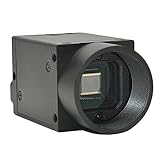
- Support VC/C++, C++builder, VB6, VB.NET, Delphi, C#, QT, JAVA, Python And Other Programming Languages.
- Support Python, OpenCV, LabView, Halcon Vision Software.
- Provide Camera SDK Development Interface.
- Supports Windows And Linux Operating Systems.
- Supports 100 Meters Transmission And Simultaneous Use Of Multiple Cameras.
Mordor’s 2026 update identifies the Cognex In-Sight 3900 Vision System as an AI-enabled edge product launched in 2026. That example illustrates the market’s convergence of camera hardware, embedded computing and defect-detection software rather than a pure software-only category.
How to interpret the 11.6% CAGR
The 11.6% figure is useful for sizing a planning scenario: under Market.us’s assumptions, the market rises from USD 2.4 billion in 2025 to approximately USD 7.3 billion in 2035. It is not a promise that every software vendor, region or application will grow at that rate. Electronics and semiconductor inspection may grow differently from food packaging, and edge deployments may grow differently from cloud subscriptions.
For a business case, keep the publisher’s scope attached to the number, then build a bottom-up estimate from inspected units, lines, cameras, software licenses, integration and validation. That approach avoids treating two non-equivalent market definitions as if they were a single industry total.
Free tools Windows power users keep installed
One-click scans. No signup required.
Quick Recap
Product prices and availability are accurate as of the date/time indicated and are subject to change. Any price and availability information displayed on Amazon at the time of purchase will apply.

