
Crashes, No Sound, or Screen Glitches?
Random freezes, missing sound and display glitches usually trace back to one bad driver. Find and replace yours safely.Free scan · under a minutePC Slower Than It Used to Be?
A free scan shows the junk files, broken settings and background clutter dragging Windows down - then fixes them in one click.Free scan · Windows 10 & 11iTechGuides is reader-supported. When you buy through links on our site, we may earn an affiliate commission. As an Amazon Associate I earn from qualifying purchases. Learn more
A useful AI and IoT upgrade connects yard sensors to operational decisions: cameras, RFID, GPS, or other devices report what is happening; edge and cloud systems process those observations; integrations match them to yard records; and staff receive information they can act on. The aim is not to add AI for its own sake, but to improve a specific operating problem—such as finding trailers, knowing which spaces are free, or routing moves—without losing track of data quality, reliability, or human oversight.
Why upgrade a supply chain yard?
Many yards still rely on manual tracking, fragmented systems, or status records that become stale before dispatch can use them. When an asset is hard to locate or occupancy information is incomplete, operators may spend time searching, send a move to the wrong place, or make decisions without a current view of gate and yard activity. These are common challenges, not proof that every yard has the same problem or needs the same technology.
Start by identifying where information fails to support a decision. Useful baseline measures include:
Recommended Free Tools
- Time required to locate a trailer, container, or other asset
- Gate dwell and dispatch cycle time
- Trailer or container inventory accuracy
- Moves per shift, including missed or duplicate moves
- Yard occupancy visibility and exception rates
- Safety incidents or near misses associated with yard movement
These measures help distinguish a technology gap from a process or data problem. AI cannot reliably compensate for ambiguous asset identifiers, unsynchronized event times, incomplete records, or workflows that do not capture what staff actually did.
#1 Best Overall
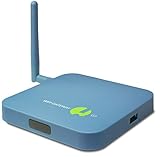
- REMOTE MONITORING: The SensorPush G1 WiFi Gateway allows you to monitor your SensorPush sensors (sold separately) from anywhere via the internet, providing real-time data access on both mobile and computer devices.
- CLOUD STORAGE: With unlimited cloud storage included (no monthly fee), you can easily access your data history, current conditions, and alerts, ensuring peace of mind even when you're far from home.
- EASY TO USE: The G1 WiFi Gateway offers a simple, user-friendly interface that lets you stay connected to your wifi temperature sensor, providing the same experience, accuracy, and functionality as local monitoring.
- VERSATILE APPLICATIONS: Ideal for remote vacation home monitoring, greenhouses, or collections like cigars or wine, ensuring your valuable items are always safe, whether you're near or far.
- A STANDARD OF EXCELLENCE: SensorPush is a U.S. based company. Development and support is handled in-house by our small, caring team. Thousands of satisfied customers agree that our quality, accurate components, careful design, and dedicated, responsive support make the SensorPush digital hygrometer thermometer a one-of-a-kind premium environmental monitoring experience. Any questions? Just reach out. We're always happy to help, before or after your purchase.
What does an AI and IoT yard architecture do?
Think of the architecture as an operating loop rather than a collection of devices. Sensors observe vehicles, trailers, containers, gates, and spaces. A nearby edge system can process time-sensitive video or sensor events. A data and integration layer reconciles observations with orders, schedules, traffic, and yard-system records. AI or other business logic identifies assets or conditions and supports scheduling or routing. Dashboards and dispatch tools put the result in front of staff, who can act on it or correct it.
- Observe: Cameras and other sensors capture events such as a vehicle entering a zone, a tagged trailer passing a reader, or a parking space becoming occupied.
- Process: Edge devices handle suitable time-sensitive tasks near the yard; cloud infrastructure can support model training, broader data processing, or centrally managed applications.
- Reconcile: The data layer associates observations with consistent asset identifiers, timestamps, locations, confidence values, and source information.
- Decide: Models and operational rules combine the observations with yard orders, freight backlogs, traffic, and other relevant context.
- Act and learn: Dispatchers or other staff receive a proposed action, carry it out or override it, and feed exceptions back into the operating process.
Preserve an auditable path from the original observation through the model or rule to the recommendation shown to staff. That path makes it easier to investigate a wrong detection, a missed event, or an inappropriate routing suggestion.
What AWS’s reference architecture illustrates
AWS’s Intelligent Yard Management guidance describes a pattern in which recorded video is annotated to train a computer-vision model, then the trained model and business logic are deployed to an edge appliance. Live IP camera feeds are processed at the yard, while a web application and dashboard present yard assets. The example also describes optional VPC peering to connect external yard systems. AWS lists encryption in transit and at rest, least-privilege access, enforced login, monitoring, workload distribution for reliability, and KPI monitoring as elements of its example. It is a reference pattern, not evidence that one vendor stack fits every operation.
Quick wins for a faster PC:
Fix the driver behind crashes, sound loss and screen glitchesFind Drivers →Clear out junk files and repair common Windows errorsFree Scan →How the NEPHELE Port of Koper use case connects data to dispatch
The NEPHELE Port of Koper use case describes sensors and cameras feeding computer vision that detects free container parking spaces. A scheduling agent combines those detections with sensor output, port information, freight or ERP backlog, and real-time traffic. A final dispatch component presents proposed routing to staff. The described design uses cloud, edge, and far-edge processing, alongside a digital twin for visualization and predictive simulation. This shows how sensing can be connected to a dispatch workflow; it does not establish that the same design or results will transfer unchanged to another yard.
How does AI improve yard management?
AI can turn sensor observations into useful detections or predictions—for example, identifying an asset in a camera view, detecting free container parking spaces, or helping evaluate routing options. The operational benefit comes when those outputs arrive with sufficient accuracy and timeliness, match the correct asset and location, and fit into the systems staff use to dispatch work.
Rank #2
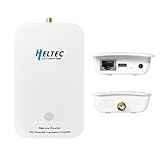
- Ultra-Long Range Wi-Fi HaLow 802.11ah Gateway: Adopts sub-1GHz low-frequency RF to achieve 1km+ transmission distance, stronger penetration through obstacles, max 32.5Mbps throughput, perfect for remote agricultural, industrial monitoring IoT sensors.
- Dual-Band + Multi-Interface Integration: Dual wireless: 802.11ah HaLow + 2.4GHz Wi-Fi; comes with RJ45 Ethernet, USB-C, SMA antenna port, high-speed MT7628 core, sufficient memory for heavy-duty IoT networking.
- High-Density Node Access & Mesh Networking: Handles far more connected devices than regular Wi-Fi routers; supports AP/STA/Mesh three core modes to construct large-area wireless sensor networks without extra bridging hardware.
- Browser-Based Setup & Remote OTA Upgrade: Intuitive web configuration page for all network parameters; remote OTA firmware update function avoids field visits, simplifies long-term network management for commercial IoT projects.
- Industrial-Grade Reliable Hardware: Wide -20~70℃ working temperature, wall-mount compact casing, visible LED status lights, low power consumption, stable 24/7 operation for smart agriculture, manufacturing, smart city applications.
That makes AI only one part of the improvement. A model may be able to detect a space, but the yard still needs reliable occupancy data, up-to-date orders, working integrations, and a process for handling uncertain detections. Recommendations that affect consequential moves should be reviewable by people, at least until the operation has demonstrated that the data and workflow are dependable.
Why use edge computing, cloud processing, and a digital twin?
Edge and cloud have different jobs
Edge computing places processing near cameras or devices. It can support timely inference, maintain some local operation when a wide-area connection is degraded, and reduce the need to send raw video to a central cloud. Fraunhofer IML describes on-site sensor processing as a way to reduce reliance on central cloud servers and network dependencies. In AWS’s example, model training takes place in cloud infrastructure while inference runs at the edge.
This supports a hybrid design, not an all-edge or all-cloud rule. Decide which tasks require a local response, which can tolerate a network round trip, and what should continue if the connection is unavailable. Test those choices under the network conditions and yard workload the site actually experiences.
What a digital twin adds
A digital twin is a virtual representation of physical yard processes that is updated with operational data. Depending on the quality and freshness of those inputs, it can support visualization, state monitoring, what-if simulation, bottleneck prediction, and coordination. Fraunhofer IML describes a twin that can connect to existing yard, warehouse, and production control systems. NEPHELE describes a port twin used with IoT collection, AI processing, visualization, simulation, and decision support.
Fraunhofer IML’s FAQ puts the edge-and-twin idea this way: “A digital twin maps physical processes virtually and processes real-time data directly at the point of origin, without detours via a central cloud.” A twin is not automatically a live or accurate picture of a yard: its value depends on the quality and freshness of its inputs and on whether recommendations connect to operational execution.
Rank #3

- Seamless Internet Connectivity: Effortlessly connect industrial thermometers (PT100 RTD) to the Internet, transmitting temperature data via HTTP(s), MQTT, TCP, Modbus/TCP, and more.
- Comprehensive Data Processing: Rescale, filter, and add additional information such as timestamps and device IDs to PT100 RTD temperature values before transmission.
- Versatile Protocol Support: Compatible with multiple formats (JSON, XML, CSV) and protocols, ideal for integration with MQTT brokers like AWS IoT Core, Mosquitto, and HiveMQ.
- Embedded Web Server Capability: Easily monitor real-time PT100 RTD temperature data from any web browser with a customizable web interface, minimizing infrastructure needs.
- Easy Programming with PHPoC: Simple to program with the PHP-based language PHPoC, with optional customized service available to meet specific programming and data management requirements.
How should a yard choose cameras, RFID, GPS, and other sensors?
Choose sensing against the event the operation needs to know—not by selecting a technology first. Cameras can observe scenes and occupancy; RFID can provide identity-linked reads when assets are tagged; GPS and geofencing can generate zone-entry and exit events. These methods can complement one another. The available examples do not establish one as universally superior.
Do these 3 things before closing this tab:
1Fix the driver behind crashes, sound loss and screen glitches2Clear out junk files and repair common Windows errors3Scan for outdated or missing drivers - takes under a minute| Method | Documented use | Questions to assess at the site |
|---|---|---|
| Computer-vision cameras | AWS describes edge inference on live IP camera feeds. NEPHELE describes camera-based data capture and object detection, including free-space detection. | Coverage and occlusion; day, night, and weather performance; camera placement; bandwidth; privacy and retention; model accuracy and latency; safety implications. |
| RAIN RFID | Impinj describes Kaleris using temporary and permanent tags and readers to identify and locate trailers or containers, including at gates and in yard or dock areas. | Tag attachment and durability; reader coverage; metal or interference conditions; read accuracy; deployment cost; integration with yard records. |
| GPS and geofencing | SAP Yard Logistics documentation for SAP S/4HANA 2024 describes GPS sensor entry and exit events updating yard orders and related tasks. | Location accuracy and update frequency; outdoor coverage; device and battery needs; geofence definition; event reliability; whether zone-level location is sufficient. |
| Other IoT sensors and industrial devices | NEPHELE describes industrial IoT devices on port vehicles and at strategic locations, as well as device-management and data-aggregation needs. | State to be sensed; ruggedness; power and connectivity; maintenance and calibration; data ownership. |
The Kaleris and Impinj example is a vendor-described solution from 2020, so treat it as an illustration of RFID use rather than confirmation of current product availability. Verify current product status before relying on it.
Independent reader supportYour contribution helps us test, update, and keep practical guides available for everyone.How do integrations, security, and reliability affect the design?
Sensor events need enough context to be useful outside the device that produced them. Normalize identifiers, timestamps, locations or zones, confidence values, and source provenance before operational systems consume events. Maintain links to yard orders, shipment or freight records, gates, docks, traffic, and dispatch so staff can understand why an event or recommendation appeared.
The examples show different integration patterns: NEPHELE describes APIs for terminal ERP backlog and real-time traffic information; AWS describes optional connections to external yard systems; and SAP’s documented geofence workflow updates yard orders and related tasks. These patterns are not interchangeable. Map the actual systems, data owners, and update paths at the site before selecting interfaces.
Device management, data collection and aggregation, network coverage, cybersecurity, and operational feedback are architecture components, not afterthoughts. NEPHELE identifies 5G coverage, IoT interfaces, and secure, energy-efficient edge computing as implementation considerations. AWS’s example includes encryption in transit and at rest, least-privilege access, enforced login, monitoring, workload distribution, and reliability KPIs. Local safety, privacy, retention, access-control, and cybersecurity requirements must also be assessed for the site and jurisdiction.
Free tools Windows power users keep installed
One-click scans. No signup required.
Rank #4

- REMOTE MONITORING: The SensorPush G1 WiFi Gateway allows you to monitor your SensorPush sensors (sold separately) from anywhere via the internet, providing real-time data access on both mobile and computer devices.
- CLOUD STORAGE: With unlimited cloud storage included (no monthly fee), you can easily access your data history, current conditions, and alerts, ensuring peace of mind even when you're far from home.
- EASY TO USE: The G1 WiFi Gateway offers a simple, user-friendly interface that lets your SensorPush devices function as wifi temperature sensors, giving you remote access with the same accuracy and functionality as local monitoring.
- VERSATILE APPLICATIONS: Ideal for remote vacation home monitoring, greenhouses, or collections like cigars or wine, ensuring your valuable items are always safe, whether you're near or far.
- A STANDARD OF EXCELLENCE: SensorPush is a U.S.-based company, with development and support handled in-house by our small, dedicated team. Carefully inspected and verified for reliable operation, this SensorPush G1 WiFi Gateway delivers the same dependable remote monitoring experience trusted by thousands of customers. Have questions? Just reach out– we're always happy to help before or after your purchase.
What quantified outcomes are reported—and what do they mean?
NEPHELE’s Port of Koper use-case page lists the following figures: up to 5% faster delivery times, up to 5% improvement in vehicle utilization, a maximum of two delivery errors per day, and up to 5% reduction in CO2 emissions. The page describes a pilot and project targets; it does not establish these figures as independently validated, typical results for other yards. The year is not stated on the reviewed use-case page.
Use those figures as project-specific context, not as a business case or guarantee. The sources cited here do not establish a general yard ROI statistic or a universal improvement baseline. An operation should compare its own results with its own pre-pilot measures.
How can a yard plan an architecture upgrade?
- Map the operation: Document yard processes, decision points, existing systems, and the time and accuracy each decision requires.
- Set a baseline: Measure the relevant costs and exceptions, such as lost-asset searches, gate congestion, duplicate moves, or poor occupancy visibility.
- Bound the pilot: Choose one use case, such as trailer location, gate automation, parking-space detection, or dispatch routing. Define the event, users, and success measures before choosing equipment.
- Match sensing to the event: Select cameras, RFID, GPS, or another sensor based on the target asset and site constraints. Set identifier, timestamp, and location conventions.
- Test edge and connectivity: Check local processing and system behavior under realistic yard conditions, including network degradation or outages relevant to the site.
- Connect recommendations to work: Integrate events with yard orders and dispatch workflows. Provide human review or override for consequential recommendations.
- Evaluate before scaling: Compare results with the baseline, document errors and exceptions, and expand only when data quality, reliability, security, and staff adoption are demonstrated.
This sequence is a practical synthesis of the documented architecture patterns, not a claim that a vendor has tested the exact steps as a single implementation.
How to separate an operating deployment from an announcement
Check whether a source describes a reference architecture, a pilot, an implemented workflow, or only an intention to explore a technology. For example, a 3 June 2024 announcement by Seatrium and M1 described a memorandum of understanding to explore 5G connectivity and yard applications including smart video analytics, AI, digital twins, and IoT. It documents exploration and partnership intent, not completed rollout across all yards. That distinction matters when using a named example to judge readiness or expected outcomes.
Quick Recap
Product prices and availability are accurate as of the date/time indicated and are subject to change. Any price and availability information displayed on Amazon at the time of purchase will apply.

