
Free tools Windows power users keep installed
One-click scans. No signup required.
iTechGuides is reader-supported. When you buy through links on our site, we may earn an affiliate commission. As an Amazon Associate I earn from qualifying purchases. Learn more
AI agents are becoming delegated workplace tools: they can plan and carry out bounded, multi-step tasks using software, data, and other tools. That makes them coworker-like in some workflows, but current evidence supports treating them as supervised digital agents—not as human-equivalent colleagues or universally autonomous decision-makers. Their safe usefulness depends on limited permissions, visible activity, clear ownership, and human review where consequences matter.
What makes an AI agent an autonomous coworker?
An AI agent is software that pursues a goal by planning and taking actions across steps, tools, data, or services. Its autonomy is a spectrum: it might answer a prompt, execute a bounded workflow, or act with less intervention. Calling a system an “agent” does not mean it understands workplace context as a person would, reliably handles every exception, or should make high-impact decisions without review.
A scripted tool follows predefined instructions; an agent can select and sequence actions toward a goal. Neither label determines whether a person remains responsible for the outcome. To assess how coworker-like an agent really is, compare its task range, authority, exception handling, visibility, and human control:
| Dimension | Scripted tool | AI agent | Human coworker |
|---|---|---|---|
| How work proceeds | Follows predefined steps or rules. | Can plan and act across steps and connected tools to pursue a goal. | Can interpret goals in context and choose how to proceed. |
| Handling ambiguity and exceptions | Usually needs its rules or inputs to cover the case. | May attempt to resolve uncertainty, but can misread intent or fail on exceptions. | Can ask questions, use judgment, and negotiate changing requirements. |
| Authority | Limited to the operations it was configured to perform. | Limited in practice by its permissions, tools, and approval requirements. | Acts under organizational authority and applicable human processes. |
| Review and interruption | Often inspectable through its inputs, rules, and outputs. | Needs useful logs, review points, and a reliable way to pause or stop it. | Can explain decisions and respond to direction, though accountability depends on role and policy. |
| Accountability | A person or organization remains responsible for its deployment and use. | A named person or organization must own its actions and results. | Responsibility is assigned through the person’s role and workplace policies. |
This is a practical distinction, not a claim that every product fits neatly into one column. A system’s actual behavior depends on its configuration, connected services, data access, and oversight.
#1 Best Overall
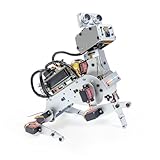
- AI-Powered Raspberry Pi Robot Dog — PiDog: Powered by Raspberry Pi (5/4B/3B+/3B/Zero 2W), OpenClaw, and multi-LLMs like ChatGPT, Gemini, Grok, DeepSeek, Qwen & Ollama. With 12 servos, camera, gyroscope, hearing & touch sensors, PiDog can see, listen, talk, move, and interact intelligently. Supports OpenCV, MediaPipe, TTS & STT, app control, FPV & Python. A great STEM robotics gift for students, makers & tech enthusiasts—perfect for birthdays and holidays. (Raspberry Pi not included)
- Realistic Dog-like Movements: PiDog's 12 powerful servos enable 32 dog-like actions, including walking, sitting, standing, shaking its head, wagging its tail, and performing playful tricks, closely mimicking a real dog and providing an engaging experience. This is an AI development robot product designed for engineers, suitable for ages 15 and above
- Rich Sensor Suite for Interactive Experiences: PiDog features ultrasonic, touch, gyroscope, sound, camera, speaker and microphone. These provide it with advanced hearing, vision, and touch, enabling it to see, detect obstacles, respond to touch, and recognize sounds, making interactions highly engaging
- AI-Powered Interactions with OpenClaw & Multi-LLMs. PiDog combines voice, vision, and gesture recognition for immersive AI experiences. Powered by OpenClaw and multi-LLMs like ChatGPT, Gemini, Grok, DeepSeek, Qwen, Doubao, and Ollama (local LLMs), it can understand questions, respond naturally through TTS & STT, recognize math problems, interpret hand gestures, and hold smart conversations. OpenClaw also enables customizable AI behaviors and personalized robotics development, helping users create their own intelligent robotic companion
- Comprehensive Learning Resources and Support: PiDog offers detailed online documentation, video tutorials, prompt technical support, and an active forum community, ensuring beginners can easily complete all projects and enjoy a great experience
What can AI agents do at work?
Reported workplace examples include drafting proposals, analyzing data, triaging security alerts, automating repetitive processes, and surfacing insights. These tasks can involve multiple steps, but examples of execution do not establish general coworker-level competence.
A useful division of work is to delegate bounded, repeatable execution and information gathering. People should define the goal, choose the agent’s permissions, review its output, resolve ambiguity, approve consequential actions, and remain accountable for results. An agent is a better fit when the task can be clearly specified, its actions are limited, and a person can check the result before anything important happens.
Rank #2

- Optimized AI Arm Kit for LeRobot & Hugging Face Projects – The SO-ARM101 is an upgraded low-cost robotic arm servo motor kit designed for AI robotics enthusiasts and developers. Fully compatible with LeRobot and Hugging Face frameworks, it supports imitation learning and reinforcement learning, making it ideal for real-world robotics applications. (3D-printed parts not included.)
- Enhanced Wiring & Performance – Compared to the SO-ARM100, the SO-ARM101 features improved wiring to prevent disconnection at joint 3 and eliminates range-of-motion limitations. The leader arm uses optimized gear ratio motors for smoother performance—no external gearboxes required.
- Real-Time Leader-Follower Functionality – New real-time tracking allows the leader arm to follow the follower arm, enabling human intervention and correction during reinforcement learning (RL) training. Perfect for hands-on AI robotics development and research.
- Open-Source, DIY-Friendly & Nvidia-Compatible – Developed by TheRobotStudio, this open-source AI Arm kit integrates seamlessly with the LeRobot platform, offering PyTorch-based datasets, simulation, training, and deployment tools. Fully compatible with Nvidia Jetson edge devices, including reComputer Mini J4012 Orin NX 16 GB.
- Comprehensive Learning Resources – Includes detailed open-source assembly and calibration guides, testing tutorials, and deployment instructions. From wiring to AI training, get everything you need to start building, teaching, and optimizing your robotic arm for grasping and placing tasks.
Are organizations adopting workplace agents?
There is evidence of adoption, but the available figures describe particular populations and Microsoft’s own products—not a universal census of autonomous agents.
Do these 3 things before closing this tab:
1Clear out junk files and repair common Windows errors2Fix the driver behind crashes, sound loss and screen glitches3Repair Windows errors before they cause bigger problems- Fortune 500 adoption: Microsoft reported in 2026 that more than 80% of Fortune 500 companies used active AI agents built with its low-code/no-code tools. In Microsoft’s methodology, “active” meant built with Copilot Studio or Agent Builder, deployed to production, and showing real activity during the last 28 days of November 2025. This is Microsoft’s telemetry for its own product ecosystem; it is not a count of agents across all platforms or a measure of fully independent work.
- Unsanctioned use: Microsoft Security reported in 2026 that 29% of employees had turned to unsanctioned AI agents for work tasks. The figure comes from a Microsoft-commissioned survey of 1,725 data-security leaders in July 2025; it should not be read as a direct count of all employees or organizations.
- Broader workplace AI: OpenAI’s 2025 enterprise AI report said 75% of surveyed enterprise workers reported that AI improved the speed or quality of their output, and workers reported saving 40–60 minutes per day. The report concerns AI broadly, not autonomous agents specifically, and these company-reported survey findings do not independently prove that agents caused productivity gains.
Microsoft’s 2026 Work Trend Index says it analyzed trillions of anonymized Microsoft 365 productivity signals and surveyed 20,000 AI-using workers across 10 countries. Its framing is that agents taking on execution may give people more room to direct work, make decisions, and own outcomes. Those findings describe the report’s sample and Microsoft’s analysis; they should not be generalized to every worker or workplace.
Rank #3
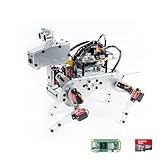
- Raspberry Pi AI Robot: powered by Raspberry Pi (5/4B/3B+/3B/Zero 2W), features 12 servos and sensors for vision, hearing, and touch. Integrated with ChatGPT-4o, it responds to complex queries. With app control and FPV, users can manage and see its view in real-time. It supports Python programming
- Realistic Movements: 12 powerful servos enable 32 actions, including walking, sitting, standing, shaking its head, wagging its tail, and performing playful tricks, closely mimicking a real and providing an engaging experience
- Rich Sensor Suite for Interactive Experiences: features ultrasonic, touch, gyroscope, sound, camera, speaker and microphone. These provide it with advanced hearing, vision, and touch, enabling it to see, detect obstacles, respond to touch, and recognize sounds, making interactions highly engaging
- Engaging Interactions with ChatGPT-4o: with ChatGPT-4o enables voice interactions and visual recognition, making it smarter and more responsive. Users can have natural conversations, solve math problems via the camera, and interpret gestures, creating diverse and fun interactions
- Comprehensive Learning Resources and Support: offers detailed online documentation, video tutorials, prompt technical support, and an active forum community, ensuring beginners can easily complete all projects and enjoy a great experience
Can you trust an AI agent to work on its own?
Trust should depend on the task and the agent’s authority, not on the word “autonomous.” Microsoft identifies risks that include misunderstood goals, weak oversight, limited visibility, disclosure failures, hijacking, information leakage, supply-chain vulnerabilities, and uncontrolled growth in the number of agents. In practical terms, an agent might act on the wrong interpretation, take an unauthorized step, expose sensitive information, or be manipulated by untrusted content it encounters.
Before delegating, check whether the system has only the access it needs, whether you can see what it did, and whether you can intervene before a consequential action. If those safeguards are absent—or if the work requires nuanced judgment, sensitive data handling, or decisions that are difficult to reverse—keep a person in the loop or do not delegate that task.
Rank #4
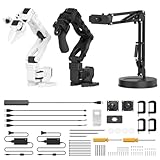
- 【End-to-End Imitation Learning】Hiwonder SO-ARM101 robot arm is an embodied intelligent hardware platform compatible with the Lerobot open-source framework. It provides developers with streamlined access to shared code, templates, and pre-trained models to explore the latest advancements in AI research.
- 【Dual-Camera Vision System】Equipped with both a gripper-mounted camera and an external camera, the system supports both precise manipulation and environmental awareness for accurate imitation learning.
- 【Hiwonder High-Performance Bus Servos】Featuring 12 high-torque bus servo motors with magnetic feedback, the Hiwonder SO-Arm101 robotic arm delivers smooth, stable motion, eliminating issues like power deficiency and jitter.
- 【Professional Control & Debugging】Integrated with the Hiwonder BusLinker V3.0 debugging board, the system supports servo scanning, real-time status monitoring, and trajectory control. The professional PC software simplifies device calibration and debugging, making it accessible for both researchers and hobbyists.
- 【Open-Source Compatibility】The SO-ARM101 robotic arm is designed to be fully compatible with the LeRobot open-source project. We acknowledge the contributions of the open-source community; all trademarks and copyrights belong to their respective owners.
What controls make workplace agents safer?
Microsoft’s design and security guidance and its agent-maturity guidance point to operational safeguards rather than a claim that risk can be eliminated. For each agent, organizations should:
Crashes, No Sound, or Screen Glitches?
Random freezes, missing sound and display glitches usually trace back to one bad driver. Find and replace yours safely.Free scan · under a minuteWindows Errors? Fix Them Before They Spread
Repair common Windows errors and clear accumulated junk for a smoother, more stable PC - no reinstall needed.Free scan · no reinstall- Grant only the minimum tools, data access, and operations needed for its assigned task.
- Make identity and authorization explicit, and record and monitor the agent’s actions.
- Name an owner who is responsible for the agent throughout its lifecycle.
- Set clear review, approval, and escalation requirements, especially for high-risk or irreversible actions.
- Make behavior observable and auditable, with useful opportunities for people to inspect outputs.
- Provide a dependable way to pause or stop autonomous behavior.
- Standardize how agents are deployed, monitored, maintained, and retired, so their number and ownership do not become difficult to track.
NIST’s National Cybersecurity Center of Excellence published a concept paper on February 5, 2026, exploring a potential project on identity and authorization for software and AI agents. Its comment period closed April 2, 2026. It is a concept paper, not a finalized standard or certification. Microsoft’s maturity material is operational guidance, not a universal certification either.
Will AI agents replace coworkers?
The available evidence here does not establish that workplace agents are causing net job losses or replacing particular occupations. Adoption figures show deployment or use in defined settings; they do not measure jobs eliminated. Nor do general workplace-AI productivity survey results prove that autonomous agents independently improve productivity. A firm prediction about job replacement would require labor-market evidence specifically measuring those outcomes.
For now, the most defensible description is that agents can take on parts of some workflows under defined permissions and oversight. Whether a workplace uses them to assist employees, reorganize tasks, or reduce roles is a separate question that these adoption and survey figures do not answer.
Quick Recap
Product prices and availability are accurate as of the date/time indicated and are subject to change. Any price and availability information displayed on Amazon at the time of purchase will apply.
Recommended Free Tools

