
iTechGuides is reader-supported. When you buy through links on our site, we may earn an affiliate commission. As an Amazon Associate I earn from qualifying purchases. Learn more
Yes—some aerogel insulation products can be used in buildings, but a blanket that flew on a spacecraft is not automatically suitable for a wall or roof. NASA’s work shows a credible path from porous silica aerogel to fiber- and polymer-reinforced composite blankets. Whether a particular product belongs in your house depends on its tested thermal performance, moisture and vapor behavior, fire classification, mechanical limits, installation method, local code acceptance and availability.
The useful lesson from the spacecraft story is not that NASA has approved aerogel for homes. It is that reinforcement and manufacturing turned an exceptionally light, fragile material into practical insulation formats. Building suitability still has to be demonstrated for the exact product and wall, roof or floor assembly.
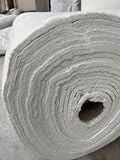
What aerogel is and why it slows heat flow
Aerogel is a solid whose liquid phase is removed during production and replaced by gas. Silica aerogel is roughly 95% porous, according to NASA’s explanation in “Aerogels: Thinner, Lighter, Stronger”. The solid network contains extremely small pores. As NASA researcher Mary Ann Meador puts it, “The pores are so small, and gas phase heat conduction is very poor.” Limiting heat transfer through the gas in those pores is a central reason aerogel can insulate effectively while occupying little space.
What’s actually slowing this PC down?
Pick the symptom - the matching free tool is one click away.
That porosity number describes the material’s structure. It is not a promise that a wall containing an aerogel blanket will use 95% less energy, nor does it tell you the installed R-value of a product. Real building performance also depends on thickness, seams, compression, framing, air leakage, moisture, thermal bridges, surface temperatures and the rest of the assembly.
#1 Best Overall

- Aerogel Insulation Hydrophobic Mat of High Temp.
- The mat is made of high quality aerogel, size: 12’’x12’’, thickness:10mm(3/8inch)
- This version of Spaceloft aerogel is great for Cryogenic temperatures of -328°F to 1200°F
- Unless it is rated for high temperature, don't go putting a torch to your Aerogel
- It is Hydrophobic, which means it will not absorb water. So, moisture from condensation is not a problem.
Pure silica aerogel has a serious practical weakness: it can be fragile and difficult to handle. A monolithic piece may crack, shed particles or lose its intended structure when flexed or compressed. NASA’s building-relevant work therefore focused on preserving the gel structure while adding reinforcement. Fiber batting and polymers can make the material flexible enough to manufacture and install as a composite rather than as a brittle block.
How NASA’s spacecraft work led to flexible insulation blankets
The commercial path developed from a specific engineering problem: cryogenic systems need insulation that performs under extreme temperature conditions, yet conventional materials can be bulky. NASA’s Kennedy Space Center began pursuing practical cryogenic insulation in 1992 and funded Aspen Systems through Small Business Innovation Research work. NASA’s 2010 Spinoff account, “Aerogels Insulate Against Extreme Temperatures,” says the first composite blanket specimens were produced in 1993.
The historical sequence matters because it explains what “space technology” means in this context. Engineers did not simply move a fragile laboratory aerogel into a house. They combined aerogel with fibers to create a flexible blanket that retained much of the gel’s insulating behavior while tolerating ordinary handling better. NASA describes commercial aerogels as commonly combined with other materials, including fiber batting that forms insulating blankets.
Rank #2

- 30' = 142.5sq/ft, each roll is 57" wide x 30' long
- The light weight and compression strength of Spaceloft make it an excellent option for areas where weight and space may be issues.
- It is hydrophobic, which aids in preventing corrosion under insulation (CUI), which could lead to costly repairs.
- Application temperatures are greater than Cryogel Z with a range from -460°F (-270°C) to 390°F (199°C)
- Delivers up to 5 times the insulating performance of competing products.
NASA Glenn later reported polymer reinforcement and polymer-based aerogels as additional ways to improve strength and create flexible or translucent forms. In the 2011 article, Meador is quoted as saying that a polymer-reinforced aerogel was about two orders of magnitude stronger than silica aerogel of the same density. That is a comparison for the specific materials described in that work, not a universal strength rating for every product sold today.
| Milestone | What it established | What it did not establish |
|---|---|---|
| 1992 NASA Kennedy Center effort | A program to develop more practical cryogenic insulation | Approval for residential construction |
| 1993 first composite blanket specimens | A flexible, fiber-reinforced aerogel format | A standard wall or roof assembly |
| NASA’s 2010 Spinoff account | A documented route from NASA-supported development to commercial applications | Current pricing, availability or code listings |
| NASA Glenn polymer-reinforcement work | Reportedly much higher strength for the compared reinforced material | A specification that applies to all commercial blankets |
NASA used aerogel for more than one space job
“Aerogel used in space” describes several different functions. NASA documents aerogel as insulation in spacecraft applications, including a Mars rover and thermal-protection concepts for flight systems. Those uses relate to managing heat in a vehicle.
The Stardust mission used silica aerogel for a different purpose. Panels in the sample-return spacecraft gently captured (“soft-caught”) comet and interstellar dust particles so they could be returned to Earth, as described on NASA’s Stardust mission page. The panels were particle collectors, not house insulation. Their existence does not provide an R-value, fire rating or installation method for a building.
Rank #3

- Innovative Nano Materials: Our Nano Fireproof Insulation Blanket is crafted from cutting-edge nano materials, offering superior fire resistance, thermal insulation, and water repellency. It’s your go-to solution for keeping your projects safe and efficient!
- Extreme Temperature Resistance**: Trust in a product that withstands extreme temperatures up to 1200°F (650°C). This Flame Retardant blanket ensures your industrial pipes and equipment are protected from heat damage, making it perfect for high-temperature applications.
- Hydrophobic and Soundproof**: Not only does this Aerogel Insulation provide excellent thermal insulation, but it’s also hydrophobic and soundproof! Say goodbye to moisture issues and noisy environments in your industrial spaces with our versatile insulation blanket.
- Easy Installation: Lightweight and easy to cut and sew, our insulation blanket saves you time and labor during installation. Whether you’re working on pipes, tanks, or industrial furnaces, you'll appreciate how effortlessly it fits to various shapes and sizes!
- Perfect for Various Uses: Designed for a wide range of applications, from power plants and military ship bulkheads to high-speed trains and lifeboats.
NASA’s current Space Logistics Technology Catalog lists a hybrid aerogel/multilayer insulation (MLI) system associated with Aspen Aerogels for cryogenic space insulation. The catalog describes intended Moon/Mars logistics use and lists Technology Readiness Level 4 on its Thermal Management page. NASA TechPort says the project’s hybrid system outperformed MLI across cryogenic temperatures and a range of vacuum conditions, including high vacuum, in the project’s reported testing; the project description is available at TechPort project 9530. Those are space cryogenic results, not tests of a residential wall.
NASA also supports continuing work on thermally stable aerogels for aerospace applications, described at NASA’s thermally stable aerogels page. Aerospace research can improve materials, but it should not be read as a building-code approval.
Can aerogel insulation be used in a house?
In principle, yes. NASA explicitly identifies building and construction as terrestrial application areas for aerogel, especially where there is very little room for insulation. Commercial forms described by NASA include fiber composites, blankets, pellets and translucent panels placed between glass panes. A thin composite could be attractive in a retrofit where widening a wall, roof edge or window reveal is difficult.
Rank #4
That conclusion is a technology pathway, not a blanket recommendation. The NASA sources do not provide a current residential product comparison, whole-wall assembly data, installation instructions, cost, energy-savings forecast, service-life test or residential code approval. Those facts must come from the manufacturer, an approved laboratory listing, the building official and the professional designing the assembly.
Evidence to require before specifying a product
Ask for documentation for the exact product, thickness and intended location. Do not substitute a spacecraft test, a loose material property or a marketing description for an installed-assembly test.
Do these 3 things before closing this tab:
1Repair Windows errors before they cause bigger problems2Fix the driver behind crashes, sound loss and screen glitches3Clear out junk files and repair common Windows errors| Question | Evidence you need | Status in the NASA sources |
|---|---|---|
| How well does it insulate? | Thermal resistance or conductivity at the stated thickness, temperature, moisture condition and test standard | A complete building comparison is not stated |
| How much space does it save? | Installed thickness and performance after seams, overlaps, fasteners and compression | Thin, space-constrained use is identified; assembly values are not stated |
| What happens with water vapor? | Vapor permeance, water absorption, drying behavior and a compatible vapor-control strategy | Not stated |
| Will it meet fire requirements? | Flame-spread, smoke and fire-resistance data for the product and complete assembly | Not stated |
| Can it tolerate installation? | Compression limits, flexing limits, dust control, facing requirements and fastening instructions | NASA documents the fragility problem and reinforcement approach; product limits are not stated |
| How long will it last? | Aging, thermal-cycling, moisture and dimensional-stability results | Not stated |
| What will it cost? | Installed cost, including preparation, cutting, waste, tapes, membranes and labor | Not stated |
| Can it be bought and approved locally? | Regional supply, listing, warranty and building-official acceptance | Not stated |
A practical decision process for a home project
- Define the location and constraint. Record whether the material is intended for an exterior wall, roof, floor, foundation, window panel, pipe or another application. Measure the available cavity and identify framing, wiring, plumbing, fasteners and membranes that the insulation must accommodate.
- Describe the complete assembly. List every layer from indoors to outdoors, including drywall, sheathing, air barriers, vapor control, cladding and finishes. Aerogel performance cannot be judged independently of the layers that surround it.
- Request product-specific data. Obtain the technical datasheet, installation guide, safety information, thermal test report, fire documentation, moisture data, compression limits, facing details, warranty and disposal guidance. Confirm that the documents apply to the exact thickness and facing you intend to buy.
- Check local approval. Ask the building department or a qualified code professional whether the proposed assembly is covered by an accepted listing, evaluation report or alternative-material procedure in your jurisdiction. NASA heritage is not a substitute for that review.
- Resolve moisture and air control before insulation. A high-performance insulator can still fail if bulk water enters, interior air carries moisture into a cold layer or the assembly cannot dry. Have the designer identify drainage, flashing, air-sealing and vapor-control planes.
- Plan handling and cutting. Follow the product’s limits for bending, compression, overlaps and penetrations. If the blanket sheds dust or requires a facing, specify protective clothing, ventilation, sealing tapes and a method that keeps fibers or particles out of occupied space.
- Build a representative mock-up. Test a section with real corners, joints, fasteners and finishes. Check that the blanket stays in position, that seams can be sealed and that other trades do not crush or puncture it.
- Document installation. Photograph concealed layers, record lot numbers and keep the datasheet and approval documents with the project file. Future repairs depend on knowing what material and assembly were actually installed.
Where the thin-profile idea is most plausible
Aerogel’s strongest building rationale is a location where conventional insulation cannot reach the desired performance without unacceptable thickness. Examples include a historic wall whose interior dimensions cannot be enlarged, a narrow window reveal, a roof edge constrained by flashing or a retrofit where moving electrical and plumbing services would be disproportionately disruptive. These are design situations, not proof that aerogel is the cheapest or best option.
Best Value

- This Aerogel Insulation is New Surplus and was manufactured by Aspen Aerogels
- The light weight and compression strength of Spaceloft make it an excellent option for areas where weight and space may be issues.
- It is hydrophobic, which aids in preventing corrosion under insulation (CUI), which could lead to costly repairs.
- Application temperatures are greater than Cryogel Z with a range from -460°F (-270°C) to 390°F (199°C)
- Delivers up to 5 times the insulating performance of competing products.
In a new build with generous cavity depth, conventional insulation may remain simpler to source, cut and inspect. The correct comparison is not “space material versus ordinary batt.” Compare complete assemblies on thermal resistance at the same thickness, moisture management, fire behavior, durability, labor and total installed cost.
Why aerospace performance does not predict household savings
Spacecraft insulation is tested for conditions such as cryogenic temperatures, vacuum and extreme mass constraints. A house experiences weather, air movement, rain, humidity, solar heating, repeated occupant-generated moisture and building-code fire exposure. A material can excel in one environment and require different facings, seals or protective layers in another.
The same caution applies to NASA’s historical cryogenic context. NASA’s Spinoff account notes that fueling a Space Shuttle required more than half a million gallons of cryogenic liquid oxygen and liquid hydrogen. That explains why reducing heat leak in launch hardware mattered; it is not a measure of household energy use and should not be converted into a home-savings estimate.
Recommended Free Tools
Costs, savings and availability: what is actually known
No building-level energy-savings figure, installed price, lifespan figure or residential code-approval number is supplied by the cited NASA material. Do not calculate a payback period from the 95% porosity figure or from cryogenic test results.
For a real project, estimate costs from the delivered product, cutting waste, tapes or membranes, protective layers, labor, inspection and any framing changes. Estimate savings with a building-energy model that uses the tested assembly values, local weather, heating and cooling equipment, air leakage and occupancy. Compare that result with a conventional assembly that meets the same code and moisture requirements. Availability can vary by region and by product line, so confirm current stock and lead times directly with the manufacturer or distributor.
Questions to ask a manufacturer or contractor
- What is the tested thermal resistance at the thickness and mean temperature I will use?
- Is the reported value for the blanket alone or for a complete wall, roof or window assembly?
- What vapor permeance, water absorption and drying behavior should the designer use?
- What fire, smoke and flame-spread classifications apply to the faced product and the finished assembly?
- What bending, compression, fastening and seam-sealing limits apply during installation?
- What protective facing is required in an occupied building, and how are exposed edges repaired?
- Which independent listing, evaluation report or local approval covers this application?
- What warranty, aging data and replacement procedure are available?
The bottom line
Aerogel can move from spacecraft technology into living space when it is supplied as a product engineered for building conditions and installed as part of an approved assembly. NASA’s documented progression—from fragile porous silica, through fiber and polymer reinforcement, to flexible composite blankets—explains why that is plausible. It does not certify every aerogel blanket for a house. Treat the NASA connection as evidence of a development pathway, then make the home decision from current product data, moisture and fire analysis, local approval and the economics of the specific space you are trying to insulate.
Quick Recap
Product prices and availability are accurate as of the date/time indicated and are subject to change. Any price and availability information displayed on Amazon at the time of purchase will apply.
Quick wins for a faster PC:
Clear out junk files and repair common Windows errorsFree Scan →Fix the driver behind crashes, sound loss and screen glitchesFind Drivers →
