
Tenstorrent announced an investment in and partnership with India’s Bodhi Computing on April 5, 2023, to develop RISC-V and AI software and systems and contribute to open-source development. The announcement connected a private, systems-focused effort to India’s broader Digital India RISC-V (DIR-V) ambitions—but it did not establish a legally constituted joint venture or confirm that Bodhi’s planned servers reached the market.
What Tenstorrent and Bodhi Computing announced
In its April 5, 2023 announcement, Tenstorrent described an investment in and partnership with Bodhi Computing. The companies said they would work together on software and systems for RISC-V and AI and support open-source ecosystem development.
The distinction in wording matters: the announcement does not call the arrangement a joint venture, and the available source does not establish that the companies formed a legally constituted JV. “Partnership” is the supported description.
Bodhi’s proposed role
Bodhi said it planned to build and sell server-grade systems based on Tenstorrent AI and RISC-V technologies. It named Indian data centers, enterprises, high-performance computing, telecom, and automotive as target markets, with global expansion described as opportunistic. These were stated plans, not proof of subsequent shipments or current commercial availability.
Do these 3 things before closing this tab:
1Clear out junk files and repair common Windows errors2Fix the driver behind crashes, sound loss and screen glitches3Repair Windows errors before they cause bigger problems#1 Best Overall

- Flexible MCU Board: Incorporate the ESP32-C3 32-bit RISC-V chip, operating up to 160 MHz, mounted multiple development ports,
- Developer Friendly: Compatible with Arduino IDE, MicroPython, CircuitPython, PlatformIO, ESP IDF, Zephyr, Matter, ESPNow, Meshtastic, WLED, ESPHome, Home Assistant, Ubidots
- Outstanding RF performance: Complete Wi-Fi functions and Bluetooth Low Energy, while supporting communication over 100m with anFL antenna
- Elaborate Power Design: 4 working modes as low as 44 μA in deep sleep mode, while supporting lithium battery charge management
- Thumb-sized Design: 21 x 17.5mm, Seeed Studio XIAO series classic form factor
People named in the announcement
The release identified Sambit Sahu and Ragu Barathalwar as Bodhi co-founders and said Tenstorrent CEO Jim Keller would join Bodhi’s board. RISC-V International’s April 6, 2023 report described the co-founders as former Intel engineers and said Bodhi had been established the previous month.
How the partnership related to India’s DIR-V programme
India’s Digital India RISC-V programme predated the Bodhi announcement. The government announced DIR-V on April 27, 2022, with an aim to develop microprocessors in India and pursue industry-grade silicon and design wins. The launch release named SHAKTI at IIT Madras and VEGA at C-DAC, and described collaboration among startups, academia, and multinational companies. Its original target for commercial silicon and design wins was December 2023—not a result confirmed by that announcement. The government’s DIR-V launch release provides that programme context.
Rank #2
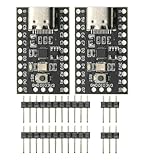
- CH32V003 Development Minimum System Board for Nano RISC-V CH32V003F4U6 Chip TYPE-C USB 22Pin
- on-board 24MHz Crystal oscillator
- Power by TYPE-C USB
Tenstorrent and Bodhi’s stated work fit the wider ecosystem ambition: their announcement focused on software, systems, and an Indian company targeting server markets, rather than announcing a DIR-V processor or claiming that Bodhi was a government programme project. Keller said at the time that he wanted Tenstorrent to help after learning of India’s RISC-V effort; his reference to a goal of launching an indigenous chipset by 2024 was his description of the ambition then, not evidence that the target was met.
In a separate April 5, 2023 PIB item about Tenstorrent’s India office, Minister of State for Electronics and IT Rajeev Chandrasekhar said, “The time and place for RISC-V is India and Bengaluru is the capital of RISC-V innovation.” That is the minister’s advocacy, not an independent assessment of the partnership’s outcomes.
Rank #3

- The ESP32-C3 SUPERMINI is positioned as a high-performance, low-power, cost-effective IoT mini development board, suitable for low-power IoT applications and wireless wearable applications
- It is equipped with a rich set of interfaces, including 11 digital I/Os that can be used as PWM pins and 4 analog I/Os that can be used as ADC pins.
- It supports four serial interfaces, including UART, I2C, and SPI.
- The ESP32-C3 features a 32-bit RISC-V CPU, including an FPU (Floating Point Unit) capable of 32-bit single-precision
- Package: 2PCS ESP32-C3 MINI Development Board ESP32 SuperMini ESP32 C3 WiFi Module
What later Indian processor efforts do—and do not—show
A government explainer posted December 15, 2025 places the Bodhi announcement within a broader, evolving domestic processor effort, but it does not report on Bodhi’s business or products. The PIB explainer on DHRUV64 calls DHRUV64 India’s first homegrown 1.0 GHz, 64-bit dual-core microprocessor, developed by C-DAC under the Microprocessor Development Programme. It describes DHRUV64 as the third chip fabricated under DIR-V after THEJAS32 and THEJAS64, and says DHANUSH64 and DHANUSH64+ were under development when the explainer was published.
Those named chips are government-programme efforts; they should not be confused with Bodhi’s proposed Tenstorrent-based server systems. The same PIB explainer reports that India consumes around 20% of microprocessors manufactured globally and has 20% of the world’s chip-design engineers. It also says that, as of 2025, the India Semiconductor Mission had approved ten projects across six states with a total investment commitment of ₹1.60 lakh crore. These are figures about the wider national semiconductor landscape, not measurements of Bodhi or the Tenstorrent partnership.
Rank #4

- ESP32-C6 WiFi 6 microcontroller development board adopts ESP32-C6-WROOM-1-N8 module, which is equipped with RISC-V 32-bit single-core processor, up to 160MHz main frequency, built-in 8MB Flash
- Integrates WiFi 6, Bluetooth 5 and and IEEE 802.15.4 (Zigbee 3.0 and Thread) wireless communication, with superior RF performance
- Integrates rich peripherals including SPI, UART, I2C, I2S, LED PWM, SDIO and other interfaces, compatible with the pinout of ESP32-C6-DevKitC-1-N8 development board, more convenient to use and expand a variety of peripheral modules
- Onboard CH343 and CH334 USB HUB chips, supports USB and UART development at the same time via a USB-C port
- Comes with online examples and tutorials for ESP-IDF development environment
Are Bodhi’s RISC-V servers available?
The April 2023 release describes what Bodhi intended to build and sell, but does not name a server model, provide a purchase channel, or establish that systems shipped. The available Tenstorrent newsroom index likewise does not verify current Bodhi operating or shipping status. So the announcement is evidence of a plan and strategic partnership, not a current product listing or confirmation that buyers can order a Bodhi system.
For readers tracking the story, the meaningful distinction is between ecosystem activity and a documented product outcome: the companies announced collaboration and market targets, while the cited material does not establish a purchasable system or a later commercial milestone.
Quick Recap
Best Value

- Ample PSRAM Storage – The development board offers 8MB PSRAM, providing substantial extra memory for handling more complex tasks, large data buffers, and advanced processing.
- Enhanced Multi-Tasking Capability – With the additional 8MB PSRAM, the ESP32-C5-WIFI6-KIT can efficiently manage multiple protocol stacks simultaneously, ensuring smooth operation in multi-tasking IoT environments.
- Support for Medium-Load Applications – The 8MB PSRAM allows the ESP32-C5 to handle medium-load applications more effectively, making it ideal for scenarios requiring real-time data processing or continuous communication.
- Seamless Performance – The increased memory improves the overall performance and responsiveness of the device, particularly when running applications with larger memory footprints or more demanding computations.
- Future-Proof for Complex Projects – With 8MB of PSRAM, developers are better equipped to build scalable, high-performance solutions that support both current and future IoT use cases, offering flexibility for future-proofing designs.
Product prices and availability are accurate as of the date/time indicated and are subject to change. Any price and availability information displayed on Amazon at the time of purchase will apply.

