
Build your party around the jobs a fight requires, not a supposedly perfect lineup. First identify what the encounter demands—surviving incoming damage, defeating threats, controlling enemies, and restoring or protecting allies—then assign those jobs to characters and choose abilities and equipment that help them do them. Roles can overlap, and the right setup depends on the game and the encounter.
Which roles should my party cover?
Use roles to describe contributions to combat, rather than assuming every character must fit one exclusive class. A broad checklist is durability, damage, support or control, and healing or protection. One character may cover more than one function, and several characters may share a job.
- Durability: Take enemy attention, withstand attacks, or prevent damage from reaching vulnerable allies.
- Damage: Defeat enemies efficiently, including prioritizing threats before they can take more actions.
- Support and control: Strengthen allies, weaken or disrupt enemies, or create openings for the party.
- Healing and protection: Restore lost health or reduce the impact of incoming attacks.
Games define roles differently. In FINAL FANTASY XIV’s party manual, tanks divert enemy focus and bear attacks, healers restore and protect allies, and DPS focus on offensive attacks. The manual also explains that party size and role restrictions depend on the duty. Treat that as a game-specific system, not a universal template.
How do I build characters around their roles?
A role is the job a character contributes; a build is the set of choices that enables that job. Work through these decisions in order, using the relevant game’s own descriptions of skills, stats, equipment, and thresholds:
Outdated Drivers Are Slowing You Down
One free scan finds every outdated or missing driver and matches the right update for your exact hardware.Free scan · exact hardware matchPC Slower Than It Used to Be?
A free scan shows the junk files, broken settings and background clutter dragging Windows down - then fixes them in one click.Free scan · Windows 10 & 11#1 Best Overall
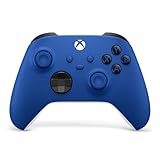
- MODERNIZED DESIGN — Experience the modernized design of the XBOX Wireless Controller with sculpted surfaces and updated geometry that enhances comfort and control during long gaming sessions.
- PRECISION PERFORMANCE — Stay on target with a hybrid D-pad and textured grips on triggers, bumpers, and back case for improved accuracy and handling.
- SHARE BUTTON: Seamlessly capture and share content such as screenshots, recordings, and more with the new Share button.
- VERSATILE CONNECTIVITY — Connect via USB-C for plug-and-play on console and PC, or quickly pair and switch between supported devices with XBOX Wireless and Bluetooth support.
- BUILT-IN AUDIO SUPPORT — Plug in compatible headsets using the 3.5mm audio jack for direct voice chat and immersive in-game sound.
- Define the contribution. Decide what the character should do for this party and encounter: for example, protect an ally, apply a useful debuff, or deal damage to a priority target.
- Find the mechanics that support it. Check which abilities, stats, equipment effects, and breakpoints improve that contribution. Numerical priorities and gear systems differ by game, so do not transfer a stat recommendation from one RPG to another without checking its rules.
- Check the rest of the party. Keep what is already covered in view. A build that duplicates an existing strength may be less useful than one that fills a gap—unless the encounter rewards specialization.
- Account for execution. Consider turn order, positioning, target access, enemy defenses or affinities, and party-wide buffs where the game uses them. A powerful effect may be less useful if the character cannot apply it at the needed time or to the needed target.
- Test a focused change. If a setup is underperforming, change one item or skill and compare results in a repeatable fight before changing more. That makes it easier to tell which choice helped.
Square Enix’s FINAL FANTASY XIV Job Guide, marked “Updated for 7.5” when accessed, illustrates why a role label does not tell the whole story. Its job descriptions distinguish, for example, physical ranged DPS that also provide support, magical ranged DPS whose casts can restrict movement while enabling burst potential, and melee DPS that rely on close-range positioning and combos. These are distinctions within FFXIV; other games may define comparable roles and trade-offs differently.
How do I adjust my party for a difficult fight?
Compare the fight’s demands with the party’s uncovered functions before rebuilding everyone. Look for the specific threat causing trouble—such as heavy incoming damage, a dangerous enemy that survives too long, a status effect, or a defense the current lineup struggles against—and choose a change that addresses it.
Rank #2

- Versatile compatibility: supports Xbox Series X/S, Xbox One X/S consoles and PC Win10 and above (including the game platform Steam).
- Precise control: features Hall joysticks and Hall triggers for a comfortable feeling, long service life and improved game accuracy.
- Plug and Play Convenience: Wired USB connection (removable) for easy setup and instant play without the need for additional drivers.
- Customizable experience: Includes 2 custom backbuttons that allow users to eliminate false triggers and improve their gaming experience.
- Impressive gameplay: Provides a pulsating vibration trigger and an asymmetric vibration grip motor for intense tactile feedback.
- Role coverage: Does a character fill a missing function, or simply duplicate one the party already handles?
- Encounter fit: Can the party answer the fight’s damage, control, status, defense, or affinity mechanics?
- Synergy: Do buffs, debuffs, protection, or combo effects make another party member more effective?
- Timing and position: Can the character act when needed and reach or affect the relevant targets?
- Survivability versus output: What damage or utility is gained, and what healing or protection is sacrificed?
- Flexibility and cost: Can the build adapt to other duties, and does this game impose a resource or respecialization cost?
In turn-based combat, acting before an enemy can make a debuff or shield more useful at the moment it matters; focusing attacks can also remove an enemy’s future turns sooner. Neither result is guaranteed across all RPGs: turn order, status rules, enemy behavior, and action systems vary. Use the fight’s mechanics to decide whether timing, concentrated damage, or broader role coverage is the better answer.
Independent reader supportYour contribution helps us test, update, and keep practical guides available for everyone.How should I compare two viable builds?
Compare them against the same encounter and the same party, rather than judging a build in isolation. Ask which one performs the needed job more reliably, what it enables for allies, and what it gives up. If the game charges resources for changing skills or equipment, include that cost in the decision; the cost is game-specific.
Rank #3

- BREAKER SERIES — Hold nothing back. Storm Breaker lets nothing stop its style with classic grays and blacks, offset with whites. Part of the collective debut of the Breaker special edition series.
- BOLD STYLE, BUILT TO PERFORM — Define your swagger with a wild, head-turning design. Stay elegantly on target with textured triggers built for every moment.
- RUBBERIZED GRIPS — Hold on to the action with rubberized grips on the back cases, designed for comfort and control during long gaming sessions.
- UP TO 40 HOURS OF BATTERY LIFE — Get up to 40 hours of battery life so you can keep playing without stopping to recharge.
- PLAY ACROSS EVERY SCREEN — Quickly pair with, play on, and switch between devices including console and PC. Stream games across mobile, gaming handhelds, Smart TVs, and supported VR headsets with XBOX Cloud Gaming.
For useful iteration, keep the test conditions as similar as possible and change one build element at a time. A repeatable fight can reveal whether the adjustment improved the outcome, but it does not establish that the build is best for every encounter.
Quick Recap
Rank #4

- Supported Multi-Platform:Switch/Switch 2 (NO support wake-up function)/iOS/Android/Windows PC (Notice:Not compatible with Xbox, PlayStation or GeForce Now, For game platforms not mentioned, please consult customer service before buying)
- Connection modes:Wired/Bluetooth/Wireless Dongle(Connect to PC via Bluetooth : Select iOS (phone) mode, but it's not recommended; Dongle is more stable)
- 【Innovative Intelligent Interactive Screen】Manba One V2 wireless game controllers create a new era of controller screens; Equipped with a 2-inch display, no App & software needed, you can set the pc controller directly through the screen visualization, More convenient operation
- 【Micro Switch Button】Manba One wireless controller has Micro Switch Button and ALPS Bumper; The 6-axis gyroscope function makes switch games more immersive
- 【Customize Your Own Controller】The intelligent interactive screen allows you to easily set vibrations, buttons, joysticks,lights, etc., without the need for complex key combinations; 4 configurations can be saved to unlock your own gameplay for different games; The 4 back keys support macro definition settings, and you can activate the set character's ultimate move with one click
Sources and scope
- Square Enix: Party Play | Game Manual | FINAL FANTASY XIV, The Lodestone — FFXIV party sizes, role descriptions, and duty-specific restrictions.
- Square Enix: FINAL FANTASY XIV Job Guide — FFXIV job distinctions; marked “Updated for 7.5” when accessed.
- Plarium: How to Improve at RPG Games: Build, Gear & Strategy — general guidance on builds, synergy, turn order, target priority, counters, and iterative improvement. Its game-specific recommendations should not be treated as rules for other RPGs.
Product prices and availability are accurate as of the date/time indicated and are subject to change. Any price and availability information displayed on Amazon at the time of purchase will apply.

