
Quick wins for a faster PC:
Fix the driver behind crashes, sound loss and screen glitchesFind Drivers →Clear out junk files and repair common Windows errorsFree Scan →iTechGuides is reader-supported. When you buy through links on our site, we may earn an affiliate commission. As an Amazon Associate I earn from qualifying purchases. Learn more
In the NHL, Injured Reserve (IR) usually means a player is expected to be unavailable for at least seven days: he cannot play in NHL games during that period, does not count toward the club’s 23-player roster limit, and may be replaced on the roster. Long-Term Injured Reserve (LTIR) is a separate mechanism for longer absences that can affect a club’s salary-cap spending limit. A roster replacement is not automatically an emergency replacement; that exception has narrow conditions.
What NHL teams mean by an “injury list”
“Injury list” is often used informally, but it is not precise enough to establish a player’s formal status. The relevant transaction may identify a player as being on Injured Reserve, Injured Non-Roster, or another status. The NHL’s September 29, 2026 opening-roster release grouped some players under “Injured and/or Non-Roster”; that combined heading does not mean everyone in it has the same formal designation. When status matters, check the individual transaction announcement.
How NHL roster limits work
Under the NHL’s current Hockey Operations Guidelines, from the start of the regular season through the trade deadline a club’s playing roster may contain no more than 23 players. It must have at least 20: 18 skaters and two goaltenders. These are playing-roster limits, not a limit on everyone under contract to the club. Players on IR do not count against the 23-player maximum.
Injured Reserve (IR): a roster opening for a qualifying absence
Eligibility and minimum time out
A player may be placed on IR if injury, disability, or illness makes him unable to perform his hockey duties after he has passed the club’s initial physical examination for that season. The NHL guidelines say the injury must leave him unable to play for at least seven days. Once placed on IR, he is ineligible to play in NHL games for at least seven days. The club’s medical staff makes injury determinations under its medical standards.
#1 Best Overall

- 𝐒𝐓𝐔𝐑𝐃𝐘 𝐅𝐀𝐁𝐑𝐈𝐂: Jetstream's Sport Duffle is made from high-quality 600 Denier & Heavy-duty Polyester fabric that is strong, lightweight, water-resistant and rip-resistant
- 𝐂𝐔𝐒𝐓𝐎𝐌𝐈𝐙𝐀𝐁𝐋𝐄: Designed in a variety of two-tone solid colors, this bag is ideal for teams and personal customization. The blank 30" opening panel makes it an ideal platform to print or stitch your team logo, name or even your player number
- 𝐂𝐎𝐍𝐕𝐄𝐍𝐈𝐄𝐍𝐓 𝐃𝐄𝐒𝐈𝐆𝐍: This sport equipment and travel bag is uniquely designed with 2-inch polypropylene webbing handles and 2 external end pockets for smaller equipment, shoes or laundry. There is one main compartment with a durable 2-way zipper closure, top loop handles for easy carrying and the bag is collapsible, folding flat for easy storage
- 𝐕𝐄𝐑𝐒𝐀𝐓𝐈𝐋𝐄: Our duffle is ideal for hauling sports gear and equipment for hockey, football, soccer, and the gym. However don't stop there, use it for camping, travel and even moving! A reliable, essential, and multifunctional lightweight duffle to cart multiple items anywhere, anytime
- 𝐃𝐈𝐌𝐄𝐍𝐒𝐈𝐎𝐍𝐒: The foldable feature of our duffle bag makes it ideal for an easy storage option, fit it in your locker, your car or in the garage. Dimensions are - 36"L x 16"H x 15"D and 16"L x 2”H x 15"D when folded
What IR changes—and what it does not
IR removes the player from the 23-player count, and the club may replace him on its NHL roster. That is roster-space relief, not automatically salary-cap relief: the Carolina Hurricanes’ roster-rules primer distinguishes IR’s active-roster effect from LTIR’s cap implications.
IR does not necessarily keep a player away from all team activity. NHL guidelines permit an IR player to attend team meetings and meals, travel with the club, and participate in practice. The CBA text says he may not appear in NHL games, take part in pre-game warmups with the club, or dress in game uniform on game days. The NHL’s CBA page is the official repository for the agreement materials.
Rank #2

- 🏒𝐋𝐀𝐑𝐆𝐄 𝐂𝐀𝐏𝐀𝐂𝐈𝐓𝐘: This wheeled hockey gear bag features a spacious main compartment with 2 removable dividers, allowing you to customize storage space for footwear, protective pads and all your hockey gear.
- 🏒𝐌𝐔𝐋𝐓𝐈𝐏𝐋𝐄 𝐏𝐎𝐂𝐊𝐄𝐓𝐒: The top pocket fits your helmet perfectly and has a hook-and-loop panel for decorative patches. 2 side pockets fit water bottles and more, while side hook-and-loop webbing firmly holds your ice hockey sticks in place.
- 🏒𝐔𝐍𝐈𝐐𝐔𝐄 𝐃𝐄𝐒𝐈𝐆𝐍: The inner PVC zippered pouch can hold wet items. Main compartment with 1 ventilation hole. The front pocket adopts a tactical MOLLE design. Reflective strips are fitted on the outside of the front zipper pocket.
- 🏒𝐏𝐑𝐄𝐌𝐈𝐔𝐌 𝐌𝐀𝐓𝐄𝐑𝐈𝐀𝐋: Crafted from high-quality water-resistant fabric, it keeps your ice hockey gear safe and dry. The waterproof and abrasion-resistant base is easy to clean, built for long-term use.
- 🏒𝐕𝐄𝐑𝐒𝐀𝐓𝐈𝐋𝐄 𝐔𝐒𝐄: Measuring 12.2 x 11.8 x 38.6 inches, this ice hockey bag comes with padded carry handles and 2 smooth silent rolling wheels. It is not only an ideal travel companion for every hockey enthusiast, but also perfectly suited as a sports gear bag, travel duffel, or hiking pack.
Long-Term Injured Reserve (LTIR): a separate cap exception
LTIR is generally relevant when injury or illness is expected to keep a player unavailable for at least 10 NHL regular-season games and 24 calendar days. The team primer describes the player as needing to be on IR as well. Unlike ordinary IR, LTIR can allow a club to spend above its normal salary-cap limit on replacement players under the applicable calculation.
The amount is not necessarily equal to the injured player’s cap hit. It depends on the club’s payroll and when it enters the exception, so a precise estimate requires the applicable cap calculation. LTIR is therefore not just another label for the roster opening created by IR: IR addresses roster accounting, while LTIR adds a long-term threshold and a distinct salary-cap exception. The NHL-NHLPA memorandum of understanding is available through the NHL’s CBA materials.
Rank #3
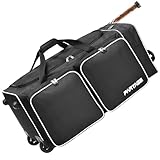
- 【PREMIUM MATERIAL】:This travel bag is made of 900D heavy duty polyester. The construction is sturdy and resistant to tears and abrasion. It is the perfect travel companion for any hockey enthusiast, ensuring your gear is protected in all conditions.
- 【LARGE CAPACITY】: This travel bag has a capacity of up to 160 L and measures 33.5x18x15 inches. Provides plenty of space for all your hockey equipment.
- 【SPECIALIZED SKATE POCKETS】: Two exterior pockets designed specifically for your ice hockey skates. Easy to reach and quick to grab your skates when you're ready to hit the ice. No more rummaging around in the main compartment for your skates.
- 【EXTERIOR DESIGN FOR HOCKEY STICK】:The exterior features a convenient pocket and two adjustable straps. The adjustable straps can firmly and securely fasten your hockey stick to the bag for easy transportation without worrying about it getting damaged.
- 【4-INCH TANK WHEELS】: Equipped with durable 4-inch wheels, this bag offers effortless mobility. Easily slide it through a variety of surfaces such as parking lots, skating rinks, or locker rooms, reducing the stress of carrying heavy gear. Note: This bag can't stand on its own. Purchase with caution.
How teams replace an injured player
Ordinary replacement
When IR creates an opening, a club may make a roster move to add another player, subject to roster limits and applicable salary-cap rules. A club may recall a player from a minor-league affiliate if that player and transaction are eligible under the rules. Recall, waiver, and cap consequences depend on the player and the specific transaction; IR does not make every potential replacement automatically eligible.
The replacement could be a player already in the organization or another eligible addition. The roster-rules primer distinguishes ordinary recalls from emergency recalls and sets out their differing roster and cap effects.
Rank #4
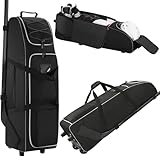
- 【Large Capacity for Sports Gym and Travel】:This 107L 41" Heavy Duty Duffel Bag is specifically designed to meet the needs of those who require substantial storage for both sports and travel.It easily provides plenty of space for all your hockey gear or other large sports equipment such as basketball, baseball, and football gear, including helmets, pads, and more.Whether you're working out or travelling long distances, this large bag offers plenty of space and convenience.Size: 12.59"12.59"41.33"
- 【Premium Material】:This travel bag is made of 900D high density polyester. The construction is sturdy and resistant to tears and abrasion. This heavy-duty bag is reinforced with anti-dirt foot pads to protect against wear and tear.It is the perfect travel companion for any hockey enthusiast, ensuring your gear is protected in all conditions
- 【Multiple Pockets】:This bag has a large main compartment for your hockey gear and clothes, and the shoe compartment is separated to keep it clean. This tote comes with a separate helmet pocket, which can pick up the helmet easily and quickly. Two exterior pockets designed for ice hockey puck sticks. When you are ready to serve ice, you can just take it out and use it
- 【Hockey Duffle Bag with Rollers】:The duffle bags with rollers is equipped with smooth and durable rollers, which greatly reduces the burden of carrying. In addition, the hockey bag comes with a carrying strap, gives you the option to carry this bag in other ways.Note: This bag can't stand on its own. Purchase with caution
- 【Easy to Use】:The exterior features a convenient pocket and two adjustable straps. The adjustable straps securely hold the hockey stick in place inside the bag, making it easy to transport without worrying about damage
Emergency replacement
The emergency-replacement exception is a narrow contingency, not the routine method for filling any injury-created opening. The relevant MOU provisions require several conditions, including limited payroll room, inability to sign or recall a player at the specified amount under the long-term exception, a shortfall below 18 skaters and two goalies because of the absence, and having played the previous game below that roster composition. The emergency replacement’s averaged amount is capped, and the player may remain only while the roster emergency continues.
What’s actually slowing this PC down?
Pick the symptom - the matching free tool is one click away.
IR and LTIR compared
| Question | IR | LTIR |
|---|---|---|
| Expected unavailability | At least seven days, under NHL Hockey Operations Guidelines | Generally at least 10 NHL regular-season games and 24 calendar days, as stated in the team primer; the CBA and amendments govern application |
| Can the player play? | No NHL games for at least seven days after placement | Associated with a longer-term absence; the applicable IR restriction still applies |
| Effect on 23-player limit | Player does not count; club may replace him | Player is on IR under the team primer, so the IR roster treatment applies |
| Salary-cap effect | No automatic cap relief, according to the team primer | May permit a higher spending limit under a calculation dependent on payroll and timing |
| Replacement route | Ordinary eligible roster move, subject to rules | Ordinary moves remain possible; emergency replacement still requires separate conditions |
Which rules apply in 2026–27?
The NHL-NHLPA CBA that began September 16, 2026 is in effect for the 2026–27 season. The NHL says the new agreement runs through September 15, 2030. Older explainers may still describe basic concepts, but the current agreement and transaction record govern technical questions about player eligibility, waivers, recalls, or cap calculations. The NHL’s September 29 opening rosters are a dated snapshot, not a continuing update to player availability.
Quick Recap
Best Value

- 900D PVC polyester + oxford cloth - rip-resistant, tear-resistant, travel-friendly material
- 186L - 35x18x18" - Rugged, waterproof tarpaulin bottom - no match for a muddy field or damp locker room
- PVC-coated mesh vent top - max air-flow and freshness
- Skate/gear organizer caddy included - locks in the center or the side of duffle, separates skates on protective felt pad. Includes wet/dry zippered pocket and 6 pockets
- 4 Exterior pockets - water bottle slots, zippered gear storage, protective felt-lined pocket for phone, sunglasses, goggles, etc
Product prices and availability are accurate as of the date/time indicated and are subject to change. Any price and availability information displayed on Amazon at the time of purchase will apply.

