
iTechGuides is reader-supported. When you buy through links on our site, we may earn an affiliate commission. As an Amazon Associate I earn from qualifying purchases. Learn more
For most modern systems, 512e is the practical default: it presents the familiar 512-byte logical sectors while storing data in 4K physical sectors. Choose 512n when an existing controller, array, appliance, or application specifically requires native 512-byte physical sectors. Neither label alone proves a drive will work in your system; check the exact model and the entire storage path. 4Kn is a separate format that exposes 4K logical sectors and needs end-to-end support.
What do 512n, 512e, and 4Kn mean?
The key difference is the physical sector size inside the drive, not simply whether the host sees 512-byte sectors. Both 512n and 512e expose 512-byte logical sectors. In 512e, the drive translates those host requests to its 4K physical sectors.
| Format | Logical sector (host-visible) | Physical sector (inside drive) | What it means |
|---|---|---|---|
| 512n | 512 bytes | 512 bytes | Native 512-byte sectors |
| 512e | 512 bytes | 4,096 bytes | 4K physical sectors with 512-byte emulation |
| 4Kn | 4,096 bytes | 4,096 bytes | Native 4K sectors; host must support 4K logical sectors |
The “e” in 512e means emulation: the drive preserves a 512-byte logical interface while using 4K physical sectors. It does not mean the drive has less advertised capacity. Western Digital describes the physical/logical distinction in its Advanced Format recording overview; Microsoft also explains the formats in its Advanced Format compatibility guidance.
The Tool Desk
Outbyte Driver Updater FREEScan for outdated or missing drivers - takes under a minuteDriver Scan →Outbyte PC Repair FREERepair Windows errors before they cause bigger problemsFix Now →Is 512n faster than 512e?
Not in every workload. 512n has a simpler path for genuinely small 512-byte writes because each logical sector is also a physical sector. With 512e, a write smaller than a physical sector—or one that is poorly aligned—can trigger read-modify-write: the drive reads the containing 4K sector, changes the requested portion in cache, then writes the full 4K sector back. Microsoft identifies this as the source of possible performance problems, not an inevitable penalty in every 512e workload (Microsoft storage I/O performance guidance).
#1 Best Overall

- Toshiba 14TB SATA 3.5" Enterprise HDD
- SATA3 6.0Gb/s, 7200RPM
- 512e Persistent Write Cache Technology
- Innovative 9-disk Helium-Sealed Design
- 3.5" Form Factor, 26.1mm height
A correctly aligned 512e volume with writes of 4K or more can perform much like 512n in ordinary use. The difference is more likely to matter with small random writes, legacy applications, misaligned partitions, or storage layers that do not understand physical-sector size. Sequential workloads may show little difference, particularly when HDD seek time, network throughput, RAID parity work, or application processing is the bottleneck. A “512n is always faster” claim is therefore too broad.
Why RAID can magnify small-write costs
Parity RAID introduces its own read-modify-write work when a small update affects only part of a stripe. A controller may need to read old data and parity, calculate new parity, then write updated data and parity. If the underlying drive also has to update a partial 4K physical sector, those costs can compound. Drive-sector alignment, RAID-stripe alignment, and filesystem or partition alignment are separate concerns.
Which format is more compatible?
512n generally has the broadest legacy sector-format compatibility because both its logical and physical sectors are 512 bytes. Microsoft lists 512n support across Windows versions in its 4K-sector support policy. That does not guarantee compatibility with every controller, drive capacity, firmware, or appliance.
Do these 3 things before closing this tab:
1Scan for outdated or missing drivers - takes under a minute2Clear out junk files and repair common Windows errors3Fix the driver behind crashes, sound loss and screen glitches512e was designed to retain the familiar 512-byte logical interface, and it is widely used in modern systems. But an operating system detecting a disk is not proof that the boot firmware, backup software, RAID controller, hypervisor, filesystem, or application will handle its physical sectors correctly. Microsoft warns that older systems and sector-unaware applications can have alignment, boot, performance, or data-integrity problems.
Rank #2
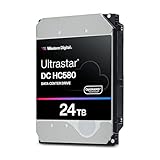
- Store vast amounts of data with a class-leading 24TB capacity, perfect for hyperscale environments, data centers, and big data applications.
- 7200 RPM, SATA 6Gb/s interface, and large 512MB cache, delivering fast, predictable performance for demanding server workloads.
- Designed for 24/7 operation with a high 2.5 million hours MTBF (Mean Time Between Failures) rating, ensuring enterprise-class durability and data dependability.
- Conventional Magnetic Recording (CMR): Employs proven CMR technology for consistent and reliable performance across various workloads.
- Engineered for massive scale-out (MSO), high-density data centers, and cloud storage applications.
4Kn is less suited to legacy environments because the host must handle 4K logical sectors. Support depends on the operating system, firmware, controller, hypervisor, filesystem, and applications. Intel’s Advanced Format support guidance documents platform-specific controller and boot requirements; native 4K is not automatically the better choice for every system.
Windows version matters
Microsoft’s compatibility guidance warns against relying on 512e or 4Kn with Windows XP, Windows Server 2003, and related codebases, even if a disk appears to work in limited circumstances. Windows 7 and Windows Server 2008 R2 require the applicable updates or service-pack level for 512e support. Newer Windows versions generally support 512e, while 4Kn still requires support throughout the platform and software stack. Consult Microsoft’s version-specific compatibility update and support policy rather than applying a blanket claim to all Windows installations.
Linux, NAS, ZFS, and virtualization
There is no single compatibility answer for every Linux distribution, NAS, or filesystem. Kernel and driver behavior, controller presentation, partition alignment, RAID implementation, encryption, volume management, and application I/O all matter. A filesystem using 4K blocks can reduce small writes, but it does not remove controller, RAID, or application-level constraints. For ZFS, verify the target implementation’s guidance for pool sector settings rather than inferring compatibility from the drive label alone.
Quick wins for a faster PC:
Repair Windows errors before they cause bigger problemsFix Now →Fix the driver behind crashes, sound loss and screen glitchesFind Drivers →Clear out junk files and repair common Windows errorsFree Scan →Virtualization adds another layer: a guest may see a 512-byte-sector virtual disk even when its physical storage is 512e, and the hypervisor must manage the underlying physical format. Hyper-V recommends VHDX when taking advantage of 4K sectors in its storage performance guidance. VMware support depends on release and datastore format; Broadcom’s 512e guidance describes version-specific conditions, so confirm the exact vSphere or vSAN support matrix before deployment. Its separate vSAN physical-sector-size guidance also underscores that storage-platform rules are specific to the product and release.
Rank #3

- Massive 16 TB Capacity - Stores up to 16 terabytes using conventional magnetic recording (CMR), delivering broad application compatibility and optimal performance in enterprise environments
- igh-Speed 7200 RPM & 512 MiB Cache - Operates at 7,200 RPM with a full 512 MiB on‑board cache, enabling sustained throughput up to ~262 MiB/s (real-world testing saw peaks around 270–280 MiB/s)
- Helium-Sealed 9-Platter Design - Toshiba’s helium technology reduces internal turbulence and power use while fitting nine CMR platters into a standard 3.5″ form factor (26.1 mm height) for high density and efficiency
- Built for 24/7 Reliability - Designed for continuous operation with an industry-grade MTTF of 2.5 million hours (approx. 0.35% annual failure rate), plus rotational vibration sensors and Toshiba’s persistent write cache to safeguard against sudden power loss
- Enterprise-Class Workload Rating & Interface Flexibility - Rated for up to 550 TB/year workload and compatible with standard SATA 6 Gb/s interfaces on servers or storage arrays. Supports both 512e (this model) and optional 4Kn or AES Self-Encrypting Drive configurations
Can you mix 512n and 512e drives in one RAID system?
Sometimes, but compatibility is a controller and storage-system rule, not a universal property of the formats. A system might allow different formats in separate disk groups or as replacements under a documented migration path, yet reject a mixed RAID group or hot spare. It may also accept a drive but warn about performance or expose a different format to the operating system. Seagate documents support for sector types and mixed drives in particular systems in its G280 storage-system manual; Intel likewise makes mixing dependent on controller support in its sector-format guidance.
For a replacement, match the existing array’s sector format unless the controller manufacturer explicitly documents a compatible replacement or mixed-format procedure. Before ordering, verify the failed drive’s exact model and format, the controller’s qualified-drive list, and hot-spare eligibility. Also match SATA or SAS, capacity requirements, firmware, carrier, and any security configuration. Back up before rebuilding and monitor the rebuild for errors and unexpected performance changes.
How to identify a drive’s sector format
Do not infer the physical sector size from a display that reports only 512-byte logical sectors: 512e reports 512-byte logical sectors too. Check both sizes, then confirm the exact drive model against its manufacturer specification. A RAID controller or USB bridge can hide or translate the underlying information.
Windows
From an elevated Command Prompt, query a volume with:
Rank #4

- High-Reliability Drive for servers, storage systems, and business-centric NAS systems
- Performance-Optimized for heavy application usage, supports workloads of up to 550TB per year—10× that of desktop hard drives
- Designed for 24×7 storage environments and backed by a 2 million hour MTBF rating
- Seagate Enterprise drives are built on 40 years of enterprise workload knowledge and experience
fsutil fsinfo sectorinfo C:
For disk-level diagnostics, Windows exposes physical alignment information through storage-property queries such as STORAGE_ACCESS_ALIGNMENT_DESCRIPTOR; Microsoft documents the distinction between logical and physical sector queries in its Advanced Format developer guidance. Confirm the result with the drive’s exact model number and datasheet.
Linux
Use:
lsblk -o NAME,MODEL,SIZE,LOG-SEC,PHY-SEC,MIN-IO,OPT-IO
LOG-SEC=512andPHY-SEC=512indicate 512n.LOG-SEC=512andPHY-SEC=4096indicate 512e.LOG-SEC=4096andPHY-SEC=4096indicate 4Kn.
Behind a RAID controller or USB enclosure, cross-check the model-specific specification because a bridge may not report the drive’s native format accurately.
What to check before buying a replacement
- Identify the current drive’s exact model and logical and physical sector sizes.
- Check the RAID controller or appliance compatibility list and its replacement-drive rules, including hot-spare eligibility.
- Match the interface (SATA or SAS), required capacity, firmware, carrier, and security variant.
- Confirm the operating system, boot firmware, hypervisor, filesystem, and applications support the candidate drive’s format.
- Verify the model number in the manufacturer’s datasheet; “512-byte sectors” in a listing may describe logical sectors only.
- Back up and verify data before replacing a member, then monitor the rebuild and resulting system behavior.
Sector-format choices vary even within one product family. Western Digital’s Ultrastar DC HC310 product information and Ultrastar SATA datasheet show why a family name is not enough to establish format. The Seagate Exos 7E8 support page likewise covers variants whose sector format, interface, and security configuration must be checked by exact part number. A listing that says only “512-byte sectors” may describe a 512e drive, not 512n.
Best Value

- 28TB Massive Enterprise Capacity
- 7200 RPM Performance
- SATA 6Gb/s Interface
- 512e Sector Format 3.5-Inch Enterprise Form Factor
- 2.5M-hours MTBF enterprise rating
When should you choose each format?
Choose 512n for a documented legacy requirement
- Your existing array, controller, appliance, boot environment, or application explicitly requires native 512-byte physical sectors.
- You are replacing a 512n array member and the manufacturer does not document a safe mixed-format path.
- A known workload depends on small 512-byte writes and you want to avoid the 512e partial-sector update path.
512n availability can be limited to selected enterprise models and capacities. For example, Western Digital documents 512n options in selected Ultrastar variants, while other models in the family use 512e or 4Kn (datasheet).
Choose 512e for most modern 512-byte-interface deployments
- You need a 512-byte logical-sector interface for compatibility.
- The controller and operating system support Advanced Format drives.
- Your partitions and storage layers are aligned and the workload is not dominated by poorly aligned small writes.
- The required capacity or current enterprise model is offered in 512e but not 512n.
Choose 4Kn only when the whole stack supports it
Consider 4Kn when you control the operating system, controller, hypervisor, filesystem, backup tools, and applications—and each explicitly supports 4K logical sectors. It can remove the 512-byte emulation layer, but it does not guarantee faster system performance and may impose firmware, boot, controller, datastore, or application restrictions.
Common mistakes and recovery
- Assuming the drive is 512n because the OS says 512 bytes: that may be the logical sector size of a 512e drive. Query physical size and verify the model datasheet.
- Replacing an array disk based only on capacity and interface: a controller may reject the format, reject it as a spare, or accept it with a warning. Check its qualified-drive list before purchase.
- Using an old cloned partition layout on 512e: misaligned offsets can make writes span physical sectors. Inspect alignment and plan a backed-up migration to an aligned layout rather than changing sector mode blindly.
- Assuming data-disk support means boot support: old BIOS, option ROM, or controller combinations may read a data drive yet fail to boot from it. Verify boot support separately; Intel lists platform-specific conditions in its Advanced Format guidance.
- Trusting an enclosure’s report without qualification: USB-SATA or USB-SAS bridge chips may hide or translate sector information. Check through the production controller path or consult the model’s specification.
- Conflating sector format with interface: a matching sector format does not make SAS and SATA interchangeable; controller, enclosure, firmware, carrier, and command support still matter.
The same logical/physical sector terminology can apply to SSDs, but flash-page or erase-block size should not be assumed to equal the advertised sector format.
Crashes, No Sound, or Screen Glitches?
Random freezes, missing sound and display glitches usually trace back to one bad driver. Find and replace yours safely.Free scan · under a minutePC Slower Than It Used to Be?
A free scan shows the junk files, broken settings and background clutter dragging Windows down - then fixes them in one click.Free scan · Windows 10 & 11Can a 512e drive be converted to 4Kn?
Only some specific models support a vendor-approved format change. Western Digital identifies conversion-capable models in its Ultrastar DC HC310 part-number information. Treat a change as a migration, not a casual setting: it can destroy existing data or require repartitioning and reformatting.
Quick Recap
- Confirm the exact model and firmware support the destination format.
- Use only the manufacturer-approved utility and procedure.
- Back up the drive and verify the backup before changing its format.
- Confirm that the controller, OS, hypervisor, and applications support 4Kn.
- Plan for repartitioning or reformatting, and do not assume every model or environment supports a reversible change.
Product prices and availability are accurate as of the date/time indicated and are subject to change. Any price and availability information displayed on Amazon at the time of purchase will apply.

