
Free tools Windows power users keep installed
One-click scans. No signup required.
There is no single best tool among the 42 mockup and wireframing tools for developers. Figma is the strongest default for most product teams; Balsamiq is better for deliberately rough wireframes, Axure RP for complex logic, Penpot for open-source or self-hosted work, UXPin for code-connected prototypes, and Uizard or Visily for AI-assisted first drafts.
These products are not interchangeable. The list includes dedicated wireframing applications, full UI design platforms, whiteboards, diagramming tools, motion-prototyping products, and developer-handoff services. Choose according to the fidelity you need, the complexity of the interaction, the way developers will inspect the work, and how your team handles collaboration, security, and cost.
Key takeaways
- Figma is the best general-purpose choice when a team needs wireframes, polished UI, prototypes, collaboration, libraries, and developer inspection in one workflow.
- Balsamiq is the strongest choice for deliberately low-fidelity work because its sketch-like visual style helps teams discuss structure before visual polish.
- Axure RP, UXPin, and Justinmind are better suited to prototypes with variables, conditions, dynamic states, or detailed behavior than simple click-through mockups.
- Penpot is the leading open-source and self-hosting candidate, but self-hosting still requires infrastructure, backups, upgrades, monitoring, and administration.
- Uizard and Visily can accelerate first drafts with AI, but AI-generated screens still require product, accessibility, content, design-system, and engineering review.
- Code export is not the same as production-ready code; exported markup or components commonly need architectural, accessibility, state-management, testing, and performance work.
What is the difference between a wireframe, mockup, and prototype?
A wireframe is a structural representation of a screen or page that emphasizes layout, hierarchy, navigation, and content placement. A mockup adds visual decisions such as typography, color, imagery, spacing, and branding. A prototype adds interaction by demonstrating links, states, transitions, gestures, or behavior. A design system is the reusable collection of components, tokens, patterns, and rules used to build consistent interfaces. Developer handoff is the process of communicating measurements, assets, styles, behavior, responsive intent, and implementation requirements to engineering.
Modern products overlap these boundaries. Figma, Sketch, Penpot, UXPin, Axure RP, Justinmind, Framer, and similar products can support multiple stages. A whiteboard can map a user journey but lack inspectable UI components, while a diagramming product can describe a flow without behaving like a realistic application.
#1 Best Overall

- Great Adaptability: This HUANUO single monitor arm fits 13-32 inch monitors, holds 4.4-19.8 lbs, suitable for VESA patterns of 75x75mm & 100x100mm. This monitor mount is specially designed for ergonomics, aiming to help people work comfortably, and to help people have a better viewing experience.
- Full Adjustable: This PC monitor stand can remain completely stable at any angle without any extra work. Compared with other single monitor arm adjustment methods, huanuo can make you adjust screws repeatedly, this monitor arm is easy to use and has a tilt range from -50°to +85°, ±90 ° swivel, and 360°rotation, so your screen can be lifted up to 39.6cm from desktop with one hand.
- 80% Sturdier Than Others: At HUANUO, we focus on improving the strength and stability of our single monitor stand. The single desk monitor mount uses automotive-grade components and has undergone 20,000 motion tests, which means it can be used continuously for more than 5 years without issue.
- Installed In 3 Minutes: The 1-piece design monitor arm simplifies the installation, so all necessary hardware is included; The setup can be completed in 3 minutes. Step 1: Affix the bracket to your table; Step 2: Attach your monitor to the VESA plate; Step 3: Adjust tension according to your monitor weight.
- Two mounting options : You may choose to use either a C-clamp or grommet mount. For best results, make sure your table meets the following criteria: wood tabletop is recommended; the underside of the tabletop should ideally be free of any beams or panels that may interfere with the installation; the tabletop thickness and grommet mounting can support 0.59"-3.54”.
Which mockup and wireframing tool is best for developers?
Figma is the best default for most product teams. Figma spans rough wireframes, high-fidelity interface design, interactive prototypes, collaboration, reusable libraries, and developer inspection. The recommendation is editorial rather than an objective benchmark, and Figma is not the best fit for every workflow.
Use Balsamiq when the purpose is to reject weak structures quickly without encouraging visual debate. Use Axure RP when the prototype needs variables, conditions, dynamic panels, annotations, or detailed behavior specifications. Use UXPin when a team wants coded libraries and production-component-oriented prototypes. Use Penpot when open-source licensing, CSS-oriented layout, privacy, or self-hosting matters. Use Uizard or Visily when the priority is generating editable first drafts from text, sketches, or screenshots.
| Need | Recommended tools | Why |
|---|---|---|
| Best general-purpose workflow | Figma | Combines design, prototyping, libraries, collaboration, and developer inspection. |
| Fastest deliberately low-fidelity work | Balsamiq, Wireframe.cc, Pencil Project | Emphasize structure and speed rather than finished visual design. |
| Complex conditional flows | Axure RP, UXPin, Justinmind | Better suited to variables, states, expressions, and behavior-heavy prototypes. |
| Code-connected prototypes | UXPin | Designed around coded libraries and realistic component behavior. |
| Open source or self-hosting | Penpot | Relevant when teams want more control over hosting and vendor dependence. |
| AI-assisted first drafts | Uizard, Visily | Useful for text-, screenshot-, or sketch-assisted ideation. |
| Workshops and early flows | FigJam, Miro, Whimsical, Excalidraw | Strong for group ideation, maps, diagrams, and lightweight flows. |
| Motion and gestures | ProtoPie, Principle, Origami Studio, Framer | Focus on animation, gesture behavior, or advanced interaction. |
| Dedicated specifications | Zeplin | Provides a separate developer-facing handoff step. |
How should developers choose a wireframing tool?
Start with the implementation question rather than the feature count. A developer working alone may need a fast, inexpensive sketching tool. A design engineer may need inspectable components and tokens. An enterprise product team may prioritize permissions, audit controls, SSO, libraries, and governance. A privacy-sensitive organization may accept the operational burden of self-hosting to reduce dependence on a cloud service.
- Choose the fidelity. Low fidelity is appropriate for information architecture and early discovery. High fidelity is appropriate for visual approval, usability testing, visual QA, and realistic states.
- Choose the interaction depth. Simple links are enough for a basic click-through. Variables, conditions, dynamic content, validation, permissions, and non-happy paths require a behavior-oriented prototyping tool.
- Check the handoff. Look for inspectable dimensions, typography, spacing, assets, variables, tokens, component names, variants, responsive intent, annotations, and links to source components.
- Separate collaboration types. Real-time editing, comments, view-only review, guest access, approvals, version history, branching, and team libraries are different capabilities. A shareable link does not prove real-time collaboration.
- Check platform and hosting. Browser-first tools simplify cross-platform access but depend on browser and internet support. Desktop tools may support local workflows but can make concurrent collaboration harder. Self-hosting transfers maintenance and security responsibility to the team.
- Calculate the real team cost. Compare editor seats, developer or inspector seats, collaborator seats, reviewers, projects, storage, history, exports, AI credits, and enterprise requirements—not only the lowest advertised monthly price.
What should a developer-friendly tool provide?
A developer-friendly tool preserves implementation intent instead of merely producing an attractive image. Useful capabilities include inspectable CSS-like properties, dimensions, typography, spacing, SVG or raster asset export, variables, design tokens, reusable components, variants, import and export compatibility, responsive layouts, accessibility annotations, contrast checking, version history, object-level comments, and links between design components and production components.
Windows Errors? Fix Them Before They Spread
Repair common Windows errors and clear accumulated junk for a smoother, more stable PC - no reinstall needed.Free scan · no reinstallOutdated Drivers Are Slowing You Down
One free scan finds every outdated or missing driver and matches the right update for your exact hardware.Free scan · exact hardware matchNative integrations, plugins, third-party connectors, and manual exports are not equivalent. Verify whether a connection to React, Vue, Angular, HTML, web components, Storybook, GitHub, GitLab, Jira, Slack, or an issue tracker is built in, supplied by a plugin, or dependent on manual work.
Code export needs careful interpretation. A product may export static markup, generated CSS, a starter React component, an image-based implementation, or a proprietary runtime. None of those descriptions automatically means the output is production-ready. Engineering usually still needs to restructure components, implement state management, remediate accessibility, add tests, optimize performance, and align the result with the existing architecture.
Rank #2

- Computer Compatibility - To ensure compatibility of the dual monitor mount, each of your monitors must meet three conditions: Firstly, screen size range: 13 to 32 inches. Secondly, screen weight limit: 17.6lbs. Thirdly, there must be VESA mounting holes on the back of the monitor screen that are spaced 75x75 mm or 100x100 mm apart. Please make sure that your monitor meets all of the above conditions before purchasing, if you are still unsure, you can seek help from customer service.
- Two Installation Options - With a detailed instruction manual and labeled hardware, the ErGear monitor mount is a breeze to set up. For the sake of using experience, please check if your table meets the following three conditions: Material first, we only recommend wooden table. Secondly, The bottom of the table should preferably be free of any beams or panels that may interfere with installation. Table thickness thirdly,'C' clamp fits 0.39"-3" while grommet mount fits 0.39"-2.36".
- Versatile Compatibility - With a 31.22“ wide arm span and 16” high bar, this dual monitor arm accommodates two 32” monitors, providing a very large amount of adjustability for your work use and allowing you to enjoy an immersive viewing experience.
- Flexible Screen Positioning - Experience ultimate flexibility with our dual monitor stand that features +/-90° swivel, +/-45° tilt, and 360° rotation. Easily adjust monitor angle for ergonomic viewing to avoid neck and eye strain. Achieve optimal comfort with customizable screen positioning, perfect for your office desk, gaming setup, or multitasking workspace.
- Free Up Desk Space - Elevate your monitors closer to eye level with our dual monitor desk mount, freeing up valuable desk space for laptops, keyboards, speakers, or other devices. Integrated cable management clips allow you to route cables for a clean look that maximizes efficiency and focus.
How do the 42 tools compare?
The following catalog is organized by the job each product performs. The catalog does not rank every product as a complete Figma alternative. Some products create polished interfaces, some are intentionally rough, and some are best used for flows or collaboration around a design.
General-purpose design and prototyping
| Tool | Best for | Fidelity and behavior | Developer relevance | Main limitation |
|---|---|---|---|---|
| 1. Figma | Most product teams | Low to high fidelity; clickable prototypes and broader interaction workflows | Libraries, variables, inspection, Dev Mode, collaboration | Cloud-centric; self-hosting is not the normal workflow |
| 2. Sketch | Mac-centered product design teams | Medium to high fidelity; interface prototyping | Reusable components, libraries, handoff features | Platform and collaboration requirements should be checked for the team |
| 3. Penpot | Open-source, CSS-oriented, or self-hosted workflows | Low to high fidelity; interface design and prototypes | Relevant to teams concerned with control and vendor lock-in | Self-hosting creates infrastructure and administration work |
| 4. Axure RP | Complex enterprise application behavior | High fidelity; variables, conditions, dynamic panels, and detailed states | Strong behavioral specifications and annotated flows | More complex than necessary for a disposable sketch |
| 5. UXPin | Design-system-driven prototypes | High fidelity; variables, expressions, and conditional logic | Coded libraries and code-based prototyping emphasis | Learning curve and cost may not suit lightweight work |
| 6. Justinmind | Detailed web and mobile interaction prototypes | Medium to high fidelity; advanced interaction simulation | Useful when simple click-through links are insufficient | May be excessive for simple wireframes |
| 7. Framer | Interactive, motion-oriented web concepts | High fidelity; animation and web publishing workflows | Useful when the prototype needs realistic web behavior | Not primarily a deliberately low-fidelity wireframing tool |
| 8. Mockplus | Rapid interface prototyping | Medium to high fidelity; clickable interactions | Useful for screen-level prototypes and reviews | Confirm current integrations and export needs |
| 9. Wondershare Mockitt | Interface mockups and collaborative prototyping | Low to high fidelity; interactive prototypes | Useful for visual design and review workflows | AI and integration capabilities can change by plan |
| 10. Proto.io | Web and mobile product prototypes | High fidelity; interaction-focused prototypes | Useful for demonstrating realistic product behavior | May be more than a developer needs for layout exploration |
| 11. Marvel | Simple click-through concepts | Low to medium fidelity; linked screens | Quick sharing and review | Less suitable for complex logic or code-connected systems |
| 12. Fluid UI | Fast web and mobile flow prototypes | Low to high fidelity; screen linking and interaction | Useful for communicating flows before implementation | Verify current plan limits and handoff depth |
Dedicated low-fidelity and wireframing tools
| Tool | Best for | Prototype behavior | Developer use | Main limitation |
|---|---|---|---|---|
| 13. Balsamiq | Fast, deliberately rough wireframes | Primarily structural wireframes and lightweight presentation | Clarifies hierarchy before implementation effort | Not intended to replace a polished UI design system |
| 14. MockFlow | Dedicated wireframing and ideation | Screen layouts and lightweight flows | Fast specification of early concepts | Limited fit for deep production-code integration |
| 15. Moqups | Wireframes, diagrams, and mockups | Clickable and visual presentation depending on workflow | Useful for early product communication | Not necessarily a full design-system platform |
| 16. Wireframe.cc | Minimal, quick wireframes | Simple screen-level layouts | Low-friction structure exploration | Limited visual and behavioral depth |
| 17. WireframeSketcher | Dedicated sketch-style screen planning | Low-fidelity wireframes | Useful when rough structure is the deliverable | Not a substitute for high-fidelity UI and handoff |
| 18. Pencil Project | Lightweight wireframing and diagramming | Low-fidelity screens and diagrams | Useful for simple, inexpensive concept work | Advanced collaboration and system integration may be limited |
| 19. iPlotz | Basic website and application wireframes | Low-fidelity screen planning | Helps communicate page structure | Check current activity and export requirements |
| 20. HotGloo | Interactive wireframes and UX flows | Clickable flows and screen relationships | Useful for communicating navigation behavior | May not provide the component workflow of a full UI platform |
| 21. Mockup Builder | Simple mockups and early layouts | Basic screen mockups | Appropriate for quick visual communication | Confirm current availability and collaboration model |
| 22. FlairBuilder | Traditional wireframe creation | Low-fidelity interface layouts | Useful for early screen specification | Confirm current support, platform, and export options |
AI-assisted tools and capabilities
AI entries in this group are capabilities within larger products where applicable, not necessarily separate applications. AI can generate breadth quickly, but generated interfaces can invent components, ignore an existing design system, use unsuitable content hierarchy, produce inaccessible contrast, or collapse at responsive sizes.
Do these 3 things before closing this tab:
1Clear out junk files and repair common Windows errors2Scan for outdated or missing drivers - takes under a minute3Repair Windows errors before they cause bigger problems| Tool or capability | Best use | What to verify | Main limitation |
|---|---|---|---|
| 23. Uizard | AI-assisted first drafts for non-designers and product teams | Text generation, editable output, plan limits, and export | Generated screens require substantial human review |
| 24. Visily | Screenshot-to-design, sketch-to-design, and AI wireframing | Editable results, Figma import/export, credits, and component control | Less suitable for rigorous production-component integration |
| 25. Figma AI | AI assistance inside an established design workflow | Available features, plan, credits, data handling, and design-system preservation | AI assistance does not remove the need for design and engineering review |
| 26. Balsamiq AI | AI-supported rough wireframe ideation | Credit limits, generated-editable output, and the applicable Balsamiq edition | Low-fi output is not final UI specification |
| 27. Framer AI | Prompt-assisted web concepts and layouts | Generated code, publishing model, responsive behavior, and ownership | Generated web output still needs implementation review |
| 28. MockFlow AI | AI-assisted wireframe generation | Current availability, credits, editable output, and export restrictions | AI-generated structure may not match the production system |
For current pricing and feature limits, consult the vendors’ live pages: Uizard pricing, Visily pricing, Figma plans, Balsamiq pricing, and MockFlow pricing. AI features, credit systems, beta availability, and plan restrictions change frequently.
Whiteboards and visual collaboration
| Tool | Best for | What it does well | Why it is not automatically a full UI replacement |
|---|---|---|---|
| 29. FigJam | Workshops, flows, and early product discovery | Collaborative diagrams, notes, maps, and group ideation | Screen-level design and developer inspection may belong in Figma |
| 30. Miro | Distributed workshops and journey mapping | Large collaborative canvases, diagrams, and facilitation | Not primarily a pixel-accurate UI design tool |
| 31. Whimsical | Clean flows, wireframes, and diagrams | Fast visual communication with a simple canvas | Advanced component systems and interaction logic may be limited |
| 32. Excalidraw | Informal sketches and technical discussions | Fast, intentionally hand-drawn diagrams and rough screens | Not intended for polished UI or detailed handoff |
| 33. Canva Whiteboards | Accessible group ideation and visual boards | General visual collaboration and presentation | Developer inspection and production component workflows are not the core job |
| 34. Lucidspark | Collaborative discovery and mapping | Whiteboarding, workshops, and early flows | Use a dedicated UI tool for detailed screen behavior and specs |
Diagramming and flow-mapping tools
| Tool | Best for | Useful output | Main limitation for mockups |
|---|---|---|---|
| 35. diagrams.net / draw.io | Technical diagrams, flows, and site maps | Flexible diagrams and system communication | May lack realistic UI states, tokens, and developer inspection |
| 36. Lucidchart | Structured diagrams and process flows | Site maps, workflows, and system diagrams | Not necessarily a complete UI prototyping environment |
| 37. Creately | Visual planning and diagrams | Flows, maps, and collaborative visual documentation | Validate UI component and prototype depth before choosing it for mockups |
| 38. Cacoo | Team diagrams and interface flows | Flow mapping and collaborative diagrams | Better for relationships and flows than production UI detail |
| 39. Gliffy | Diagrams and process communication | Flowcharts, architecture, and screen relationships | Not a full replacement for a UI design system |
| 40. OmniGraffle | Detailed diagrams in an Apple-centered workflow | Structured visual documentation and flows | Check platform requirements and interface-prototyping depth |
| 41. ConceptDraw DIAGRAM | Technical and business diagrams | System maps, workflows, and structured visuals | Better suited to diagramming than realistic application behavior |
Interaction and motion prototyping
| Tool | Best for | Behavior focus | Main limitation |
|---|---|---|---|
| 42. ProtoPie | Motion, gestures, and realistic interaction demonstrations | Advanced interactive behavior beyond static screen links | It complements a design workflow rather than replacing every wireframing stage |
Which tools are best at each fidelity level?
Low-fidelity tools are best for early product discovery. Balsamiq, Wireframe.cc, Pencil Project, Excalidraw, and MockFlow can help teams test layout, hierarchy, and navigation before visual polish creates false confidence. Low-fidelity output does not communicate final typography, brand expression, animation, accessibility details, or all responsive behavior.
High-fidelity tools are best when visual and behavioral realism matters. Figma, Sketch, UXPin, Axure RP, Framer, Justinmind, and Proto.io are better suited to client approval, usability testing, visual QA, and realistic application states. The trade-off is slower production and a higher risk that teams debate colors and spacing before validating the underlying structure.
Which tools support complex interaction logic?
Axure RP, UXPin, and Justinmind are the strongest choices in this list when prototypes need variables, conditions, dynamic content, validation, permissions, or detailed state transitions. ProtoPie, Principle, Origami Studio, Framer, and Flinto are more relevant when the question concerns animation, gestures, or motion. Figma, Sketch, MockFlow, Moqups, and Marvel are generally more appropriate for simpler linked-screen flows.
The Tool Desk
Outbyte PC Repair FREEClear out junk files and repair common Windows errorsFree Scan →Outbyte Driver Updater FREEScan for outdated or missing drivers - takes under a minuteDriver Scan →Rank #3
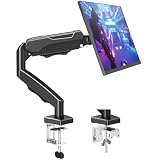
- Adjustable Tension Arm for Perfect Balance: Built with a long-lasting tension system that has passed over 20,000 rigorous cycle tests before leaving the factory. The monitor arm supports monitors 4.4-19.8 lbs. Use the included hex key to adjust tension: turn COUNTERCLOCKWISE to increase support for heavier monitors. Pre-set to mid-tension; adjust AFTER mounting your monitor. For 15+ lb monitors, turn 7+ full rotations.
- Full Motion Monitor Stand: Tilt -45°/+90°, swivel ±180°, rotate 360° for portrait/landscape, extend up to 19.4 inches, height adjustment up to 16.9 inches above desk. Smooth one-finger repositioning once tension is properly set. Tilt adjustment via hex bolt on VESA plate — tighten firmly for heavier monitors.
- Universal VESA Compatibility: Fits 75×75mm and 100×100mm VESA patterns. Compatible with most 17-32 inch flat/curved monitors from ASUS, Acer, Samsung, LG, HP, Dell, Lenovo, AOC. If your monitor has a 1000R/1500R/1800R curved screen, we recommend searching for "MOUNTUP heavy duty monitor arm" to support the monitor. Two mounting options: C-clamp (desk 0.39-2.76 inch thick) or grommet bolt (desk 0.39-2.76 inch thick). 15-minute setup with included hardware and clear manual.
- Free Up 80%+ Desk Space: Heavy-duty steel construction with built-in cable management channels. Snap-on covers keep HDMI and power cables organized and hidden. The single-point desk attachment replaces bulky monitor stands, creating a cleaner, more ergonomic workspace.
- Sturdy Construction & MOUNTUP Support: Solid steel arm and clamp/grommet base ensure stable, wobble-free positioning. For maximum stability, use grommet mount and keep arm partially retracted. Backed by MOUNTUP's 10-year support.
A useful complex prototype must include more than the happy path. Document loading, empty, error, validation, permission, offline, and responsive states. A polished prototype can otherwise suggest behavior that engineering cannot implement or that the product has never specified.
What is the best tool for developer handoff?
Figma Dev Mode, UXPin, Penpot, Sketch handoff features, and Zeplin are the main candidates for a developer-facing handoff workflow. Figma’s official pricing page describes separate Full, Dev, and Collab seats and positions its paid plans around prototyping and developer handoff; verify the current plan names, prices, and regional terms on the official Figma pricing page.
Zeplin is useful when a team wants a dedicated specification and publishing step. Zeplin’s official pricing page describes a project-oriented model and publishing from Figma through its plugin, but a separate handoff service adds another workflow step. If Figma, Sketch, Penpot, or UXPin already provides enough inspection, annotations, and asset delivery, Zeplin may be unnecessary.
UXPin is differentiated by its emphasis on coded libraries, conditional logic, variables, and expressions. The UXPin pricing and feature page lists Core at $49 per month and Growth at $69 per month in the retrieved pricing snapshot; the amounts and billing terms should be rechecked before publication.
What’s actually slowing this PC down?
Pick the symptom - the matching free tool is one click away.
How do the main pricing models differ?
Pricing is difficult to compare because vendors charge for different units. A product may charge per editor, per seat, per project, per workspace, for AI credits, or through an enterprise quote. Reviewer and developer access can materially change the total cost.
| Product | Pricing signal in the research snapshot | What to verify before buying |
|---|---|---|
| Figma | Starter free; Professional Full $16/month, Dev $12/month, Collab $3/month; Organization and Enterprise list higher annual-billing seat prices. | Currency, billing frequency, seat type, included Dev Mode, AI credits, and regional availability. |
| Balsamiq | One pricing view lists Starter $16/editor/month, Teams $24/editor/month, and Enterprise $35/editor/month annually; another lists project-based Business $12/month and Enterprise $18/month. | Which edition and billing model apply; the two retrieved pricing views must not be flattened into one claim. |
| UXPin | Core $49/month and Growth $69/month in the retrieved page. | Annual versus monthly billing, included libraries, seats, and higher-tier features. |
| Justinmind | Free $0; Standard $19/editor/month; Professional $29/editor/month; Enterprise $59/editor/month in the retrieved snapshot. | Monthly versus perpetual purchase figures, editor limits, and enterprise terms. |
| Penpot | Hosted and self-hosted options are presented on the official pricing page. | Current hosted prices, support, infrastructure, backups, upgrades, and administration for self-hosting. |
| Visily and Uizard | Official pricing pages exist, but exact plan amounts should be checked live. | AI credits, export, import, editable output, storage, and team limits. |
| Zeplin | Project-oriented pricing model is described on its official pricing page. | Projects, reviewers, publishing workflow, and whether an additional handoff service is necessary. |
These pricing signals come from the retrieved official pages for Figma, Balsamiq editor plans, Balsamiq project plans, UXPin, Justinmind, Penpot, and Zeplin. Prices and plan names are volatile and should be checked on the publication date, including the target pricing snapshot of August 16, 2026.
Rank #4
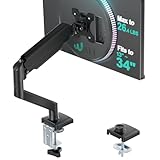
- Keep Your Desk Organized: By lifting screen off the desktop, this monitor arm opens up valuable space for your keyboard, notebook, docking station or a simple, clutter-free work area. Built-in cable management guides wires along the arms, keeping cords out of sight and out of the way. Enjoy a tidy, modern workstation that looks as good as it feels to use.
- Wide Compatibility: WALI single monitor arm is designed to fit most flat or curved LCD/LED screens up to 34", regular screen up to 32 inch, max load capacity 26.4 lbs for flat screens and 19.8 lbs for curved screens, with standard Mounting Pattern mounting holes 75x75mm and 100x100mm. Be sure to verify your monitor’s VESA pattern, size, and weight before purchasing to ensure a perfect fit.
- Full Motion for Ergonomic Comfort: WALI single vesa monitor mount allows to extend your screen out by 19.3" and raise the arm up to 17.3" above the desktop. It swivels +180°/-180°, tilts +70°/-45°and rotates 360°. Whether you’re working from home, gaming through the night, or switching between video calls and documents, getting the screens to your natural line of sight helps relieve neck, shoulder and back strain so you can stay focused longer with less fatigue.
- Engineered for Lasting Performance: This adjustable monitor stand features wider VESA head and tighter-fitting VESA panel to enhance stability and keep your monitor firmly in place. The high-performance durable core has been tested through 20,000+ cycles, delivering smooth, effortless adjustments and dependable performance for years of daily use.
- Two Ways to Install: We offer two desk mounting options: C-clamp mounting for desks 0.39″–2.76″ thick, or grommet base mounting for desks 0.39″–2.76″ thick. With straightforward instructions, you can set up your monitor arm effortlessly, making it a hassle-free addition to your desk. We only recommend installing it on a wooden desk, preferably with no crossbeam blocking the underside.
Which toolchains work well for developers?
Fast product discovery
Use FigJam or Miro for group flows and workshops, Balsamiq or Excalidraw for rough screens, Figma for validated UI, and Jira or GitHub for implementation work. The advantage is keeping discovery deliberately separate from final visual design.
Design-system-driven product teams
Use Figma, Penpot, or UXPin with a shared component library, named variants, tokens, responsive rules, and a link to the production component repository or Storybook. UXPin is especially relevant when coded libraries are central to the prototype; Penpot is relevant when open-source or self-hosted control is important.
Complex enterprise applications
Use Axure RP or UXPin for variables, conditions, permission states, error handling, and detailed interaction rules. Add formal review, version control, accessibility requirements, responsive behavior, and engineering sign-off before implementation.
Open-source or privacy-sensitive work
Use Penpot for interface design, diagrams.net or Excalidraw for flows, and Git-based documentation for implementation notes. Self-hosting does not make the workflow free: the organization still owns infrastructure, backups, monitoring, upgrades, identity management, support, and internal administration.
How should a mockup be handed off to developers?
- Define the implementation target. State whether the work targets a responsive website, native mobile application, desktop application, or internal tool.
- Name screens and flows consistently. Use stable names for screens, routes, components, and states so design, tickets, and code refer to the same objects.
- Document responsive behavior. Specify layout rules, breakpoints, resizing, wrapping, scrolling, and what happens when content is longer than the example.
- Identify reusable components. Mark components, variants, states, tokens, and exceptions rather than leaving engineers to infer which elements are meant to be shared.
- Specify non-happy paths. Include loading, empty, error, validation, permission, network, keyboard, and disabled states where they apply.
- Export only required assets. Provide the needed SVG, PNG, or other asset formats at appropriate sizes and identify ownership or licensing requirements where relevant.
- Record visual and interaction rules. Include typography, spacing, color, elevation, focus behavior, transitions, gestures, and accessibility requirements.
- Link design to production components. A component name or repository link is more useful than a screenshot that happens to resemble the intended UI.
- Review with engineering before sign-off. Engineers can identify unsupported components, impossible animations, missing states, and responsive problems before implementation begins.
- Track post-handoff changes. Record what changed, why it changed, and which implementation tickets or components are affected.
What should you avoid when comparing these tools?
Do not treat the old exact-title list as a current market guide. The historical list mixes wireframing with surveys, user testing, feedback collection, conversion optimization, and device-mockup generation; product status and purpose must be confirmed before inclusion. The older 42-tool article is useful historical evidence, not a current availability register.
Do not repeat unsupported performance measurements, adoption rates, percentage improvements, or claims of hands-on testing. A newer page using the same title contains unrelated product advertising and claims that lack transparent methodology. Treat the newer duplicate article as topic discovery rather than evidence.
Best Value

- Screen Compatibility: This single-arm mount fits screens that weigh up to 22 lbs with backside mounting (VESA 75x75mm or 100x100mm). This covers most monitors on the market between 13” and 32”, as well as ultrawide monitors up to 38”. Please verify VESA compatibility before purchasing
- Articulation and Height Adjustment: Adjustable arm offers +90° to -90° tilt, 360° swivel, 360° rotation, and height adjustment up to 16" along the center pole. Monitor can be placed in portrait or landscape orientation
- Heavy Duty Desk Clamp: Secures to desks (up to 3.25" thick) with simple hand tightening for toolless installation. An optional and equally secure grommet mount is included
- Integrated Cable Management: Keep your power and AV cables clean and organized with detachable cable clips on the arms and center pole
- Easy Installation: Mounting your monitor is a simple process with the detachable VESA plate, and we provide all the hardware and instructions for easy assembly
Do not call a diagramming tool a complete UI design platform. diagrams.net, Lucidchart, Cacoo, Gliffy, OmniGraffle, and ConceptDraw DIAGRAM can be valuable for site maps, system diagrams, and flows, but may lack realistic UI components, responsive layout systems, interaction states, design tokens, or developer inspection.
Do not call an AI-generated interface reliable merely because it looks complete. Review information architecture, content hierarchy, responsive behavior, contrast, keyboard access, component availability, state coverage, licensing, and alignment with the production design system.
Final selection checklist
- Can the tool represent the fidelity your current decision requires?
- Does the tool model the interaction complexity, states, and non-happy paths you need?
- Can developers inspect dimensions, typography, assets, tokens, components, and responsive intent?
- Does the tool integrate with the production component library, or does it only export a visual approximation?
- Are real-time editing, comments, reviewers, permissions, version history, and approvals actually included?
- Does the platform support the team’s browsers, operating systems, offline requirements, and hosting policy?
- What are the limits on editable files, projects, exports, storage, history, reviewers, seats, and AI credits?
- Can the team maintain a consistent workflow from rough structure through implementation?
Frequently Asked Questions
What is the best free wireframing tool for developers?
The best free choice depends on the job. Excalidraw, diagrams.net, and Pencil Project are useful for inexpensive rough diagrams or wireframes, while Figma’s Starter plan provides a broader collaborative design workflow subject to its current limits. Check each vendor’s live plan restrictions before choosing a team tool.
Is Figma better than Balsamiq for developers?
Figma is better when developers need polished UI, prototypes, reusable libraries, collaboration, and inspection. Balsamiq is better when the team wants deliberately rough wireframes that keep discussion focused on structure rather than visual polish.
Recommended Free Tools
Which tools export React code?
Some products advertise code or component export, but the output may be static markup, generated CSS, a starter component, an image-based implementation, or a proprietary runtime. Exported code should not be treated as production-ready React until engineers review architecture, accessibility, state management, testing, performance, and design-system alignment.
Are AI wireframing tools reliable?
AI wireframing tools are useful for generating first drafts from text, sketches, or screenshots, but AI output is not a substitute for product requirements, usability testing, accessibility review, or engineering validation. AI can invent components, produce inconsistent states, ignore tokens, and create layouts that fail responsively.
What is the best open-source alternative to Figma?
Penpot is the strongest open-source and self-hosting candidate in this list. Teams should still budget for hosting, backups, monitoring, upgrades, identity management, support, and administration, because open source does not mean zero operational cost.
The Bottom Line
Choose the smallest tool that can answer the next product question. Use Balsamiq or Excalidraw to settle structure, Figma or Penpot for collaborative interface design, Axure RP or UXPin for complex behavior, ProtoPie for motion and gestures, and Zeplin only when a separate handoff layer adds value. The best developer workflow is usually a small, deliberate toolchain—not a 42-product shopping list.

